
For years, there has been one headline that has been celebrated more than any other in the startup ecosystem:
“Startup X raises ₹500 crore.”
However, behind every funding announcement lies a far more interesting story.
It is not simply about how much money was raised.
It is about where that money is going.
Institutional investors, venture capital firms, private equity funds, family offices, sovereign wealth funds, and corporate venture funds rarely invest at random.
Instead, they:
- follow emerging trends
- identify new industries
- study changing consumer behaviour
- anticipate where the next wave of opportunity will emerge
Capital has always been one of the strongest indicators of where an economy is heading.
And in 2026, India’s smart money appears to be flowing in some fascinating directions.
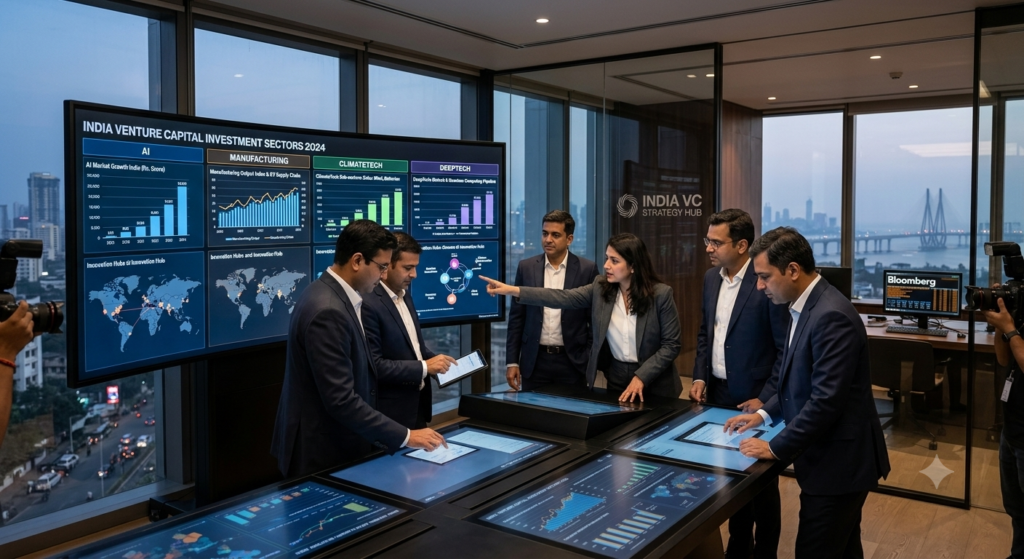
From Artificial Intelligence and defence technology to climate innovation and advanced manufacturing, investors are increasingly backing businesses that solve long-term structural problems rather than chasing short-term trends.
The question, therefore, isn’t simply:
“Which startups are raising money?”
The more important question is:
“What is smart money quietly betting on?”
Let’s take a closer look.

What Do We Mean by “Smart Money”?
The term “smart money” refers to capital invested by experienced investors with a proven track record of identifying opportunities before they become mainstream.
These investors typically include:
- Venture Capital (VC) firms
- Private Equity (PE) funds
- Family Offices
- Institutional Investors
- Sovereign Wealth Funds
- Corporate Venture Funds
Unlike retail investors, smart money usually takes a long-term view.
Rather than reacting to headlines, these investors focus on industries that have the potential to experience significant growth over the next five to ten years.
India’s startup ecosystem has expanded significantly through initiatives such as Startup India, supporting innovation and entrepreneurship across the country.
Artificial Intelligence Continues to Dominate Investor Attention
If there is one sector that continues to attract extraordinary levels of investment, it is Artificial Intelligence (AI).
However, investor priorities have evolved.
Businesses are no longer receiving funding simply because they mention AI.
Businesses exploring AI adoption can also discover the AI tools every business should use in 2026.
Instead, investors are looking for companies that are using AI to solve real-world business problems.
Areas attracting significant investor interest include:
- AI infrastructure
- Enterprise AI
- AI agents
- Healthcare AI
- Manufacturing AI
- Financial AI
- Customer support automation
- Cybersecurity
Businesses that improve productivity, rather than simply generate content, are increasingly attracting serious investor attention.
India’s long-term AI strategy has also been shaped through recommendations published by NITI Aayog.
Artificial Intelligence is rapidly transforming Corporate India. Explore how Indian businesses are using AI to improve productivity, customer experience and decision-making.

DeepTech Is Finally Having Its Moment
For many years, Indian startups were primarily associated with:
- logistics
- e-commerce
- FinTech
- mobility
Today, the landscape is changing.
Investors are increasingly supporting companies building foundational technologies.
DeepTech now includes businesses working in:
- robotics
- semiconductor design
- aerospace
- quantum computing
- advanced materials
- industrial automation
Although these businesses may take longer to scale, they often create stronger competitive advantages.
The World Economic Forum has consistently highlighted AI, advanced manufacturing and climate innovation as key drivers of future economic growth.

Defence Technology Is Emerging as a Major Opportunity
India’s growing emphasis on defence indigenisation has created an entirely new investment theme.
Investors are increasingly backing startups developing:
- drones
- surveillance systems
- autonomous defence technologies
- aerospace components
- advanced electronics
Government initiatives promoting domestic manufacturing have further strengthened investor confidence in the sector.

ClimateTech Is Moving From Trend to Necessity
Climate technology is no longer viewed purely through the lens of environmental sustainability.
It has become a significant business opportunity.
Capital is increasingly flowing into companies working on:
- renewable energy
- battery technology
- energy storage
- carbon management
- water conservation
- waste management
- clean mobility
As businesses around the world become more focused on sustainability, Indian ClimateTech startups are attracting increasing interest from global investors.

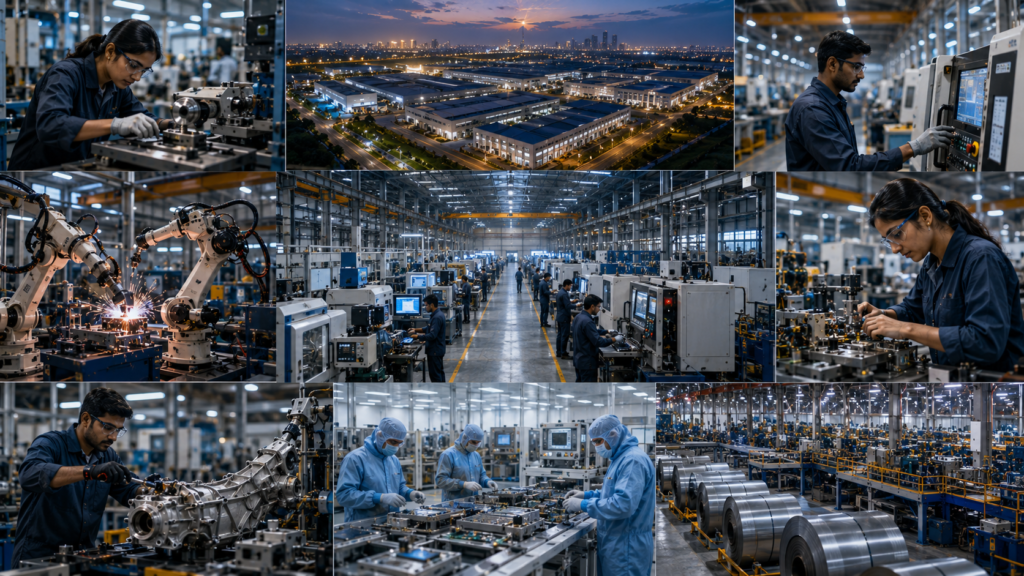
Manufacturing Is Back in Focus
For several years, technology dominated India’s startup headlines.
Today, manufacturing is quietly making a comeback.
Government initiatives such as the Production Linked Incentive (PLI) Scheme, combined with global supply chain diversification, have renewed investor confidence in Indian manufacturing.
Capital is increasingly flowing into businesses involved in:
- precision engineering
- industrial automation
- speciality chemicals
- defence manufacturing
- medical devices
Manufacturing is once again becoming an attractive investment opportunity.
India’s manufacturing resurgence is being driven by global supply chain shifts. Read our detailed analysis on how the global supply chain reset is creating new opportunities for Indian manufacturers.
Healthcare Innovation Continues to Attract Capital
Healthcare remains one of India’s largest long-term opportunities.
Investors continue to support businesses focused on:
- diagnostics
- preventive healthcare
- digital health platforms
- medical devices
- hospital technology
- AI-powered healthcare solutions
As India’s population continues to age and healthcare demand rises, the sector is expected to remain attractive for many years.
B2B SaaS Continues to Be a Global Success Story
Indian Software-as-a-Service (SaaS) companies continue to attract international investors.
Rather than building exclusively for India, many SaaS businesses now serve global customers from day one.
Popular investment themes include:
- workflow automation
- cybersecurity
- HR technology
- productivity software
- compliance software
- AI-enabled enterprise solutions
Recurring revenue models continue to make SaaS particularly attractive to investors.
Family Offices Are Becoming More Influential
One of the quieter developments in India’s investment ecosystem is the growing influence of family offices.
Successful business families are increasingly investing directly in startups.
Unlike traditional venture capital firms, family offices often:
- invest patiently
- provide strategic guidance
- support founders over longer periods
Their growing participation is gradually reshaping India’s funding landscape.
India’s startup ecosystem continues to benefit from policy support led by the Department for Promotion of Industry and Internal Trade (DPIIT).

Investors Are Becoming More Disciplined
Perhaps the biggest shift compared to a few years ago is investor behaviour itself.
The era of funding growth at any cost appears to be fading.
Today’s investors are asking tougher questions.
They want to understand:
- Can the company generate sustainable revenue?
- Is the business model profitable?
- Can the founders execute consistently?
- Is customer acquisition efficient?
- Can the business withstand difficult market conditions?
Capital is becoming increasingly selective.
Profitability Is Back in Fashion
Only a few years ago, many startups focused almost entirely on rapid expansion.
Today, investors are increasingly rewarding businesses that balance growth with financial discipline.
Metrics such as:
- unit economics
- cash flow
- customer retention
- operational efficiency
have become significantly more important.
The conversation has shifted from:
“How fast can you grow?”
to:
“Can you build a sustainable business?”
Strong execution remains a defining characteristic of successful businesses. Explore what makes India’s best-managed companies consistently outperform.

India’s Tier-2 Innovation Story Is Growing
Another fascinating trend is geography.
Investment activity is no longer confined to Bengaluru, Mumbai, or Delhi NCR.
Founders are increasingly building successful companies from:
- Jaipur
- Indore
- Kochi
- Coimbatore
- Ahmedabad
- Bhubaneswar
- Chandigarh
Investors are becoming increasingly comfortable backing businesses regardless of location.
Talent is becoming more widely distributed across the country.
The Global Supply Chain Shift Is Creating New Opportunities
As multinational companies diversify manufacturing beyond China, India continues to benefit.
This has created opportunities in:
- industrial manufacturing
- logistics
- warehousing
- export infrastructure
- supply chain technology
Investors increasingly view India as one of the world’s most promising manufacturing destinations over the coming decade.
India continues attracting international investment across manufacturing and emerging industries through initiatives supported by Invest India.

The Contrarian View: Not Every Hot Sector Wins
While some industries receive enormous attention, history suggests caution.
Not every heavily funded sector ultimately produces successful businesses.
Sometimes the most exciting investment opportunities emerge quietly.
Many of today’s successful companies were established long before their industries became fashionable.
That is why experienced investors often focus less on trends and more on strong business fundamentals.
What This Means for Entrepreneurs
For founders, these investment trends provide valuable signals.
Rather than chasing fashionable sectors, entrepreneurs should ask themselves:
- Am I solving a meaningful problem?
- Is the market large enough?
- Can this business scale?
- Can I create long-term value?
Smart money rarely follows hype alone.
It follows opportunity.

Final Thoughts
For as long as economies have existed, capital has remained one of the strongest indicators of where growth is heading.
The investment decisions being made today will shape tomorrow’s industries.
In 2026, India’s smart money appears to be backing businesses that solve meaningful problems, build long-term capabilities, and create sustainable value.
Artificial Intelligence may dominate the headlines.
But beneath the surface, investors are quietly supporting sectors such as:
- manufacturing
- DeepTech
- defence technology
- healthcare
- climate innovation
- enterprise technology
Perhaps the biggest lesson for entrepreneurs is this:
Funding trends change.
Technologies evolve.
Markets fluctuate.
But businesses that solve real problems, execute consistently, and build lasting value are the ones that continue attracting smart money—regardless of the economic cycle.
