
When the Government of India launched the Make in India initiative in 2014, the vision was ambitious.
The objective was to transform India into a global manufacturing hub, attract foreign investment, create millions of jobs, boost exports, and reduce dependence on imports.
At the time, many questioned whether India could compete with established manufacturing powerhouses.
More than a decade later, the results are becoming increasingly visible.
From mobile phone manufacturing and defence production to renewable energy equipment and automotive components, India has emerged as one of the world’s most attractive destinations for manufacturing investment.
The initiative has not only attracted multinational corporations but has also helped Indian companies expand operations, adopt new technologies, and compete on a global scale.
Let’s explore some of the most notable Make in India success stories and understand how the initiative is reshaping India’s economic future.
“Manufacturing is the backbone of every developed economy.”
The Make in India initiative reflects India’s long-term ambition to strengthen domestic manufacturing, create jobs and improve global competitiveness across strategic industries.
Many manufacturing startups are benefiting from initiatives supported by Startup India, which helps entrepreneurs access resources, mentorship and growth opportunities.
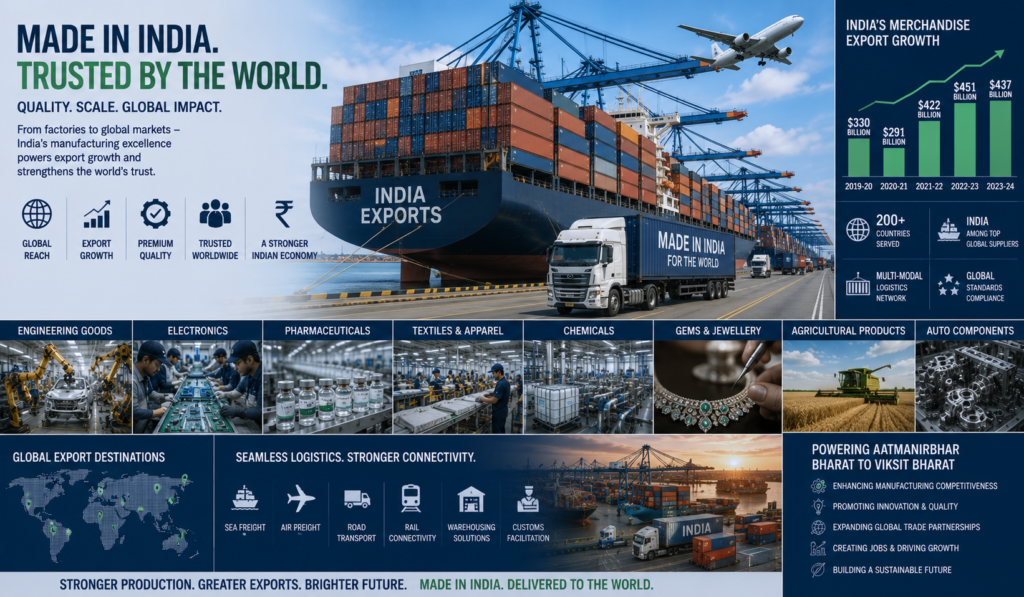
Understanding the Make in India Initiative
The Make in India initiative was designed to encourage companies to manufacture products within the country while simplifying regulations and improving the ease of doing business.
Key Objectives
- Increase manufacturing’s contribution to India’s GDP
- Attract Foreign Direct Investment (FDI)
- Create employment opportunities
- Promote innovation
- Strengthen domestic manufacturing capabilities
- Improve export competitiveness
Over the years, complementary initiatives such as:
- Production Linked Incentive (PLI) Schemes
- Startup India
- Digital India
- Atmanirbhar Bharat
have further strengthened India’s manufacturing ecosystem.
The Make in India initiative continues to serve as a cornerstone of India’s industrial strategy. Additional information and sector-specific opportunities are available through Make in India.
India’s broader economic transformation is being supported by multiple government initiatives designed to encourage entrepreneurship and business creation. Similar efforts are also helping women founders access funding, mentorship and growth opportunities through various government-backed programs. Read our guide on government incentives available for women entrepreneurs in India.
Mobile Manufacturing: India’s Biggest Success Story
Perhaps no sector better demonstrates the success of Make in India than mobile phone manufacturing.
A decade ago, India imported the majority of its smartphones and mobile devices.
Today, the country has become one of the world’s largest mobile phone manufacturing hubs.
The Transformation
Several global technology companies have significantly expanded manufacturing operations in India.
This has resulted in:
- Increased domestic production
- Reduced dependence on imports
- Significant job creation
- Expansion of component supplier networks
- Growth in exports
India now manufactures hundreds of millions of mobile phones annually, with exports reaching record levels.
Key Success Factors
- Government incentives
- PLI schemes
- Large domestic market
- Skilled workforce
- Expanding electronics ecosystem
Mobile manufacturing has become one of the flagship achievements of Make in India.
“The future belongs to countries that build and innovate.”
India’s rise as a major mobile manufacturing hub demonstrates how policy support, market demand and industrial investment can work together to create large-scale economic opportunities.
The rapid growth of India’s electronics and mobile manufacturing ecosystem is also attracting increasing investor interest. Venture capital firms are actively backing startups involved in manufacturing technology, supply chains and industrial automation. Learn more about the most active VCs in India.
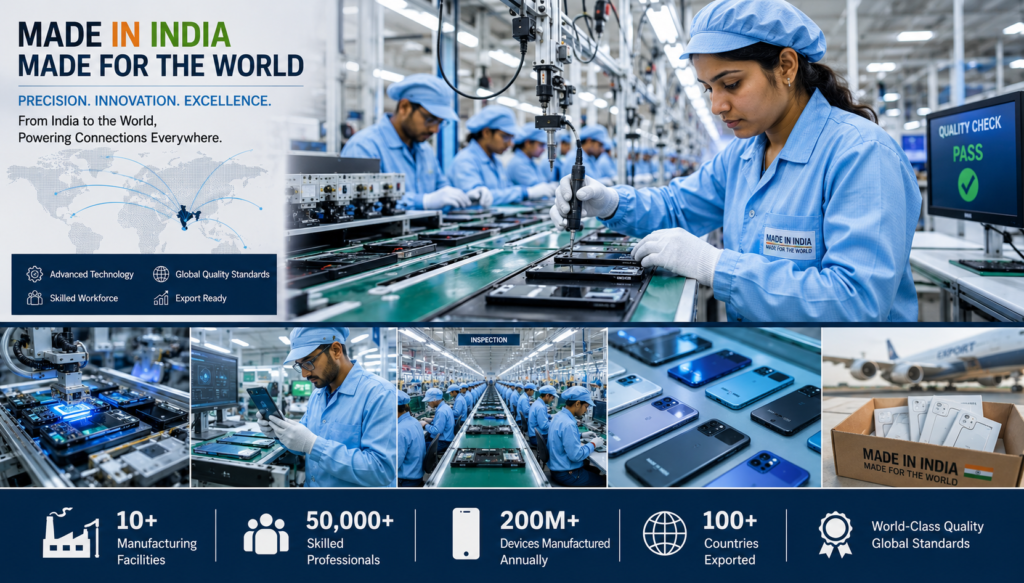
Electronics Manufacturing Gains Momentum
Beyond smartphones, India’s broader electronics sector has witnessed remarkable growth.
Today, India is producing:
- Consumer electronics
- Computer hardware
- Telecommunications equipment
- Wearable devices
- Electronic components
Why Investors Are Paying Attention
Electronics manufacturing offers:
- High export potential
- Significant employment generation
- Technology transfer opportunities
- Supply chain development
With global companies actively diversifying their supply chains, India is emerging as an increasingly attractive manufacturing destination.
“Semiconductors are the new oil of the digital economy.”
Growing demand for AI, electronics and connected devices is making semiconductor manufacturing a critical strategic priority for countries around the world.
As India’s electronics ecosystem expands, investors continue looking for opportunities across advanced manufacturing, semiconductors and industrial technologies. Recent funding activity highlights growing interest in these sectors. Explore our latest analysis of startup funding trends in India.
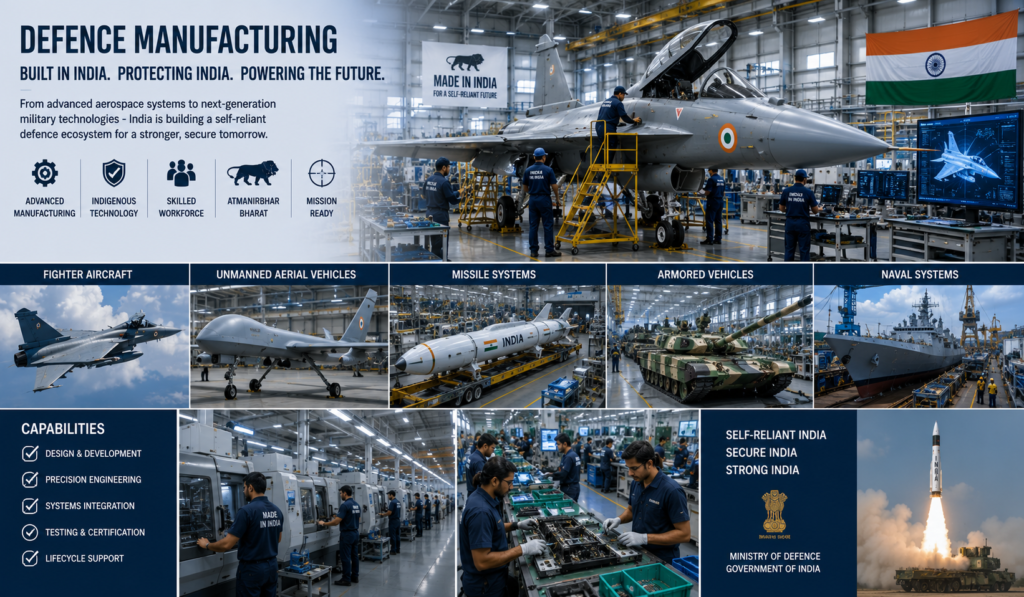
The Rise of Defence Manufacturing
For decades, India was one of the world’s largest importers of defence equipment.
Today, that picture is changing.
Government reforms and procurement initiatives have encouraged domestic defence manufacturing.
Areas of Progress
India is increasingly producing:
- Defence electronics
- Military vehicles
- Aerospace systems
- Naval equipment
- Surveillance technologies
This has created opportunities for both large corporations and emerging defence-tech startups.
Strategic Benefits
- Reduced import dependence
- Enhanced national security
- Technology development
- High-skilled job creation
- Export opportunities
Defence manufacturing has emerged as one of the most strategically important outcomes of Make in India.
The adoption of smart manufacturing technologies is also being supported by broader initiatives such as Digital India, which promotes technology adoption across industries.
Automotive Manufacturing: A Global Success Story
India has long been a major automotive market, but Make in India has accelerated its role as a global manufacturing hub.
Today, India is a leading producer of:
- Passenger vehicles
- Two-wheelers
- Commercial vehicles
- Automotive components
Why the Automotive Industry Matters
The sector supports:
- Millions of jobs
- Large supplier networks
- Export growth
- Technology adoption
Several global automakers have expanded manufacturing facilities in India, while domestic companies continue strengthening their international presence.
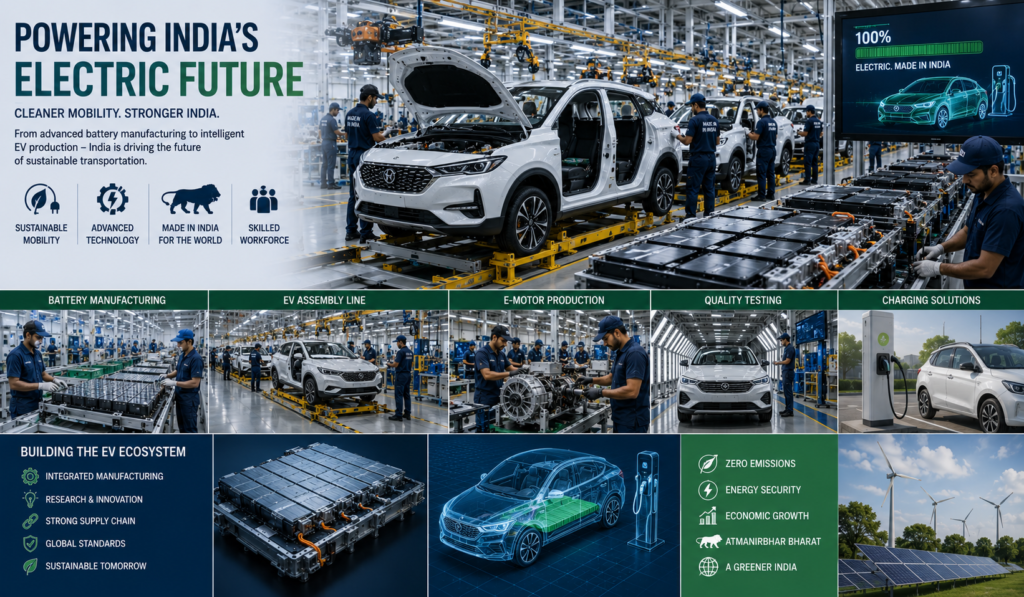
Electric Vehicles and the Future of Mobility
The rise of electric vehicles (EVs) has created new opportunities under the Make in India framework.
Government incentives and policy support have encouraged investment throughout the EV value chain.
Areas Experiencing Growth
- Electric two-wheelers
- Electric cars
- Battery manufacturing
- Charging infrastructure
- EV components
Several Indian startups and established manufacturers are investing heavily in this space.
As global demand for cleaner transportation grows, India aims to become a major player in the electric vehicle ecosystem.
The future of mobility extends beyond vehicle manufacturing. Artificial Intelligence is increasingly helping companies optimize transportation networks, reduce costs and improve operational efficiency. Read how AI is helping Indian logistics startups reduce delivery costs.
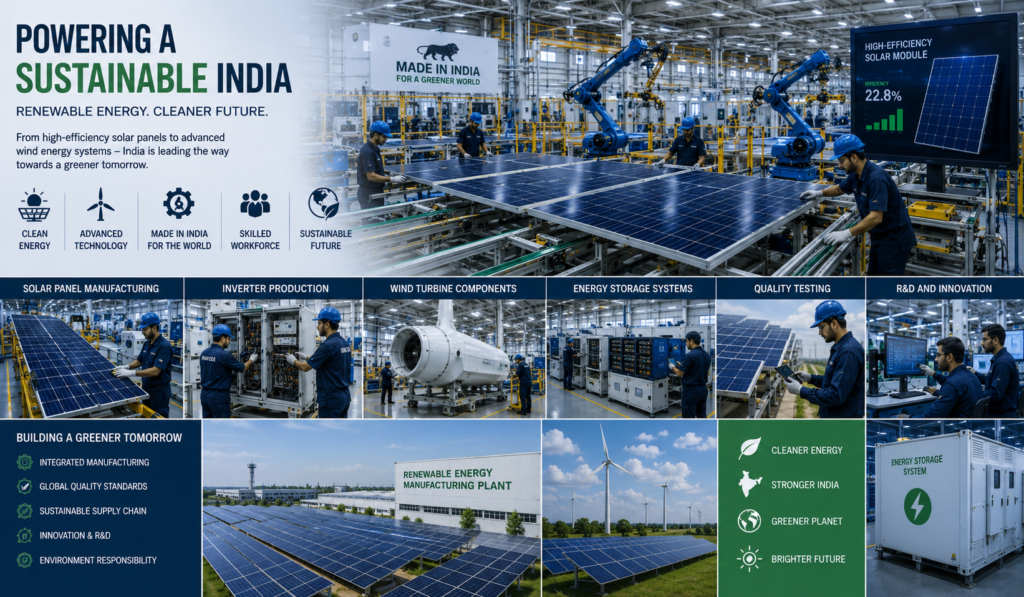
Renewable Energy Manufacturing Success
India’s renewable energy ambitions have created significant manufacturing opportunities.
The country has become one of the fastest-growing renewable energy markets in the world.
Growth Areas
- Solar panels
- Wind energy equipment
- Energy storage systems
- Green hydrogen technologies
The combination of domestic demand and export opportunities continues attracting investment.
Renewable energy manufacturing aligns closely with both Make in India and India’s sustainability goals.
India’s renewable energy sector is also creating opportunities for a new generation of entrepreneurs, including women-led businesses that are entering sustainability, clean technology and green manufacturing markets.
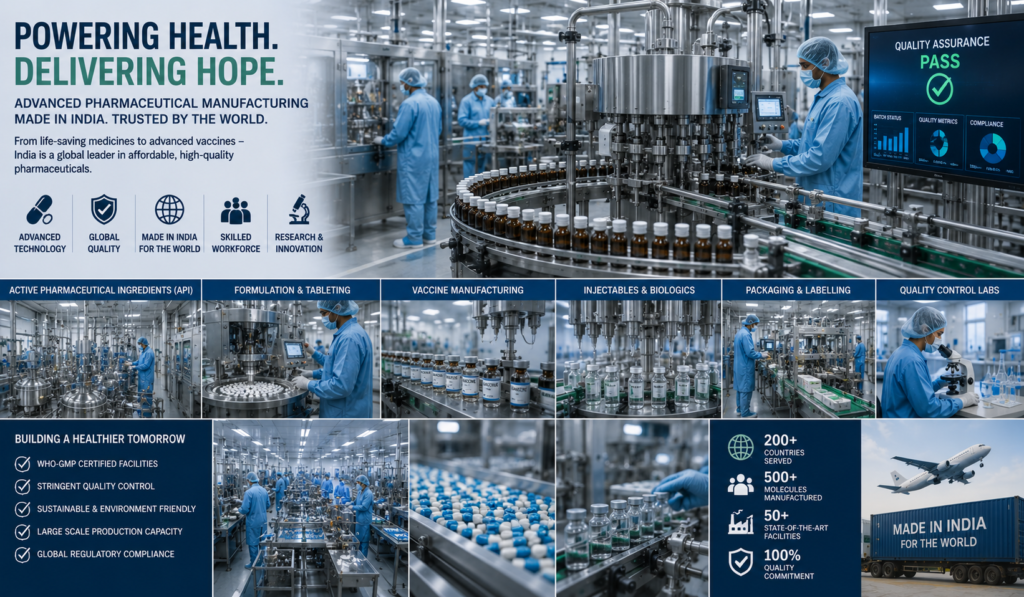
Pharmaceutical Manufacturing: India’s Global Strength
India has long been known as the “Pharmacy of the World.”
The Make in India initiative has further strengthened the pharmaceutical sector.
Today, India is a leading producer of:
- Generic medicines
- Vaccines
- Active Pharmaceutical Ingredients (APIs)
- Biotechnology products
Why the Sector Continues to Thrive
Key advantages include:
- Strong scientific talent
- Established manufacturing infrastructure
- Competitive production costs
- Growing global demand
The pharmaceutical industry remains one of India’s most successful manufacturing sectors.
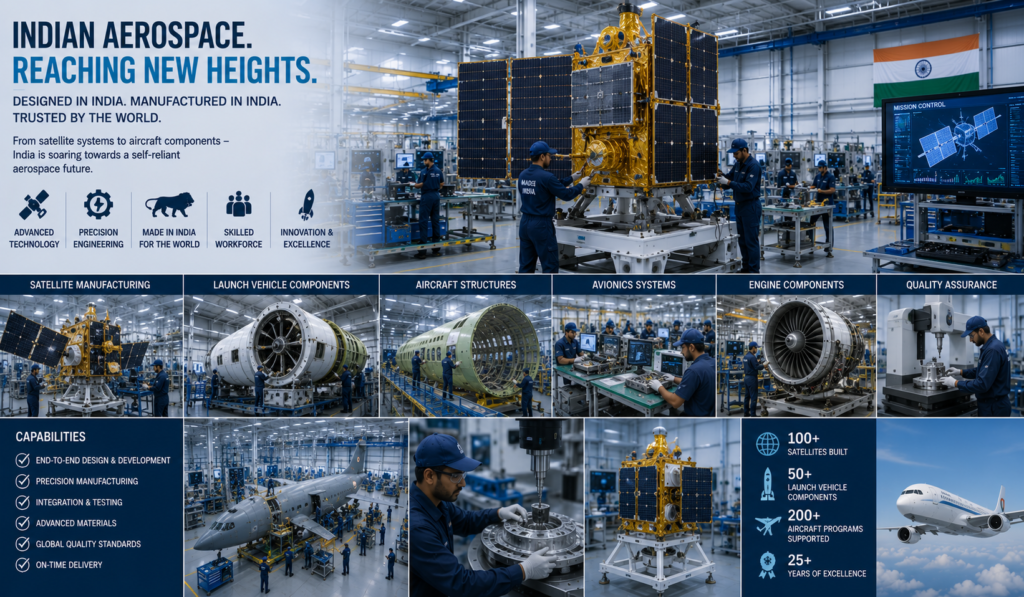
Aerospace and Space Technology
India’s achievements in space exploration have created momentum for aerospace manufacturing.
Growing government support and private-sector participation are expanding opportunities.
Emerging Opportunities
- Satellite manufacturing
- Aerospace components
- Launch technologies
- Space-tech startups
As the commercial space industry grows globally, India is positioning itself as a competitive player.
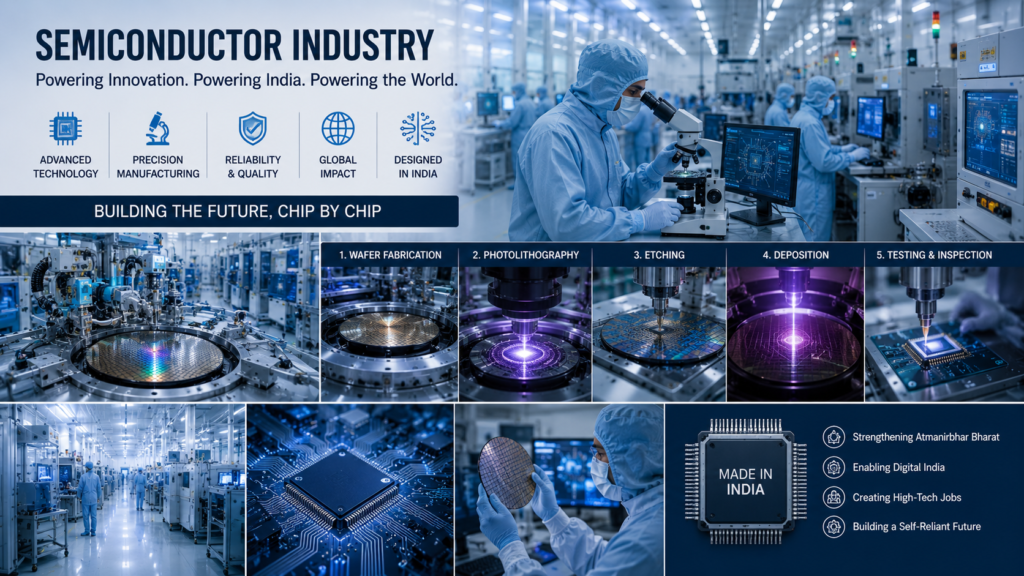
Semiconductor Manufacturing: The Next Big Opportunity
Semiconductors power virtually every modern technology product.
Recognising their strategic importance, India has launched major initiatives to encourage semiconductor manufacturing.
Why Semiconductors Matter
They are critical for:
- Smartphones
- Computers
- Automotive systems
- Defence technologies
- Artificial Intelligence applications
Although still in its early stages, semiconductor manufacturing could become one of India’s most important industrial success stories over the coming decade.
The growth of semiconductor manufacturing will also support emerging technologies such as Artificial Intelligence, automation and intelligent logistics systems that are transforming industries across India.
India’s semiconductor ambitions are receiving significant policy support through programs promoted by Ministry of Electronics and Information Technology (MeitY).
How Indian Companies Are Benefiting
While much of the attention focuses on multinational corporations, Indian companies have also benefited significantly from Make in India.
Many domestic manufacturers have expanded capacity, improved quality standards, and increased exports.
Key Benefits
- Better access to capital
- Government incentives
- Improved infrastructure
- Global market opportunities
- Technology partnerships
These advantages have helped businesses scale more effectively.
The Role of Startups in Manufacturing Innovation
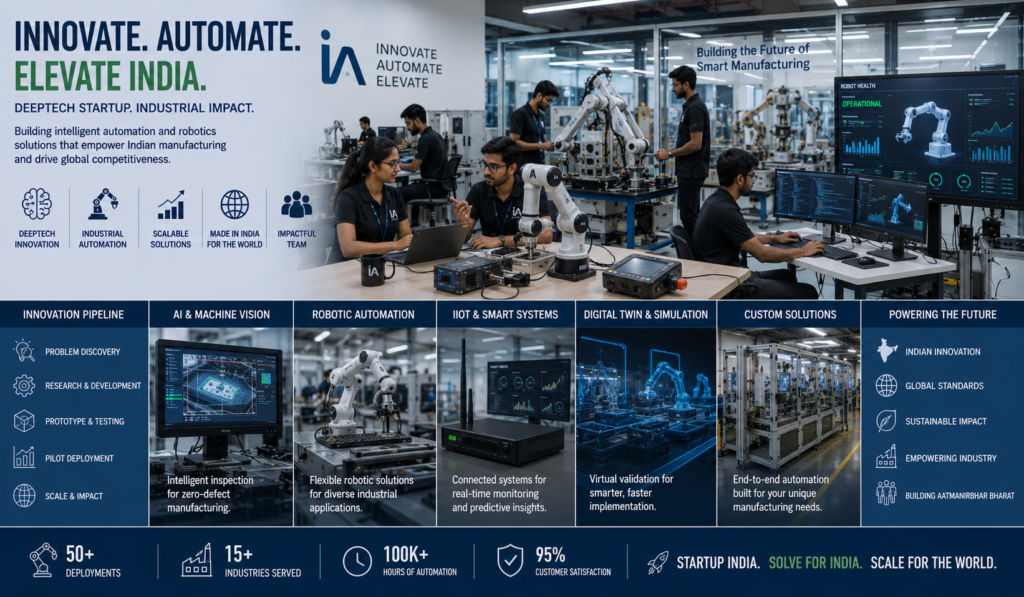
Startups are playing an increasingly important role in India’s manufacturing transformation.
Areas Attracting Startup Activity
- Industrial automation
- Robotics
- Artificial Intelligence
- Supply chain technology
- Advanced manufacturing
- DeepTech solutions
Many startups are helping traditional industries improve efficiency and competitiveness.
Job Creation and Economic Impact
One of the primary objectives of Make in India has been employment generation.
Manufacturing growth creates opportunities across multiple skill levels.
Direct Benefits
- Factory employment
- Engineering roles
- Technical positions
- Research and development jobs
Indirect Benefits
- Logistics
- Warehousing
- Supplier networks
- Ancillary industries
- Professional services
The broader economic impact extends far beyond manufacturing facilities themselves.
The growth of manufacturing also contributes to a healthier startup ecosystem by creating opportunities across supply chains, logistics, software and industrial services. Recent funding activity reflects growing confidence in India’s long-term growth story.
Challenges That Still Need Attention
Despite significant progress, challenges remain.
Infrastructure Gaps
Certain regions continue to require improvements in logistics and industrial infrastructure.
Skill Development
Advanced manufacturing requires specialised skills.
Continued investment in workforce training remains essential.
Supply Chain Development
Several industries still depend heavily on imported components.
Global Competition
India continues competing with established manufacturing economies worldwide.
Addressing these challenges will be critical for sustaining long-term growth.
Addressing infrastructure, skill development and capital access challenges will require continued collaboration between policymakers, investors and entrepreneurs. Government incentives and tax reforms remain important tools in supporting long-term industrial growth.
The Future of Make in India
The next phase of Make in India is likely to focus on high-value industries.
Priority Sectors
- AI hardware
- Semiconductors
- Electric vehicles
- Aerospace
- Defence technology
- Renewable energy
- DeepTech manufacturing
Combined with initiatives such as PLI schemes and Atmanirbhar Bharat, the programme is expected to continue attracting investment and driving industrial growth.
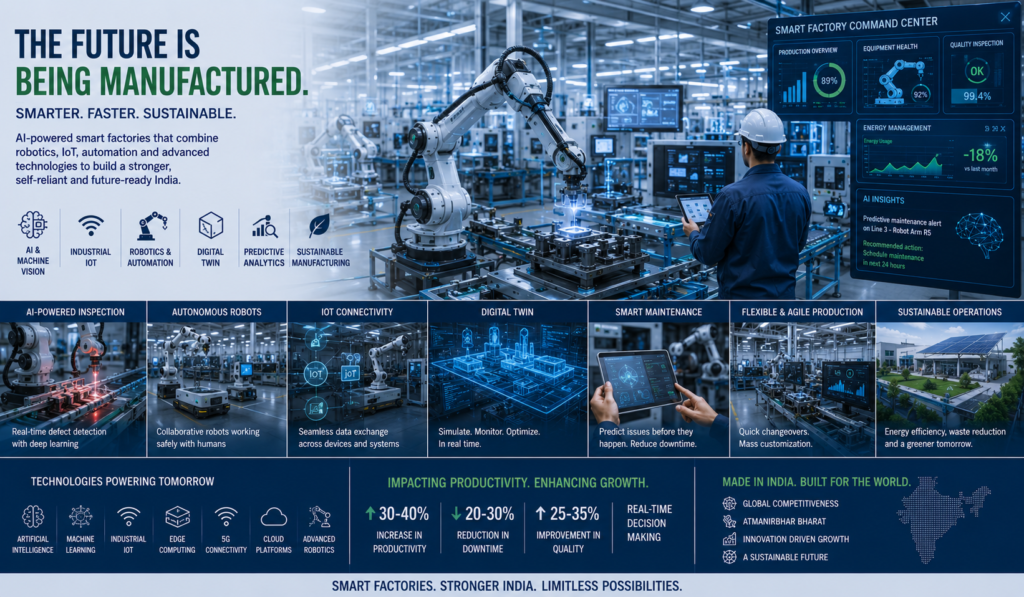
Many of the next-generation industries expected to drive India’s manufacturing growth—including AI hardware, smart factories and advanced supply chains—will rely heavily on Artificial Intelligence and automation technologies.
Government support for manufacturing has been further strengthened through Production Linked Incentive (PLI) Schemes, which encourage companies to expand domestic production.
The support extends beyond production incentives. Entrepreneurs and investors can also benefit from a range of tax-saving opportunities designed to encourage innovation and business growth. Explore the key tax benefits available for startups and investors in India.
Conclusion
More than a decade after its launch, Make in India has evolved from a policy initiative into one of India’s most significant economic transformation stories.
The growth of mobile manufacturing, defence production, automotive exports, renewable energy equipment, and pharmaceutical manufacturing demonstrates the programme’s impact.
While challenges remain, the direction is clear.
India is steadily strengthening its position as a global manufacturing destination.
For businesses, investors, startups, and policymakers, the Make in India journey offers valuable lessons about how strategic policy, entrepreneurship, innovation, and investment can work together to create long-term economic growth.
As global supply chains continue to evolve, India’s manufacturing story is only just beginning.
