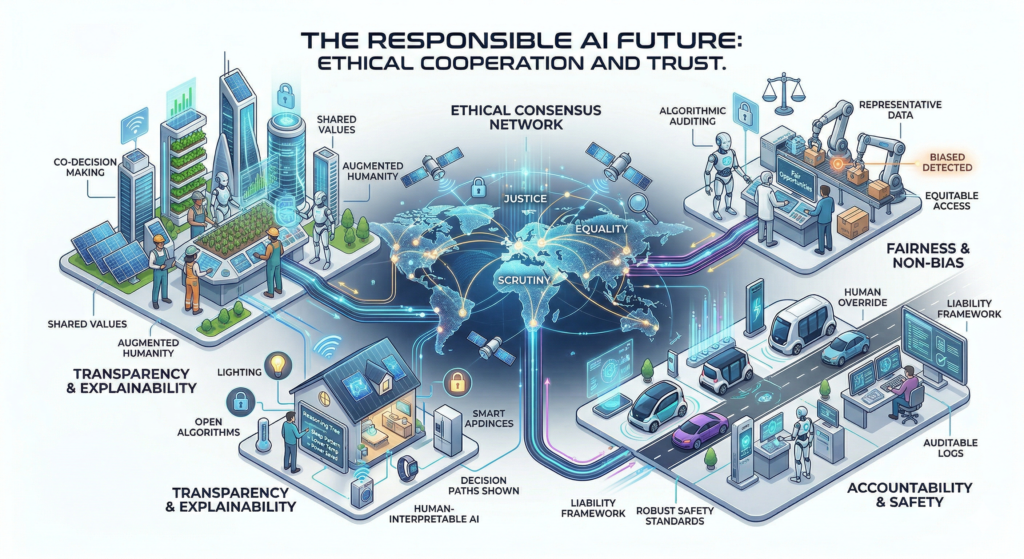
The ethical issues of artificial intelligence are no longer theoretical—they are shaping real-world decisions across industries. From hiring algorithms to financial systems and healthcare diagnostics, AI is influencing outcomes that impact millions. But as its adoption accelerates, so do concerns around bias, privacy, accountability, and transparency—raising critical questions about how far we should trust machines.
But with great capability comes an equally great responsibility. The rise of AI has triggered one of the most important debates in modern technology: how do we ensure that intelligent machines serve society ethically and responsibly?
Artificial intelligence promises enormous benefits, yet it also introduces complex questions around bias, privacy, accountability, and the future of human work.
As Aravind Srinivas has said:
“AI is an incredibly powerful tool, but the real question is how responsibly humans choose to use it.”
This tension between innovation and responsibility lies at the heart of the ethical dilemma surrounding artificial intelligence.
As explored in our analysis on how AI is reshaping industries, AI is already transforming Indian businesses at an unprecedented pace.
When Algorithms Influence Human Decisions
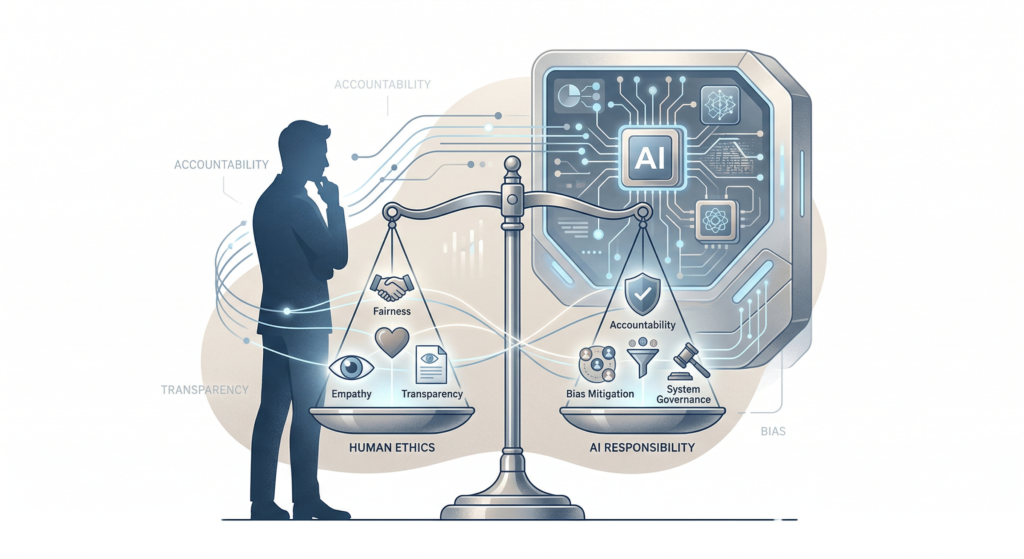
One of the biggest ethical concerns around AI is that machines are increasingly making decisions that affect people’s lives.
Today, AI systems are used in:
- hiring and recruitment screening
- loan approvals and credit scoring
- insurance risk assessments
- predictive policing systems
- medical diagnosis tools
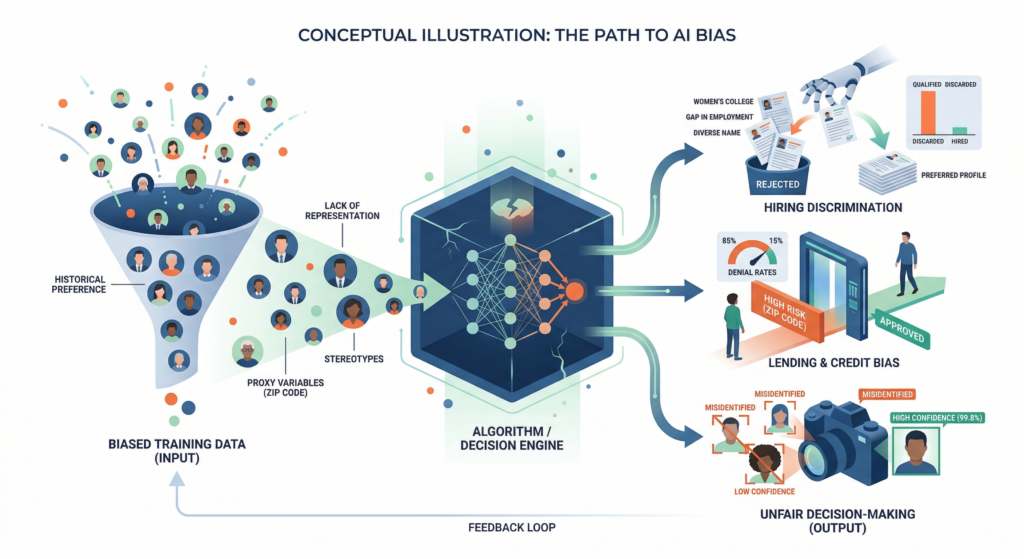
While these systems promise efficiency and speed, they can also unintentionally reproduce human biases embedded in historical data.
These concerns are closely tied to how AI is influencing hiring, marketing, and customer targeting decisions — something we’ve detailed in our article on AI’s impact on business operations.
For instance, an AI recruitment tool trained on past hiring data may unknowingly favour certain demographics over others.
Similarly, facial recognition systems have faced criticism for higher error rates when identifying certain population groups.
According to Prashanth Chandrasekar:
“AI systems reflect the data they are trained on. If the data is flawed, the outcomes will be flawed.”
This means the responsibility for fairness ultimately lies with the people building and deploying these systems.
The Privacy Question
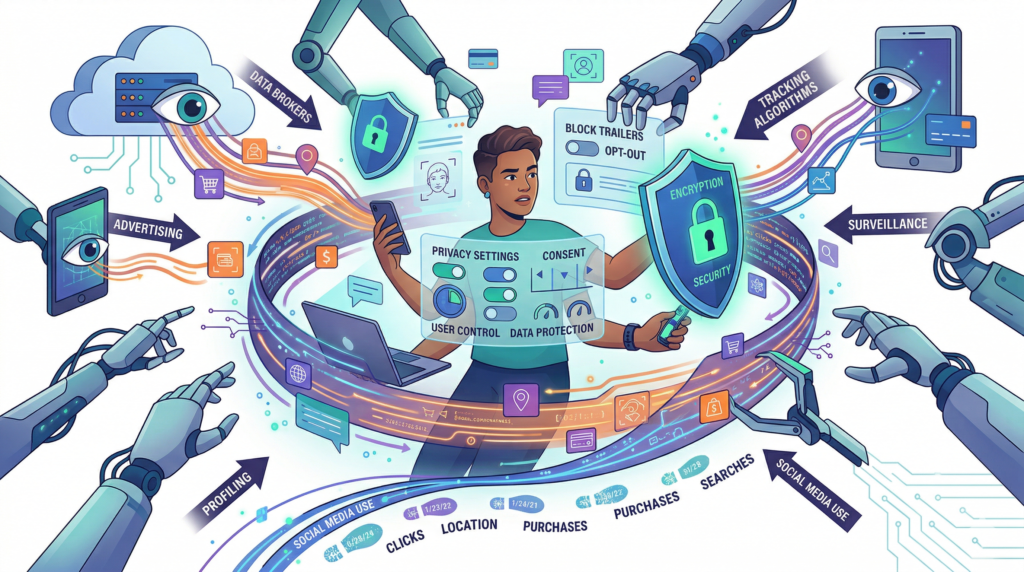
Another major ethical challenge revolves around data privacy.
AI systems rely heavily on vast datasets to improve their accuracy. These datasets often include personal information such as browsing patterns, purchase history, location data, and biometric identifiers.
The more data an AI system processes, the more powerful it becomes—but this also raises serious questions:
- Who owns this data?
- How transparent are companies about how it is used?
- How much control should individuals have over their digital footprint?
As Sridhara Vembu has often emphasized:
“Technology must serve society, not extract value from people without accountability.”
This perspective highlights a growing demand for stronger ethical standards in how technology companies collect and use data.
Automation and the Future of Work
Few topics generate as much debate as the impact of AI on employment.
Automation has always reshaped industries—from the Industrial Revolution to the rise of computers—but artificial intelligence is unique because it can automate both physical and cognitive work.
Examples include:
- AI chatbots replacing customer service roles
- legal AI tools reviewing contracts faster than lawyers
- AI-powered analytics replacing manual data analysis
- autonomous vehicles potentially transforming transport industries
However, many technology leaders believe AI will augment human work rather than eliminate it entirely.
According to Anand Mahindra:
“The goal of technology should not be to replace humans, but to amplify human capability.”
History suggests that technological revolutions tend to create new kinds of work even as they disrupt old ones.
Looking ahead, the evolution of AI will significantly reshape the workforce, raising even deeper ethical questions — something we’ve already explored in detail.
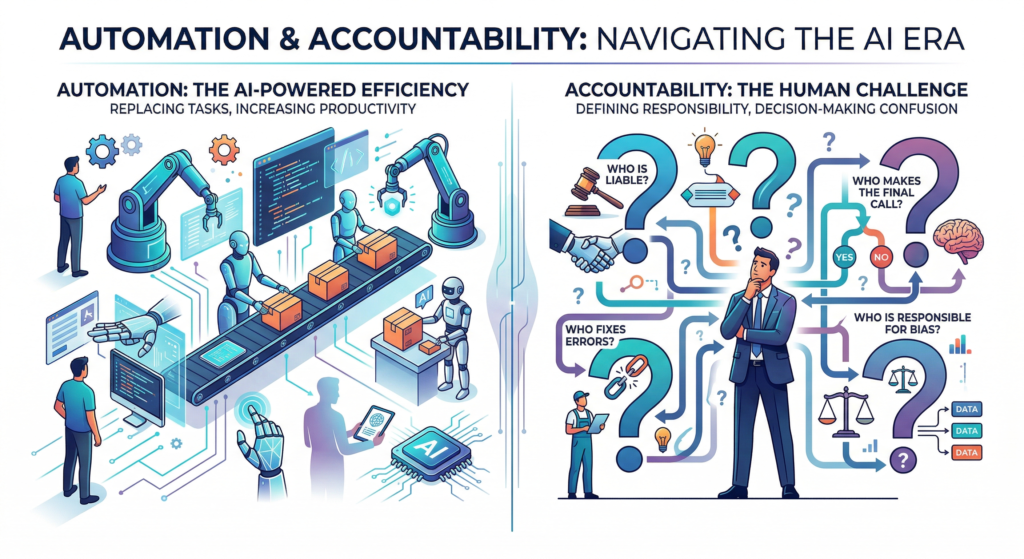
Who Is Accountable When AI Makes Mistakes?
Another difficult ethical question arises when AI systems fail.
Imagine situations where:
- an autonomous vehicle causes an accident
- a medical AI tool misdiagnoses a patient
- an algorithm unfairly denies someone a loan
In such scenarios, assigning responsibility becomes complex.
Is the developer responsible?
The company deploying the system?
Or the algorithm itself?
This issue is becoming increasingly relevant as AI systems gain more autonomy.
As Kris Gopalakrishnan has noted:
“Technology evolves faster than regulation. Society must continuously adapt its frameworks to keep pace.”
Governments around the world are now exploring regulatory models to ensure accountability in AI systems.
The Risk of Misuse
Beyond unintended bias or error, AI also presents risks when used deliberately for harmful purposes.
Some of the most concerning possibilities include:
- Deepfakes used to spread misinformation
- AI-powered cyberattacks targeting digital infrastructure
- autonomous weapons systems capable of independent decisions
- mass surveillance technologies
These risks highlight why many researchers believe that global cooperation is necessary to establish ethical standards for AI development.
Building Responsible AI
Despite these challenges, the solution is not to slow technological progress but to guide it responsibly.
Experts increasingly believe ethical AI should be built around several key principles:
- Transparency – AI systems should be explainable and understandable
- Fairness – algorithms must avoid discrimination
- Accountability – companies must take responsibility for AI decisions
- Privacy protection – individuals must retain control over their data
According to Debjani Ghosh:
“Responsible AI is not just a technological issue—it is a societal commitment.”
A Human Question at Its Core
Ultimately, the ethical dilemma of artificial intelligence is not really about machines. It is about human values.
AI reflects the priorities, incentives, and ethical frameworks of the people who design it.
If used responsibly, artificial intelligence could help solve some of humanity’s biggest challenges—from improving healthcare to tackling climate change.
But if deployed without care, it could deepen inequality, undermine trust, and create new societal risks.
The future of artificial intelligence will therefore depend not just on technological breakthroughs, but on the wisdom with which society chooses to guide its development.
And that responsibility lies not with machines—but with us.