
For decades, the basic blueprint for constructing a prosperous enterprise was relatively uncomplicated.
- Hire people who are talented.
- Construct a fantastic product.
- Enter into new markets and expand.
- Increase the amount of revenue.
- Enhance the effectiveness of the operations.
- Maintain a profitable business.
- Reiterate.
That set of principles is still relevant.
The CEOs of today, on the other hand, are operating in a business environment that is very different from the one that their predecessors inherited.
Artificial intelligence is revolutionising industries.
Global supply chains are being redesigned.
Customers expect faster and more personalised experiences.
Cybersecurity has become a boardroom priority.
Employees increasingly value purpose, flexibility and continuous learning.
Meanwhile, disruption has evolved from being the exception to becoming the prevailing norm.
No longer is the question “How do we grow?” the only one that matters to the leaders of Indian businesses.
Instead, a much more important question has emerged:
“How do we build organisations that continue growing even as the rules keep changing?”
This is the foundation upon which the new CEO playbook is built.
“The illiterate of the 21st century will not be those who cannot read and write, but those who cannot learn, unlearn and relearn.”— Alvin Toffler

Leadership Today Is Less About Control and More About Adaptability
The traditional model of leadership frequently centred on maintaining control.
- Decisions followed a hierarchy.
- Information travelled slowly.
- Strategies were reviewed annually.
- Markets evolved gradually.
Today, that world no longer exists.
Competitive advantages can disappear in months rather than years.
Technology evolves constantly.
Customer expectations continue changing.
Startups with remarkably small teams are challenging billion-dollar companies.
The most successful CEOs in India are no longer trying to anticipate every disruption.
Instead, they are building organisations capable of adapting faster than their competitors.
To accomplish that, a different style of leadership is required.
Modern CEOs increasingly prioritise:
- Agility over bureaucracy
- Experimentation over perfection
- Learning over certainty
- Speed over hierarchy
- Collaboration over isolation
- Long-term resilience over short-term optimisation
Adaptability has become one of the most valuable leadership skills of the modern era.

Artificial Intelligence Has Moved From the IT Department to the Boardroom
Until relatively recently, artificial intelligence was largely viewed as a technology initiative.
Today, it has become a business strategy.
Every CEO is beginning to ask similar questions:
- How can artificial intelligence improve customer experience?
- Which repetitive tasks can be automated?
- Can AI help employees become more productive?
- How will artificial intelligence reshape our industry over the next five years?
- What happens if competitors adopt AI faster than we do?
According to McKinsey & Company, organisations creating the greatest value from AI combine technology investments with organisational change, leadership commitment and employee capability building.
The conversation is no longer about whether businesses should explore AI.
It is about how quickly they can integrate it responsibly.
Leading organisations are deploying AI across multiple functions, including:
- Customer service
- Marketing
- Sales enablement
- Financial forecasting
- Supply chain planning
- Demand forecasting
- Human resources and recruitment
- Fraud detection
- Knowledge management
- Business intelligence
The smartest CEOs understand that artificial intelligence is not replacing leadership.
Businesses looking to get started can also explore our guide to the best AI tools every business should use in 2026.
It is improving decision-making.
The World Economic Forum believes Artificial Intelligence will fundamentally reshape industries, leadership and the future of work over the coming decade.
Artificial Intelligence is already reshaping businesses across every sector. Read our detailed analysis on how Indian businesses are using AI to improve productivity, customer experience and decision-making.
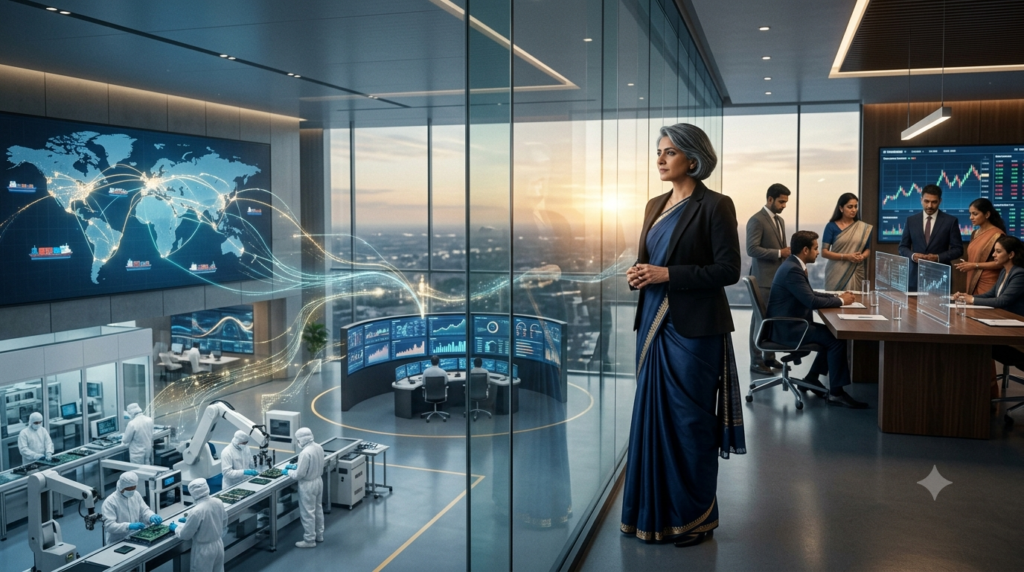
Information Is No Longer the CEO’s Greatest Advantage
There was a time when senior leaders possessed information that very few others could access.
Much of that advantage has disappeared.
Today:
- Information is everywhere.
- Data arrives every second.
- Reports are generated automatically.
- Dashboards update continuously.
The challenge is no longer finding information.
It is knowing what deserves attention.
Modern CEOs must become exceptional decision-makers rather than simply information managers.
The best leaders ask better questions.
Instead of asking:
“What happened?”
They ask:
- Why did it happen?
- What changed?
- What happens next?
- What new risks are emerging?
- Where are the biggest opportunities developing?
Good questions often build stronger organisations than quick answers.
Many of India’s strongest organisations have mastered this philosophy. Explore how India’s best-managed companies consistently outperform through leadership, governance and long-term thinking.
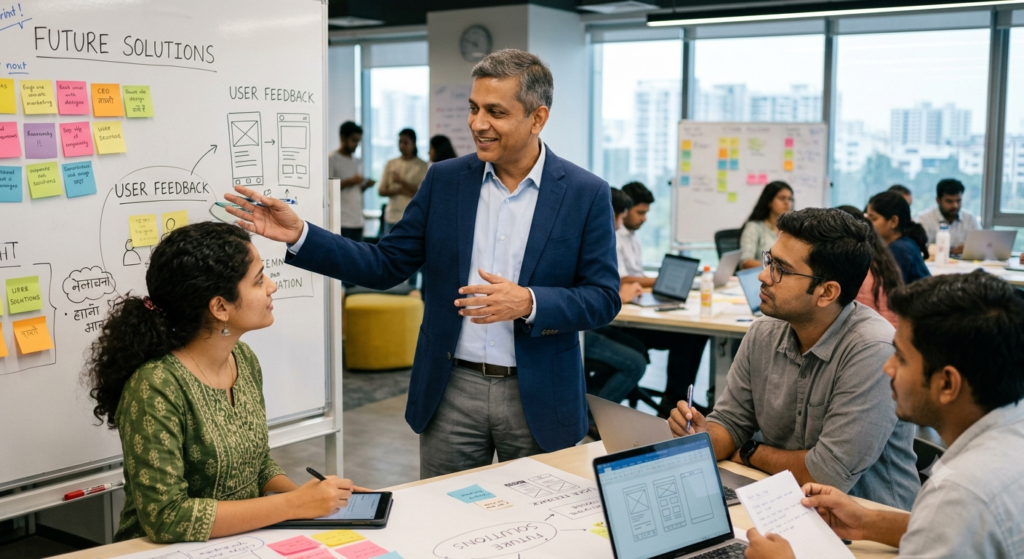
Customers Have Changed Faster Than Most Businesses
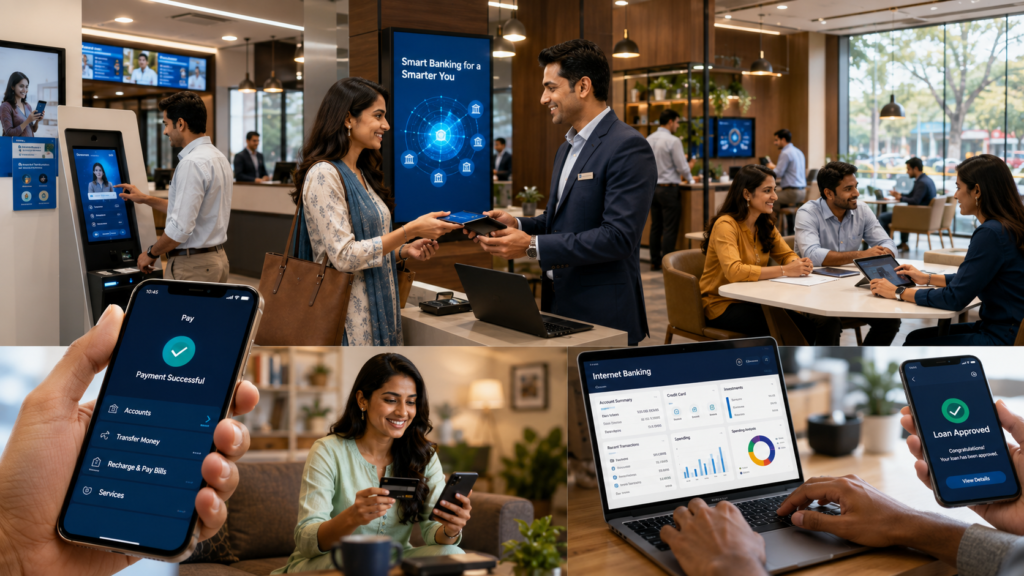
Indian consumers increasingly expect experiences rather than transactions.
Whether buying insurance, opening a bank account or ordering groceries, customers compare every interaction with the best experience they have had anywhere.
That means they may compare:
- A logistics company with Amazon.
- A hospital with Apple.
- A bank with Google Pay.
Customer expectations have become industry agnostic.
Successful CEOs recognise customer experience as a strategic advantage rather than simply a service function.
Businesses are investing in:
- Faster response times
- Personalised communication
- Omnichannel engagement
- Simpler digital journeys
- Better after-sales support
- Customer analytics
- Continuous feedback systems
Organisations that consistently improve customer experience often build stronger loyalty and greater pricing power.
Research published by Harvard Business Review consistently highlights adaptability, learning and organisational culture as defining characteristics of successful leadership.

Building a Culture That Learns Faster Than Competitors
Technology can be purchased.
Factories can be built.
Capital can be raised.
Culture cannot.
One defining characteristic of high-performing organisations is continuous learning.
Employees are encouraged to experiment.
Mistakes become learning opportunities.
Knowledge is shared rather than protected.
Teams collaborate across departments.
Innovation becomes part of everyday work rather than an annual initiative.
Modern CEOs invest in:
- Leadership development
- Employee upskilling
- AI literacy
- Digital capabilities
- Cross-functional collaboration
- Continuous learning programmes
- Internal innovation
Businesses rarely outperform the quality of the people building them.

Data Has Become a Competitive Advantage
Many Indian businesses already possess enormous amounts of data, including:
- Sales data
- Customer behaviour
- Financial information
- Operational metrics
- Supply chain insights
The challenge is rarely the lack of data.
The challenge is converting information into better decisions.
Leading CEOs increasingly use data to answer questions such as:
- Which customers are becoming less engaged?
- Which products are growing fastest?
- Where are margins under pressure?
- Which markets deserve greater investment?
- Which teams require additional support?
- Which risks deserve immediate attention?
Data should support judgement.
It should never replace it.
Growth Alone Is No Longer Enough
For many years, businesses were rewarded primarily for growth.
Today, sustainable growth matters far more.
Modern CEOs increasingly focus on:
- Profitability
- Cash flow
- Capital allocation
- Operational efficiency
- Risk management
- Governance
- Compliance
Fast growth built on weak foundations can quickly become fragile.
The strongest businesses combine ambition with discipline.
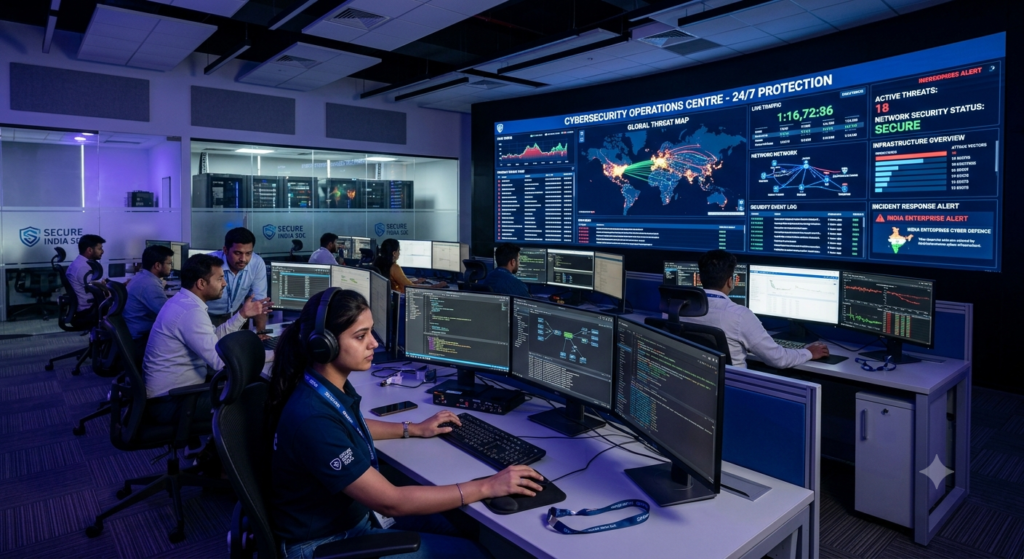
Cybersecurity Has Become a Leadership Responsibility
Cybersecurity is no longer only an IT issue.
It is now a boardroom responsibility.
Every business manages valuable digital assets, including:
- Customer information
- Financial records
- Employee data
- Intellectual property
- Operational systems
A single security breach can destroy trust built over decades.
Leading CEOs increasingly invest in:
- Strong governance
- Employee awareness
- Vendor security reviews
- Incident response planning
- Regular cybersecurity audits
- Business continuity planning
Trust has become one of the world’s most valuable business assets.
ESG Is Moving Beyond Compliance
Environmental, Social and Governance initiatives are no longer simply reporting requirements.
Forward-looking CEOs increasingly focus on:
- Renewable energy
- Responsible sourcing
- Ethical governance
- Waste reduction
- Diversity and inclusion
- Community engagement
- Transparent reporting
Responsible businesses often become more resilient businesses.
Indian CEOs Must Think Globally From Day One
India remains one of the world’s largest domestic opportunities.
However, tomorrow’s successful Indian businesses will increasingly compete globally.
Global leadership requires understanding:
- International customer expectations
- Cross-cultural management
- Global supply chains
- Export opportunities
- International regulations
- Geopolitical risks
- Currency movements
The next Indian multinational could begin as today’s regional business.
Global thinking is becoming increasingly important as India’s export opportunity expands well beyond the software industry.

Great CEOs Build Systems, Not Dependencies
One of the most common mistakes founders make is becoming indispensable.
Every major decision depends on them.
Customers rely on them.
Employees wait for approvals.
Growth slows.
Great CEOs instead build organisations that continue functioning efficiently even when they are not present.
They develop:
- Clear processes
- Strong leadership teams
- Decision-making frameworks
- Accountability systems
- Succession plans
- Performance metrics
- Knowledge-sharing cultures
Businesses become scalable when systems become stronger than individuals.

The CEO of the Future Will Be a Chief Learning Officer
Perhaps the biggest shift in modern leadership is this:
The most successful CEOs are becoming the biggest learners within their organisations.
They:
- Read constantly.
- Listen to customers.
- Experiment with technology.
- Study competitors.
- Challenge assumptions.
- Encourage curiosity.
Leadership is becoming less about having every answer.
It is about building organisations capable of finding better answers every day.
That mindset may become India’s greatest competitive advantage.
The New CEO Playbook
The modern Indian CEO is no longer expected to be the smartest person in the room.
Instead, the role increasingly involves building organisations capable of thinking, learning and adapting faster than competitors.
The new leadership playbook includes:
- Think long term while executing quickly.
- Use artificial intelligence to improve judgement rather than replace it.
- Build customer obsession into every function.
- Create a culture of continuous learning.
- Make data central to decision-making.
- Invest in people before processes.
- Strengthen governance and cybersecurity.
- Build systems that scale without founder dependency.
- Think globally from the beginning.
- Stay curious.
Government initiatives such as the IndiaAI Mission are helping accelerate India’s ambitions of becoming one of the world’s leading AI economies.
Final Thoughts
The companies that define India’s next decade may not necessarily be those with the largest budgets, biggest workforces or most advanced technology.
Instead, they are more likely to be organisations led by CEOs who understand one simple truth:
Leadership today is no longer about having complete control. It is about building organisations that thrive in uncertainty.
The future belongs to leaders who:
- Embrace change rather than resist it.
- Build cultures rather than hierarchies.
- Ask better questions rather than chasing perfect answers.
- Empower people rather than protect authority.
India is entering one of the most exciting periods in its economic history.
Artificial intelligence, manufacturing, exports, digital transformation and entrepreneurship are creating unprecedented opportunities.
The CEOs who succeed will not simply manage these changes.
They will shape them.
Because the new playbook for Indian CEOs is no longer about managing successful businesses.
It is about building organisations that remain relevant, resilient and remarkable, regardless of how the future evolves.
