
For decades, the image of manufacturing in India remained largely familiar.
It typically involved:
- long assembly lines
- machines performing repetitive tasks
- large factory floors where personnel manually managed operations
The formula stayed relatively unchanged:
- Raw materials came in
- Products were manufactured
- Goods were shipped out
For many years, scale itself was the competitive advantage.
The larger the factory, the greater the output.
However, a quiet revolution is now taking place across India’s manufacturing landscape.
Factories are increasingly becoming:
- connected
- intelligent
- data-driven
- automated
- predictive
Welcome to the era of:
Smart Factories
Although the term may sound futuristic, this transformation is already underway.
Across industries such as:
- automotive manufacturing
- pharmaceuticals
- electronics manufacturing
- industrial equipment
- consumer goods
Indian factories are beginning to look very different from what they looked like even a decade ago.
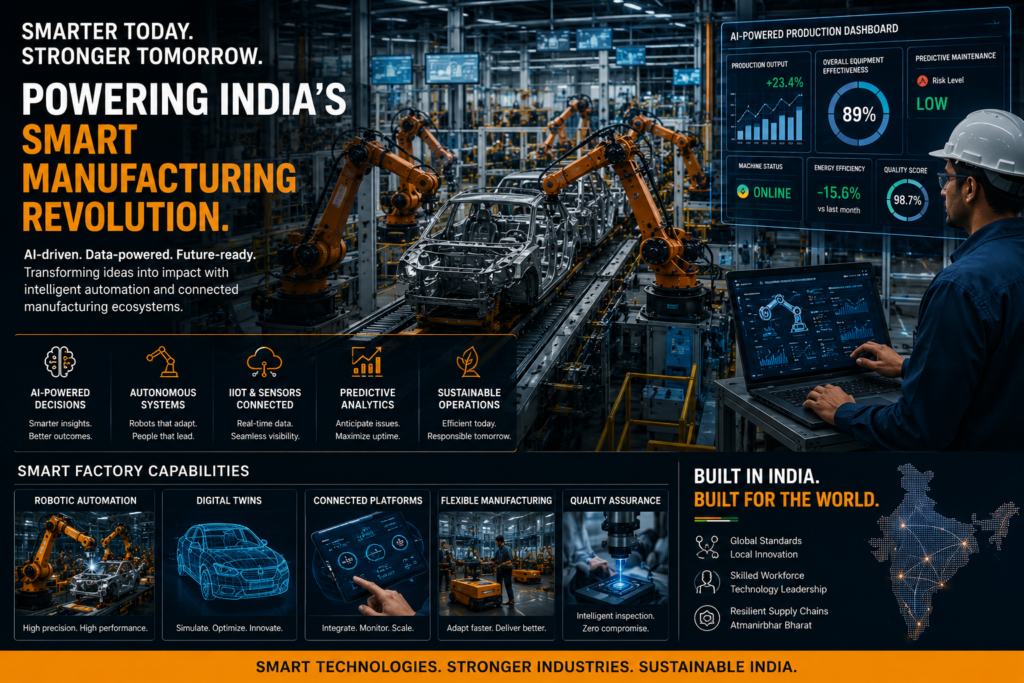
The rise of smart factories has the potential to become one of the most important industrial transformations shaping India’s future economy.
India’s manufacturing ambitions also align closely with broader trends explored in the global supply chain reset and India’s manufacturing opportunity.
What Exactly Is a Smart Factory?
At first glance, the term may sound complex.
However, the concept itself is fairly straightforward.
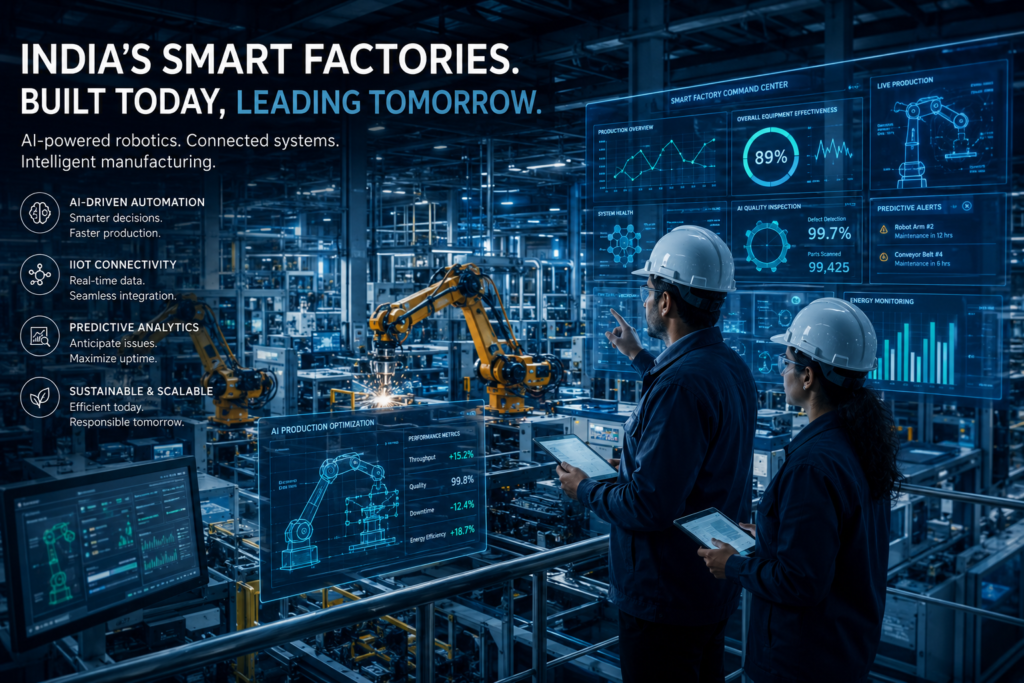
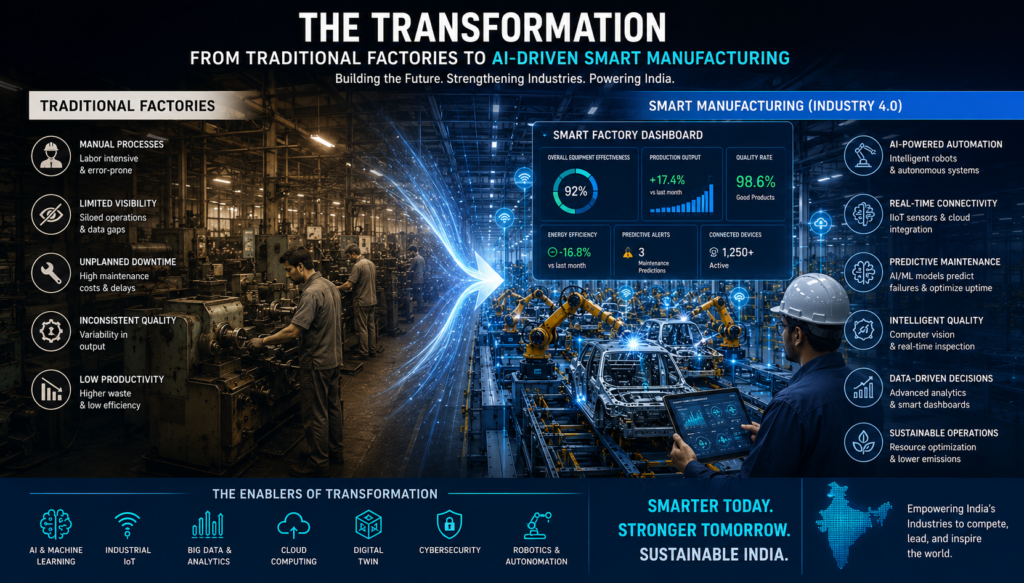
A smart factory is a manufacturing environment where technology, machines, software, sensors, and data systems continuously communicate with one another to improve efficiency and decision-making.
Rather than relying heavily on manual intervention, smart factories increasingly use:
- Artificial Intelligence (AI)
- Internet of Things (IoT)
- robotics
- cloud computing
- automation
- real-time analytics
- machine learning
The objective is not simply automation.
The larger goal is to create systems that can:
- monitor themselves
- optimize themselves
- predict issues
- improve performance
Think of it this way:
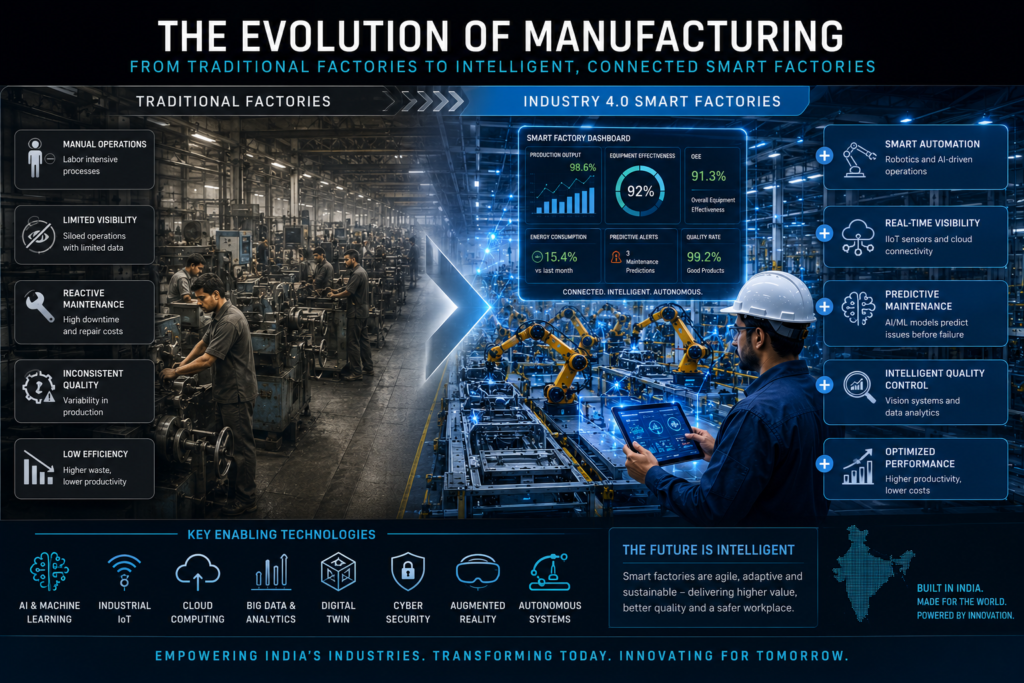
Traditional factories react to problems.
Smart factories increasingly anticipate them.
Government initiatives such as Make in India continue supporting manufacturing growth and industrial development.
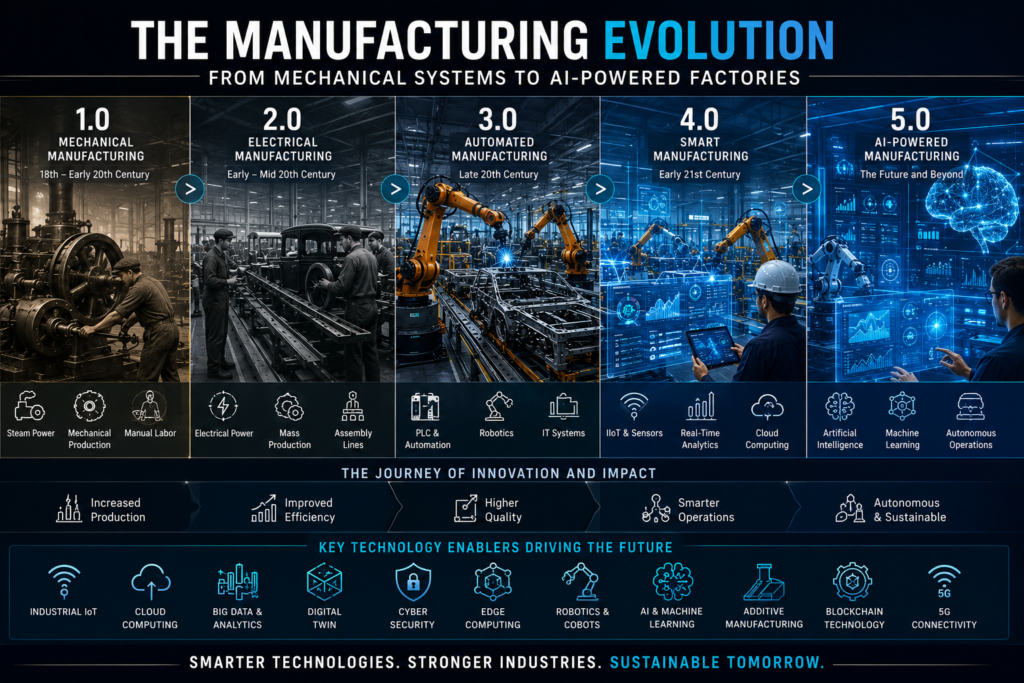
From Manufacturing 1.0 to Industry 4.0
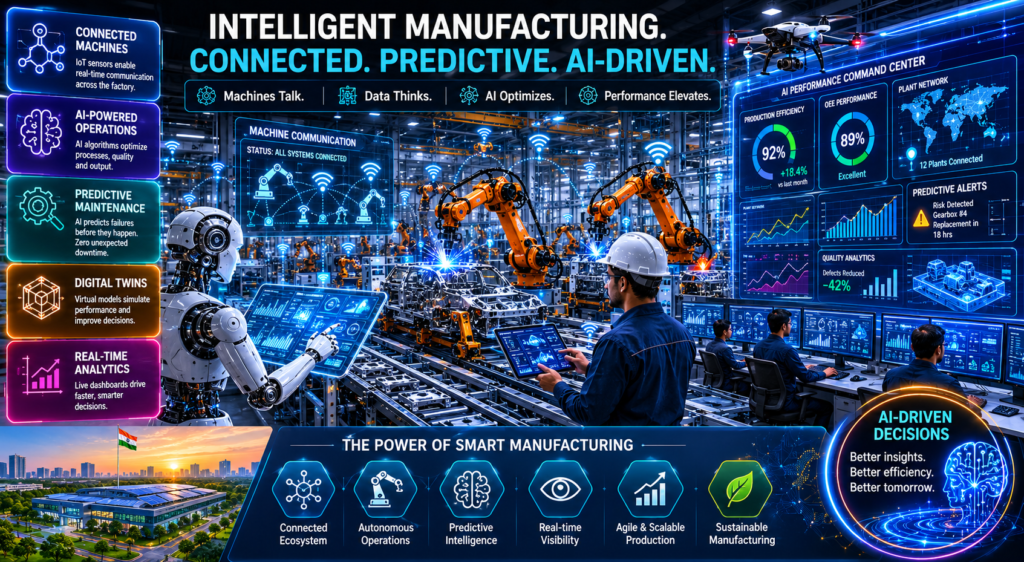
The evolution of manufacturing can be understood through four major phases:
- Manufacturing 1.0: The first industrial phase introduced mechanical production powered by steam-driven systems.
- Manufacturing 2.0: Electricity enabled large-scale production and significantly improved efficiency.
- Manufacturing 3.0: The introduction of computers brought basic automation and greater process control.
- Manufacturing 4.0 (Smart Manufacturing): Today’s era combines Artificial Intelligence, connected devices, intelligent systems, predictive analytics, and advanced automation.
This latest stage is commonly referred to as Industry 4.0, and India is increasingly becoming an important participant in this transformation.
This phase is commonly referred to as:
Industry 4.0
India is increasingly becoming an important participant in this movement.
Industry 4.0 technologies are reshaping manufacturing globally according to research from the World Economic Forum.
The growing role of AI within manufacturing reflects broader technological shifts discussed in the future impact of AI on work and industries.
Why India Is Suddenly Talking About Smart Factories
Several factors are accelerating this shift.
1. Manufacturing Needs Greater Efficiency
Manufacturers today face growing pressure.
They must balance:
- rising costs
- increasing competition
- supply chain uncertainty
- changing customer expectations
- stricter global quality standards
Traditional manufacturing systems often struggle to react quickly.
Smart systems help businesses:
- reduce downtime
- improve productivity
- optimize resources
- increase operational visibility
Increasingly:
Efficiency determines competitiveness.
2. The Global Supply Chain Is Changing
Recent global developments exposed weaknesses in supply chains.
Businesses around the world are rethinking:
- where products are manufactured
- how products are manufactured
India is increasingly positioning itself as a manufacturing alternative.
Government initiatives such as:
- Make in India
- Production Linked Incentive (PLI) schemes
are supporting manufacturing growth.
However, global manufacturing leadership requires more than scale.
Increasingly, it requires intelligence.
India’s manufacturing ecosystem is also receiving support through Production Linked Incentive (PLI) initiatives.
The rise of automation and AI-driven efficiency also reflects trends explored in AI-powered entrepreneurship and lean business models.
3. Customers Expect Faster Everything
Modern consumers increasingly expect:
- faster delivery
- customized products
- better quality
- higher reliability
Traditional factories often struggle to handle rapidly changing demand patterns.
Smart factories can adapt more quickly because they rely heavily on:
- automation
- data systems
- real-time insights
How Smart Factories Actually Work
One of the most interesting aspects of smart factories is that they are not simply about robots replacing people.
Instead, multiple systems work together.
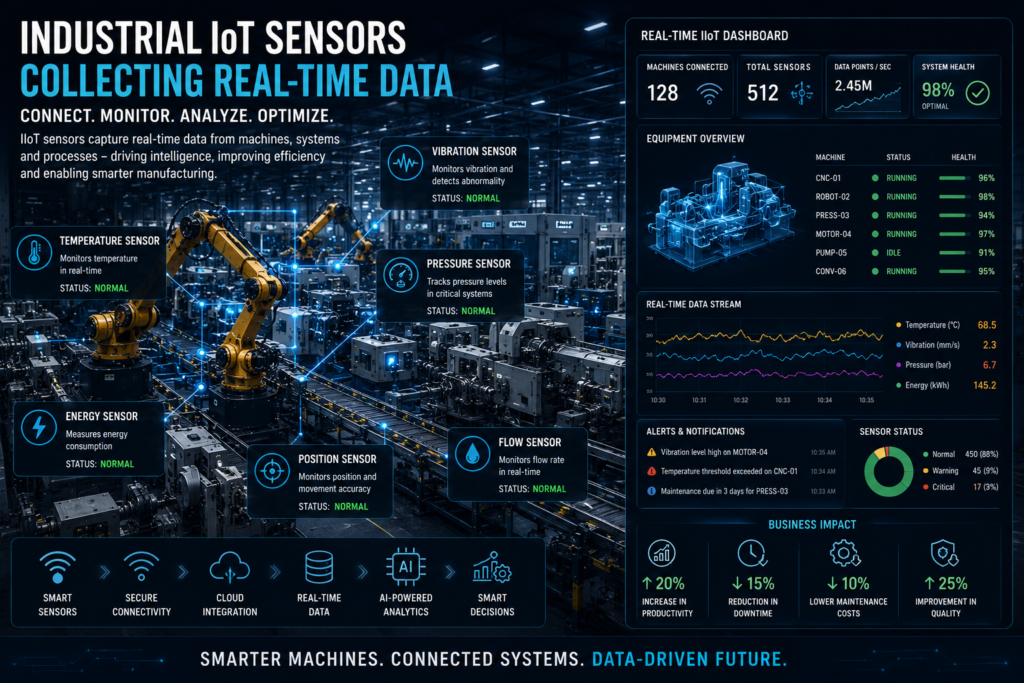
For example, sensors installed on machines constantly collect information such as:
- temperature
- vibration
- energy consumption
- production output
- equipment health
This information is analyzed in real time.
If unusual patterns emerge:
- maintenance teams receive alerts
- systems automatically adjust
- issues can be identified earlier
Instead of fixing machines after failure:
Companies increasingly prevent failures before they happen.
Growing manufacturing demand is also connected to changing consumer behavior explored in the rise of Bharat consumers.
Predictive Maintenance Could Change Everything
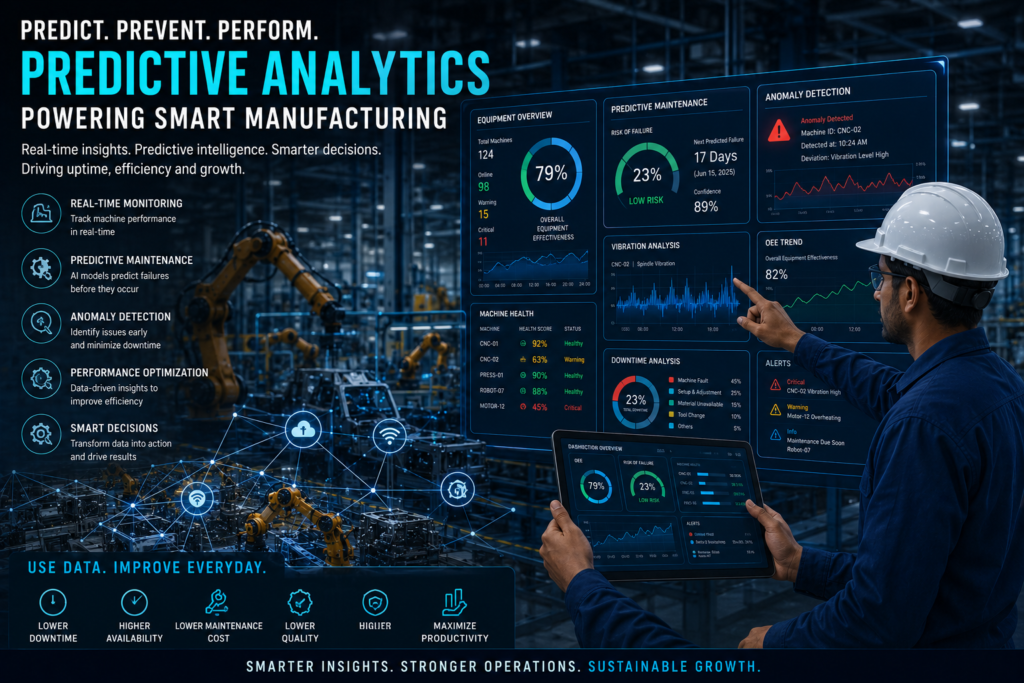
One of the biggest advantages of smart factories is predictive maintenance.
Traditionally:
Machines continued functioning until they stopped working.
This often created:
- delays
- repair expenses
- production losses
Smart systems increasingly predict:
- equipment failures
- maintenance requirements
- performance issues
Imagine receiving a message that says:
“Machine number 7 may fail in three days.”
That fundamentally changes operations.
Data Is Becoming the New Factory Fuel
For years, factories depended heavily on machinery.
Today, they increasingly depend on data.
Manufacturers can now track:
- production speed
- machine performance
- quality metrics
- inventory movement
- workforce efficiency
This creates a level of visibility that was previously impossible.
Increasingly:
Data itself becomes a strategic asset.
The Human Role Is Also Changing
There is often concern that automation eliminates jobs.
However, the reality may be more complex.
Smart factories do not necessarily eliminate human involvement.
Instead, they increasingly change human roles.
Rather than repetitive activities, workers increasingly focus on:
- monitoring systems
- decision-making
- technical operations
- process optimization
- analytics
Manufacturing jobs themselves are evolving.
Skills are becoming increasingly important.
Industries Leading India’s Smart Factory Movement
Several industries are moving aggressively toward intelligent manufacturing.
Automotive
Automobile companies increasingly use:
- robotics
- connected assembly systems
- AI-based quality checks
Electronics Manufacturing
Growing demand requires:
- precision
- speed
- lower defect rates
Pharmaceuticals
Pharma companies increasingly rely on:
- automated monitoring
- quality tracking
- connected manufacturing systems
Consumer Goods
FMCG companies increasingly optimize:
- packaging
- logistics
- inventory systems
Challenges Still Exist
While the shift is exciting, challenges remain.
Smart manufacturing often requires:
- significant investment
- skilled talent
- technology infrastructure
- cybersecurity systems
Smaller manufacturers may face challenges around:
- affordability
- implementation complexity
- workforce training
The transformation may not happen overnight.
The Bigger Opportunity for India
The smart factory movement extends far beyond manufacturing efficiency.
It could influence:
- exports
- employment
- global competitiveness
- industrial growth
- innovation ecosystems
India already possesses advantages such as:
- a large workforce
- engineering talent
- digital infrastructure
- manufacturing ambitions
Smart manufacturing could strengthen these advantages even further.
What Happens Next?
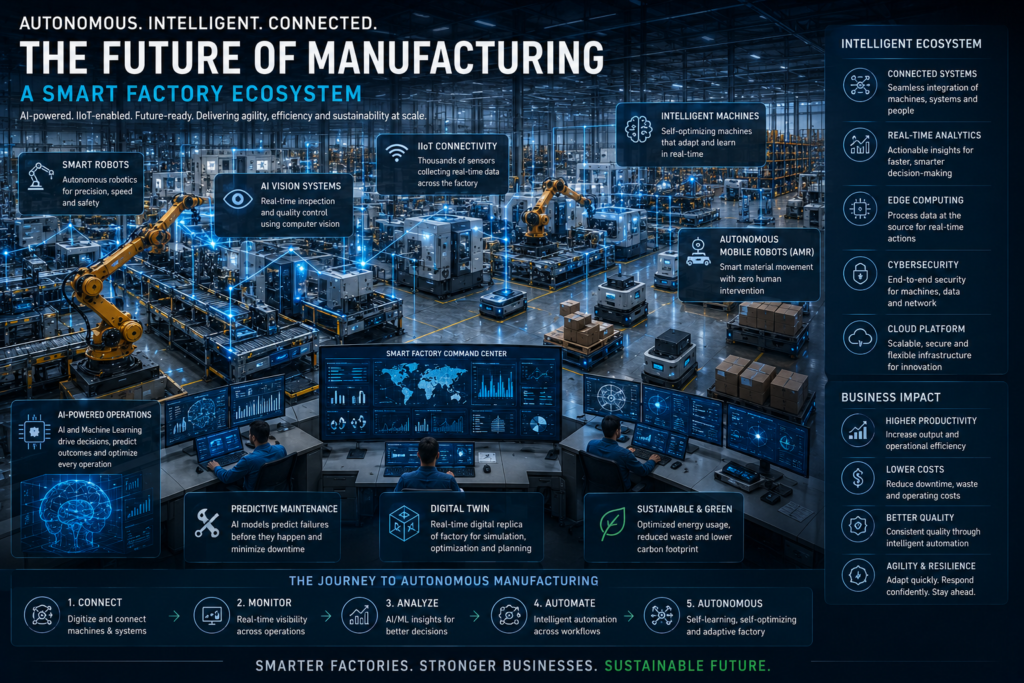
Over the next decade, expect increased adoption of:
- AI-powered factories
- robotics
- connected machines
- industrial analytics
- digital twins
- intelligent supply chains
Factories may increasingly become:
- autonomous
- adaptive
- highly connected
The future factory may not simply manufacture products.
It may continuously learn and improve itself.
The future of manufacturing may increasingly depend on how effectively businesses adapt to AI, automation and digital ecosystems.
Final Thoughts
For decades, manufacturing focused on producing more.
The next chapter may focus on producing smarter.
Because in the future, competitive advantage may not belong only to the largest factories.
Increasingly, it may belong to the smartest ones.
And as India continues its journey toward becoming a global manufacturing hub, smart factories may quietly become one of the most important engines driving that transformation.
