Farmtheory is building a digital farm-to-market platform that connects farmers directly with buyers, improving agricultural supply chains across India.
Indian spacetech startup InspeCity is developing satellite servicing technology to extend satellite lifespans and tackle the growing problem of space debris.
Artificial intelligence is transforming the future of work by automating routine tasks, creating new careers, and increasing the value of human skills such as creativity and problem-solving.
Artificial intelligence raises major ethical questions around bias, privacy, accountability, and the future of work as AI systems increasingly influence real-world decisions.
Artificial intelligence is rapidly transforming Indian businesses through automation, data-driven decision making, and improved customer experiences across industries.
Six early-stage Indian startups including GalaxEye, Boson Whitewater, CynLr, Pixxel, and Ati Motors are developing breakthrough technologies in space, robotics, climate tech, and AI.
Farmtheory is building a digital farm-to-market platform that connects farmers directly with buyers, improving agricultural supply chains across India.
Indian spacetech startup InspeCity is developing satellite servicing technology to extend satellite lifespans and tackle the growing problem of space debris.
Bengaluru startup Newtrace is developing advanced electrolyser technology to make green hydrogen cheaper and accelerate the global clean energy transition.
Farmtheory is building a digital farm-to-market platform that connects farmers directly with buyers, improving agricultural supply chains across India.
Indian spacetech startup InspeCity is developing satellite servicing technology to extend satellite lifespans and tackle the growing problem of space debris.
Artificial intelligence is transforming the future of work by automating routine tasks, creating new careers, and increasing the value of human skills such as creativity and problem-solving.
Artificial intelligence raises major ethical questions around bias, privacy, accountability, and the future of work as AI systems increasingly influence real-world decisions.
Artificial intelligence is rapidly transforming Indian businesses through automation, data-driven decision making, and improved customer experiences across industries.
Six early-stage Indian startups including GalaxEye, Boson Whitewater, CynLr, Pixxel, and Ati Motors are developing breakthrough technologies in space, robotics, climate tech, and AI.
Farmtheory is building a digital farm-to-market platform that connects farmers directly with buyers, improving agricultural supply chains across India.
Indian spacetech startup InspeCity is developing satellite servicing technology to extend satellite lifespans and tackle the growing problem of space debris.
Bengaluru startup Newtrace is developing advanced electrolyser technology to make green hydrogen cheaper and accelerate the global clean energy transition.
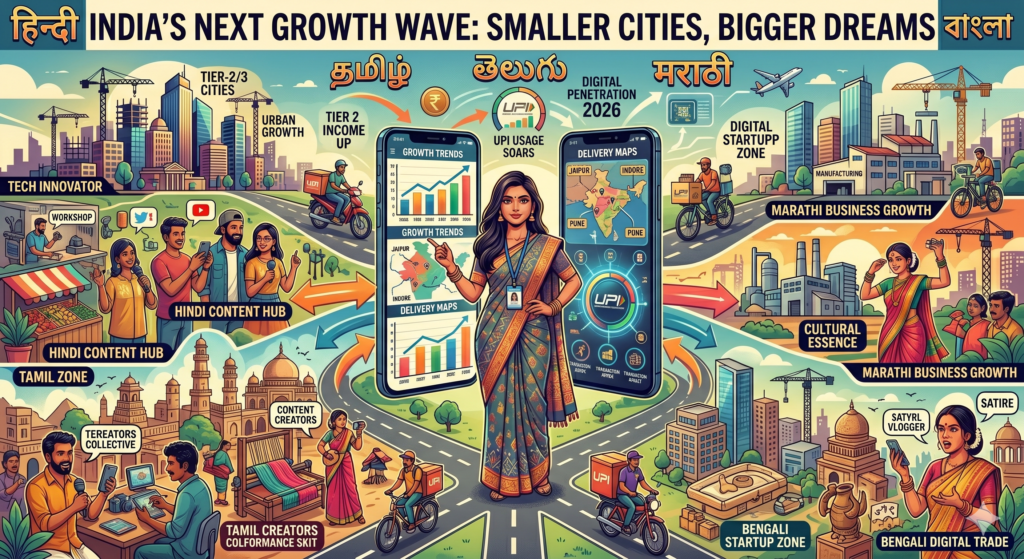
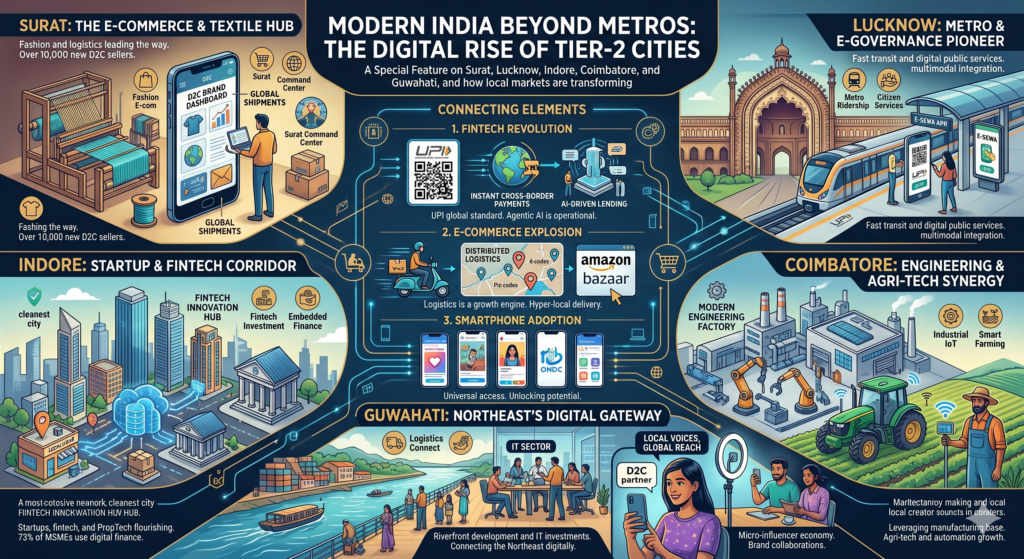
India’s smaller cities are quietly becoming powerful economic engines, reshaping spending habits, digital behavior, investing, and consumer aspirations.
Key Takeaways
Tier-2 and Tier-3 cities are becoming important drivers of India’s economic growth.
Affordable smartphones and internet access dramatically changed consumption behavior.
Creator culture and vernacular content are reshaping product discovery.
Businesses increasingly need localized and Bharat-first strategies.
Video Breakdown
Audio Brief
For years, India’s economic growth story was largely viewed through the lens of a few well-known cities.
Mumbai represented finance
Bengaluru symbolized technology
Delhi represented power
Hyderabad became associated with innovation
Brands initially launched products in metropolitan markets. Startups developed products and services primarily for urban consumers, while marketing campaigns focused heavily on English-speaking audiences living in large cities.
If India were a story, metros would have been considered the main characters.
However, beyond the skyscrapers and away from the headlines, another India was quietly evolving.
An India that is becoming:
increasingly connected
increasingly aspirational
increasingly digital
increasingly influential
Welcome to the rise of:
The Bharat Consumer
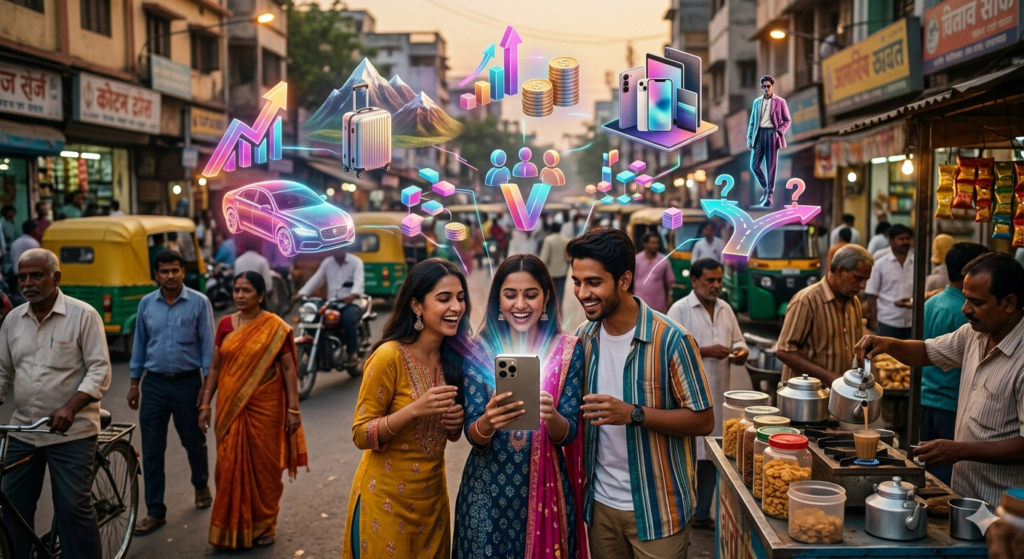
A consumer living outside the traditional metro bubble, yet rapidly transforming the way India:
buys
spends
watches
invests
travels
consumes products and services
This shift is not simply about geography.
It represents a redistribution of economic influence.
And over the next decade, this consumer may become one of the most powerful forces shaping India’s economy.
The rise of digital transactions across India has been enabled by innovations built on UPI and NPCI infrastructure.
The Earlier Assumption: India Meant Metros
For decades, businesses treated India as a metro-led market.
The formula looked simple:
Launch in metropolitan cities
Test market response
Gradually scale outward
The assumption was:
Large cities create trends, and smaller markets eventually follow.
That logic worked for years.
But India itself changed.
Why Bharat Is No Longer Waiting
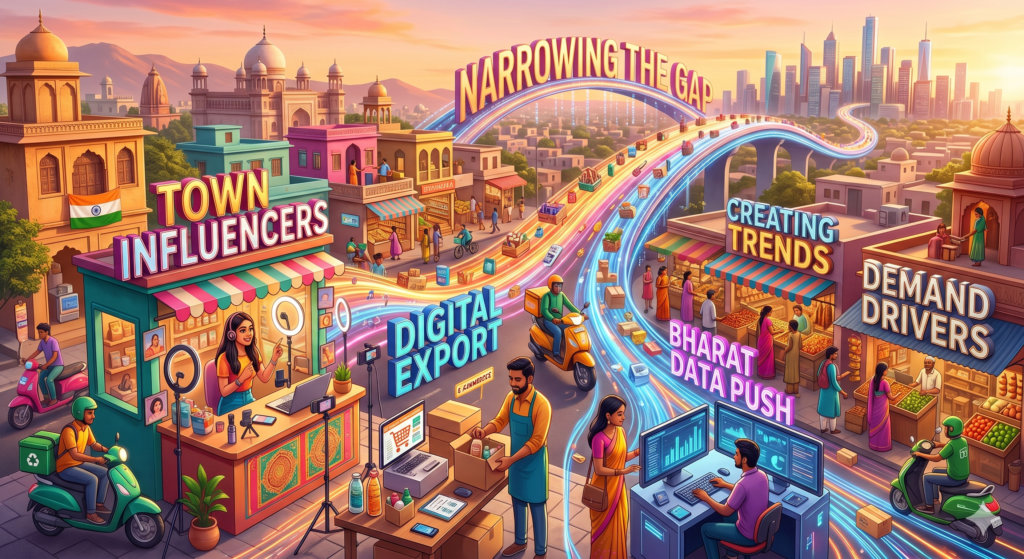
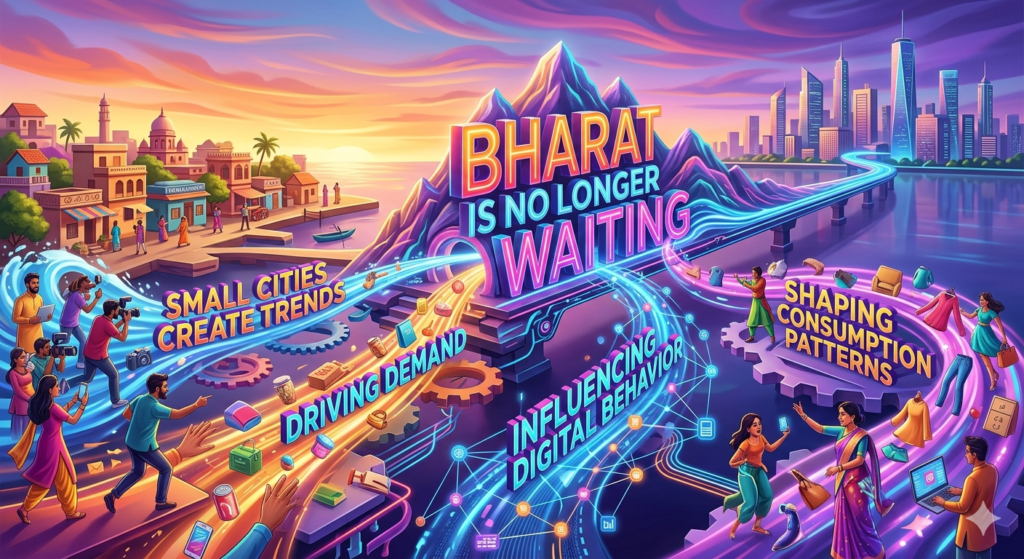
Smaller cities are no longer waiting for trends to arrive.
Today, they are:
creating trends
driving demand
influencing digital behavior
shaping consumption patterns
The gap between urban India and Bharat is narrowing faster than many expected.
The Bharat consumer refers to consumers outside traditional metro markets who are increasingly influencing India’s economy, consumption, and digital behavior.
Smartphones, internet penetration, creator ecosystems, and rising aspirations have increased spending power and digital participation.
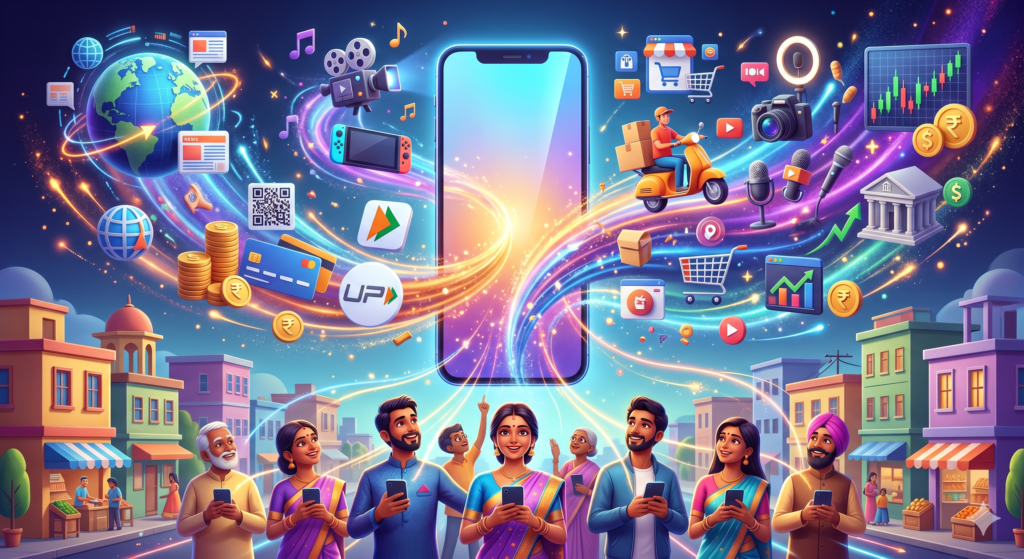
Smartphones reduced information barriers and gave millions of people access to ecommerce, investing, entertainment, and digital services.
The Bharat Samachar Editorial Team delivers sharp, fact-driven analysis on India’s business, startups, policy, and technology landscape—continuing a legacy of information-first journalism.
The ideas, deals and turning points shaping India’s startup, technology and corporate landscape. Bharat Samachar brings you sharp insights, deep dives and signals that matter to founders, operators and investors.