
For more than twenty years, the internet operated in a manner that was consistent and predictable.
- You posed a query.
- You opened Google.
- You entered a search query.
- You clicked on a website.
That was the internet.
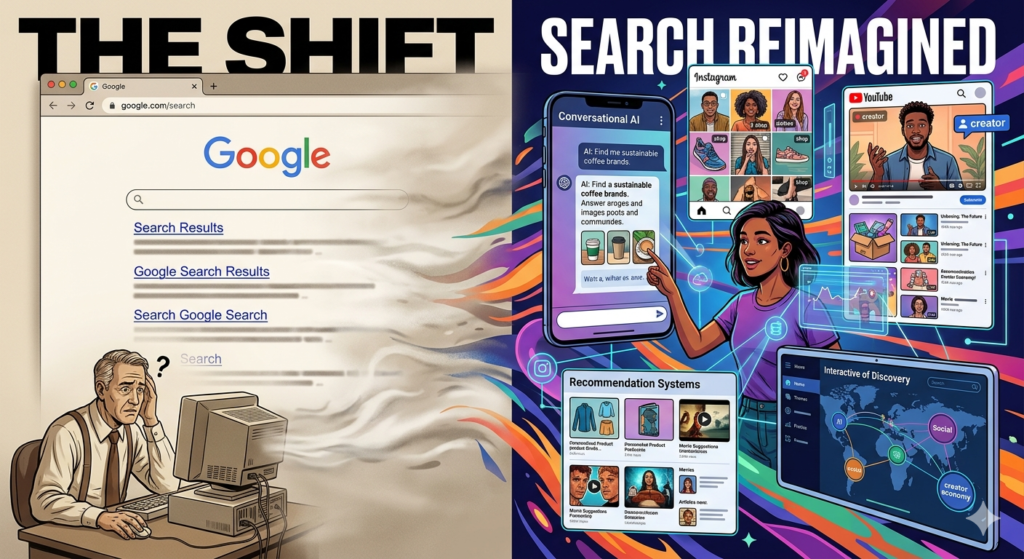
However, an interesting phenomenon is currently taking place, particularly among younger users in India.
It is becoming increasingly common for individuals to find information without “searching” in the conventional way.
Instead of Google, they are turning to:
- YouTube
- Artificial intelligence assistants
- Recommendation feeds
- Short-form video platforms
- Creators and influencers
This has resulted in the rise of what many people are referring to as:
The Searchless Internet
A world in which algorithms, creators, and artificial intelligence increasingly decide what people encounter on the internet — often before users even search for it.
This shift has the potential to significantly reshape:
- online businesses
- search engine optimisation (SEO)
- digital marketing
- customer behaviour
particularly in India, one of the fastest-growing internet economies in the world.
India has become one of the world’s fastest-growing digital economies due to affordable smartphones and internet access, according to the Internet and Mobile Association of India (IAMAI).
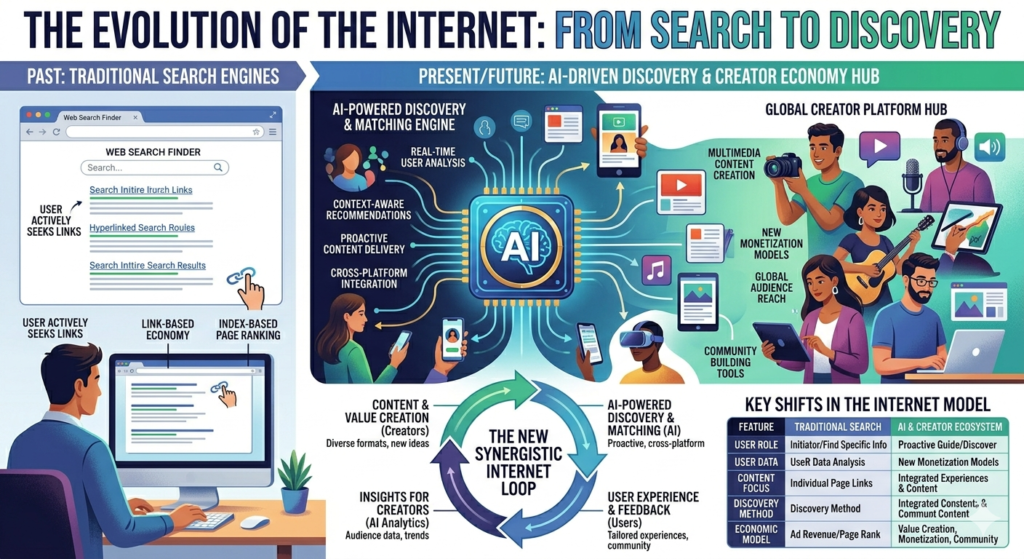
What Is the “Searchless Internet”?
The searchless internet refers to a growing trend in which people discover information through:
- recommendation feeds
- artificial intelligence-generated responses
- social content creators
- short-form content
- algorithms and curated suggestions
instead of conventional search engines.
To put it simply:
👉 Discovery is replacing search.
In the past, users actively searched for information.
Today:
👉 Information increasingly finds users.
This represents a major behavioural shift.
Why Are Indians Moving Beyond Traditional Search?
The evolution of the internet in India differs significantly from several Western markets.
And that difference matters.
1. India Became a Mobile-First Nation
For the most part, India skipped the desktop era.
Millions of users experienced the internet for the first time through smartphones.
That dramatically changed user behaviour.
Mobile users generally prefer:
- quick content
- visual information
- short videos
- voice-driven interactions
instead of typing lengthy search queries.
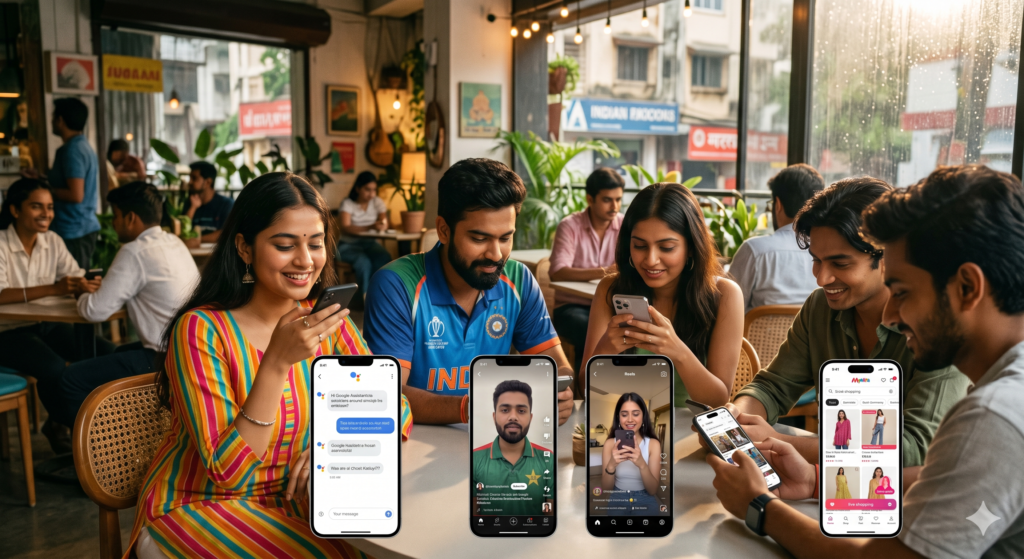
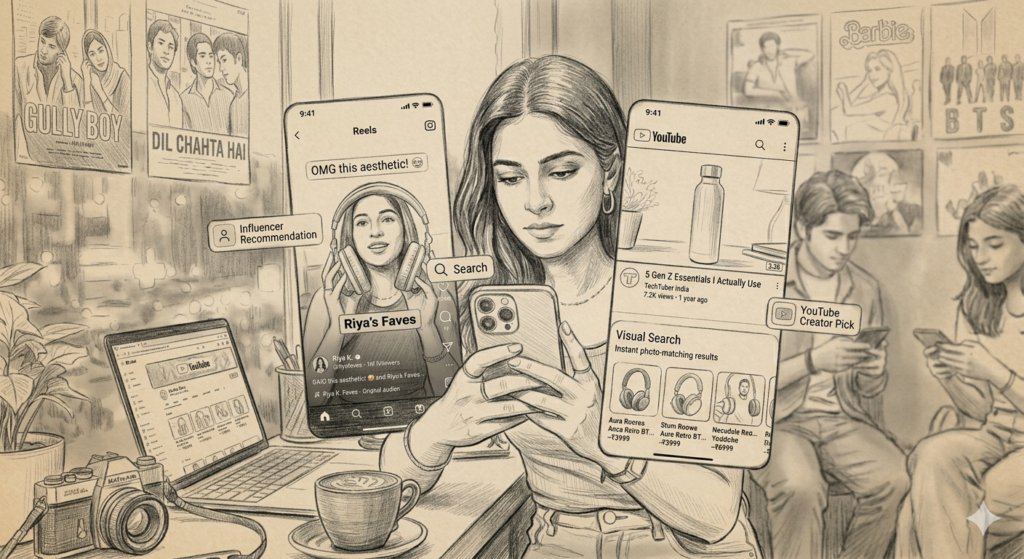
2. Video Has Become the New Search Engine
Today, many Indians search for:
- recipes
- tutorials
- reviews
- travel information
- product recommendations
directly on platforms such as YouTube and Instagram.
Why?
Because:
👉 Watching often feels easier and more engaging than reading.
For example, someone searching for:
“The best coffee shops in Delhi”
may now prefer:
- Instagram reels
- creator-led videos
- YouTube vlogs
instead of traditional blog articles.
Video consumption continues to grow rapidly across India through platforms such as YouTube, particularly among younger mobile-first audiences.
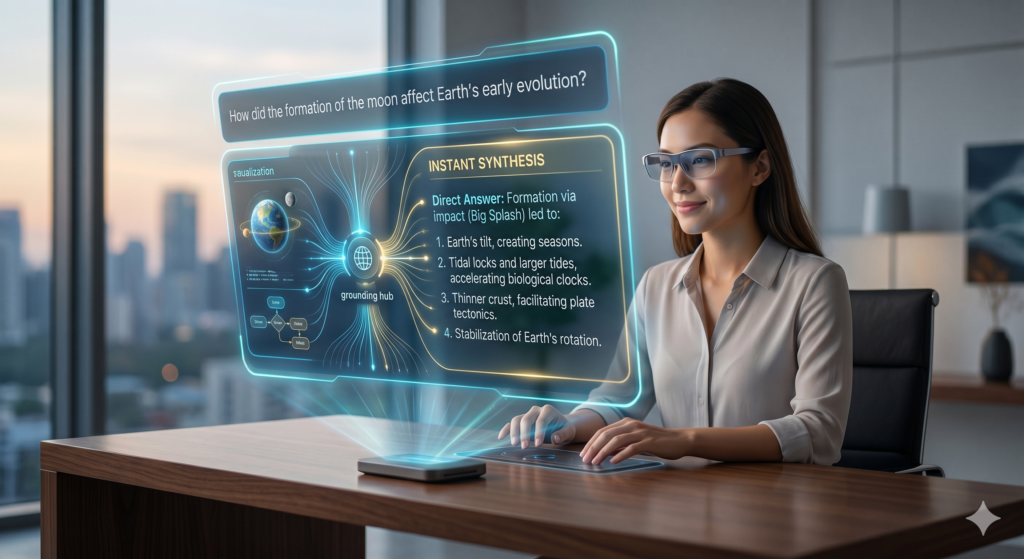
3. Artificial Intelligence Is Reducing the Need to Click on Websites
Increasingly, AI tools provide:
- summarised responses
- recommendations
- explanations
- comparisons
without requiring users to visit multiple websites.
This is dramatically changing online behaviour.
Instead of:
- searching
- comparing links
- opening multiple webpages
a growing number of users are directly asking AI.
👉 Search is becoming conversation.
The rapid rise of AI-powered discovery aligns closely with broader shifts explored in the future impact of AI on work and digital ecosystems.
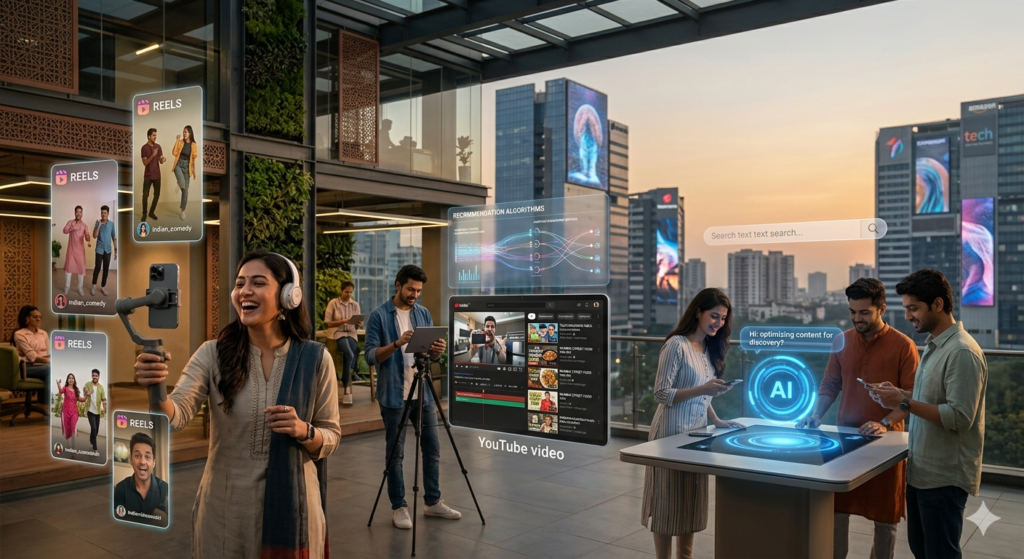
4. Algorithms Have Become Discovery Engines
Modern platforms no longer wait for users to search.
Algorithms now proactively recommend content.
This creates an entirely different internet experience.
An increasing number of users now discover:
- businesses
- products
- ideas
- news
- creators
through recommendation systems rather than search bars.
Why This Shift Is Especially Strong in India
India’s digital environment is accelerating this trend.
Smartphone-Driven Internet Adoption
Mobile devices are the primary way most Indians access the internet.
Naturally, this favours:
- apps
- videos
- feeds
- visual discovery
over traditional web browsing.
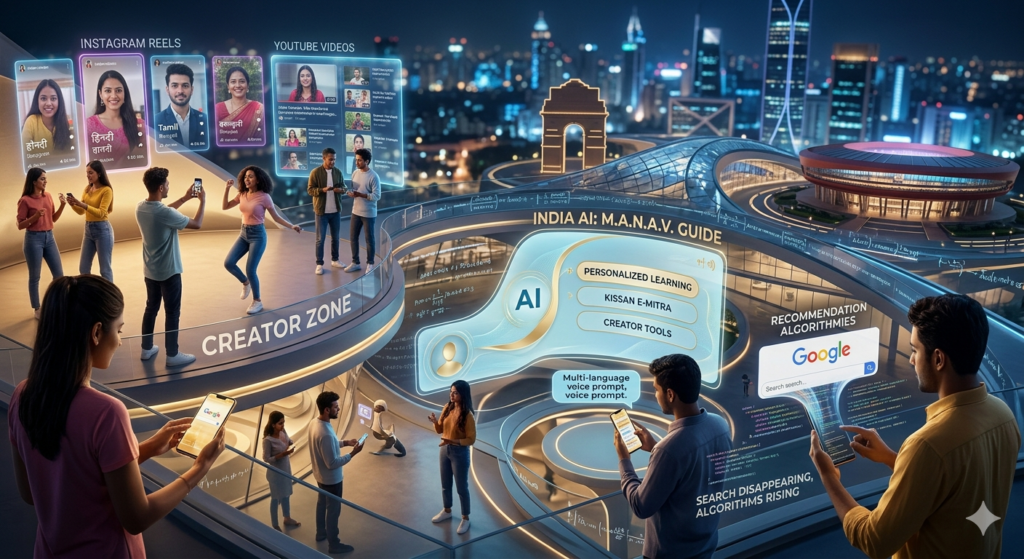
The Rise of Vernacular Content
Millions of Indians consume content in:
- Hindi
- Tamil
- Bengali
- Marathi
- Telugu
- other regional languages
Creators and short-form platforms adapted far faster than traditional websites.
👉 The creator economy became more relatable than conventional search results.
The rise of social discovery also reflects the broader shift toward India-first digital consumption and creator-led ecosystems.
Cheap Data Changed Consumption
Affordable mobile internet transformed India into one of the world’s largest consumers of digital content.
This accelerated:
- video consumption
- creator-led discovery
- social commerce
- AI-driven engagement
India’s internet transformation has also been accelerated by the rapid expansion of digital infrastructure and connectivity ecosystems.
What This Means for Google
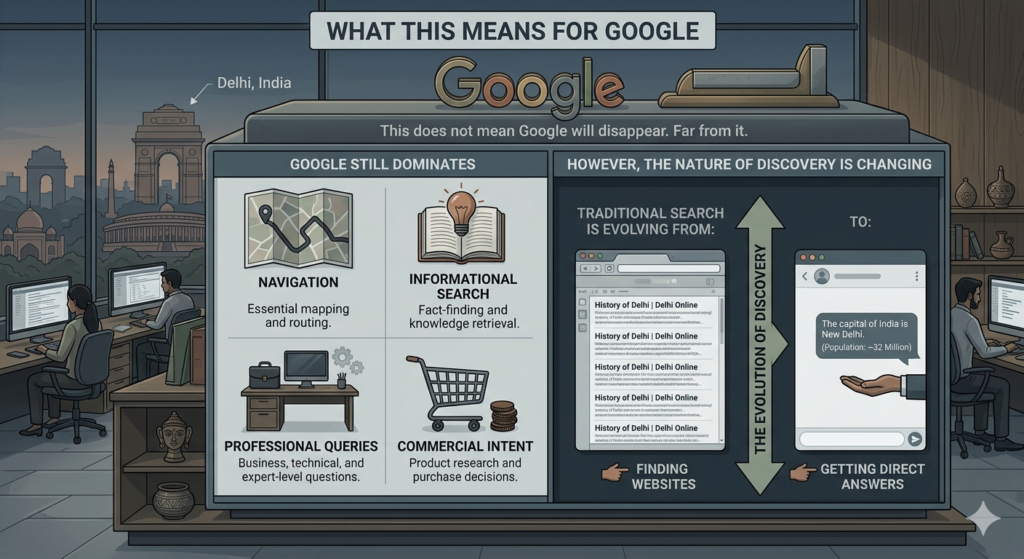
This does not mean Google will disappear.
Far from it.
Google still dominates:
- navigation
- informational search
- professional queries
- commercial intent
However, the nature of discovery is changing.
Traditional search is evolving from:
👉 Finding websites
to:
👉 Getting direct answers
That distinction is extremely important.
The Growing Popularity of Social Search
A growing number of users — especially Gen Z — now use:
- TikTok-like platforms
- YouTube
as search engines.
Examples include:
- fashion inspiration
- restaurant discovery
- travel recommendations
- skincare advice
- technology reviews
Why Social Search Works
Because it feels:
- visual
- direct
- human
- immediate
An increasing number of users trust:
👉 creators over websites.
Social platforms like Instagram are increasingly functioning as discovery engines for products, businesses, creators, and recommendations.
The Psychological Shift Behind This Trend
The searchless internet is not just technological.
It is behavioural.
Modern internet users increasingly want:
- convenience
- speed
- curation
- recommendations
- visual content
Typing long queries and opening multiple webpages increasingly feels inefficient.
The modern user mindset is:
“Just show me what matters.”
Algorithms and artificial intelligence are optimised precisely for that.
What Happens to Traditional Websites?
This is where things become uncomfortable for publishers and businesses.
If users increasingly consume:
- AI-generated summaries
- creator recommendations
- social feeds
then what happens to websites that depend heavily on:
- search traffic
- SEO
- clicks
The Challenge
Traditional SEO models may weaken over time.
Traffic patterns are already changing.
Businesses Now Need Multi-Platform Visibility
Earlier:
👉 Ranking on Google was enough.
Today, businesses increasingly require visibility across:
- YouTube
- AI search systems
- creator ecosystems
👉 Distribution is becoming decentralised.
AI Could Accelerate This Shift Dramatically
AI may push the searchless internet even further.
Imagine users asking AI:
- “What are the best investment apps for beginners?”
- “Which are the best cafés nearby?”
- “Summarise today’s economic news.”
and receiving instant answers.
No website clicks required.
The rapid evolution of conversational AI systems is fundamentally reshaping how users access information online, as demonstrated by advancements in generative AI technologies.
The changing internet landscape may also accelerate the rise of AI-powered solo businesses and creator-led companies.
This creates a significant shift in:
- SEO
- advertising
- content strategy
- digital discovery
The Rise of Recommendation Economies
The internet is increasingly becoming recommendation-driven.
Platforms now influence:
- what users watch
- what users buy
- what users believe
- what users discover
Algorithms are quietly shaping attention in the background.
The Risks of the Searchless Internet
This transition also creates challenges.
1. Reduced Diversity of Information
If algorithms dominate discovery:
👉 Users may receive narrower perspectives.
2. Platform Dependency
Businesses increasingly depend on:
- social algorithms
- creator ecosystems
- platform policies
3. Misinformation Risks
Short-form and AI-generated content can sometimes prioritise:
- speed
- virality
- engagement
over accuracy.
4. Decline of Independent Web Discovery
Users may increasingly consume information without exploring the broader web.
Research by the World Economic Forum suggests AI and automation are expected to significantly reshape digital behavior and information ecosystems.

The Contrarian View: Search Is Not Dying — It Is Evolving
Despite all this, traditional search is unlikely to disappear completely.
Instead:
👉 Search itself is changing form.
The future internet may combine:
- AI-generated answers
- social discovery
- creator ecosystems
- traditional search infrastructure
What Happens Next?
Over the next decade, expect rapid growth in:
- AI-powered search assistants
- creator-led discovery
- conversational search
- personalised recommendation systems
- voice-driven internet usage
Businesses Will Need to Adapt
To succeed online, businesses may increasingly require:
- creator collaborations
- content ecosystems
- visibility across multiple platforms
- AI discoverability
Conclusion
The internet is currently undergoing one of its biggest behavioural transformations since the rise of search engines.
For years, users searched for information.
Today, increasingly:
👉 Information finds users.
And in India — where:
- mobile usage dominates
- creator culture is booming
- AI adoption is accelerating
this shift could happen far faster than many expect.
The future of the internet may no longer revolve around:
👉 Search bars
but around:
👉 Algorithms, creators, conversations, and AI-driven discovery.
Businesses that understand this shift early may gain a significant advantage in the digital economy of the future.
The future of digital visibility may increasingly depend on how effectively businesses adapt to AI-driven discovery and decentralized internet ecosystems.
