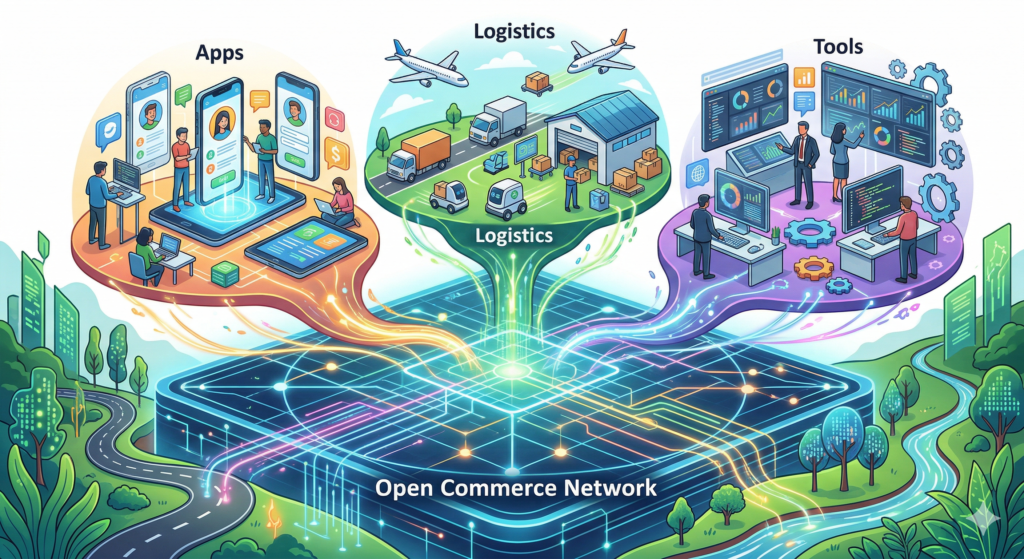
India’s e-commerce story is entering a new phase—one that could redefine how buyers and sellers interact online. However, this shift is not just about new players—it’s about a completely new way of thinking about digital commerce.
This shift reflects broader trends shaping the digital economy of India, where open ecosystems are gaining momentum.
For years, platforms like Amazon India and Flipkart have dominated the market. They built scale, trust, and convenience, shaping how millions of Indians shop online. At the same time, this model also led to increasing centralization and platform dependency.
However, a new player is changing the rules of the game: the Open Network for Digital Commerce (ONDC).
Unlike traditional platforms, ONDC is not just another marketplace—it’s an open network. And that shift has far-reaching implications for businesses, startups, and consumers alike.
To understand the framework behind ONDC, founders can explore the Open Network for Digital Commerce (ONDC), an initiative backed by the Government of India. As policy vision highlights, “ONDC aims to democratize digital commerce by creating an open and inclusive network.”
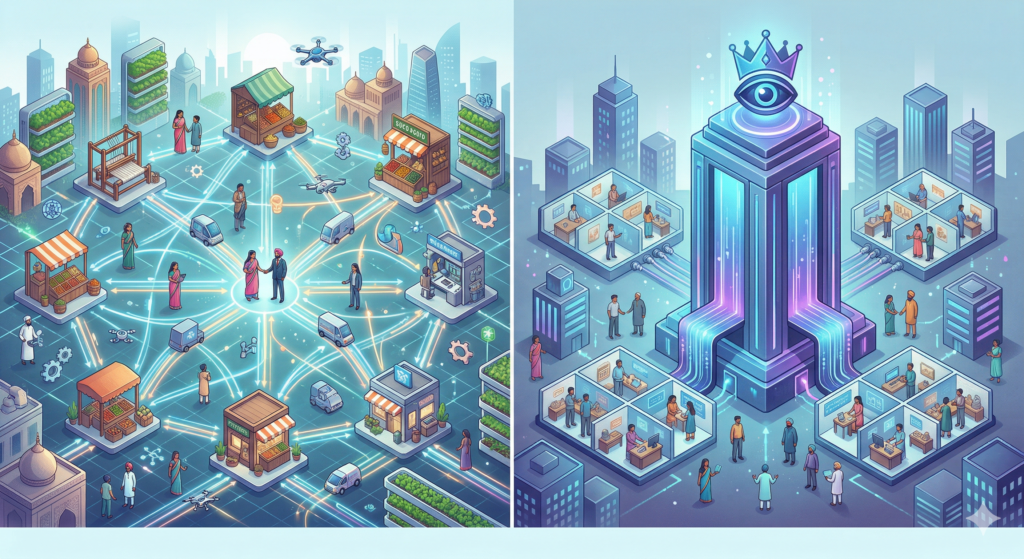
Understanding the Two Models
To understand this shift clearly, it’s important to examine how these two models differ.
This evolution aligns with patterns seen in India’s fintech boom, where open networks like UPI transformed industries.
Traditional E-commerce: Platform-Centric
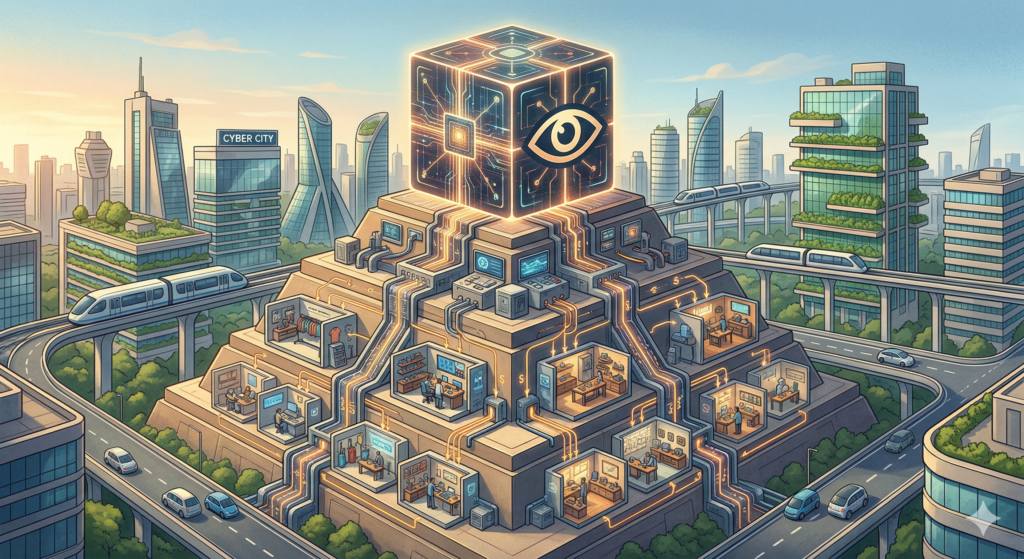
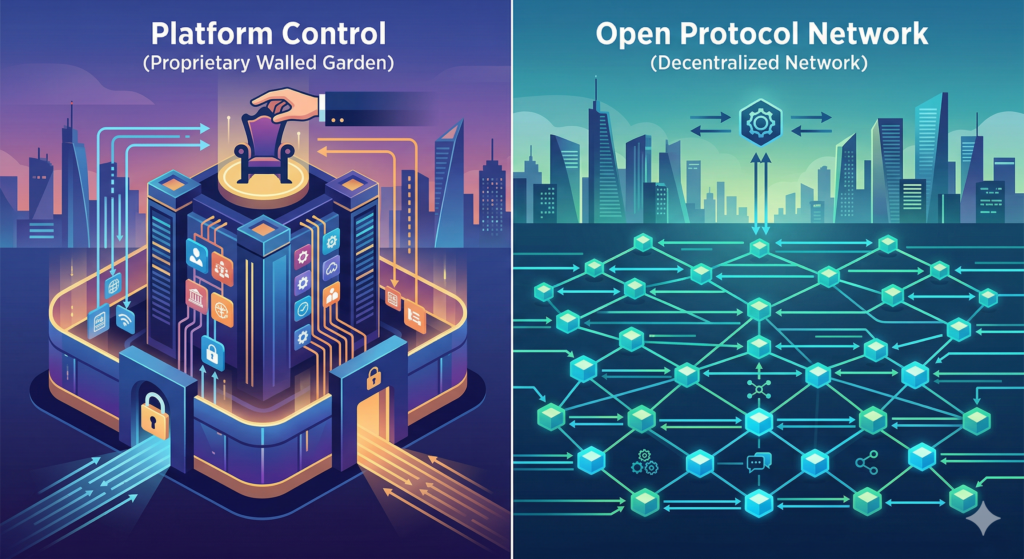
Traditional e-commerce platforms operate as closed ecosystems.
They:
- Control the marketplace as a result, sellers become highly dependent on the platform for visibility and growth.
- Own customer relationships
- Manage logistics, payments, and visibility
Sellers depend heavily on the platform for:
- Discovery
- Sales
- Customer access
While this model has delivered scale and convenience, it has also created centralized control.
ONDC: Network-Centric Commerce
ONDC flips this model. Instead, it introduces a decentralized approach to commerce.
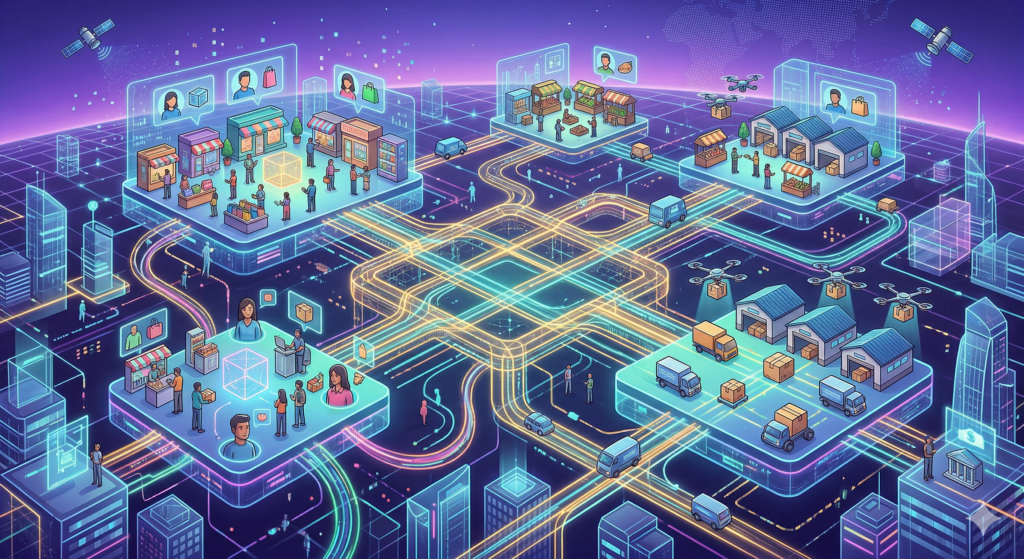
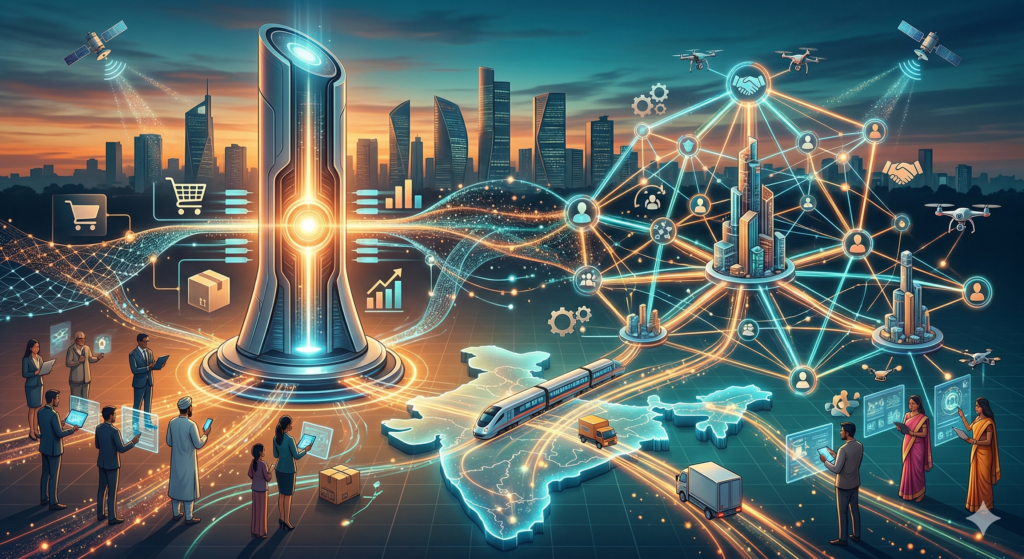
Instead of a single platform controlling everything, ONDC creates a network of interconnected buyers, sellers, and service providers.
In this model:
Firstly, buyers and sellers can transact across platforms.
In addition, discovery becomes decentralized rather than controlled by a single entity.
As a result, businesses retain greater control over their operations and customer relationships.
Think of it as the difference between a single mall and an entire city of connected stores.
The Core Shift: From Platforms to Protocols
The biggest change ONDC introduces is structural. More importantly, this is not just an operational shift—it is a fundamental change in how commerce is designed.
Traditional e-commerce is built on platforms.
ONDC is built on protocols.
This means:
- No single entity controls the ecosystem
- Multiple apps can act as buyer interfaces
- Sellers can be discovered across the network
This shift is similar to how:
- Email works across providers
- UPI transformed digital payments
And that’s why ONDC is often compared to India’s digital public infrastructure success stories.
This transformation is supported by the Digital India initiative, which focuses on building scalable digital infrastructure. As emphasized, “technology is a key enabler of inclusive economic growth.”
What’s Changing for Sellers?
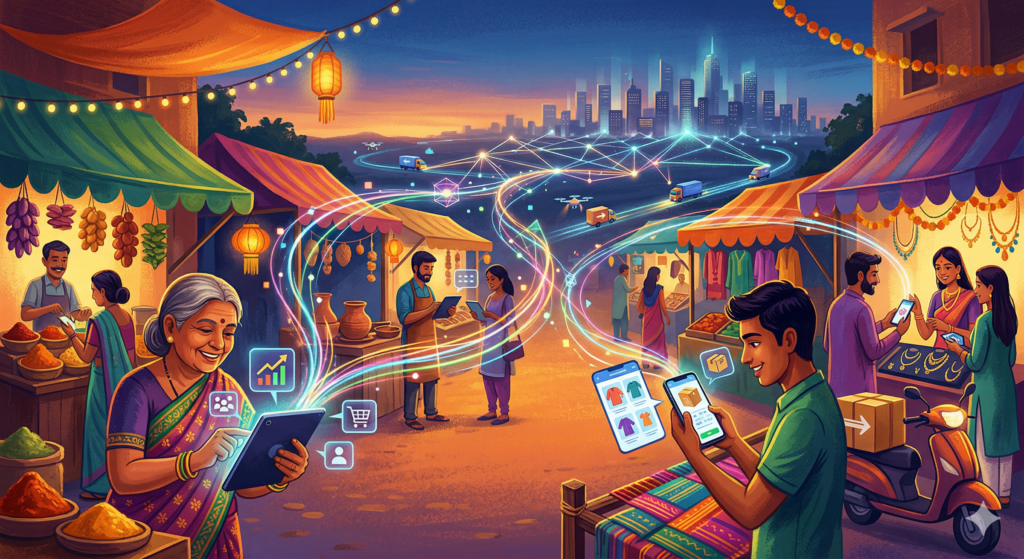
For businesses—especially small and medium enterprises—this shift is significant. For instance, small businesses now have more control over pricing and customer relationships.
Greater Independence
On traditional platforms, sellers often face:
- High commissions
- Limited visibility without paid promotions
- Dependence on platform algorithms
ONDC changes this dynamic.
Sellers can:
- Access multiple buyer apps
- Reduce platform dependency
- Retain greater control over pricing and branding
Expanded Reach
Instead of being locked into a single platform, sellers on ONDC can be discovered across:
- Multiple apps
- Different customer segments
- Various geographies
This opens up new distribution opportunities, particularly for smaller businesses.
Lower Entry Barriers
ONDC is designed to be more inclusive.
It enables:
- Small retailers
- Local businesses
- Kirana stores
to participate in digital commerce without needing deep technical expertise.
This shift also connects with themes explored in the future of Indian startups.
Institutions like NITI Aayog highlight that “open digital ecosystems can drive innovation, competition, and accessibility.”
What’s Changing for Consumers?
While sellers gain flexibility, consumers benefit from increased choice and transparency. On the other hand, consumers benefit from increased choice and transparency.
More Options, Better Discovery
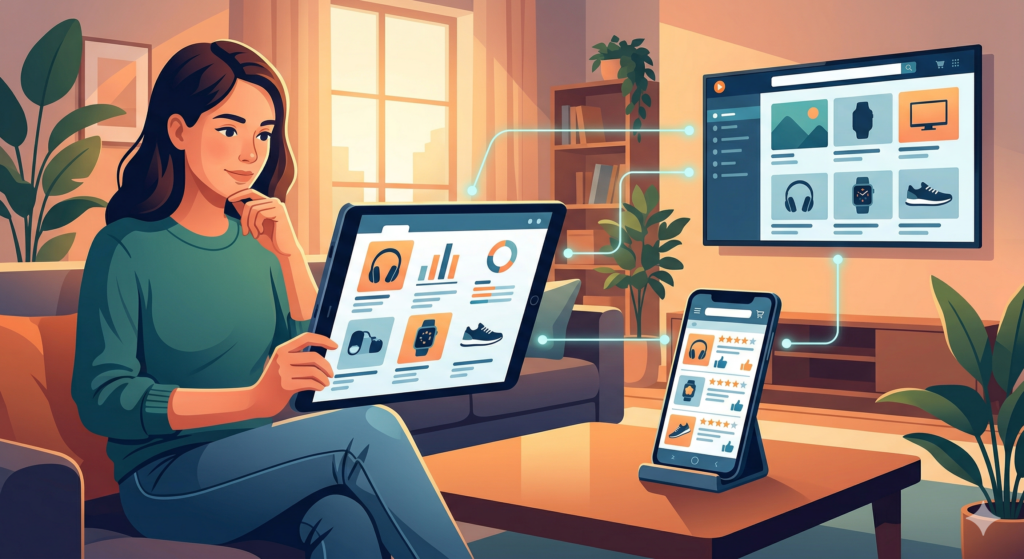
Consumers are no longer limited to a single platform’s inventory.
They can:
For example, discover products across multiple sellers instead of being limited to one platform.
Additionally, compare prices more effectively across the network.
Ultimately, access a much wider range of offerings.
Potential for Better Pricing
With increased competition and reduced platform control:
- Prices may become more competitive
- Discounts may be driven by sellers rather than platforms
Unified Experience (In the Long Run)
As ONDC evolves, consumers may experience:
- Seamless shopping across apps
- Interoperable services
- Greater convenience
The Impact on Traditional E-commerce Giants
The rise of ONDC does not mean the end of traditional platforms—but it does signal increased competition.
Companies like Amazon India and Flipkart still have strong advantages:
- Established logistics networks
- Brand trust
- Customer loyalty
However, ONDC introduces pressure in key areas:
- Pricing transparency
- Seller retention
- Commission structures
Over time, this could lead to:
- More competitive pricing models
- Improved seller policies
- Faster innovation
Opportunities for Startups
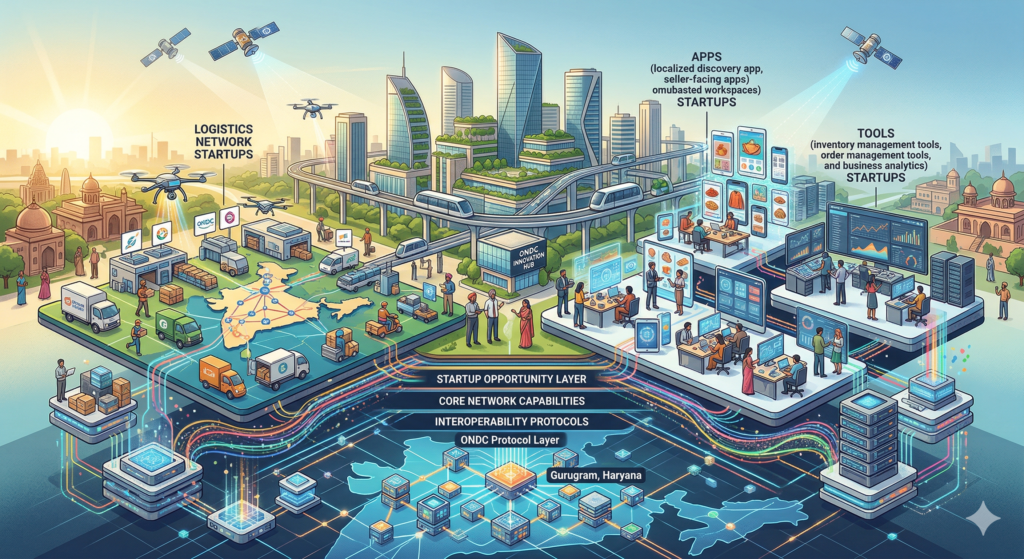
ONDC is not just a disruption—it is an opportunity layer. In fact, it creates an entirely new layer of opportunity for startups.
Startups can build on top of ONDC by creating:
- Buyer apps
- Seller tools
- Logistics solutions
- Payment integrations
This opens up a new category of businesses focused on enabling commerce rather than owning it.
For example:
- A startup could build a niche discovery app for fashion
- Another could offer logistics optimization for ONDC sellers
The possibilities are vast because the network is open by design.
Startups building in this space can benefit from frameworks discussed in go-to-market strategies.
The rise of ONDC aligns with efforts by Startup India, which promotes innovation-led entrepreneurship. Policy insights suggest that “open networks create new opportunities for startups.”
Challenges ONDC Must Overcome
However, despite its potential, ONDC still faces several challenges. While the vision is compelling, execution remains key.
User Experience
Traditional platforms offer:
- Seamless interfaces
- Fast delivery
- Reliable service
ONDC must match—or exceed—these standards to drive adoption.
Standardization
With multiple participants in the ecosystem:
- Maintaining consistent quality
- Ensuring smooth interoperability
becomes critical.
Trust and Awareness
Consumers are familiar with established platforms.
ONDC needs to:
Firstly, build trust among users.
Moreover, increase awareness across both consumers and sellers.
At the same time, educate users about how the network works.
ONDC vs Traditional E-commerce: Key Differences
While both models aim to enable digital commerce, their approach is fundamentally different.
- Traditional platforms are centralized; ONDC is decentralized
- Platforms control the ecosystem; ONDC enables it
- Sellers depend on platforms; ONDC empowers them
- Discovery is controlled; ONDC makes it open
This shift is not just operational—it is philosophical.
The Bigger Picture: Democratizing Digital Commerce
More broadly, ONDC represents a shift toward democratizing digital commerce.
It is about:
- Reducing monopolistic control
- Empowering small businesses
- Creating a level playing field
In many ways, it mirrors what UPI did for payments—
turning a fragmented system into an open, scalable network.
What Lies Ahead
The future of e-commerce in India is unlikely to be a winner-takes-all scenario.
Instead, we may see a hybrid ecosystem where:
- Traditional platforms continue to dominate in scale
- ONDC grows as an open alternative
Over time, the lines may blur.
Platforms may adopt open principles.
ONDC participants may build stronger user experiences.
Conclusion
Ultimately, the emergence of the Open Network for Digital Commerce (ONDC) marks a turning point in India’s digital commerce journey.
and aligns with policy-driven initiatives like Startup India.
It shifts the focus from platforms to participation, from control to collaboration.
Sellers gain greater independence, consumers benefit from increased choice, and startups unlock new opportunities.
Traditional e-commerce is not going away—but it is being challenged to evolve.
And in that evolution lies the future of commerce in India—
one that is more open, more inclusive, and far more dynamic.
“Open digital networks have the potential to reshape industries by reducing barriers and enabling broader participation.” — Policy-aligned perspective