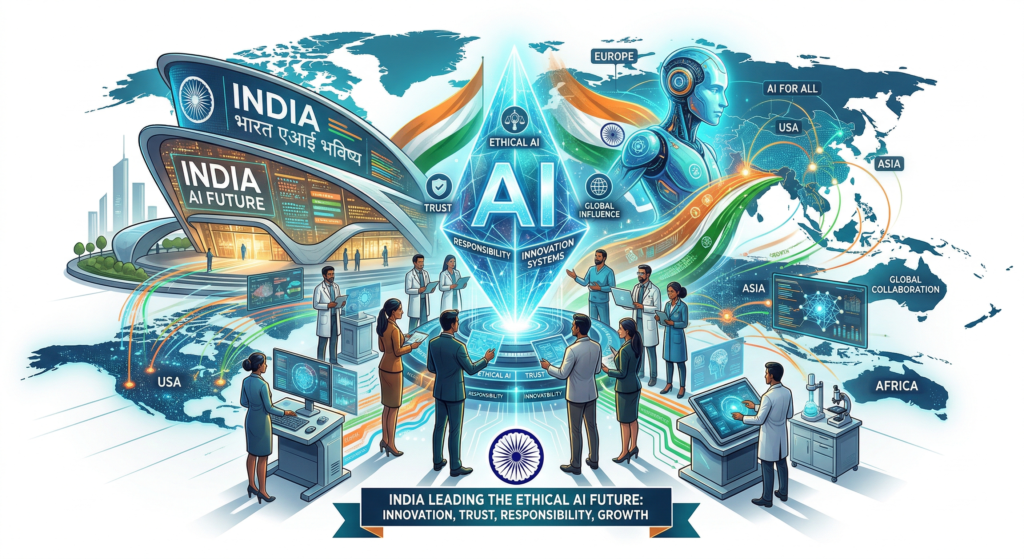
A Massive Technology Workforce
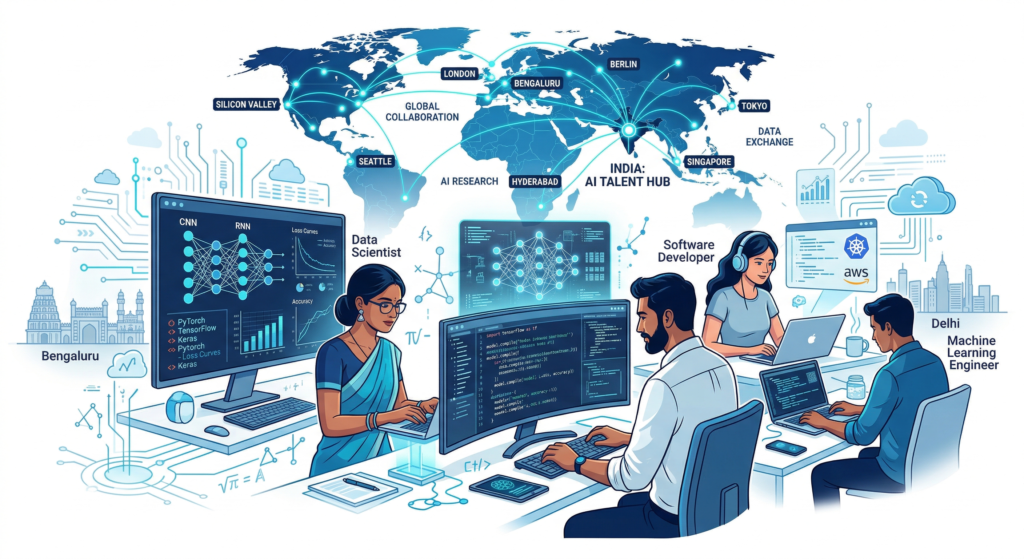
One of India’s biggest strengths in the AI race is its sheer scale of technical talent.
India produces hundreds of thousands of engineering graduates every year, many of whom specialise in computer science, data science, and related fields.
This rise also reflects broader shifts in the digital economy of India, where technology and talent are converging to drive global competitiveness.
Several factors contribute to this growing talent pool:
- a large number of engineering institutions across the country
- strong mathematics and analytical training
- widespread exposure to programming and software development
- a rapidly expanding startup ecosystem
According to industry estimates, India already has one of the largest populations of AI-skilled professionals in the world, and that number continues to grow as universities and training programs expand their focus on artificial intelligence.
This creates a powerful flywheel effect—more talent leads to more startups, which leads to more innovation, further strengthening India’s position as a global AI talent capital.
However, India’s rise as a global AI talent hub is not just about scale—it is increasingly about depth and specialization. Over the past few years, engineers and data scientists have begun focusing on niche areas such as generative AI, MLOps, computer vision, and large language models. This shift is critical because the next phase of AI innovation will be driven by specialists who can build and deploy complex systems at scale.
The Startup Ecosystem Driving AI Innovation
India’s startup ecosystem is another powerful driver of AI talent development.
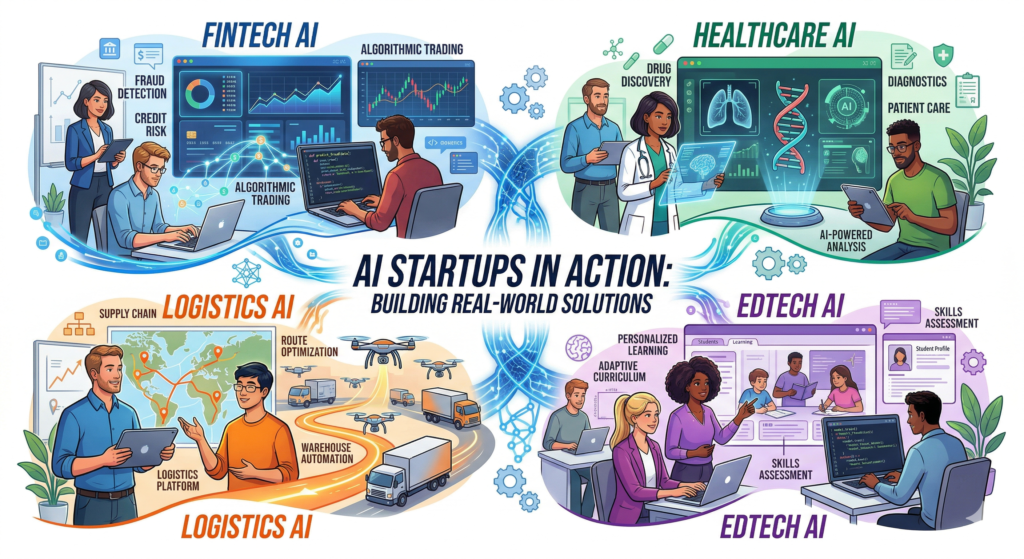
Young companies across sectors—from fintech to healthcare—are integrating artificial intelligence into their products and services. These startups provide a fertile environment where engineers and researchers can experiment, build, and scale AI systems.
Examples of AI-driven innovation in India include:
- fintech platforms using machine learning to detect fraud
- health-tech startups analysing medical scans using AI
- logistics companies optimizing delivery routes with predictive algorithms
- ed-tech platforms personalizing learning through AI-driven insights
As a result, India’s AI talent is gaining significant hands-on experience in solving real-world problems across industries. From fintech to healthcare and logistics, professionals are working on practical applications rather than just theoretical models. This exposure is accelerating both learning and innovation, making Indian talent increasingly valuable in the global AI ecosystem.
As Vijay Shekhar Sharma once noted:
“India’s startup ecosystem has the ability to adopt and adapt new technologies faster than many traditional industries.”
This environment is creating a generation of engineers who are not just writing code but building intelligent systems.
At the same time, India’s startup ecosystem is playing a pivotal role in accelerating AI adoption. Startups are building scalable solutions across sectors, aligning with trends seen in India’s fintech boom, where technology-led innovation is transforming industries. In addition, founders are leveraging AI to build capital-efficient businesses, as highlighted in go-to-market strategies for startups that prioritize automation and efficiency.
Indian Engineers Powering Global AI
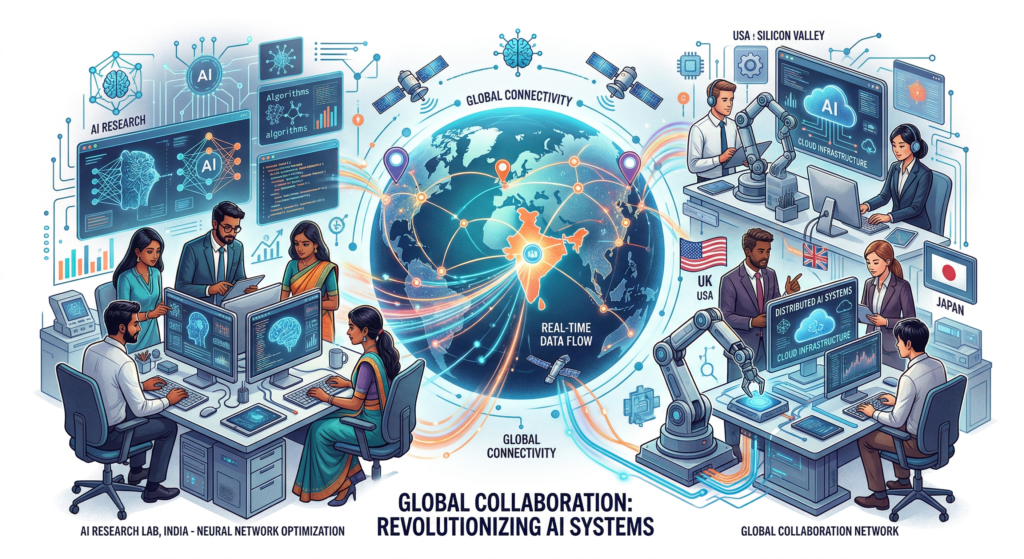
Another factor strengthening India’s position in the AI landscape is the growing presence of Indian professionals in global technology companies.
Across Silicon Valley and other global tech hubs, Indian engineers and researchers are leading teams developing cutting-edge AI systems.
Many of the world’s most influential technology companies employ large numbers of Indian AI specialists working on:
- machine learning models
- natural language processing systems
- computer vision technologies
- recommendation algorithms
This global exposure is important because it allows Indian engineers to participate directly in the development of advanced technologies and bring that expertise back into India’s innovation ecosystem.
More importantly, India’s momentum is supported by strong policy and digital infrastructure. Initiatives like Digital India and guidance from NITI Aayog emphasize the role of AI in driving economic growth and global competitiveness. This creates a powerful flywheel effect—more talent leads to more startups, which drives innovation and further strengthens India’s position as a global AI talent capital.
The Rise of AI Education
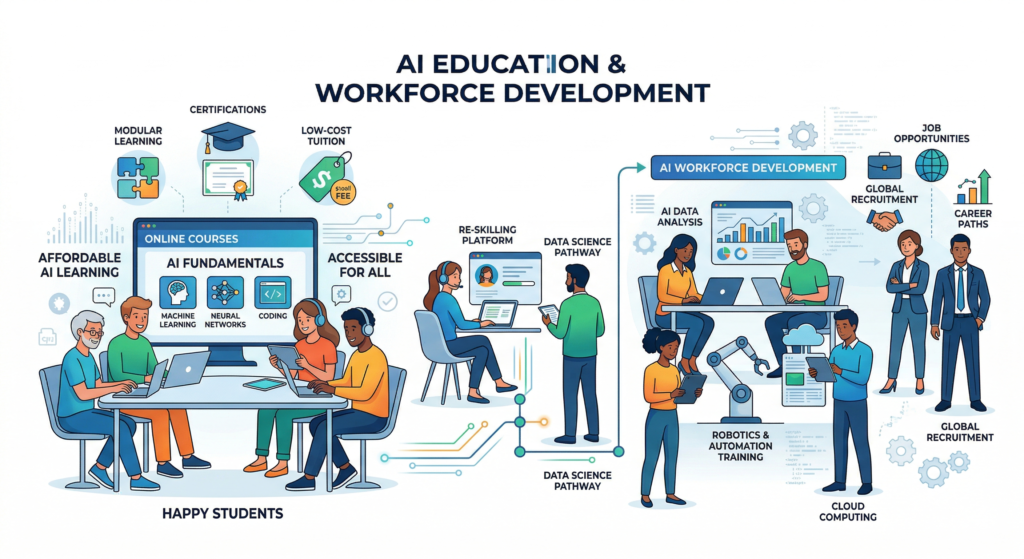
Recognizing the importance of artificial intelligence, many educational institutions across India are rapidly adapting their curricula.
Universities, technical institutes, and private learning platforms are introducing specialised courses in:
- machine learning
- deep learning
- data science
- artificial intelligence engineering
In addition, online platforms have made advanced AI education accessible to a much broader audience.
According to Nithin Kamath:
“Technology education in India has become far more accessible than it was even a decade ago.”
This democratization of learning is enabling a wider group of students and professionals to acquire the skills needed for the AI-driven economy.
Cost Advantage Meets High Skill
Another factor that positions India uniquely in the AI talent landscape is the combination of high technical capability and relatively lower costs compared to Western markets.
Global companies increasingly rely on Indian engineering teams to build and maintain AI-powered systems because they can access high-quality expertise at scale.
This advantage has historically helped India dominate the global IT services industry. The same dynamic could play out again in artificial intelligence.
Companies around the world are already setting up AI research centres and development hubs in India to tap into this talent pool.
The Importance of Responsible AI
As India’s influence in the AI ecosystem grows, so too does its responsibility to shape the ethical development of these technologies.
Artificial intelligence raises important questions around:
- bias in algorithms
- data privacy
- automation and employment
- accountability of AI-driven decisions
Technology leaders increasingly argue that AI development must be guided by strong ethical frameworks.
As Debjani Ghosh has said:
“India has the opportunity not just to build AI talent, but to build responsible AI leadership.”
This perspective highlights the broader role India could play—not only as a supplier of technical expertise but also as a contributor to global conversations about the responsible use of artificial intelligence.
A Moment of Opportunity
Artificial intelligence is still in its early stages. Many of the technologies that will define the AI era are still being developed.
For India, this creates a rare window of opportunity.
With a large and growing technology workforce, a vibrant startup ecosystem, expanding AI education programs, and strong global connections, the country has many of the ingredients needed to become a global centre for AI talent.
However, achieving this vision will require continued investment in education, research, and innovation.
If those investments continue, India could play a pivotal role in shaping the next phase of the global technology landscape.
And in doing so, it may not just participate in the AI revolution—it could help lead it.