
For years, wealth creation in India was often associated with ownership—real estate, businesses, or investments.
But a new reality is emerging.
In the coming decade, one of the most powerful wealth-building assets may not be something you own.
It may be what you know how to do.
Because in an economy being reshaped by AI, digital transformation, entrepreneurship and global opportunities, skills are becoming serious economic leverage.
Not just employability tools.
Wealth multipliers.
And for millions of Indians—students, professionals, founders, freelancers and creators—that may be one of the biggest opportunities ahead.
The question is no longer:
Which job pays well?
Increasingly it is:
Which skills create outsized value?
Because value creation often precedes wealth creation.
And the next decade may reward skill ownership in unprecedented ways.
The World Economic Forum has highlighted that rapidly evolving skill demands will reshape economic opportunity globally.
This trend also aligns with broader changes in India’s digital economy, where knowledge and leverage are becoming major opportunity drivers.

Why Skills May Matter More Than Ever
We are entering a world where traditional career formulas are being disrupted.
Degrees alone are losing signaling power.
Titles matter less than outcomes.
And technology is compressing the shelf life of expertise.
That means one thing:
Adaptable, high-value skills may become far more valuable than static credentials.
That “specific knowledge” may increasingly be where wealth gets created.
Research from McKinsey & Company suggests adaptable high-value skills may increasingly define career and income upside.
What makes a skill wealth-building?
Not every skill creates disproportionate upside.
The ones likely to matter most often have three characteristics:
- They solve expensive problems
- They scale beyond your time
- They benefit from technology and leverage
Those are the skills that can compound.
And many are becoming more valuable in India.
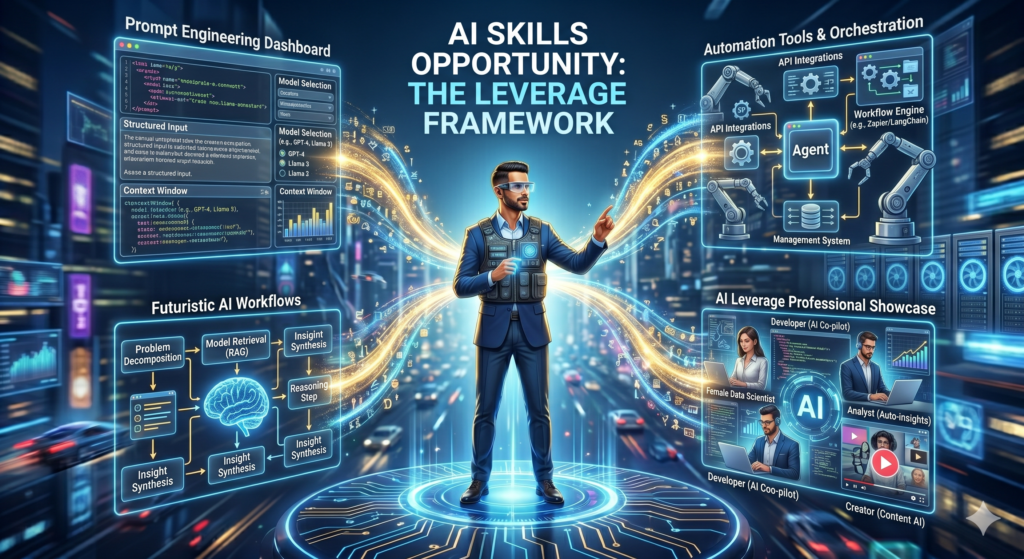
1. AI & Automation Skills
If one category may define the next decade, this is it.
Artificial Intelligence is not just creating tools.
It is creating opportunity.
And those who know how to use, apply, or build with AI may have enormous upside.
High-value AI skills likely to matter
- Prompt engineering and AI workflow design
- AI automation for businesses
- Machine learning applications
- AI product building
- AI consulting for companies
Even non-technical professionals who know how to use AI productively may gain an advantage.
That matters.
Because this is not only about coders.
It is about problem-solvers.
Why this could create wealth
Businesses will pay for productivity.
And AI increasingly drives productivity.
Those who help companies save money or make more money through AI could be very well positioned.
It also connects with insights from India’s AI opportunity landscape, where talent and applied skills are creating outsized upside.
2. Digital Sales & Revenue Skills
This is often underrated.
And hugely valuable.
People who can drive revenue tend to remain in demand.
Always.
Because sales is tied to growth.
And growth creates economic upside.
Skills likely to matter
- B2B sales
- Enterprise selling
- Growth strategy
- Demand generation
- Go-to-market execution
These are not just “job skills.”
They can become consulting businesses, agencies, startups or wealth engines.
And increasingly do.
In many ways, the ability to generate revenue may become one of the most monetizable skills in the decade ahead.
This aligns with lessons explored in go-to-market strategy, where revenue-driving skills remain highly valuable.
3. Data & Analytics Skills
Data is becoming the operating system of modern business.
And people who can interpret, apply and act on data are becoming increasingly valuable.
Not just analysts.
Decision-makers.
High-value skills here include
- Business analytics
- Data storytelling
- Performance marketing analytics
- Financial modeling
- Decision intelligence
Because in a world flooded with data—
Insight becomes scarce.
And scarcity often gets rewarded.
4. Global Digital Skills
One of the biggest shifts of our time:
Indians can increasingly sell skills globally.
Not just locally.
This is huge.
Because income ceilings can change dramatically when talent accesses global markets.
Skills with global upside
- Software development
- Product design
- Copywriting
- Performance marketing
- No-code building
- Consulting
A skilled professional in India can now serve clients anywhere.
That changes the economics of talent.
And potentially wealth creation.
According to the World Bank, skills development will be central to long-term economic competitiveness.

5. Problem-Solving and Strategic Thinking
This may be the most underrated wealth skill.
Tools change.
Platforms change.
Technology changes.
But people who solve important problems remain valuable.
Very valuable.
Strategic skills gaining importance
- Systems thinking
- Business problem solving
- Strategic decision-making
- Opportunity spotting
- Resource allocation
These are often what separate well-paid professionals from wealth creators.
Because they compound into leadership, ownership and enterprise building.
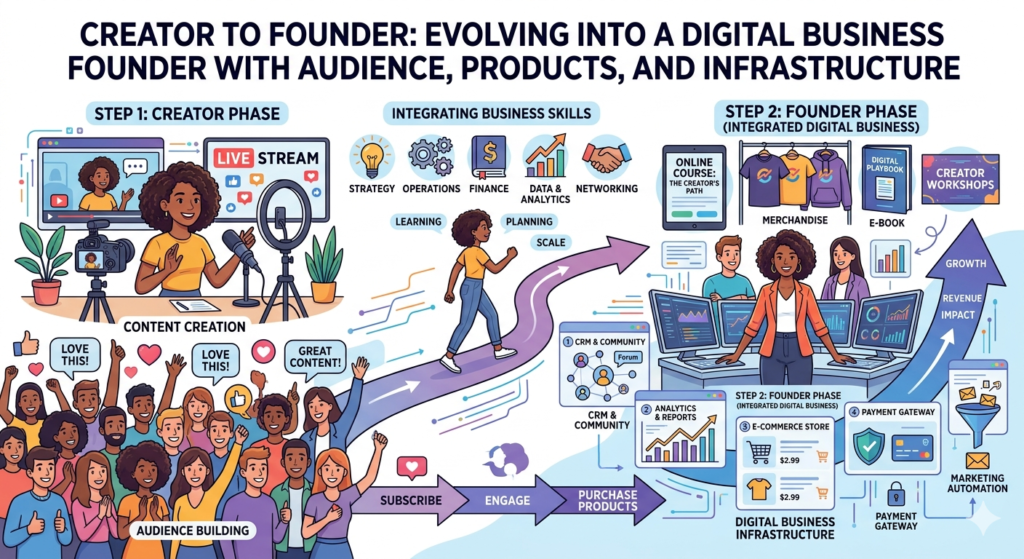
6. Creator Economy Skills
A decade ago this might have seemed unconventional.
Today it looks increasingly serious.
Skills around building audience and trust may become major economic assets.
High-value creator skills
- Content creation
- Storytelling
- Community building
- Audience monetization
- Personal brand building
Because attention has economic value.
And trusted attention can become businesses.
Increasingly it already is.
As MrBeast has demonstrated, creators can become companies.
That is not a side trend.
That is a signal.
Industry bodies such as NASSCOM have also highlighted growing demand for advanced digital and AI capabilities.
7. Financial Skills
An often-overlooked wealth skill:
Knowing how money works.
Because earning well and building wealth are not the same.
Increasingly, financial literacy itself may be a wealth advantage.
Valuable skills here include
- Investing
- Capital allocation
- Understanding markets
- Personal finance management
- Business finance
The ability to manage and grow capital may become as valuable as earning it.
Possibly more.
8. Building Skills (Entrepreneurial Skills)
The next decade may reward builders.
People who can create products, systems, businesses.
Not just participate in them.
Skills that matter here
- Opportunity validation
- Product thinking
- Startup execution
- Business building
- Distribution building
Entrepreneurial capability itself may become a major wealth lever.
Especially in India.
9. Human Skills Will Become More Valuable, Not Less
This may surprise many.
But in an AI-heavy world—
Human skills may appreciate.
Not decline.
Skills likely to grow in value
- Communication
- Negotiation
- Leadership
- Empathy
- Relationship building
Because automation may commoditize many technical tasks.
Human judgment may become more valuable.
That has economic implications.
Morgan Housel has noted that durable wealth often comes from compounding advantages—an idea closely linked to skill stacking.
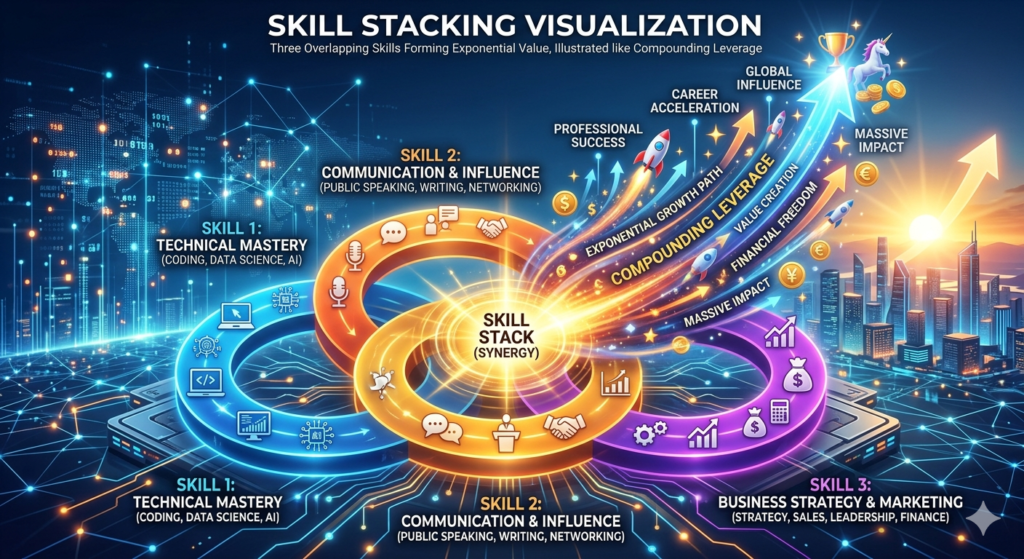
10. Skill Stacking May Be the Real Superpower
Perhaps the biggest opportunity isn’t mastering one skill.
It may be combining several.
This is where outsized value often emerges.
Examples
Someone with:
Sales + AI + storytelling
Very different market value.
Someone with:
Finance + data + strategy
Different upside.
Someone with:
Content + community + business building
Potentially a company.
This is called skill stacking.
And it may create disproportionate returns.
It also reflects themes in builder and startup playbooks, where multidisciplinary leverage often drives outsized outcomes.
Why India Is Especially Well Positioned
India may be uniquely placed to benefit from this skill economy.
Why?
Because of:
- Massive young population
- Digital access
- Entrepreneurial momentum
- Global service advantage
- AI and tech tailwinds
Few countries combine these forces.
That creates opportunity.
Especially for those who build valuable skills early.
Scott Galloway has often emphasized that skills tied to scarcity and leverage tend to command outsized economic returns.
Skills That May Be Overvalued
Important reality check:
Not every popular skill creates wealth.
Some may become commoditized quickly.
That’s worth noting.
Purely generic skills without differentiation may struggle.
The bigger upside may lie in:
- Specialized skills
- Applied skills
- Leveraged skills
That distinction matters.
What Could Matter Even More by 2035
Several themes may intensify.
Likely future wealth skills
- AI orchestration
- Productivity consulting
- Cybersecurity
- Climate and sustainability expertise
- Digital health skills
- Community-led business building
Many of these may still be underappreciated.
Which often signals opportunity.
A Better Question to Ask
Instead of asking:
“What job should I pursue?”
Perhaps ask:
- What problems can I solve?
- Which skills scale?
- Which skills create leverage?
- Which skills the market will pay premiums for?
Those questions may lead to very different outcomes.
As Naval Ravikant has argued, specific knowledge combined with leverage can become a powerful wealth creation engine.
Key Skills That Could Create Wealth
If we simplify, some of the strongest candidates include:
- AI and automation skills
- Sales and revenue skills
- Data and analytics
- Global digital skills
- Strategic thinking
- Creator economy skills
- Financial literacy
- Entrepreneurial building skills
- Human relationship skills
- Skill stacking
These are not trends in isolation.
They are signals.
Conclusion
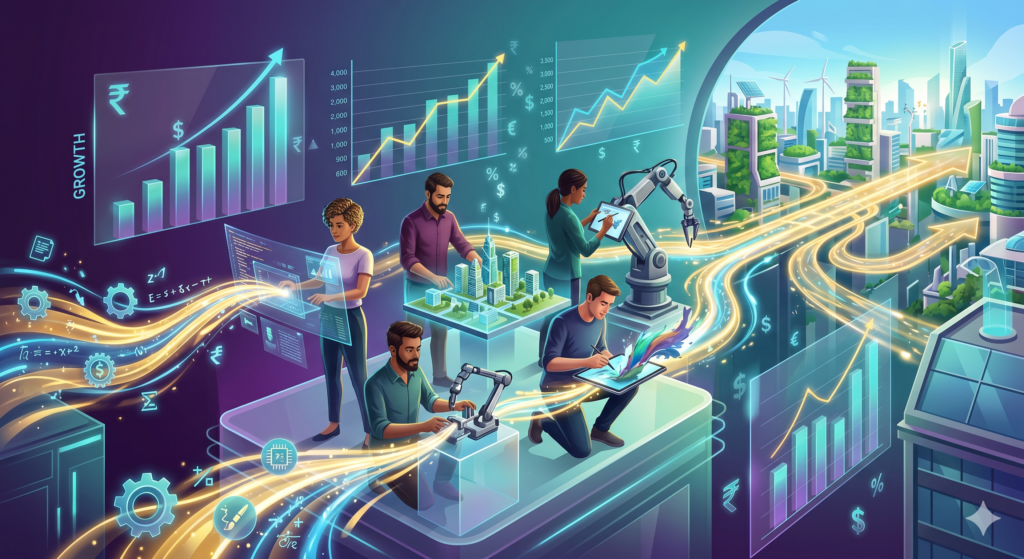
The next decade may create extraordinary wealth.
But perhaps not only for those with capital.
For those with leverage.
And increasingly—
Skills may be leverage.
The old model often rewarded credentials.
The emerging model may reward capability.
That changes the opportunity landscape dramatically.
Because in the coming decade, what could make many Indians rich may not just be where they invest.
Or what company they join.
But what rare, valuable and scalable skills they build.
And that may be one of the biggest opportunities of all.
