
For decades, one fact shaped the global financial order:
The U.S. dollar ruled.
It powered trade.
Dominated reserves.
Priced oil.
Anchored global finance.
And for much of the modern era, few seriously questioned it.
Until now.
A growing debate around de-dollarization—the effort to reduce dependence on the U.S. dollar in global trade and finance—is no longer confined to economists and geopolitical strategists. It has entered mainstream policy conversations.
Countries are exploring trade in local currencies. Central banks are diversifying reserves. Geopolitical tensions have accelerated calls for alternatives.
And suddenly, a once-fringe question sounds less fringe:
Could the dollar’s dominance weaken?
But perhaps the bigger question for us is:
Does de-dollarization actually matter for India?
Short answer?
Yes.
Potentially a lot.
And perhaps in ways most people underestimate.
This debate also intersects with broader questions around India’s rise in a changing global order, where economic positioning increasingly carries strategic weight.

First, What Is De-Dollarization?
At its simplest, de-dollarization refers to reducing reliance on the U.S. dollar in:
- Global trade settlements
- Central bank reserves
- Cross-border payments
- Commodity pricing
- International finance
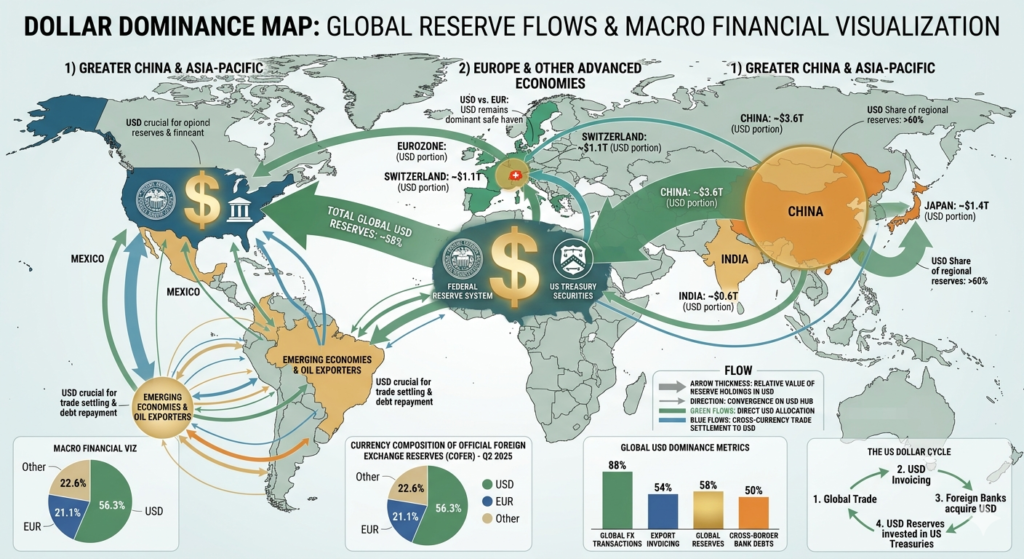
The dollar still dominates global reserves and trade settlement.
According to the International Monetary Fund, the U.S. dollar continues to account for a dominant share of global foreign exchange reserves, underscoring why any shift is likely gradual.
But cracks in the conversation are growing louder.
And much of it is being fueled by geopolitics.
Why the debate intensified
Three forces changed the tone.
1. Geopolitical fragmentation
Sanctions have made many countries rethink dependence on dollar systems.
Money is increasingly viewed not just as economics—
But power.
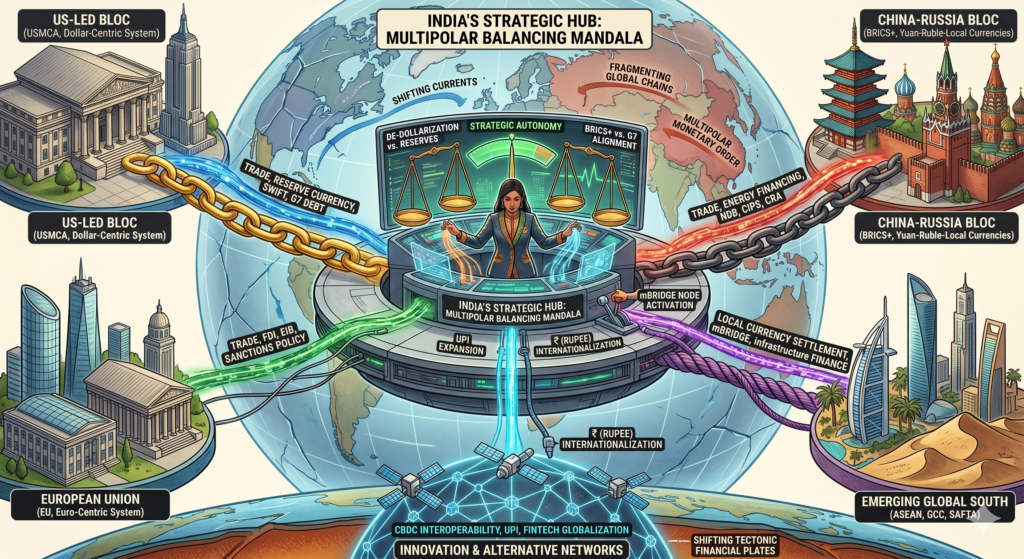
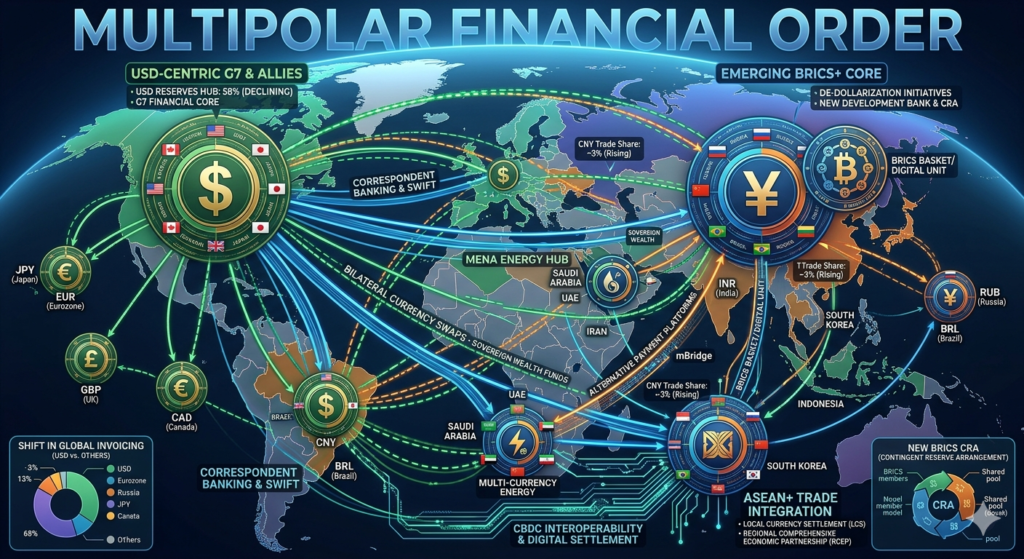
2. Rise of alternative blocs
Discussions around BRICS cooperation have added momentum to the debate.
Whether symbolic or substantive—
The signal matters.
3. Multipolar ambitions
As economies like India and China rise, questions about a more multipolar monetary order inevitably grow.
As economist and former U.S. Treasury Secretary Lawrence Summers warned:
“Fragmentation carries long-term consequences for the global financial system.”
That warning matters.
Is De-Dollarization Real — Or Overhyped?
This is where debate gets interesting.
Some call de-dollarization inevitable.
Others call it exaggerated geopolitical theatre.
And honestly—
Both sides have arguments.
The skeptical view
Critics say:
The dollar remains deeply entrenched because of:
- Trust
- Liquidity
- Rule-of-law perception
- Depth of U.S. capital markets
And replacing that is extraordinarily hard.
Fair point.
Very fair.
The contrarian view
But here’s the provocative counter:
Maybe de-dollarization doesn’t require replacing the dollar.
Maybe it only requires reducing dependence on it.
That’s a different debate.
And arguably already happening.
That distinction matters
The dollar may remain dominant.
Yet the world may still become less dollar-dependent.
Those are not mutually exclusive.
And that nuance often gets missed.

Why India Should Care
Because for India, this isn’t abstract macro theory.
It touches real economic interests.
Possibly strategic ones.
1. Trade Settlement Flexibility
India imports heavily.
Especially energy.
And dollar dependence means exposure.
To:
- Dollar strength
- U.S. monetary policy
- FX volatility
Reducing some dependence could improve resilience.
Potentially.
2. Energy Security Implications
This matters enormously.
Oil priced in dollars creates vulnerabilities for import-heavy economies.
And India is one.
Any diversification in settlement mechanisms could have strategic implications.
Big ones.
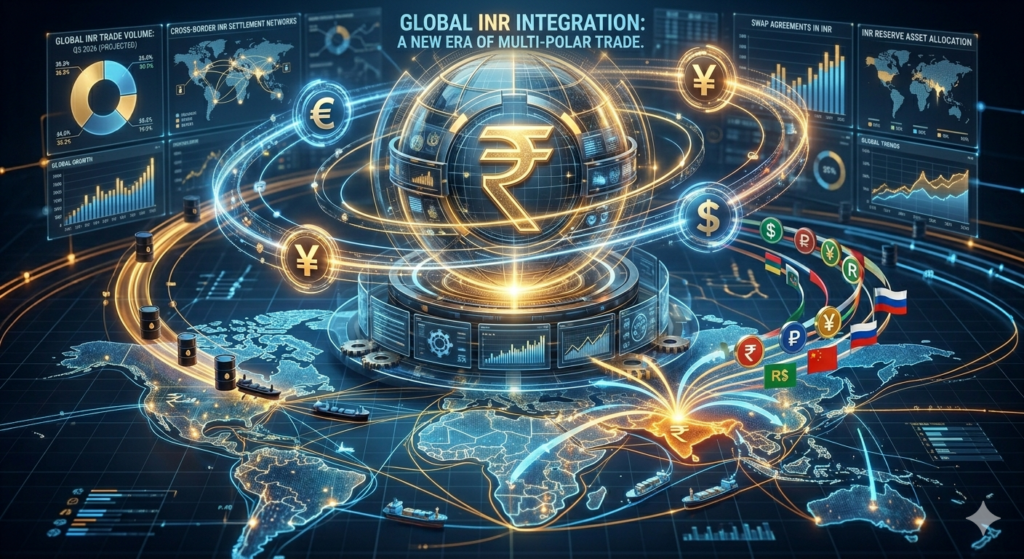
3. Rupee Internationalization Ambitions
This is where things get especially interesting.
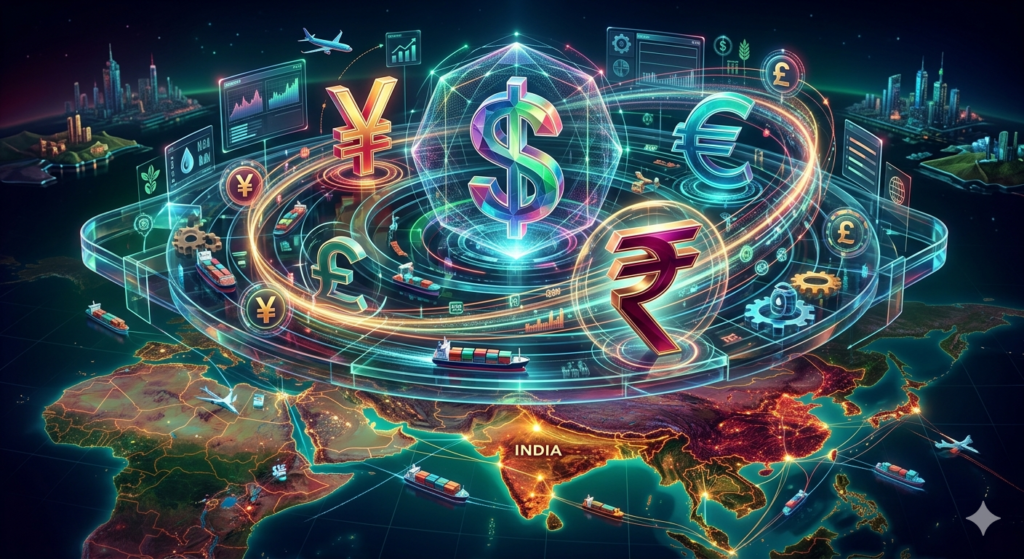
India has increasingly explored trade settlement in rupees.
Quietly but meaningfully.
That raises a controversial question:
Could de-dollarization partly be an India opportunity?
Some think yes.
As Shaktikanta Das has noted in broader discussions around currency resilience:
“The internationalization of the rupee is a process.”
That word matters.
Process.
Not event.
The Reserve Bank of India has also emphasized the long-term and gradual nature of rupee internationalization.
These questions also connect with broader themes around India’s strategic infrastructure ambitions, where sovereignty increasingly includes financial architecture.
Could India Actually Benefit?
Here’s where the debate gets provocative.
Because many discussions frame de-dollarization as global risk.
But what if—
For India—
It is partly opportunity?
Potential upside
Stronger strategic autonomy
Reduced vulnerability to external currency shocks.
Greater trade flexibility
Especially with emerging markets.
Stronger rupee positioning
Long-term possibility.
Though difficult.
Geopolitical leverage
Monetary relevance often shapes geopolitical relevance.
That matters.
But Let’s Be Honest — There Are Risks Too
This is not one-directional upside.
Far from it.
There are serious risks.
India also benefits from dollar stability
This is often ignored.
The dollar’s dominance, for all its critics, has brought predictability.
And markets value predictability.
A lot.
Disorderly fragmentation could hurt everyone
A fragmented currency order could create:
- Higher transaction costs
- More volatility
- Trade inefficiencies
- Financial instability
That could hurt India too.
Potentially significantly.
Research from the Bank for International Settlements suggests payments diversification may evolve faster than reserve currency displacement.
Here’s the uncomfortable question
What if the real risk isn’t dollar dominance—
But unstable alternatives?
That deserves debate.
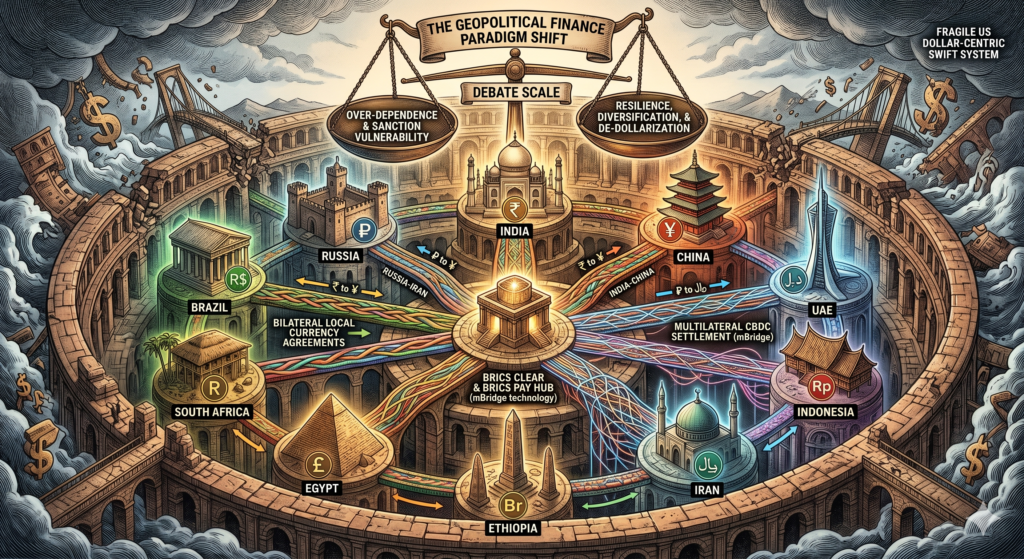
Is BRICS Currency Hype Overblown?
Let’s go there.
Because it’s controversial.
And important.
Talk of alternative reserve currency blocs makes headlines.
But many economists remain skeptical.
For good reason.
Currencies require:
- Deep markets
- Trust
- Institutional credibility
Not slogans.
That’s hard to build.
Very hard.
Debate around alternative monetary arrangements has also intensified within BRICS policy discussions, though feasibility remains contested.
As Raghuram Rajan has repeatedly emphasized in broader monetary debates:
“Institutions matter.”
In currencies—
That may be everything.
Hard truth:
Many “de-dollarization” headlines may be overstated.
But incremental diversification?
Much more plausible.
And perhaps already underway.
That distinction matters.
A sharper question few ask: what if the real story is not de-dollarization at all—but the beginning of monetary fragmentation?
Historical reserve currency persistence is also reflected in analysis from the U.S. Treasury, which highlights the structural advantages behind dollar liquidity.
What About India’s Markets?
This debate matters for investors too.
Potential implications touch:
- Rupee stability
- Bond markets
- Trade balances
- Capital flows
- Inflation
This is not just geopolitics.
It is markets.
And money.
Investors may also view this through the lens of capital allocation and risk management, where macro shifts often reshape opportunity.
If dollar dominance weakens over time…
Potentially:
- Emerging markets could gain room
- Capital flows could shift
- Commodity dynamics could evolve
India could benefit.
Or face volatility.
Possibly both.
The Contrarian Argument Nobody Talks About
Here’s a sharper debate.
What if de-dollarization is less about economics—
And more about negotiating leverage?
Meaning:
Even partial alternatives could reshape bargaining power.
That alone matters.
Even without “ending dollar dominance.”
That’s a huge distinction.
And deeply relevant.
Some critics argue de-dollarization may be less about replacing the dollar and more about quietly reducing U.S. financial leverage. That distinction is politically sensitive—but economically significant.
Analysis from the Council on Foreign Relations argues the bigger story may be incremental bargaining leverage rather than dramatic de-dollarization.
Could India Become a Winner in a Multipolar Financial Order?
This is where things get fascinating.
India may be unusually positioned.
Why?
Because it is:
- Large enough to matter
- Trusted by multiple blocs
- Growing rapidly
- Strategically non-binary
That combination is rare.
Could India become a balancing force in a more fragmented financial order?
Possibly.
That idea deserves more attention.
The World Bank has argued resilient financial systems increasingly depend on diversified payment and settlement infrastructure.
This also aligns with questions explored in India’s next economic growth phase, where capital, currency and strategic autonomy may increasingly converge.
But Let’s Not Romanticize It
Important caution.
Rupee internationalization sounds attractive.
But hard realities remain.
A currency’s global role depends on:
- Economic depth
- Convertibility confidence
- Financial market maturity
- Global trust
That is earned slowly.
Not declared.
Researchers at Brookings have suggested fragmentation pressures may reshape global finance even without replacing the dollar.
Which leads to uncomfortable truth:
India may benefit from some de-dollarization—
while still relying heavily on dollar stability.
That paradox may be reality.
And it’s worth saying clearly.
What Happens Next?
Three plausible scenarios.
Scenario 1: Dollar stays dominant
Most likely near term.
Incremental change.
No dramatic shift.
Scenario 2: Partial diversification grows
Possibly most realistic.
Less about replacement.
More about pluralization.
Scenario 3: Geopolitics accelerates fragmentation
Higher risk.
Higher volatility.
Potentially disruptive.
India must prepare for all three.
So… Does De-Dollarization Matter for India?
Absolutely.
But perhaps not for the reasons headlines suggest.
Not because the dollar is collapsing.
That narrative may be overblown.
But because the global monetary order may be becoming more contested.
And India sits inside that shift.
Not outside it.
What This Debate Is Really About
At a deeper level, this is not merely about currencies.
It is about:
Power.
Trade.
Sovereignty.
Strategy.
And increasingly—
India’s place in a changing world.
That’s why it matters.
Key Takeaways
The de-dollarization debate matters for India because it could affect:
- Trade resilience
- Energy security
- Rupee ambitions
- Capital flows
- Strategic autonomy
But—
The debate is nuanced.
The dollar may remain dominant.
While the system becomes less singular.
Both can be true.
More broadly, this debate reinforces questions about India’s evolving role in shaping global systems, not merely participating in them.
Conclusion
Here’s the provocative takeaway:
The question may not be:
Will the world de-dollarize?
But:
How much diversification happens—and who benefits?
That’s a very different debate.
And for India, potentially a consequential one.
Because if global finance is becoming even modestly more multipolar—
India may not merely be reacting to the shift.
It may help shape it.
And that possibility alone makes this debate worth watching.
Closely.
Very closely.
