
India in 2026 is not short of ideas—it’s short of execution on the right ideas.
With digital adoption accelerating, consumer behavior evolving, and sectors like AI, fintech, and EVs reshaping the economy, the opportunity landscape has never been richer. But here’s the catch: the businesses that will win are not the ones chasing trends—they are the ones aligning with structural shifts.
So if you’re looking to start something meaningful, scalable, and future-ready, the real question isn’t what’s trending—it’s what’s inevitable.
This evolution reflects broader trends shaping the digital economy of India.
To understand India’s entrepreneurial momentum, founders can explore the Startup India initiative, which has been instrumental in enabling innovation and reducing barriers. As highlighted in government policy narratives, “startups are key drivers of economic growth, innovation, and job creation in India.”
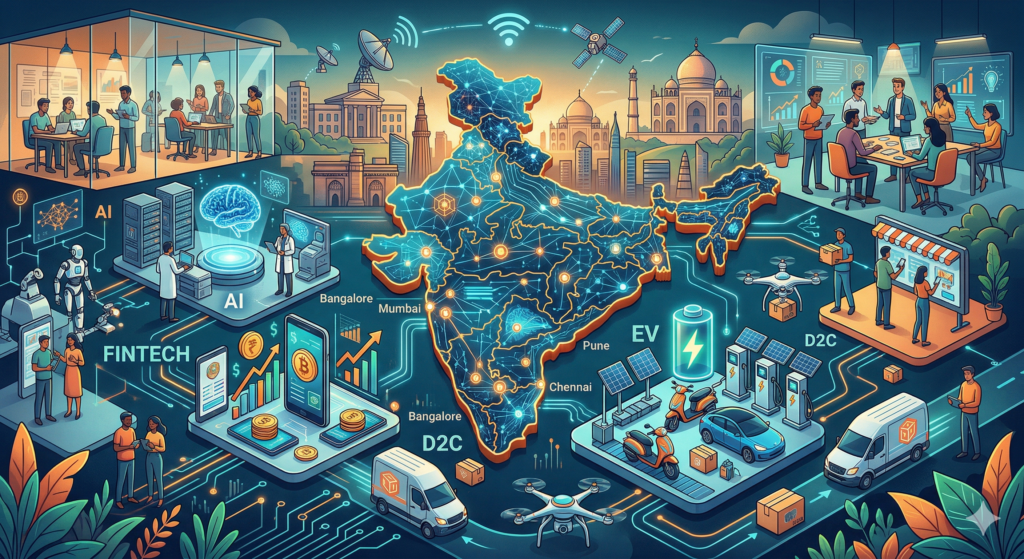
The Big Shift: From Ideas to Opportunity Alignment
Over the past decade, India’s startup ecosystem has matured significantly.
Earlier, success was often driven by:
- Replicating global models
- Scaling quickly
- Chasing funding
Today, the rules have changed.
The best business ideas in 2026 are built on:
- Clear problem-solution fit
- Strong monetization potential
- Technology leverage
- Scalability from Day 1
This shift is what separates opportunities from noise.
India’s digital transformation is further supported by the Digital India initiative, which aims to build a digitally empowered economy. As emphasized by policymakers, “digital infrastructure is a core utility for every citizen and business.”
1. AI-Led Businesses: From Feature to Foundation
Artificial Intelligence is no longer an add-on—it is becoming the core of how businesses operate.
Companies across industries are actively looking for:
- Automation tools
- AI-driven customer support
- Predictive analytics
- Workflow optimization
This creates a massive opportunity for entrepreneurs to build AI-first solutions, especially in niche industries like healthcare, logistics, or recruitment.
The real advantage lies in specialization. Instead of building generic tools, founders who focus on industry-specific AI solutions are more likely to succeed.
This aligns with insights from India’s AI startup playbook, which highlights sector-specific opportunities.
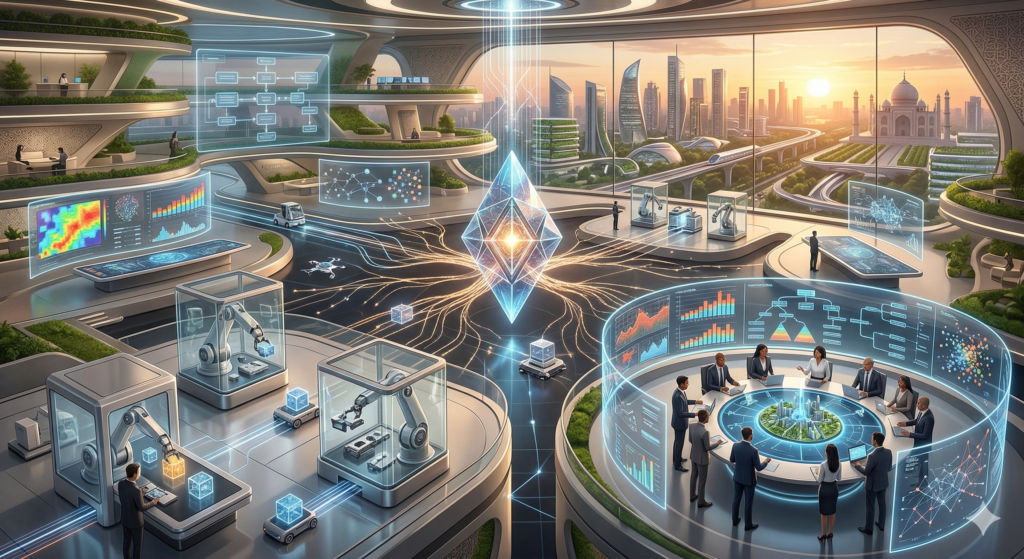
2. Vertical SaaS: Solving Deep, Specific Problems
The next wave of SaaS in India is not horizontal—it’s vertical.
Instead of building broad platforms, startups are targeting specific industries with tailored solutions. This could include:
- Software for logistics companies
- Tools for healthcare clinics
- Platforms for retail inventory management
The reason this works is simple:
depth beats breadth.
Vertical SaaS businesses often enjoy higher retention, better pricing power, and clearer differentiation.
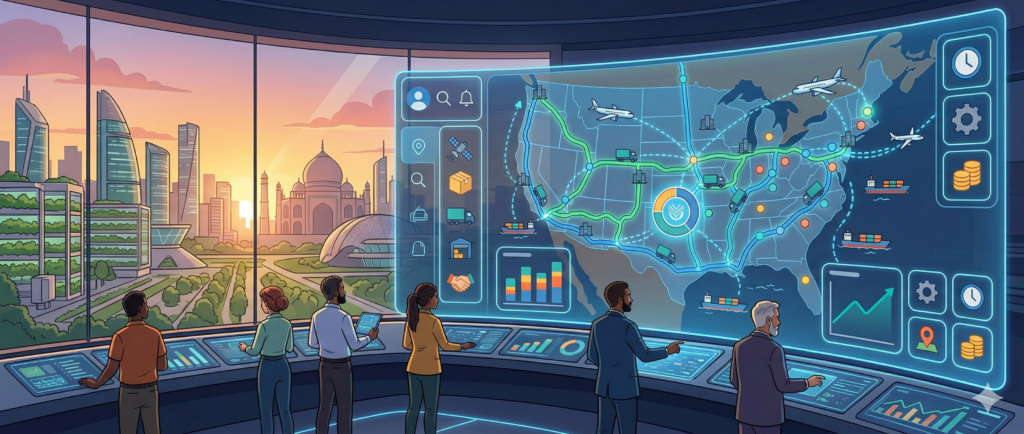
3. Quick Commerce & Hyperlocal Opportunities
The rise of instant delivery platforms has fundamentally changed consumer expectations.
While companies like Zepto and Blinkit dominate the space, there are still opportunities in niche categories.
Entrepreneurs can explore:
- Hyperlocal specialty products
- Regional goods delivery
- Premium or curated offerings
The opportunity lies not in competing with large players, but in complementing their ecosystems.
4. Creator Economy: Turning Influence into Business
The creator economy is no longer just about content—it’s about commerce, influence, and distribution.
Platforms like YouTube and Instagram have enabled individuals to build audiences at scale.
This has created demand for:
- Personal branding agencies
- Content strategy services
- Influencer management platforms
Businesses that help creators monetize, scale, and professionalize their presence are seeing strong traction.
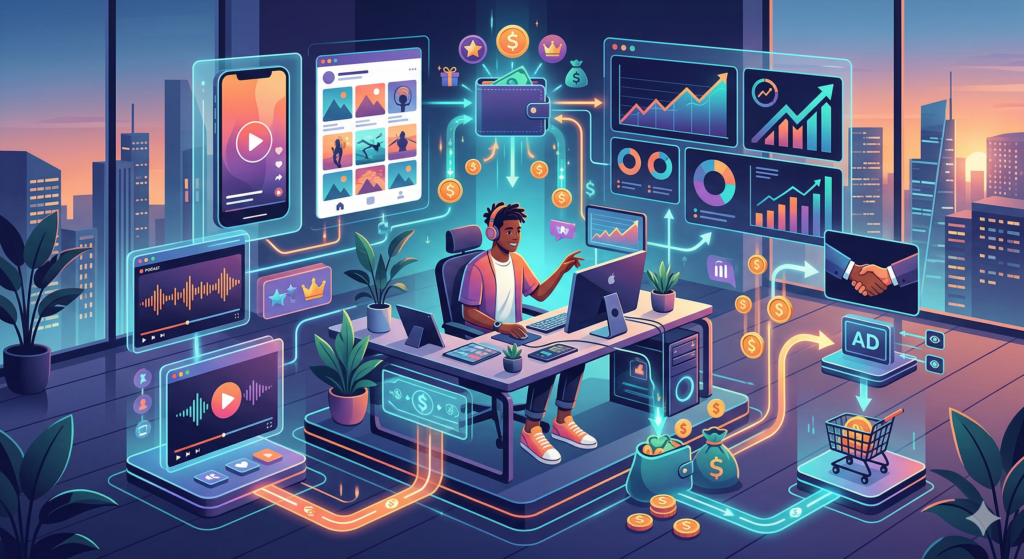
5. D2C Brands: Building for the New Consumer
India’s D2C (Direct-to-Consumer) boom continues to evolve.
Consumers today are:
- More brand-conscious
- More digitally native
- More open to trying new products
High-potential categories include:
- Health and wellness
- Skincare and beauty
- Sustainable and eco-friendly products
The advantage of D2C lies in control—over branding, customer experience, and margins.
6. EV Ecosystem: Beyond Just Vehicles
India’s push toward electric mobility is creating opportunities far beyond vehicle manufacturing.
Startups can build in areas such as:
- Charging infrastructure
- Battery management systems
- EV fleet solutions
With strong policy support and increasing adoption, the EV ecosystem represents a long-term growth opportunity.
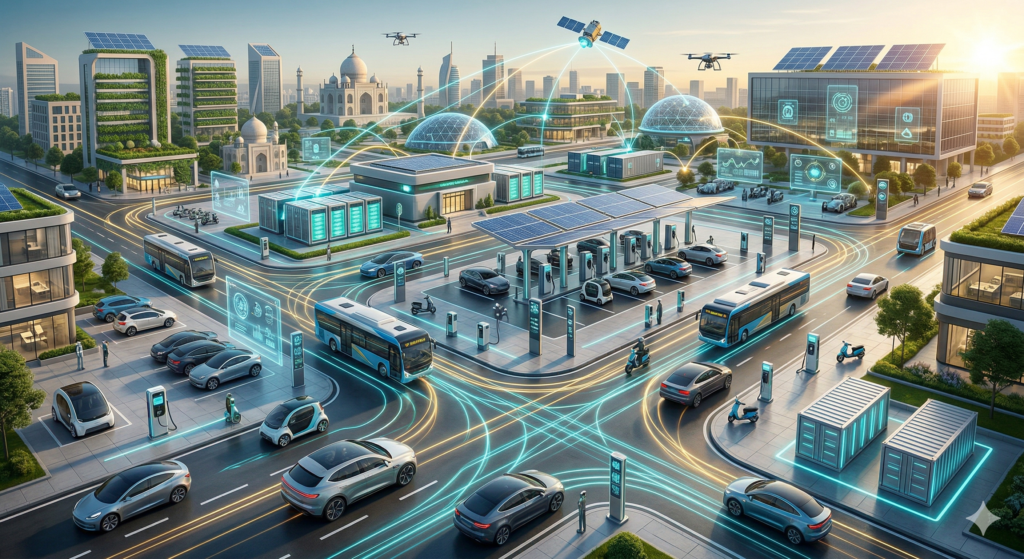
Electric Vehicles (EVs) — a sector evolving alongside the future of Indian startups.
The EV ecosystem is being accelerated through policy direction from NITI Aayog, which highlights that “clean mobility and innovation-led ecosystems will define the future of transportation in India.”
7. EdTech 2.0: From Content to Outcomes
The first wave of edtech focused on scale. The next wave is focused on results.
Students and professionals are now looking for:
- Job-ready skills
- Practical learning
- Outcome-driven programs
This opens up opportunities in:
- Skill-based learning platforms
- Corporate training solutions
- Micro-learning tools
The shift is clear:
from education to employability.
8. HealthTech: Preventive and Digital-First
Healthcare in India is undergoing a transformation.
There is a growing focus on:
- Preventive care
- Digital health platforms
- Mental wellness
Startups that can combine technology with accessibility are well-positioned to succeed.
The opportunity is not just in treatment—but in proactive health management.
9. Fintech for SMEs: The Underserved Market
While consumer fintech is crowded, SME-focused fintech remains underpenetrated.
India’s small and medium businesses face challenges in:
- Accessing credit
- Managing cash flow
- Handling payments
Startups that address these pain points through:
- Lending platforms
- Financial management tools
- Embedded finance solutions
can unlock a massive market.
This trend is part of the larger India fintech boom reshaping financial access.
10. Sustainable Businesses: The Future is Green
Sustainability is no longer optional—it’s becoming a business imperative.
Opportunities exist in:
- Eco-friendly packaging
- Waste management solutions
- Renewable energy services
With increasing regulatory pressure and consumer awareness, green businesses are moving from niche to mainstream.
What Makes a Business Idea Work in 2026?
While opportunities are abundant, success depends on execution.
The best business ideas share a few common traits:
- They solve real, high-frequency problems
- They leverage technology effectively
- They have clear revenue models
- They are scalable beyond local markets
More importantly, they are built with a long-term perspective.
India’s scale advantage is supported by initiatives like Make in India, where the focus is on transforming the country into a global manufacturing hub. As policy vision states, “India aims to become a global design and manufacturing destination.”
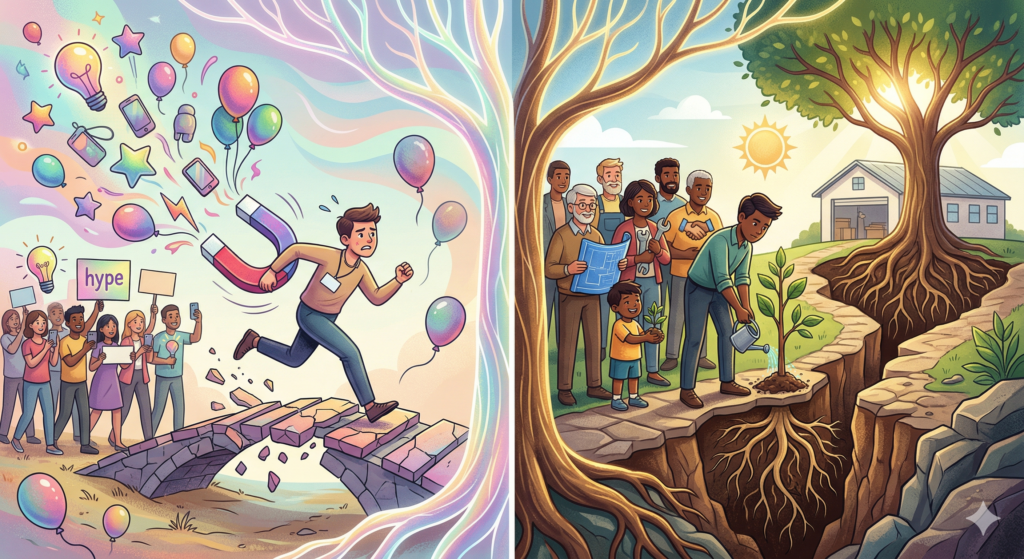
A Common Mistake: Chasing Trends Instead of Solving Problems
One of the biggest mistakes entrepreneurs make is chasing what’s trending rather than what’s needed.
Trends change.
Problems persist.
The businesses that succeed are those that:
- Understand their customers deeply
- Build solutions that create real value
- Focus on sustainability over hype
The Bigger Picture: India’s Entrepreneurial Moment
India is at a stage where:
- Digital infrastructure is Strong
- Talent is abundant
- Capital is available (though more selective)
This creates a unique environment for entrepreneurship.
But with opportunity comes competition.
The winners will not be those who start fast—
but those who build right.
Conclusion
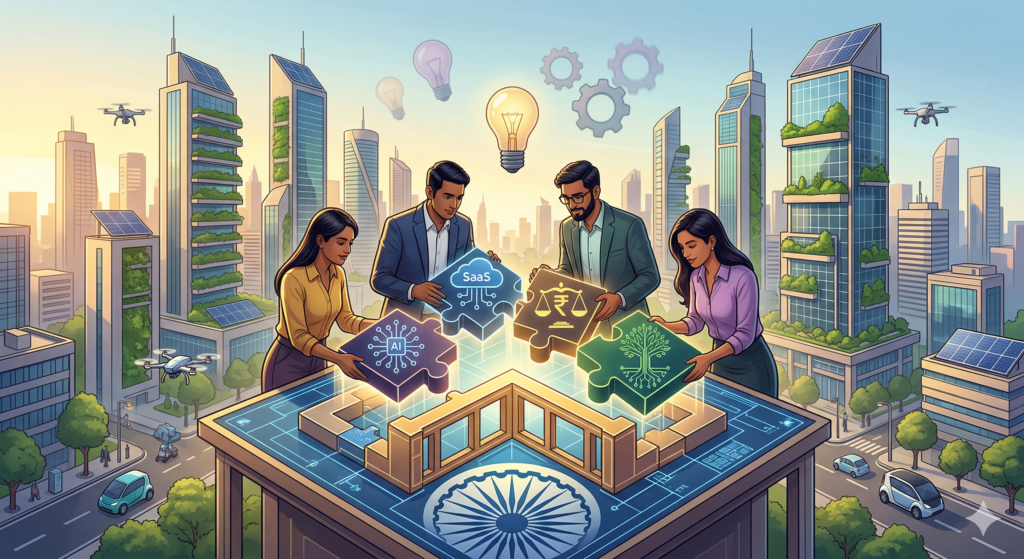
The best business ideas in India (2026) are not just about innovation—they are about alignment.
Alignment with and supported by frameworks like Startup India and SEBI regulations:
- Market demand
- Technological shifts
- Consumer behavior
- Economic direction
Whether it’s AI, SaaS, fintech, or sustainability, the opportunity is clear.
But the real question is not which idea is best.
It’s this:
Which problem are you willing to solve—and how well can you solve it?
Because in today’s landscape, ideas are everywhere.
Execution is rare.
And that’s where real businesses are built.
“India’s entrepreneurial growth will be driven by its ability to combine innovation, scale, and execution.” — Policy-aligned economic perspective

5 Responses
Saved as a favorite, I love your blog!
I relish, lead to I discovered exactly what I was looking for.
You have ended my 4 day lengthy hunt! God Bless you man. Have a great day.
Bye
Solid post! I found it informative.
I do not even knolw how I ended up here, but I thought
this post was great. I do not know who you are but definitely you’re going to a famouss
blogger iff you are not already 😉 Cheers!
Stunning story there. What occurred after? Thanks!