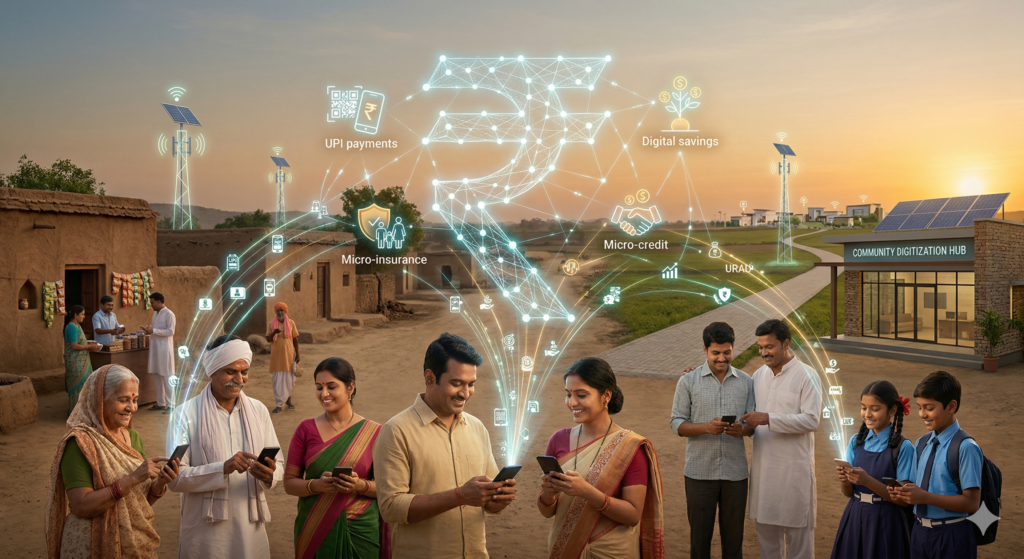
India’s fintech revolution has transformed how millions interact with money. From UPI payments to digital lending and investing, the country has built one of the most advanced financial ecosystems in the world.
Yet, beneath this rapid progress lies a critical gap.
According to financial inclusion insights from the World Bank, expanding access to financial services is critical for economic growth in emerging markets.
A large segment of India—particularly in Tier 2, Tier 3, and rural markets—still struggles with access to reliable, simple, and trustworthy financial services.

Reports from the World Economic Forum highlight that digital financial services are essential for driving inclusion in emerging economies like India.
This is where new-age fintech players like Vijya Fintech are stepping in.
Their mission is not just to digitize finance—but to make it accessible, understandable, and usable for the next wave of Indian users.
This shift reflects broader trends in the India startup ecosystem growth, where startups are increasingly focused on solving real-world problems at scale.
India’s rapid digital payments growth, driven by UPI, has been widely recognized by the Reserve Bank of India as a key milestone in financial innovation.
What Vijya Fintech Is Building
At its core, Vijya Fintech is focused on simplifying financial services through digital platforms.
Instead of building complex financial tools for already-served urban users, the company is targeting a much larger opportunity—bringing financial access to users who are just entering the digital economy.
This includes:
- Simplified financial transactions
- Easy-to-use digital interfaces
- Accessible financial products
- Solutions designed for first-time users
The emphasis is clear: reduce friction and increase trust.
The Real Opportunity: Bharat’s Financial Awakening
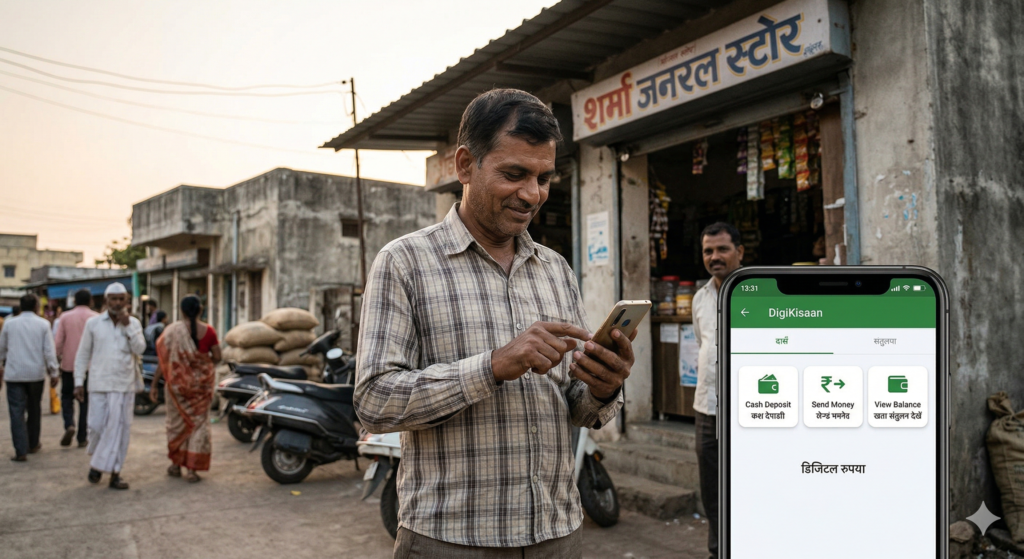
India’s next 500 million internet users are not in metros.
They are in smaller towns, rural regions, and emerging markets—often referred to as “Bharat.”
These users:
- Prefer local languages
- Need simplified interfaces
- Require trust-first financial products
Vijya Fintech is building with this user in mind.
This aligns closely with the broader Bharat market opportunity, where digital adoption is accelerating rapidly.
Technology as an Enabler, Not a Barrier
One of the biggest mistakes fintech companies make is overcomplicating technology.
Vijya Fintech appears to be taking the opposite approach.
Its focus is not on showcasing technology—but on hiding complexity behind simplicity.
This includes:
- Intuitive user experiences
- Seamless onboarding
- Minimal friction transactions
This philosophy aligns with how AI is transforming Indian businesses by making systems smarter while keeping interfaces simpler.

Financial Inclusion: The Core Thesis
Financial inclusion is one of India’s biggest long-term opportunities.
Despite rapid digitization, millions still lack access to:
- Formal credit
- Insurance
- Structured savings tools
Vijya Fintech is positioned within this gap.
Rather than competing in saturated segments, it is focusing on underserved users—where the real growth lies.
This mirrors trends seen across the fintech ecosystem in India.
Where Vijya Fits in India’s Fintech Landscape
India’s fintech ecosystem is evolving rapidly.
It is moving from:
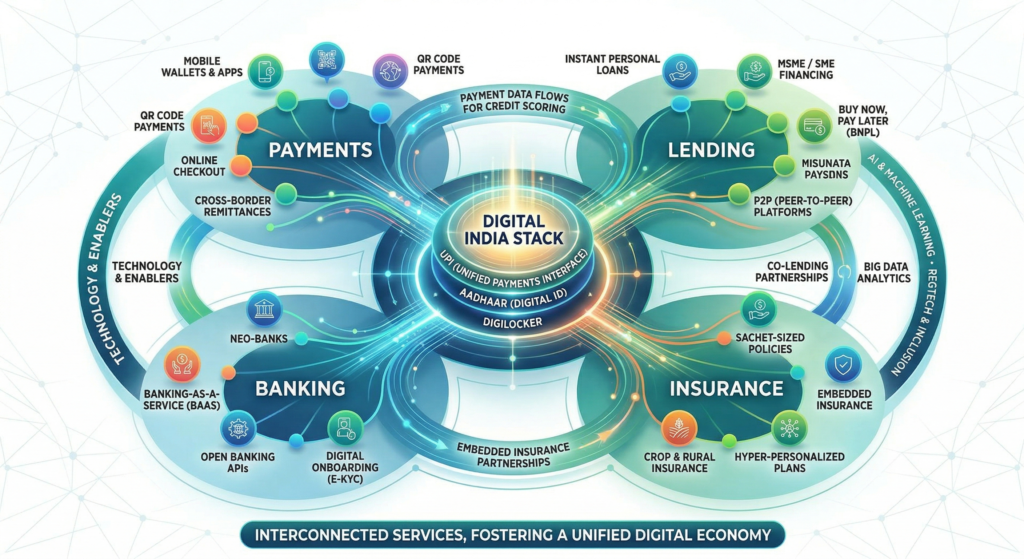
👉 Payments → to → Financial ecosystems
Companies are no longer just solving one problem—they are building integrated platforms.
Vijya Fintech fits into this shift as a bridge between access and usability.
It is not just about providing financial services.
It is about making them usable for the masses.
Challenges Ahead
While the opportunity is massive, the path is not easy.
Key challenges include:
- Building trust among new users
- Navigating regulatory frameworks
- Competing with larger, well-funded players
- Ensuring product simplicity at scale
According to the Reserve Bank of India, balancing innovation with regulation will be critical for fintech growth.
The Road Ahead: A Long-Term Play
The future of fintech in India will not be decided in metros.
It will be decided in Bharat.
And companies that understand this shift early will have a significant advantage.
Vijya Fintech’s focus on accessibility, simplicity, and inclusion positions it well for this long-term opportunity.
Global research by McKinsey & Company suggests that fintech platforms focused on accessibility and simplicity will drive the next wave of growth.

Final Take: Building for the Next Billion
India’s fintech revolution is far from complete.
In fact, it is just entering its most important phase.
The next wave of growth will not come from adding features—it will come from removing complexity.
Startups like Vijya Fintech are not just building products.
They are building access.
According to the International Monetary Fund, digital financial ecosystems will play a central role in shaping future economic growth.
And in a country as vast and diverse as India, that might be the most valuable innovation of all.