
The Global Reset: Why Layoffs Are Reshaping the Talent Market
Over the past few years, the global technology ecosystem has undergone a significant correction. Companies that aggressively hired during the pandemic are now recalibrating.
This shift is closely tied to broader macro trends, including rising interest rates and a move toward sustainable growth. This transition also reflects larger structural shifts in the global startup ecosystem.
As companies move from “growth at all costs” to efficiency, layoffs are becoming more common. However, this contraction is creating opportunity—especially for India.
“The global labor market is undergoing a structural transformation driven by technology and economic shifts.” — World Economic Forum
India’s Advantage: Why Talent Is Flowing In
India has long been known as a global talent hub. Today, it is evolving from cost arbitrage to capability-driven value creation.
This transformation aligns with the broader future of jobs in India.
1. Access to High-Quality Talent Pool
Global layoffs have released a large pool of highly skilled professionals.
Indian companies are leveraging this by hiring returning professionals and building global teams.
2. Cost Efficiency Without Compromising Quality
India continues to offer strong cost advantages.
However, the narrative is evolving toward optimized value rather than cheap labor.
“Cost efficiency combined with high skill density is a powerful competitive advantage.” — McKinsey & Company
3. Rise of Remote-First Work Culture
Remote work has fundamentally changed hiring models.
India is now a central node in global distributed teams.
This shift mirrors broader trends in AI transforming Indian businesses.

Business Impact on Corporate India
The talent shift is creating structural changes in the Indian economy.
1. Startups Gain a Strategic Edge
Indian startups are gaining access to world-class talent.
This is strengthening product quality and global competitiveness.
This trend is particularly strong in sectors highlighted in India fintech innovation.
2. Salary Structures Are Stabilizing
The hiring frenzy is cooling down.
Salaries are becoming more rational and sustainable.
3. India as a Global Talent Hub
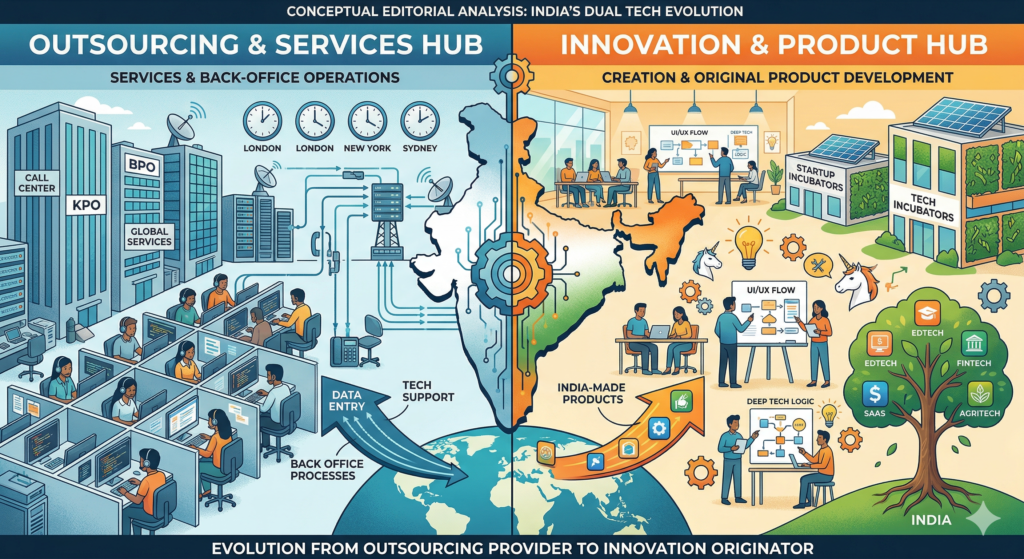
India is evolving beyond outsourcing into a global innovation hub.
Companies are expanding engineering and leadership roles in India.

Knowledge Transfer & Capability Building
Returning professionals bring global experience and best practices.
This accelerates India’s transition toward innovation-led growth.
The Big Debate: Back-Office or Innovation Hub?
India is at a turning point. It continues to serve as a back-office in some sectors.
However, it is rapidly emerging as an innovation hub in others.
This transition is tied to broader next big technologies shaping the future.
Challenges That Could Limit the Opportunity
Despite the opportunity, challenges remain:
- Talent retention
- Skill gaps in AI and deep tech
- Infrastructure gaps
- Leadership depth
These must be addressed for sustained growth.
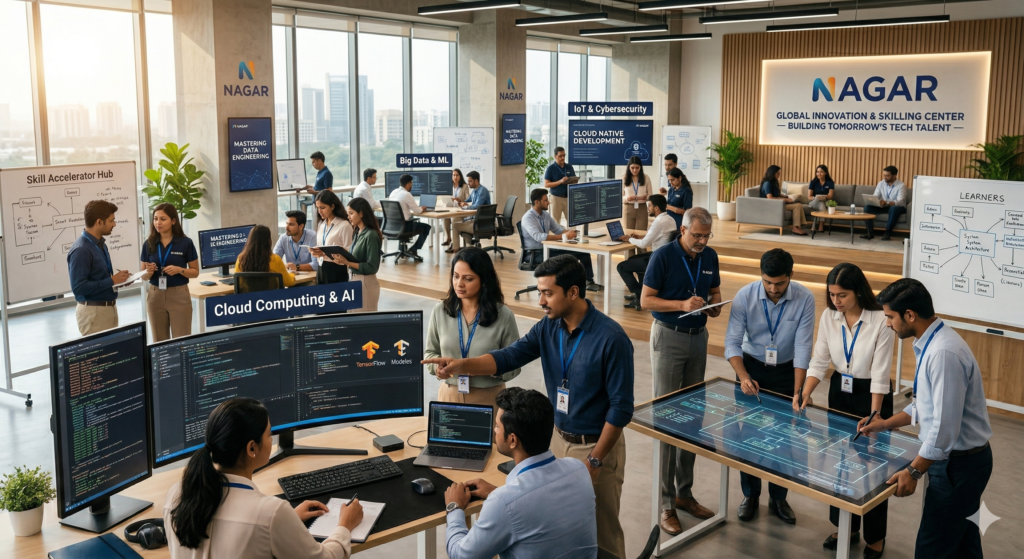
The Future: What Lies Ahead
The global talent landscape is undergoing a permanent shift.
Key trends include:
- Cross-border hiring
- Remote-first organizations
- India-based global teams
India has the potential to become both the talent engine and innovation engine of the world.
“Talent is the most important resource in a knowledge-driven economy.” — World Bank

What Should Business Leaders Do Next?
- Tap into global talent pools
- Invest in upskilling
- Adopt remote-first models
- Focus on retention
- Build global products
