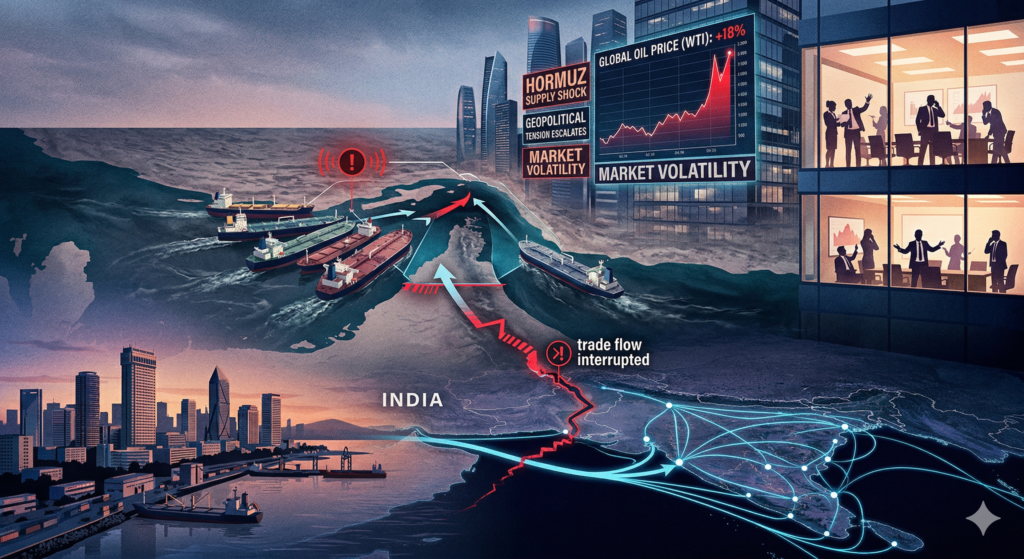
A War Beyond Borders — And Beyond Control
This is no longer just a regional conflict.
The escalating tensions involving Iran, the United States, and Israel are rapidly transforming into a global economic shockwave—one that is already rippling through energy markets, supply chains, and corporate balance sheets.
At the center of this crisis lies the Strait of Hormuz, a narrow choke point that carries nearly 20% of the world’s oil supply.
When this artery tightens, the world doesn’t just watch—it pays.
This disruption is deeply connected to broader global instability and economic shifts, similar to trends seen in the global interest rate cycle and its impact on Indian startups.
“Energy markets are extremely sensitive to geopolitical disruptions, especially in critical transit chokepoints.”
— International Energy Agency
For India, this is not just another headline.
It is a structural vulnerability being exposed in real time.
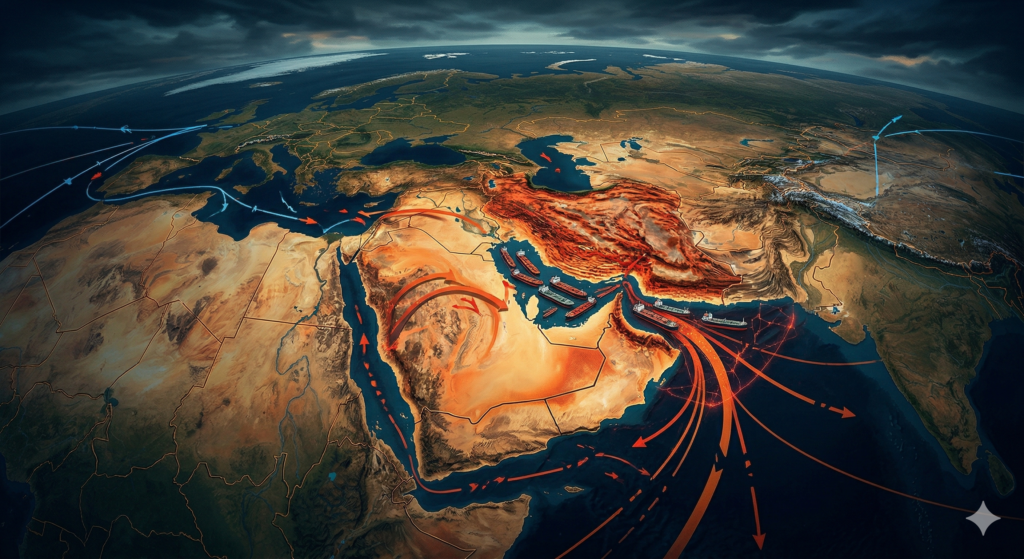
India’s Strategic Vulnerability: A Risk Decades in the Making
India imports over 80–90% of its crude oil.
A significant portion comes from the Middle East.
Nearly half of these supplies pass through the Strait of Hormuz.
This is not dependence.
This is exposure.
And in moments like these, exposure turns into risk—fast.
This vulnerability also reflects broader structural dependencies seen in India’s energy and economic policy evolution.
“Energy security remains one of the most critical challenges for emerging economies.”
— World Bank
India is not just affected by this war.
It is financially wired into it.
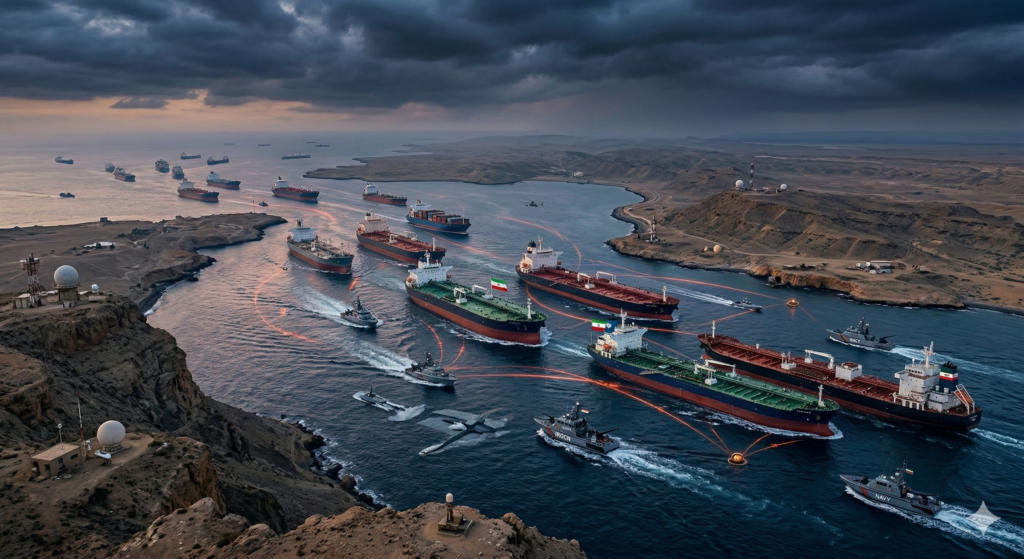
Immediate Impact: Corporate India Is Already Feeling It
This is where geopolitics becomes business reality.
1. Rising Energy Costs
Oil crossing $100 per barrel is not just a number—it’s a margin killer.
Manufacturing costs rise.
Logistics becomes expensive.
Power-intensive sectors get squeezed.
This mirrors pressures seen in global supply chain disruptions and manufacturing shifts.
2. Inflation & Demand Compression
Higher fuel costs ripple across the economy.
As a result, consumer spending weakens.
FMCG, retail, and discretionary sectors feel the first hit.
3. Currency Volatility
The rupee comes under pressure as import bills rise.
Meanwhile, companies with dollar debt face higher repayment costs.
This is where macroeconomics hits balance sheets.
4. Supply Chain Disruptions
Shipping routes across the Gulf are no longer predictable.
Freight costs rise.
Insurance premiums spike.
Delivery timelines stretch.
Global trade is slowing—not because of demand, but because of risk.
5. Energy & LPG Stress
The impact isn’t limited to corporations.
It hits households, SMEs, and entire sectors like hospitality and manufacturing.
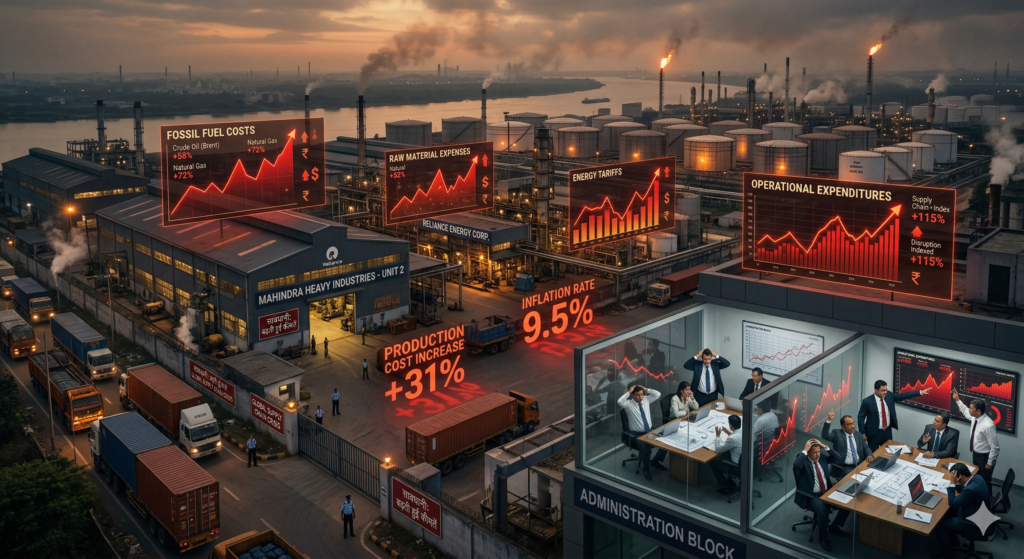
The Bigger Shift: Geopolitics Is Now a Boardroom Metric
This is the real story.
Geopolitics is no longer background noise.
It is now a core business variable.
Companies are being forced to:
- Recalculate risk
- Rethink sourcing
- Redesign supply chains
This shift aligns with broader transformations in how AI and global dynamics are reshaping businesses.
“Geopolitical risk is now a key strategic factor for global corporations.” — World Economic Forum
Long-Term Corporate Impact: The Reset Has Begun
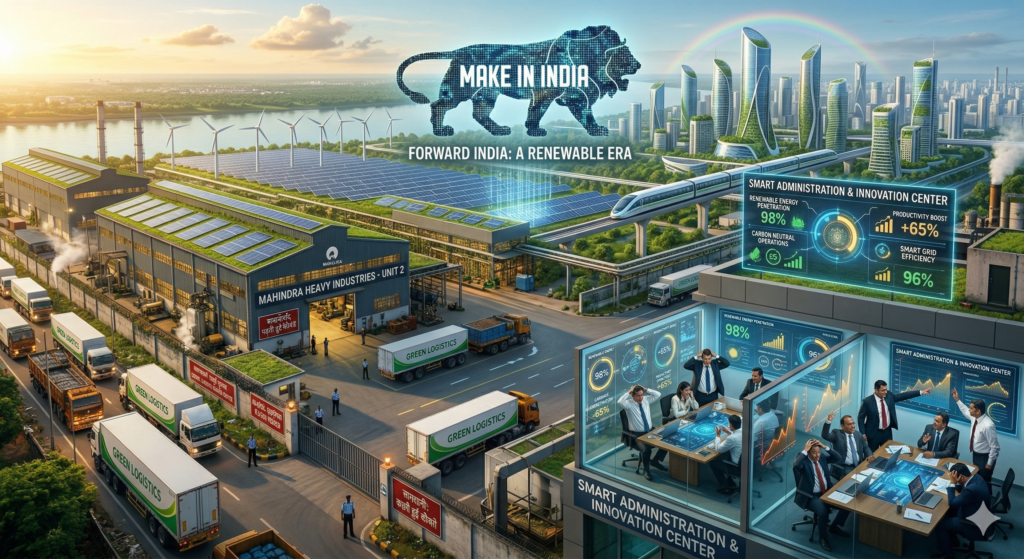
1. Energy Independence Becomes Urgent
India is accelerating investments in:
- Renewables
- Domestic exploration
- Alternative energy
This crisis may do what policy alone couldn’t—force urgency.
2. Supply Chains Are Being Rewritten
Companies are diversifying away from single-region dependence.
Localization is no longer optional—it’s strategic.
3. Risk Management Goes Mainstream
Boardrooms are now pricing geopolitical risk into decisions.
From sourcing to expansion—everything is being re-evaluated.
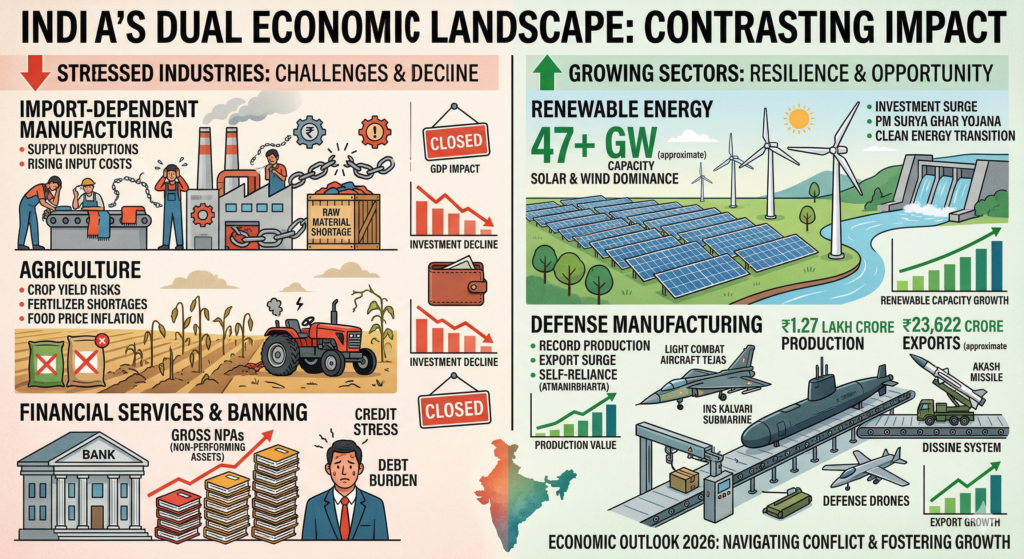
4. Winners vs Losers
Not all sectors will suffer equally:
Under Pressure:
- Aviation
- Logistics
- Manufacturing
Potential Winners:
- Renewable energy
- Defense
- Domestic supply chain players
5. Domestic Economic Shifts
Reverse migration from the Gulf could reshape India’s internal economy.
Tier-2 and Tier-3 cities may see new economic activity.
The Hard Truth: India Can’t Control This Crisis
India cannot control global geopolitics.
But it can control its response.
This moment is a test—not of strength, but of strategy.
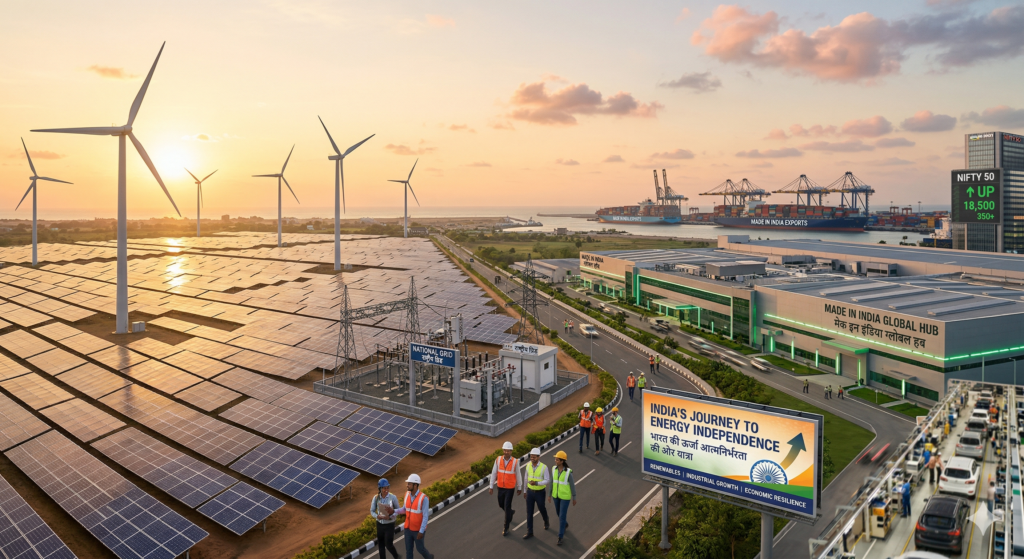
The Opportunity Hidden Inside the Crisis
Every crisis creates a pivot point.
This one could accelerate:
- Energy transition
- Supply chain resilience
- Domestic manufacturing
This shift connects to India’s long-term ambition of becoming a global manufacturing and economic powerhouse.
Final Take: Adapt or Absorb the Shock
This war is not just about missiles and markets.
It is about resilience vs vulnerability.
India’s challenge is clear:
👉 Absorb the shock today
👉 Build strength for tomorrow
Because in the next decade, the winners won’t just be the biggest economies.
They will be the most adaptable.