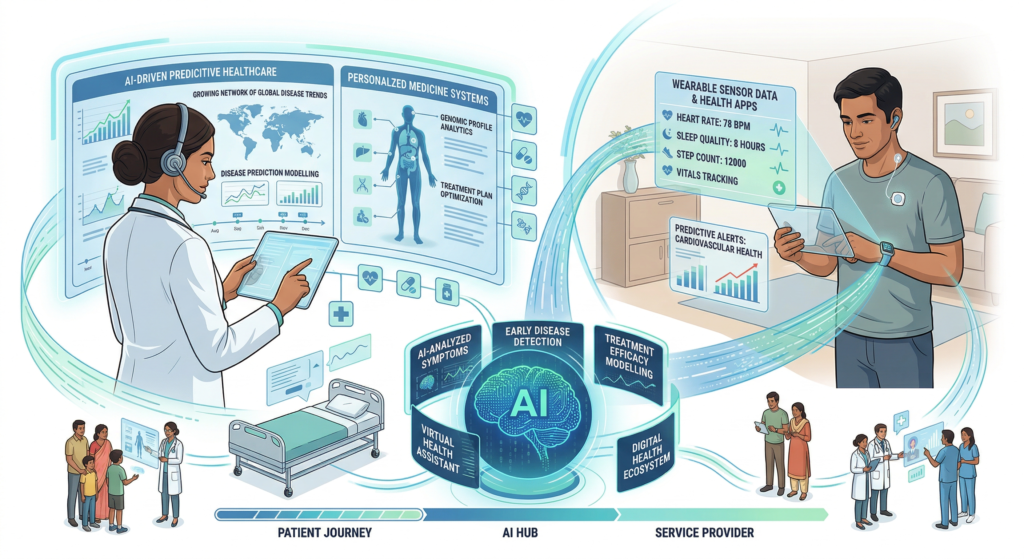
The Transformation of India’s Healthcare Landscape
India’s healthcare system has long faced structural challenges—overburdened hospitals, limited access in rural regions, and rising costs. However, the rapid emergence of HealthTech is rewriting this narrative. By combining technology with healthcare delivery, India is witnessing a paradigm shift that is not only improving access but also enhancing quality and efficiency.
Healthtech India is rapidly transforming the country’s healthcare system, improving access, efficiency, and patient outcomes through digital innovation.
The growth of healthtech India is enabling scalable solutions across diagnostics, telemedicine, and patient care.
From telemedicine platforms to AI-powered diagnostics, HealthTech is emerging as one of the most impactful sectors in India’s digital revolution.
This transformation is closely tied to broader shifts in the digital economy of India, where technology adoption is reshaping essential services.
Globally, organizations like the World Economic Forum highlight that digital health technologies are transforming healthcare delivery and improving access to services.
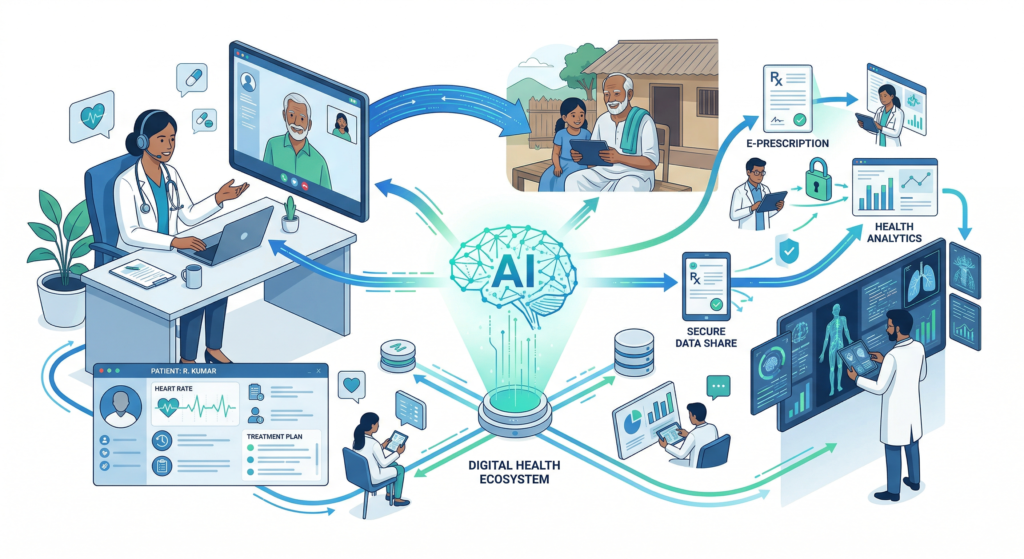
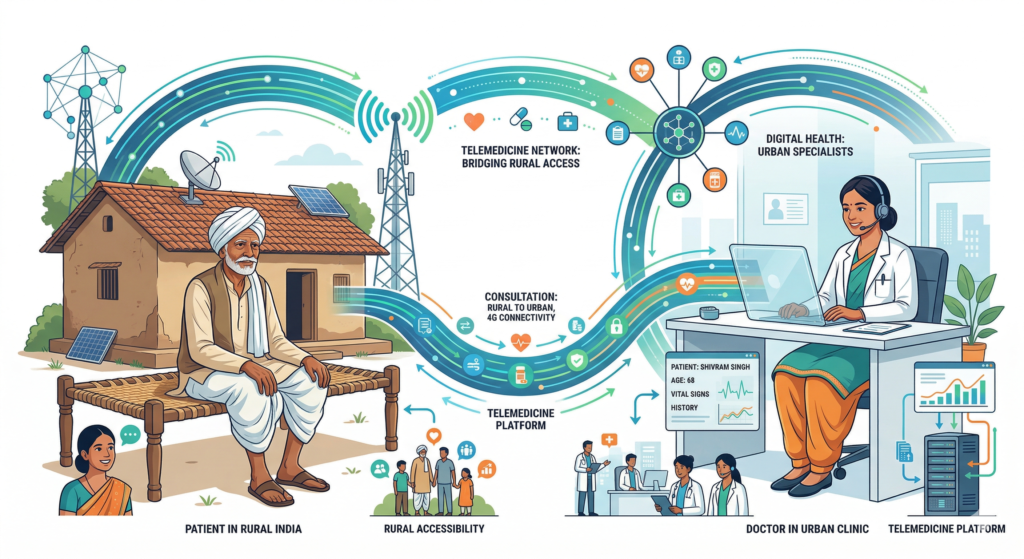
Bridging the Urban-Rural Divide
One of the most significant contributions of HealthTech is its ability to connect underserved populations with quality healthcare.
In a country where nearly 65–70% of the population resides in rural areas—but a majority of doctors are concentrated in urban centers—this gap has historically been difficult to bridge.
Telemedicine platforms like Practo, Tata 1mg, and MFine are changing that. Patients can now consult qualified doctors remotely, access prescriptions, and even schedule lab tests without stepping out of their homes.
Government initiatives such as the Ayushman Bharat Digital Mission (ABDM) are further strengthening this ecosystem by creating digital health IDs and integrated health records, enabling seamless access to healthcare services across the country.
In India, the healthcare sector is undergoing rapid transformation. According to the India Brand Equity Foundation (IBEF), increased investment and digital adoption are driving growth in healthcare services.
At the same time, this mirrors trends seen in India’s fintech boom, where digital platforms have improved accessibility and scale.
AI and Data: The New Backbone of Healthcare
Artificial Intelligence (AI) and big data analytics are transforming how diseases are diagnosed and treated.
AI-powered tools can now:
- Detect diseases like cancer at early stages
- Analyze radiology scans with high accuracy
- Predict patient risks using historical health data
Startups like Qure.ai and Niramai are leading this space in India, using AI to detect tuberculosis and breast cancer respectively—often faster and more accurately than traditional methods.
This not only improves patient outcomes but also reduces the burden on healthcare professionals, allowing them to focus on more critical cases.

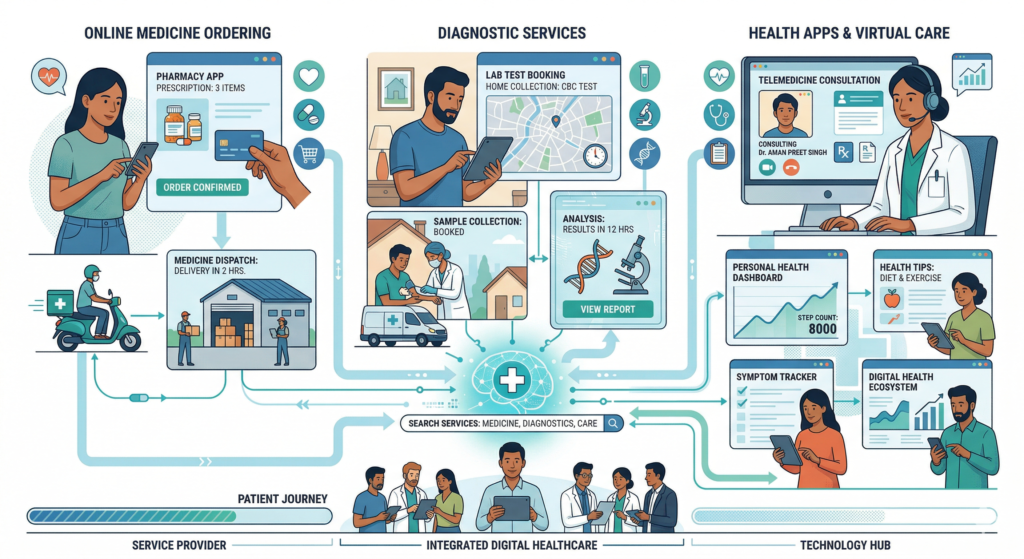
Rise of Digital Pharmacies and E-Health Platforms
The surge of online pharmacies and digital health platforms has added another layer of convenience and accessibility.
Platforms like PharmEasy, Netmeds, and Apollo 24|7 allow users to:
- Order medicines online
- Book diagnostic tests
- Access health consultations
This has been particularly transformative during and after the COVID-19 pandemic, where digital healthcare became not just a convenience, but a necessity.
Additionally, subscription-based health plans and preventive care packages are encouraging Indians to take a more proactive approach to their health.
More importantly, telemedicine is expanding access to healthcare. Insights from McKinsey & Company suggest that digital health solutions can significantly improve patient outcomes and system efficiency.
The Startup Ecosystem Driving Innovation
India’s HealthTech ecosystem is one of the fastest-growing in the world. With increasing investor interest and government support, startups are innovating across multiple segments:
- Diagnostics (e.g., AI-based imaging)
- Wearables & remote monitoring
- Mental health platforms
- Chronic disease management
The pandemic acted as a catalyst, accelerating adoption by both consumers and healthcare providers.
Investments in HealthTech have surged, signaling strong confidence in the sector’s long-term potential. As a result, India is not just adopting global innovations but also building solutions tailored to its unique healthcare challenges.
This transformation is supported by initiatives like Digital India, which aim to strengthen digital infrastructure across sectors, including healthcare.
In addition, many healthtech startups are leveraging insights from go-to-market strategies to scale solutions efficiently.
Making Healthcare More Affordable
Affordability has always been a critical concern in India’s healthcare system.
HealthTech is addressing this by:
- Reducing operational costs through automation
- Enabling early diagnosis, which lowers treatment costs
- Offering competitive pricing through digital platforms
For example, AI-driven diagnostics reduce the need for expensive infrastructure, while teleconsultations significantly cut down travel and consultation costs.
Insurance technology (InsurTech) is also integrating with HealthTech to offer more inclusive and customized health coverage, further improving affordability.
At the same time, patient expectations are evolving. According to the Harvard Business Review, digital experiences are becoming central to improving engagement and satisfaction.
Challenges on the Road Ahead
Despite its rapid growth, the HealthTech sector in India faces several challenges:
- Digital literacy gaps in rural populations
- Data privacy and security concerns
- Regulatory complexities
- Trust deficit among certain user groups
To fully unlock its potential, stakeholders—including the government, startups, and healthcare providers—must collaborate to address these issues.
This also aligns with evolving trends in startup funding, where sustainability and efficiency are key priorities.
The Future of HealthTech in India
The future of healthcare in India is undeniably digital.
With advancements in wearable technology, genomics, and personalized medicine, the next phase of HealthTech will focus on predictive and preventive healthcare.
Imagine a system where:
- Wearables continuously monitor your health
- AI predicts potential illnesses before symptoms appear
- Doctors intervene proactively rather than reactively
Looking ahead, institutions like the World Bank highlight that digital health innovation will play a critical role in improving healthcare access and outcomes in emerging economies.
India is well-positioned to lead this transformation, given its strong IT ecosystem, growing startup culture, and massive population base that demands scalable solutions.