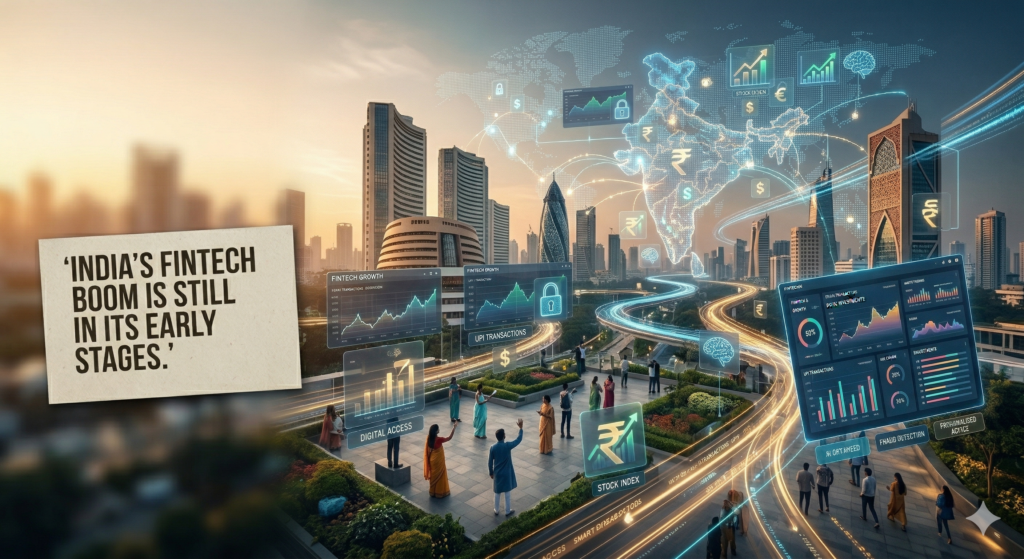
The Rise of India’s Fintech Ecosystem
India’s fintech story is one of the most remarkable transformations in the global financial landscape.
This growth is closely linked to broader trends in the digital economy of India, where digital infrastructure is enabling large-scale financial innovation.
A decade ago, financial services in India were largely traditional—bank branches, paperwork-heavy processes, and limited access for large sections of the population. Today, the country has emerged as one of the world’s most dynamic fintech ecosystems, driven by digital payments, mobile adoption, and a wave of innovative startups.
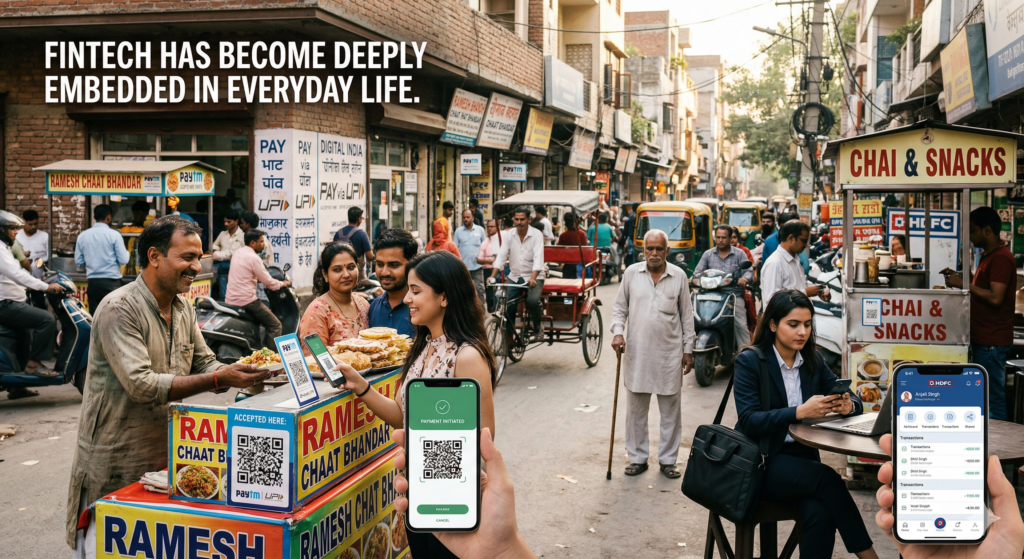
From scanning QR codes at street vendors to investing in stocks through mobile apps, fintech has become deeply embedded in everyday life.
But what exactly is driving this explosive growth?
The answer lies in a powerful combination of technology, policy, consumer behavior, and entrepreneurial innovation.
At the same time, this momentum aligns with insights from India’s global fintech innovation, where Indian platforms are gaining international relevance.
As Nithin Kamath has observed:
“India’s fintech growth is being driven by accessibility and simplicity more than anything else.”
The UPI Revolution & Digital Public Infrastructure
The UPI Revolution
At the heart of India’s fintech boom lies the Unified Payments Interface (UPI).
UPI has fundamentally changed how money moves in India by enabling:
- instant bank-to-bank transfers
- seamless mobile payments
- zero-cost transactions for users
- interoperability across platforms
Today, billions of transactions take place every month through UPI, making it one of the most successful real-time payment systems in the world.
The impact of UPI goes far beyond convenience—it has brought millions of small businesses and individuals into the digital economy.
For example:
- street vendors now accept digital payments via QR codes
- small retailers can operate without cash dependency
- consumers can make payments instantly without cards or wallets
UPI has effectively created a national payments infrastructure that fintech companies can build on.
In India, the payments ecosystem has been transformed by platforms like the National Payments Corporation of India (NPCI), which powers UPI and enables real-time digital transactions at scale.
Digital Public Infrastructure (DPI)
India’s fintech growth is not accidental—it is built on a strong foundation of Digital Public Infrastructure.
Key components of this ecosystem include:
- Aadhaar for digital identity
- UPI for payments
- Account Aggregator framework for financial data sharing
- DigiLocker for document storage
This infrastructure allows fintech startups to innovate without having to build core systems from scratch.
According to Nandan Nilekani:
“India’s digital public infrastructure is enabling innovation at a scale never seen before.”
This “India Stack” has become one of the country’s biggest competitive advantages in fintech.
In addition, many fintech startups are leveraging insights from go-to-market strategies to expand rapidly in competitive markets.

Mobile Adoption & Startup Innovation
A Mobile-First Nation
India’s fintech boom is also closely tied to the rapid adoption of smartphones and affordable internet.
With hundreds of millions of smartphone users, India has become a mobile-first economy, where financial services are increasingly accessed through apps rather than physical branches.
This shift has enabled:
- digital wallets and payment apps
- mobile-based investing platforms
- app-driven lending solutions
- instant financial services
For many users, especially in smaller cities and rural areas, mobile apps represent their first interaction with formal financial systems.
This transformation is supported by initiatives like Digital India, which provide a strong foundation for digital financial services.
The Rise of Fintech Startups
India’s fintech ecosystem has been energized by a new generation of startups solving real financial problems.
These companies are operating across multiple segments, including:
Payments
Startups building payment gateways, wallets, and merchant solutions.
Lending
Platforms offering digital loans using alternative credit scoring models.
WealthTech
Apps making investing accessible to retail users.
InsurTech
Technology-driven insurance distribution and management.
Infrastructure
APIs and platforms enabling other fintech companies.
These startups are not just competing with traditional banks—they are redefining how financial services are delivered.
This also aligns with evolving patterns in startup funding, where investors are focusing on sustainable growth and profitability.
As Kunal Shah has said:
“The biggest opportunity in fintech is not disruption—it’s simplification.”

Inclusion, Regulation, and AI-Driven Growth
Financial Inclusion at Scale
One of the most significant impacts of fintech in India has been its role in financial inclusion.
Millions of Indians who previously lacked access to formal banking systems are now able to:
- open digital bank accounts
- access credit
- make digital payments
- invest and save
Government initiatives such as Jan Dhan Yojana have further accelerated this inclusion by enabling mass account creation.
Fintech platforms have built on this foundation to deliver services to underserved populations.
For example:
- digital lending platforms provide credit to users without traditional credit histories
- micro-investment apps allow small-ticket investing
- payment platforms enable financial participation at the grassroots level
Regulatory Support and Policy Push
India’s fintech boom has also been supported by a relatively proactive regulatory environment.
The Reserve Bank of India (RBI) and other regulators have played a key role in:
- enabling digital payments infrastructure
- introducing frameworks like the Account Aggregator system
- regulating digital lending practices
- promoting innovation while managing risk
This balance between innovation and regulation has helped create a stable ecosystem for fintech growth.
Globally, organizations like the World Economic Forum highlight that fintech is reshaping financial systems and driving economic growth worldwide.
The Role of Data and AI
Another major driver of fintech innovation is the use of data and artificial intelligence.
Fintech companies are increasingly using AI to:
- assess creditworthiness
- detect fraudulent transactions
- personalize financial products
- improve customer experience
For example:
- lending platforms use alternative data (such as transaction history) to evaluate borrowers
- fraud detection systems analyze transaction patterns in real time
- wealth platforms recommend investment strategies based on user behaviour
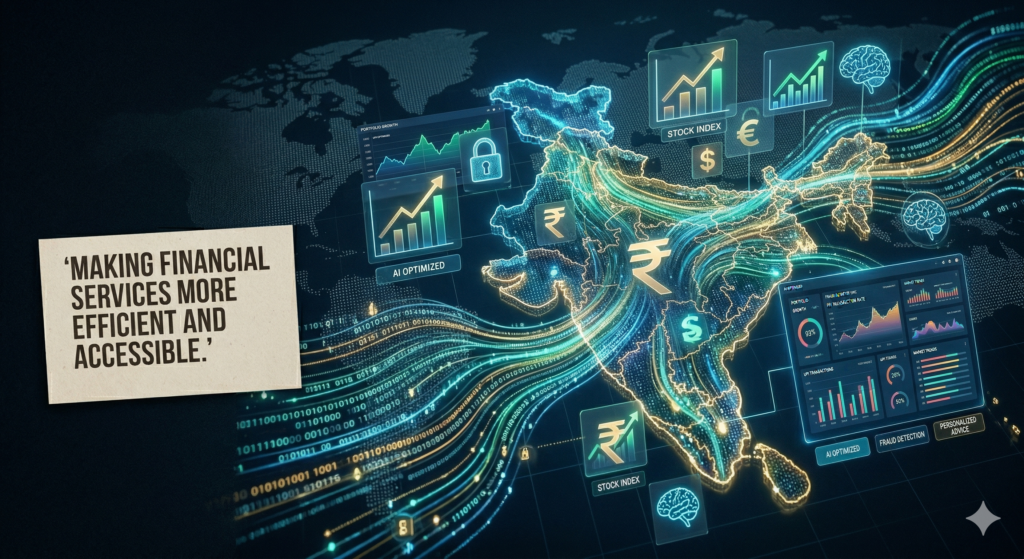
This data-driven approach is making financial services more efficient and accessible.
Challenges, Future Outlook & Conclusion
Challenges Ahead
Despite its rapid growth, India’s fintech ecosystem faces several challenges:
- regulatory uncertainty in emerging segments
- data privacy and cybersecurity concerns
- profitability and sustainable business models
- increasing competition among startups
Addressing these challenges will be critical for the long-term sustainability of the sector.
Looking ahead, insights from McKinsey & Company suggest that digital financial services will continue to expand rapidly, particularly in high-growth markets like India.
The Road Ahead
India’s fintech boom is still in its early stages.
As technologies such as AI, blockchain, and embedded finance continue to evolve, the scope for innovation will only expand further.
The next phase of growth is likely to focus on:
- deeper financial inclusion
- global expansion of Indian fintech models
- integration of financial services into everyday platforms
- more personalized and intelligent financial products
As Vijay Shekhar Sharma has noted:
“India is not just adopting fintech—it is defining how fintech works at scale.”
A Defining Moment
India’s fintech boom represents more than just technological progress—it reflects a fundamental shift in how financial services are accessed, delivered, and experienced.
With strong digital infrastructure, a vibrant startup ecosystem, and a massive user base, India is well-positioned to remain at the forefront of global fintech innovation.
And as this transformation continues, fintech may well become one of the defining pillars of India’s digital economy in the years to come.