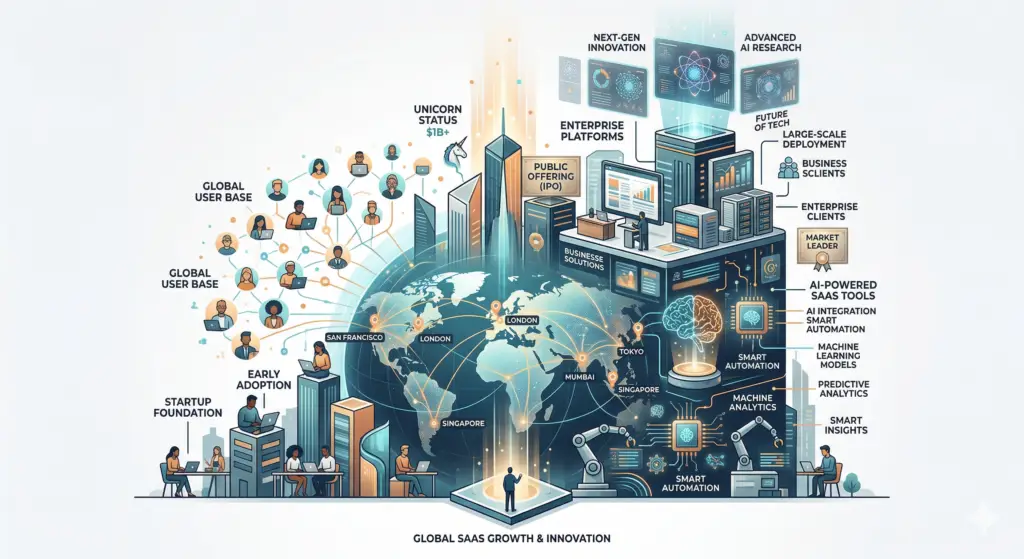
Over the past two decades, Software-as-a-Service (SaaS) has emerged as one of the most powerful and scalable business models in the global technology ecosystem. By delivering software through cloud-based platforms rather than traditional on-premise installations, SaaS companies enable businesses to access powerful applications through the internet without the need for complex infrastructure or large upfront investments.
This scalability is closely tied to broader trends in the digital economy of India, where cloud adoption and digital transformation are accelerating.
This shift has fundamentally transformed how software is built, distributed, and monetised.
Today, many of the world’s most successful technology companies operate on the SaaS model. From Salesforce and Adobe to Shopify and ServiceNow, SaaS platforms now power a significant portion of the global digital economy.
At the same time, India has rapidly emerged as one of the most promising SaaS ecosystems globally, with startups building cloud-based platforms used by businesses across North America, Europe, and Asia.
The reason SaaS has become so dominant is simple: it is one of the most scalable startup models ever created.
Globally, the SaaS model is widely recognized for its scalability. According to the McKinsey & Company, “software and cloud-based models enable businesses to scale rapidly with relatively low marginal costs,” making them highly attractive for long-term growth.
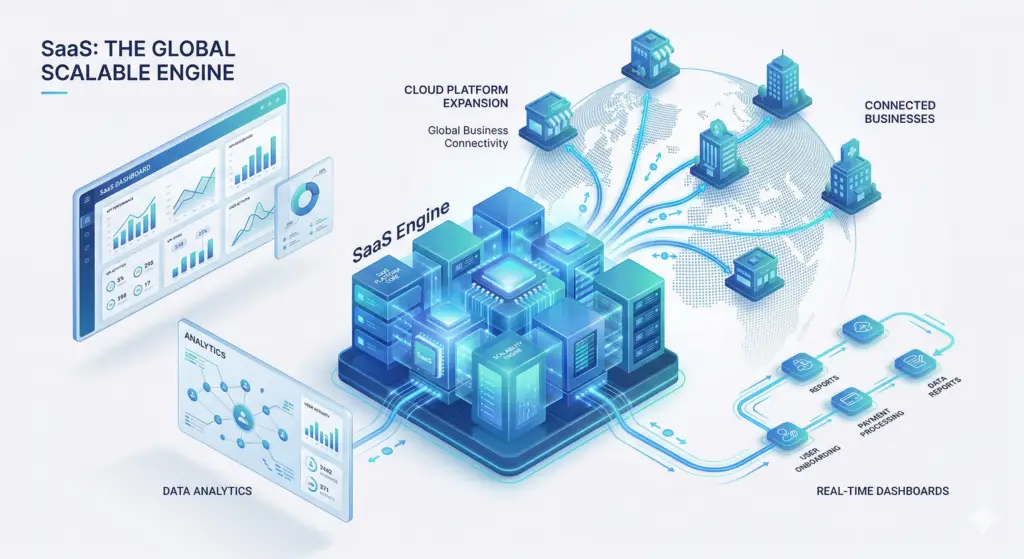
The Global SaaS Opportunity
The scale of the SaaS market reflects how rapidly businesses are moving toward cloud-based software solutions.
Industry estimates highlight the enormous growth potential of the sector:
- The global SaaS market is expected to exceed $300 billion by 2025.
- By the early 2030s, the market could surpass $1 trillion in annual revenue.
- More than 85% of enterprise applications are expected to run on cloud infrastructure within the next decade.
At the same time, this aligns with trends seen in SaaS industry growth in India, where companies are scaling globally from India.
Several macro trends are accelerating SaaS adoption worldwide:
• cloud computing adoption
• digital transformation initiatives
• remote and hybrid work environments
• demand for automation and analytics tools
These trends have created an environment where SaaS companies can scale faster than traditional software businesses.
In addition, SaaS startups often leverage insights from go-to-market strategies to scale efficiently across markets.
What Makes SaaS So Scalable?
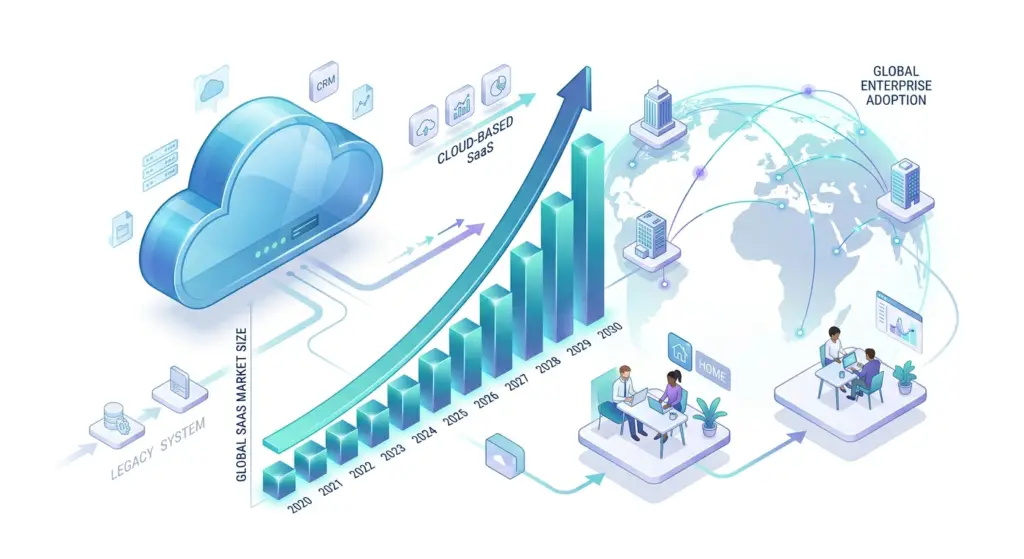
SaaS startups possess several structural advantages that make them uniquely suited for rapid global growth.
1. Recurring Revenue Creates Predictable Growth
One of the most powerful aspects of the SaaS model is the subscription-based revenue structure.
Instead of selling software as a one-time purchase, SaaS companies charge customers recurring monthly or annual fees.
This creates predictable revenue streams that allow companies to forecast growth more accurately.
Key advantages include:
• stable cash flow
• long-term customer relationships
• higher investor confidence
• stronger company valuations
SaaS companies typically track Annual Recurring Revenue (ARR) as a core growth metric.
Investors often value SaaS companies at high ARR multiples because recurring revenue signals business stability.
2. Global Distribution Through the Internet
Traditional businesses often require physical infrastructure or distribution networks to reach customers.
SaaS companies, however, distribute their products entirely through the internet.
This enables them to sell software to customers around the world without building offices or physical distribution channels.
Advantages include:
• global customer reach
• lower operational costs
• rapid international expansion
Many SaaS startups in India generate the majority of their revenue from international markets while operating with development teams based locally.
Looking at global trends, organizations like the World Economic Forum highlight that cloud-based platforms are transforming industries and enabling scalable innovation worldwide.
3. Extremely High Gross Margins
SaaS companies often operate with gross margins ranging from 70% to 90%, significantly higher than most traditional businesses.
Once a software platform has been developed, the cost of delivering it to additional customers is relatively low.
This creates powerful economies of scale.
For example:
• the same software product can serve thousands of customers
• infrastructure costs grow slower than revenue
• profitability increases as customer numbers rise
This scalability is one of the key reasons investors are highly attracted to SaaS startups.
Industry leaders have also emphasized this advantage. Sridhar Vembu, Founder of Zoho, has often highlighted that “SaaS allows companies to build globally scalable products with capital efficiency,” reinforcing why the model has gained widespread adoption.
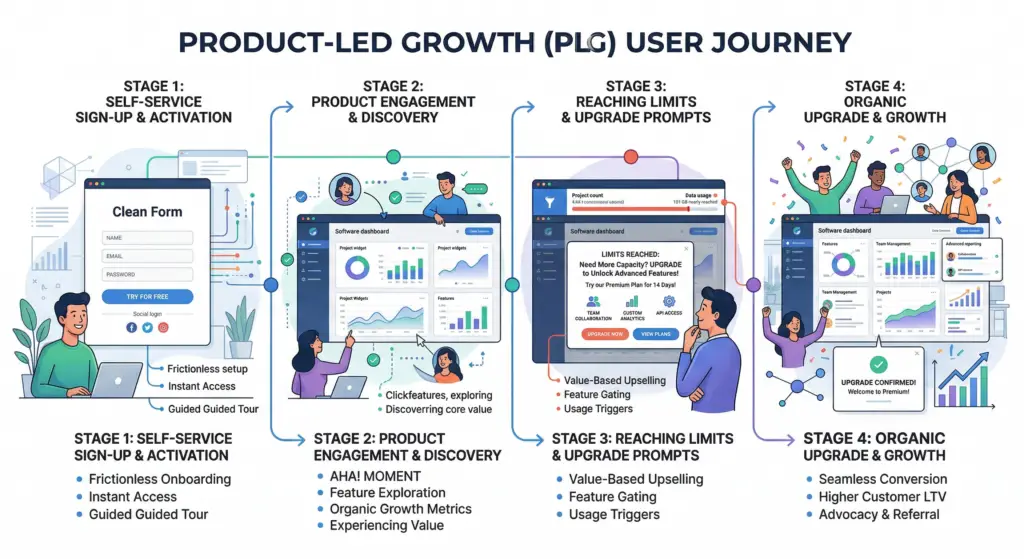
4. Product-Led Growth Accelerates Scaling
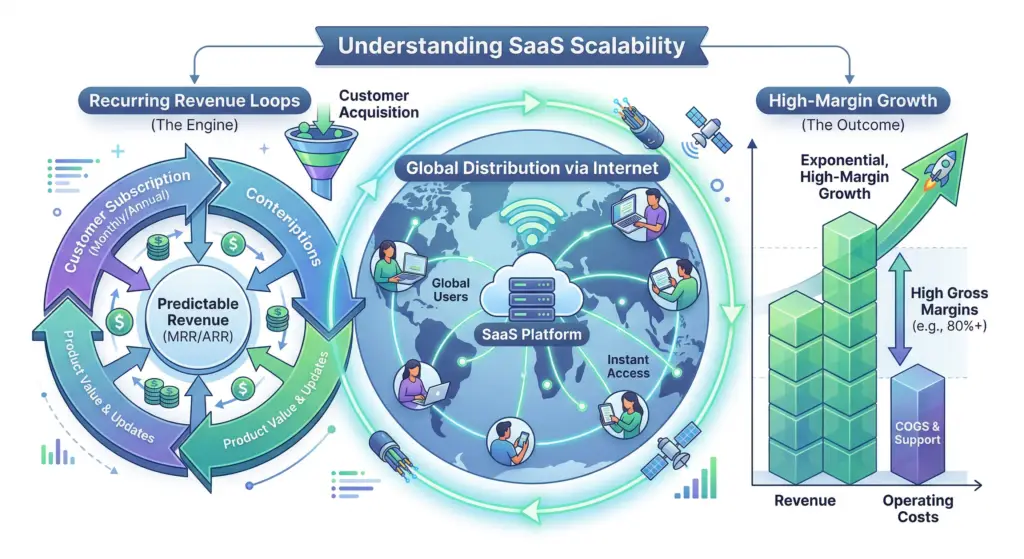
Many modern SaaS companies use a strategy known as Product-Led Growth (PLG).
In this model, the product itself becomes the primary driver of user acquisition and expansion.
Instead of relying heavily on sales teams, customers can:
• sign up for free trials
• explore the product independently
• upgrade to paid plans
Examples of PLG strategies include:
• freemium pricing models
• self-serve onboarding
• in-product upgrade prompts
Companies such as Slack, Zoom, and Dropbox have scaled rapidly using this approach.
Product-led growth allows SaaS startups to acquire users globally with minimal sales overhead.
5. Continuous Innovation Through Cloud Delivery
Unlike traditional software that requires manual upgrades, SaaS products are updated continuously through the cloud.
This enables companies to deliver improvements rapidly without disrupting users.
Advantages include:
• faster product development cycles
• continuous feature releases
• real-time performance improvements
SaaS companies can also analyse customer usage data to understand how their products are used.
This data-driven feedback loop allows companies to refine their platforms and build features that customers truly need.
This transformation is further supported by initiatives like Digital India, which aim to build a strong digital foundation for businesses to scale efficiently.
SaaS Success Stories
Several global companies have demonstrated the enormous potential of the SaaS model.
Salesforce
Salesforce pioneered the cloud-based Customer Relationship Management (CRM) industry and became one of the world’s largest enterprise software companies.
Shopify
Shopify enables millions of businesses worldwide to build and manage online stores through its SaaS platform.
Zoom
Zoom experienced explosive growth by offering cloud-based video communication software that organisations could adopt instantly.
The Rise of the SaaS Ecosystem in India
India has rapidly become one of the most exciting SaaS ecosystems in the world.
Several factors are driving this growth:
• a large and skilled engineering workforce
• lower product development costs
• global demand for enterprise software
• increasing venture capital investment
Today, India hosts more than 1,000 SaaS startups, many of which serve international markets.
Industry analysts estimate that Indian SaaS companies could generate $50–70 billion in annual revenue by 2030.
Several Indian SaaS companies have already achieved global success, demonstrating the scalability of the model.
In India, the growth of SaaS is supported by policy initiatives. According to NITI Aayog, digital innovation and technology-driven businesses are expected to play a key role in India’s economic growth and global competitiveness.
This also aligns with evolving trends in startup funding, where sustainable growth and strong unit economics are critical.
Emerging Trends in the SaaS Industry
The SaaS industry continues to evolve rapidly as new technologies reshape how software platforms operate.
Industry estimates suggest that SaaS companies can achieve significantly higher margins due to low incremental costs, making them one of the most capital-efficient business models in the startup ecosystem.
Key trends include:
AI-Powered SaaS
Artificial intelligence is becoming deeply integrated into SaaS platforms.
Examples include:
• predictive analytics
• automated workflows
• AI-powered customer support
• intelligent data insights
AI integration is expected to significantly enhance the capabilities of SaaS platforms.
Vertical SaaS
Many startups are now building SaaS platforms designed specifically for individual industries.
Examples include:
• healthcare SaaS platforms
• logistics management software
• fintech infrastructure tools
• real estate management systems
Vertical SaaS companies often achieve strong market positions because they deeply understand industry-specific needs.
API-First Platforms
Modern SaaS products increasingly provide APIs that allow businesses to integrate software into their existing systems.
This creates entire ecosystems of applications built on top of SaaS platforms.
Additionally, initiatives like Startup India aim to “build a strong ecosystem for nurturing innovation and startups,” enabling SaaS companies to scale both domestically and globally.
Final Thoughts
Software-as-a-Service has fundamentally changed how software is created, distributed, and consumed.
By combining cloud delivery, recurring revenue, and global accessibility, SaaS enables startups to build businesses that scale rapidly across markets.
For entrepreneurs, the SaaS model offers a powerful framework for building sustainable technology companies with strong growth potential.
As digital transformation continues to accelerate worldwide, SaaS platforms will remain at the centre of the global software economy.
Ultimately, institutions like the World Bank emphasize that digital platforms and scalable business models like SaaS are critical for driving economic growth in emerging markets.
In many ways, SaaS represents not just a successful startup model but the future of how software will be built and delivered across industries.