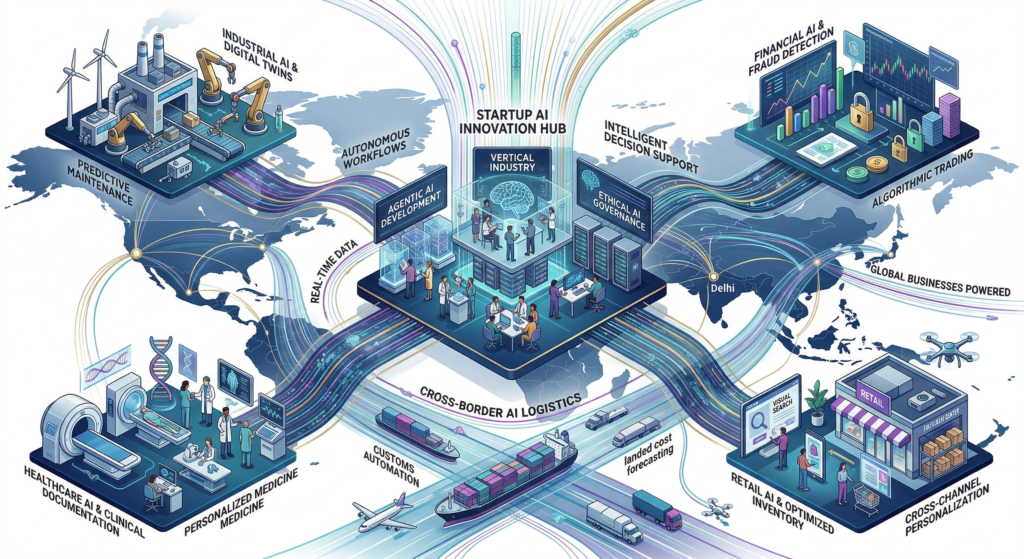
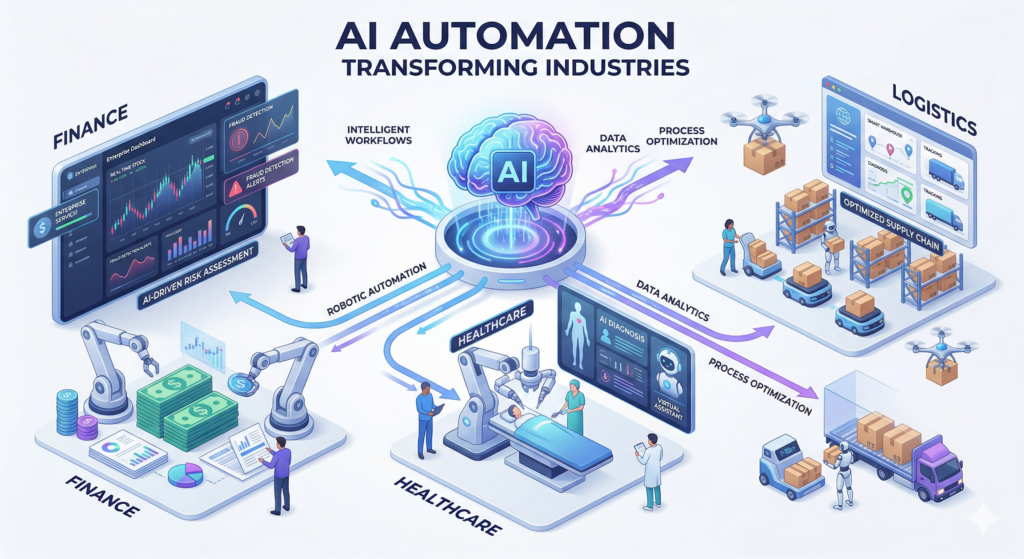
Artificial intelligence is rapidly reshaping how businesses operate. Automation is emerging as one of its most transformative applications.
Across industries like finance, logistics, healthcare, and enterprise software, startups are building intelligent systems.
These systems can automate complex workflows once handled by large teams.
This growth reflects broader trends in the digital economy of India, where AI is becoming a key driver of innovation.
Global attention often focuses on large AI companies in Silicon Valley.
However, a new generation of Indian startups is quietly building innovative AI-powered automation tools.
These solutions are designed for both domestic and international markets.
As Rajan Anandan has noted, “India is at an inflection point in building global AI companies,” highlighting the momentum behind emerging startups.
These companies may not yet be widely known.
However, their technology platforms and product strategies suggest they could play an important role in the next wave of enterprise automation.
Here are six Indian AI startups that investors and industry observers are beginning to watch closely.
1. Tattvam AI
AI-powered chip design automation
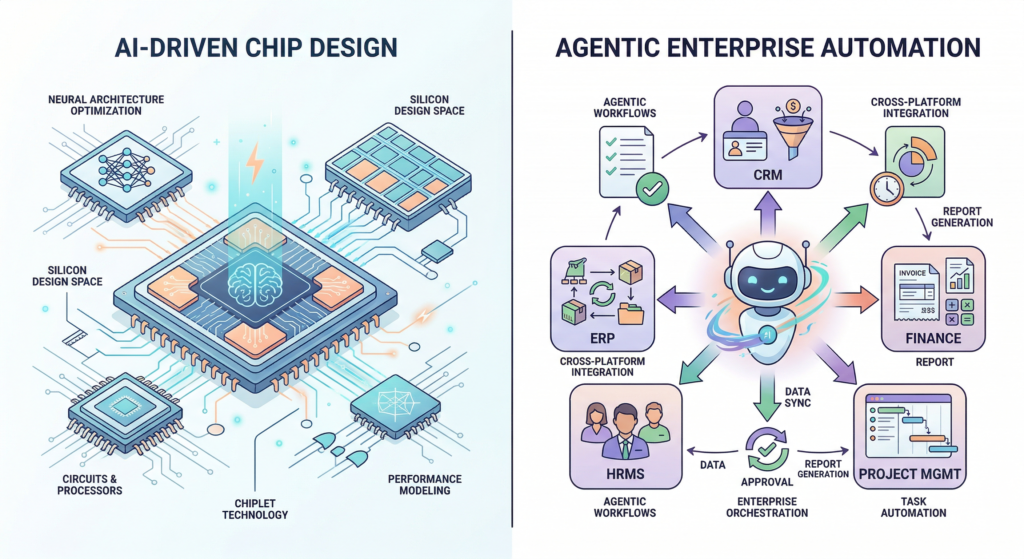
Based in Chennai, Tattvam AI is working on one of the most technically ambitious problems in the semiconductor industry: automating chip design.
Traditional chip development can take years and require large engineering teams. Tattvam AI is developing AI models capable of understanding circuit architecture and design constraints, dramatically reducing the time required to design custom chips.
The company recently raised early funding to build its platform and aims to shorten chip design timelines from years to weeks. This could make semiconductor innovation more accessible for startups and specialized hardware companies.
With demand for custom processors increasing due to AI workloads, tools that automate chip design could become an important part of the future semiconductor ecosystem.
2. Ascimov
Agentic AI for robotic process automation
Kerala-based Ascimov is developing agentic AI systems designed to automate complex enterprise workflows.
Unlike traditional robotic process automation tools that rely on predefined scripts, Ascimov’s platform focuses on AI agents capable of making contextual decisions, allowing automation systems to handle more dynamic and unpredictable tasks.
This type of “agentic automation” is emerging as one of the most exciting trends in enterprise software. Rather than automating individual tasks, AI agents can coordinate entire workflows across multiple software systems.
As businesses increasingly look to automate operational processes, startups like Ascimov could become key players in the next generation of enterprise automation platforms.
3. Gnani.ai
Voice AI automation for customer interactions
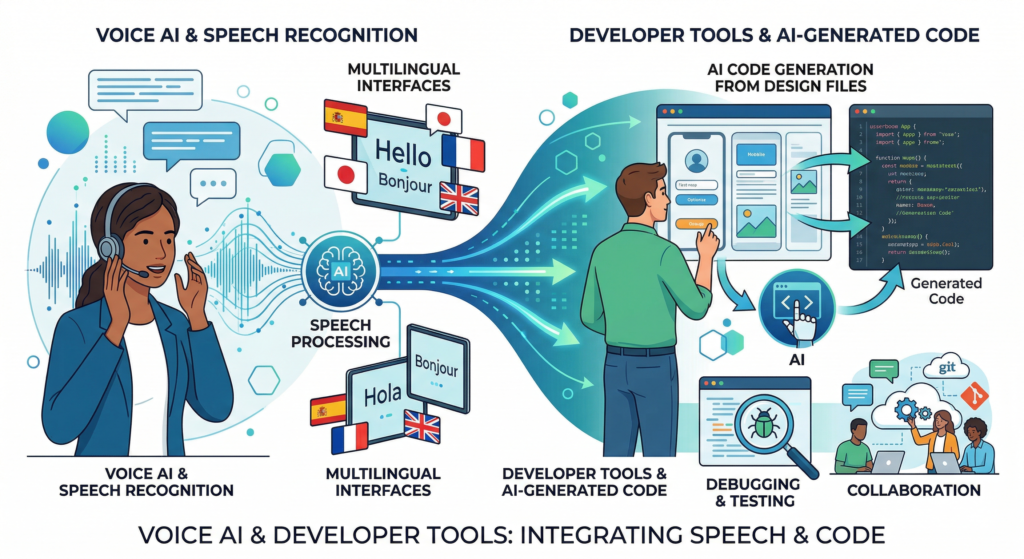
Bengaluru-based Gnani.ai is building advanced speech recognition and conversational AI systems tailored for multilingual markets.
The company’s technology enables businesses to automate voice-based customer interactions in multiple Indian languages. This capability is particularly valuable in sectors such as banking, telecom, and e-commerce where large volumes of customer calls must be handled daily.
Voice AI remains one of the most complex challenges in artificial intelligence due to accent variations, background noise, and linguistic diversity. By focusing on Indian languages and real-world enterprise use cases, Gnani.ai is addressing a critical gap in AI-driven customer service automation.
4. Kombai AI
AI assistants for software developers
Developer productivity tools have become one of the fastest-growing categories within the AI ecosystem.
Kombai AI, founded by Indian engineers, is building AI-powered assistants designed to help developers automatically convert design files into functional code.
This capability can significantly accelerate software development workflows. Instead of manually translating interface designs into front-end code, developers can use AI to generate production-ready components.
As software teams increasingly rely on AI copilots to boost productivity, startups building tools for developers are attracting growing attention from venture investors.
5. Enmovil
AI-driven supply chain automation
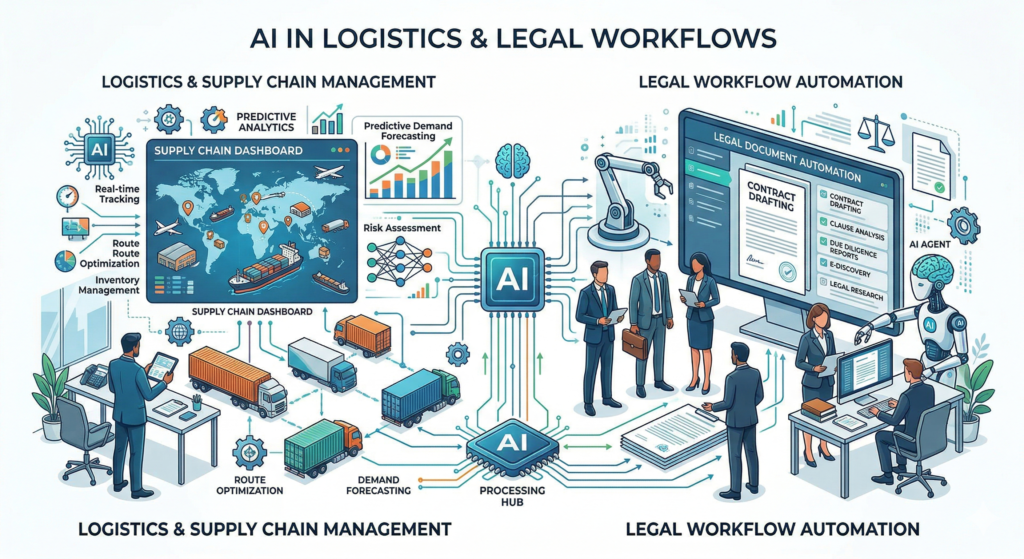
Hyderabad-based Enmovil is developing AI software designed to automate supply chain planning and logistics operations.
The company’s platform integrates with enterprise resource planning systems to provide predictive demand forecasting, real-time visibility across supply networks, and automated planning tools for manufacturers.
Large global manufacturers face persistent challenges around supply chain complexity and fragmented logistics data. By applying AI to these problems, Enmovil aims to help companies improve efficiency while reducing operational costs.
Supply chain automation is becoming increasingly important as global manufacturing networks grow more complex.
6. Lexi
AI automation for legal workflows
Legal services have traditionally been slow to adopt automation technologies, but AI is beginning to change that.
Legal-tech startup Lexi is developing AI tools designed to automate legal research, contract drafting, and document analysis.
The platform functions as an AI-powered legal assistant that can help law firms and corporate legal teams handle routine tasks more efficiently. By automating repetitive legal work, the technology allows lawyers to focus on higher-value strategic tasks.
The startup is already serving law firms across multiple countries and is continuing to expand its capabilities as it prepares to raise additional funding.
“India is uniquely positioned to become a global hub for AI innovation.” — Debjani Ghosh
Why These Startups Matter
These companies represent a broader shift in the AI ecosystem toward automation platforms that solve real operational problems.
Rather than competing directly with large technology companies developing foundational AI models, many Indian startups are focusing on building specialized applications that sit on top of existing AI infrastructure.
This strategy offers several advantages:
- lower capital requirements
- faster product development cycles
- clearer enterprise use cases
It also mirrors the earlier playbook used by India’s SaaS ecosystem, where startups built globally successful software products without needing massive infrastructure investments.
At the same time, this aligns with insights from AI sector trends in India, where investment and innovation are accelerating.
“India’s talent will play a defining role in the future of technology.” — Rishad Premji
The Next Wave of AI Innovation
India’s AI ecosystem is still evolving, but the momentum behind AI-driven startups continues to grow.
As Arvind Krishna has noted, “AI will impact every industry,” underscoring the breadth of opportunities for AI startups.
Government initiatives supporting artificial intelligence research, combined with a large pool of engineering talent, are helping create fertile ground for new startups exploring automation technologies.
For investors and industry observers, the companies highlighted here represent the early signals of a much larger transformation underway.
Some of these startups may remain niche players, while others could grow into globally recognized technology companies.
What is clear, however, is that the next generation of automation tools may increasingly come from a new wave of AI startups emerging across India’s innovation hubs.
More broadly, the rise of these startups reflects opportunities highlighted in India’s AI industry growth, where innovation is expanding across sectors.
“AI is creating entirely new opportunities for startups to scale.” — Vijay Shekhar Sharma