Farmtheory is building a digital farm-to-market platform that connects farmers directly with buyers, improving agricultural supply chains across India.
Indian spacetech startup InspeCity is developing satellite servicing technology to extend satellite lifespans and tackle the growing problem of space debris.
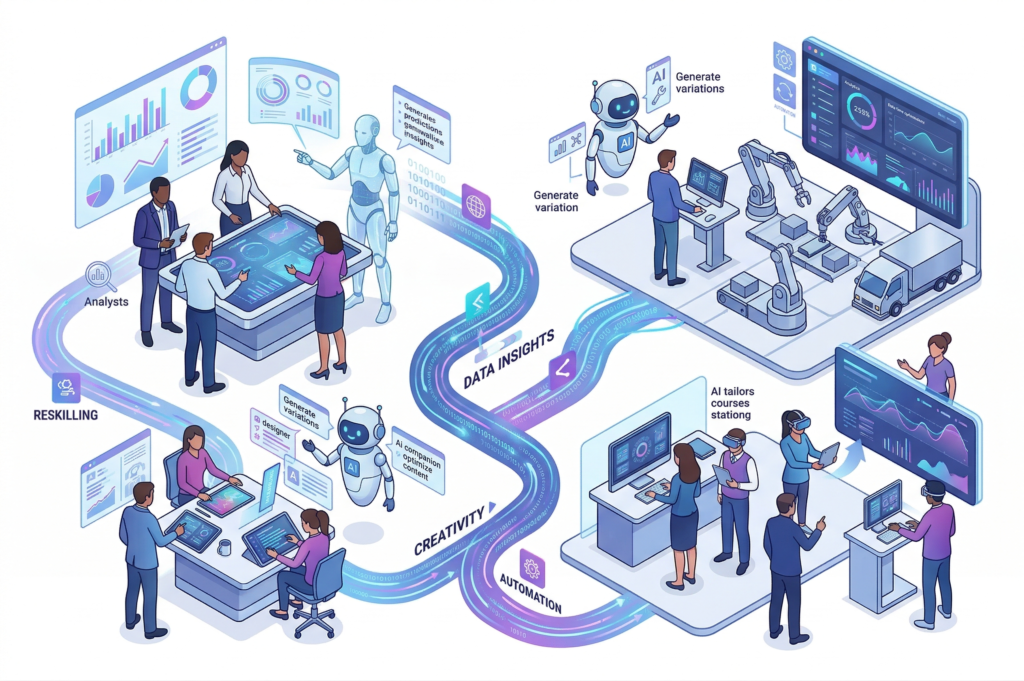
Artificial intelligence is transforming the future of work by automating routine tasks, creating new careers, and increasing the value of human skills such as creativity and problem-solving.
Artificial intelligence raises major ethical questions around bias, privacy, accountability, and the future of work as AI systems increasingly influence real-world decisions.
Artificial intelligence is rapidly transforming Indian businesses through automation, data-driven decision making, and improved customer experiences across industries.
Six early-stage Indian startups including GalaxEye, Boson Whitewater, CynLr, Pixxel, and Ati Motors are developing breakthrough technologies in space, robotics, climate tech, and AI.
Farmtheory is building a digital farm-to-market platform that connects farmers directly with buyers, improving agricultural supply chains across India.
Indian spacetech startup InspeCity is developing satellite servicing technology to extend satellite lifespans and tackle the growing problem of space debris.
Bengaluru startup Newtrace is developing advanced electrolyser technology to make green hydrogen cheaper and accelerate the global clean energy transition.
Farmtheory is building a digital farm-to-market platform that connects farmers directly with buyers, improving agricultural supply chains across India.
Indian spacetech startup InspeCity is developing satellite servicing technology to extend satellite lifespans and tackle the growing problem of space debris.
Artificial intelligence is transforming the future of work by automating routine tasks, creating new careers, and increasing the value of human skills such as creativity and problem-solving.
Artificial intelligence raises major ethical questions around bias, privacy, accountability, and the future of work as AI systems increasingly influence real-world decisions.
Artificial intelligence is rapidly transforming Indian businesses through automation, data-driven decision making, and improved customer experiences across industries.
Six early-stage Indian startups including GalaxEye, Boson Whitewater, CynLr, Pixxel, and Ati Motors are developing breakthrough technologies in space, robotics, climate tech, and AI.
Farmtheory is building a digital farm-to-market platform that connects farmers directly with buyers, improving agricultural supply chains across India.
Indian spacetech startup InspeCity is developing satellite servicing technology to extend satellite lifespans and tackle the growing problem of space debris.
Bengaluru startup Newtrace is developing advanced electrolyser technology to make green hydrogen cheaper and accelerate the global clean energy transition.
Artificial intelligence is transforming the future of work by automating routine tasks, creating new careers, and increasing the value of human skills such as creativity and problem-solving.
Key Takeaways
Artificial intelligence is transforming the nature of work by automating both physical and cognitive tasks.
Jobs are more likely to evolve rather than disappear, with new roles emerging alongside technological change.
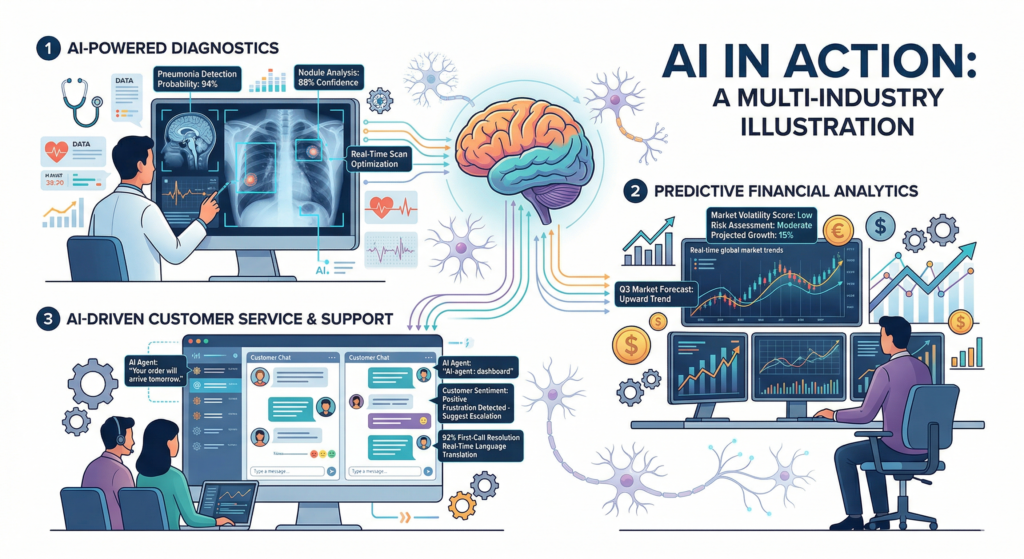
Industries such as healthcare, finance, and customer support are already being reshaped by AI.
Human skills like creativity, emotional intelligence, and problem-solving will become more valuable.
Continuous learning and reskilling will be essential for workers to adapt to the AI-driven economy.
Video Breakdown
Audio Brief
For decades, technology has reshaped the way people work. The industrial revolution mechanized physical labour, computers digitized office work, and the internet connected businesses globally.
Globally, institutions like World Economic Forum highlight that “AI will create more jobs than it displaces, but the nature of work will fundamentally change.”
This shift reflects broader changes in the digital economy of India, where AI is becoming a core driver of growth.
Artificial Intelligence, however, may be the most transformative shift yet.
Unlike earlier technologies that automated routine tasks, AI has the ability to perform cognitive work—analysing data, recognising patterns, generating content, and even assisting with decision-making. This has sparked both excitement and anxiety about what the future of work might look like.
Will AI replace human jobs? Or will it create entirely new opportunities?
Most experts believe the answer lies somewhere in between.
“Technology changes jobs faster than education systems adapt. The real challenge is preparing people for the new roles that emerge.”
The transformation of work is already underway.
Jobs Will Not Disappear—They Will Evolve
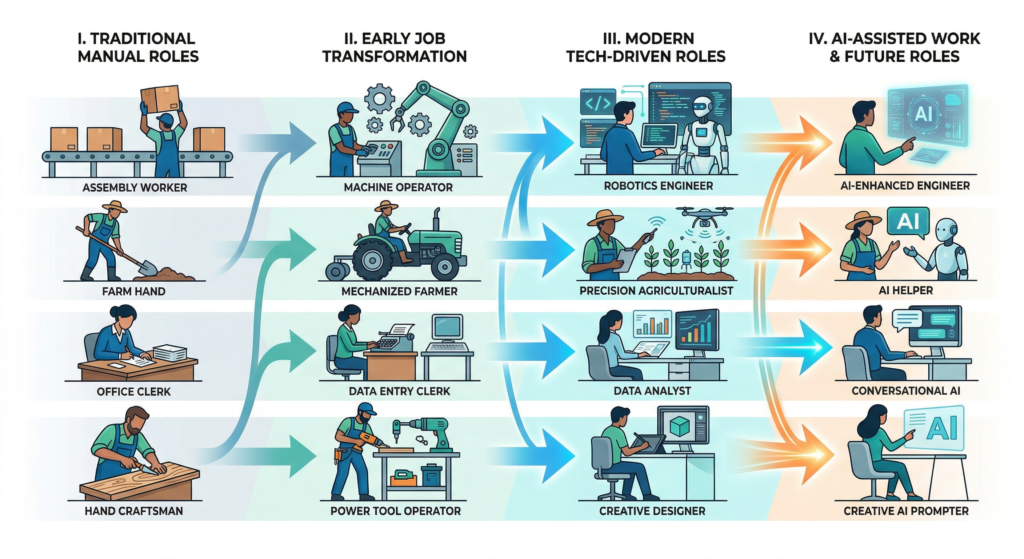
History offers an important lesson. Every major technological shift has disrupted existing jobs while creating new industries.
When computers became widespread in the 1980s and 1990s, many administrative roles changed dramatically. But new professions—such as software engineering, digital marketing, and cybersecurity—emerged in their place.
Artificial intelligence is likely to follow a similar pattern.
Rather than eliminating work entirely, AI will redefine what humans focus on.
Tasks that involve repetitive data processing will increasingly be handled by machines, while humans will focus more on creativity, strategy, and complex decision-making.
However, the conversation around AI and jobs is not just about displacement—it is increasingly about transformation. While certain repetitive and rule-based roles may decline, entirely new categories of work are emerging that require a blend of technical and human skills.
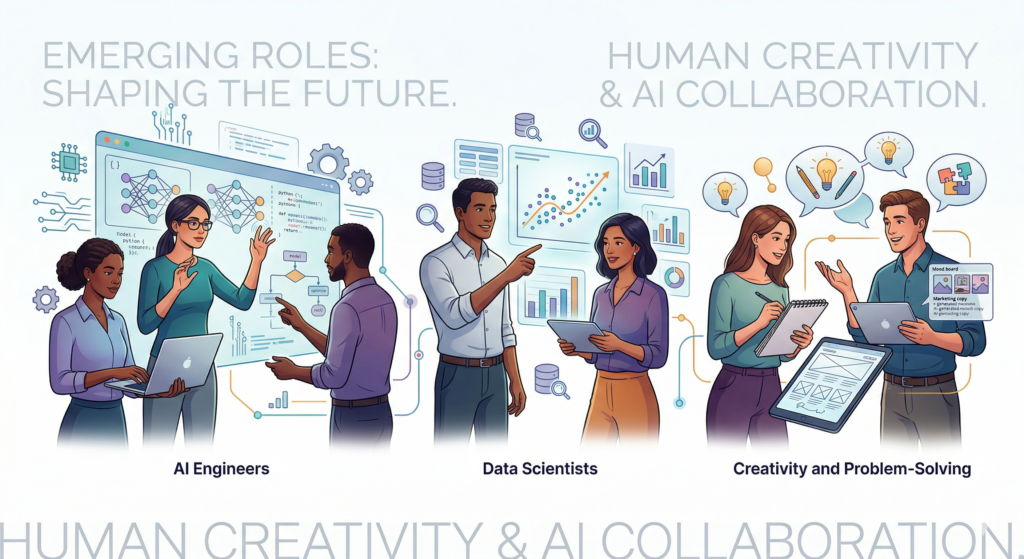
Roles such as AI trainers, prompt engineers, data ethicists, and automation specialists are becoming more relevant across industries. As a result, the workforce is shifting from task execution to problem-solving, creativity, and decision-making.
More importantly, this shift is forcing both individuals and organizations to rethink how skills are developed. Continuous learning is no longer optional—it is essential. Professionals who adapt by learning AI tools, understanding data, and combining domain expertise with technology will remain highly competitive in the evolving job market.
“Innovation always creates new possibilities for people willing to adapt.”
These new roles highlight how the workforce itself will evolve alongside technological progress.
In India, policy direction from NITI Aayog emphasizes that “AI is expected to significantly contribute to economic growth and job creation in the coming decade.”
Human Skills Will Become More Valuable
One of the most interesting consequences of AI adoption is that human skills may become more important—not less.
Machines excel at processing data and performing repetitive tasks. However, they still struggle with abilities that humans possess naturally.
These include:
creativity and original thinking
emotional intelligence
leadership and decision-making
complex problem solving
ethical judgement
As AI automates routine work, the value of these uniquely human capabilities is likely to increase.
“Technology can scale processes, but human insight and empathy are irreplaceable.”
The Importance of Reskilling
One of the biggest challenges of the AI era will be ensuring that workers can transition into new roles.
Many jobs will require different skills than they do today, which means continuous learning will become essential.
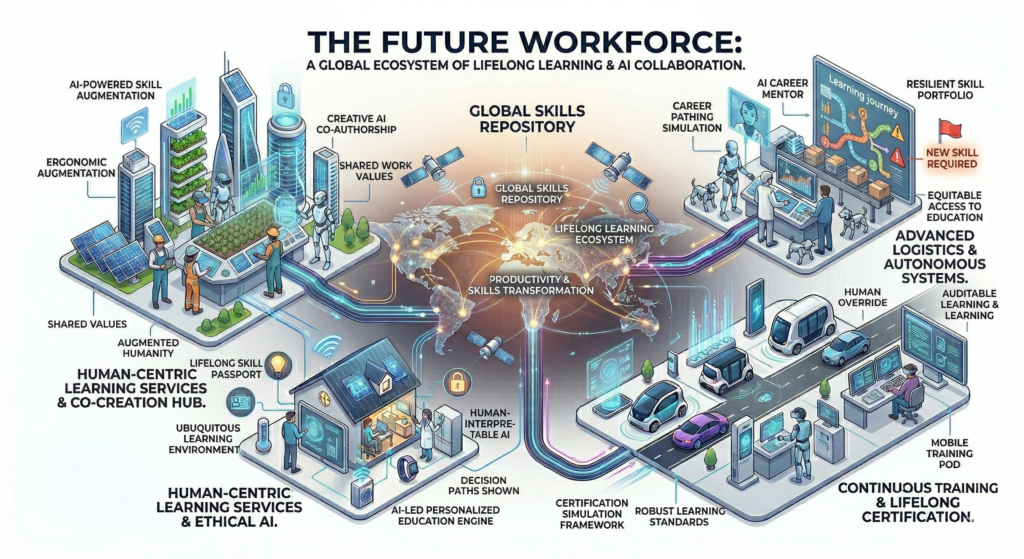
Governments, universities, and companies will all need to play a role in preparing people for these changes.
Some of the most important skills for the AI era include:
data literacy
digital collaboration
critical thinking
interdisciplinary problem solving
adaptability to new technologies
Workers who invest in learning these skills will be better positioned to thrive in an AI-driven economy.
A New Relationship Between Humans and Machines
Rather than replacing humans entirely, AI is more likely to become a collaborative partner in the workplace.
In many industries, professionals are already using AI tools to enhance productivity.
Examples include:
designers using AI to generate creative concepts
programmers using AI assistants to write code faster
marketers using AI analytics to understand customer behaviour
This partnership between human creativity and machine intelligence may ultimately redefine how work gets done.
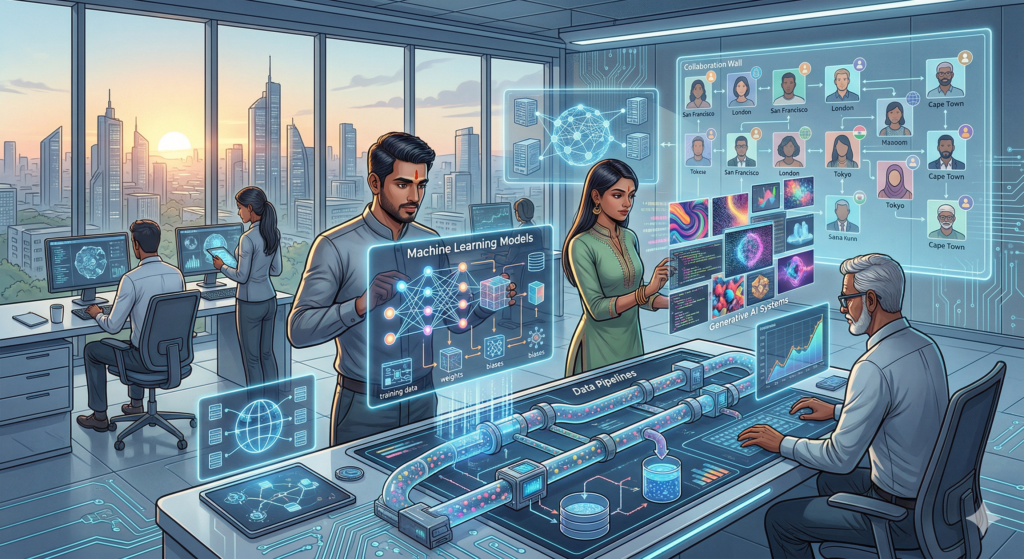
In the Indian context, this transformation is closely tied to the rapid expansion of the digital economy of India, where technology adoption is accelerating across sectors. Startups and enterprises alike are integrating AI into their operations, creating demand for new skill sets and hybrid roles. This trend also mirrors patterns seen in India’s fintech boom, where automation and digital innovation have reshaped employment landscapes.
At the same time, policy frameworks and digital initiatives are playing a crucial role in enabling this transition. Programs like Digital India and strategic direction from NITI Aayog emphasize that technology and skill development must go hand in hand. Consequently, the future of jobs in India will not just depend on technology adoption—but on how effectively the workforce adapts to it.
The Future of Work
Artificial intelligence will undoubtedly reshape the global workforce over the next decade. Some roles will disappear, many will evolve, and entirely new professions will emerge.
But the fundamental nature of work—solving problems, creating value, and collaborating with others—will remain deeply human.
The Bharat Samachar Editorial Team delivers sharp, fact-driven analysis on India’s business, startups, policy, and technology landscape—continuing a legacy of information-first journalism.
The ideas, deals and turning points shaping India’s startup, technology and corporate landscape. Bharat Samachar brings you sharp insights, deep dives and signals that matter to founders, operators and investors.