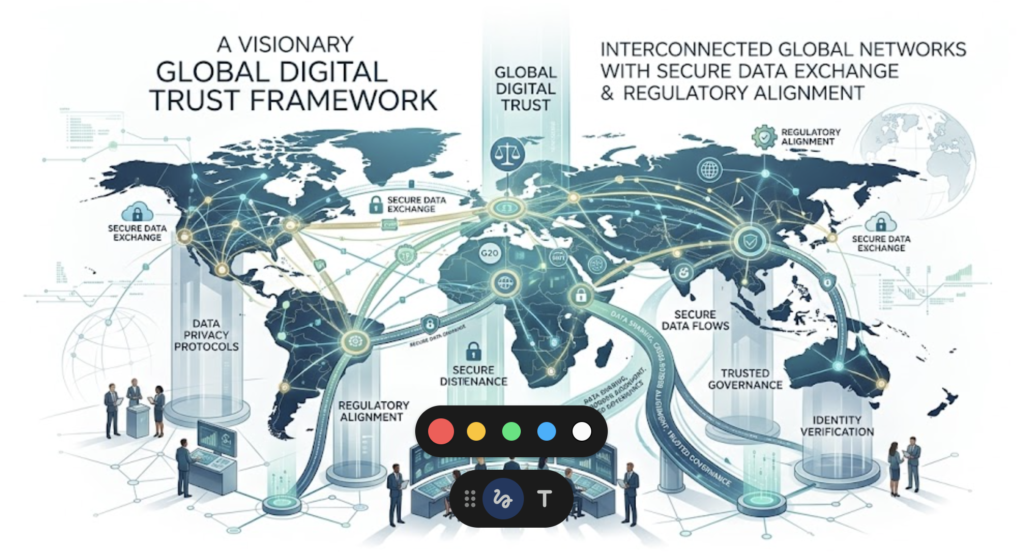
In an age where data has become one of the most valuable resources in the global economy, governments around the world are grappling with an important question: how do you protect personal information without slowing innovation?
India’s answer to that challenge is the Digital Personal Data Protection Act, a landmark law designed to regulate how companies collect, store, and use personal data.
This shift is closely tied to broader developments in the digital economy of India, where data is becoming a core asset.
For a country with more than 800 million internet users and one of the fastest-growing digital economies in the world, the implications of this law could be far-reaching.
The legislation represents India’s first comprehensive attempt to create a legal framework around personal data—something that technology companies, startups, and digital platforms have long operated without.
As Ashwini Vaishnaw explained while introducing the law:
“The Digital Personal Data Protection Act strikes a balance between protecting citizens’ rights and enabling the growth of India’s digital economy.”
That balance will be critical as the country navigates the complex intersection of privacy, technology, and economic growth.
The India data protection law is not just a regulatory requirement—it is a structural shift in how data is handled.

Why Data Protection Matters
The digital economy runs on data.
Every online transaction, mobile app interaction, and digital service generates vast amounts of information about users. Companies analyze this data to improve services, personalize experiences, detect fraud, and build new products.
As the India data protection law evolves, startups and enterprises must adapt quickly to remain compliant.
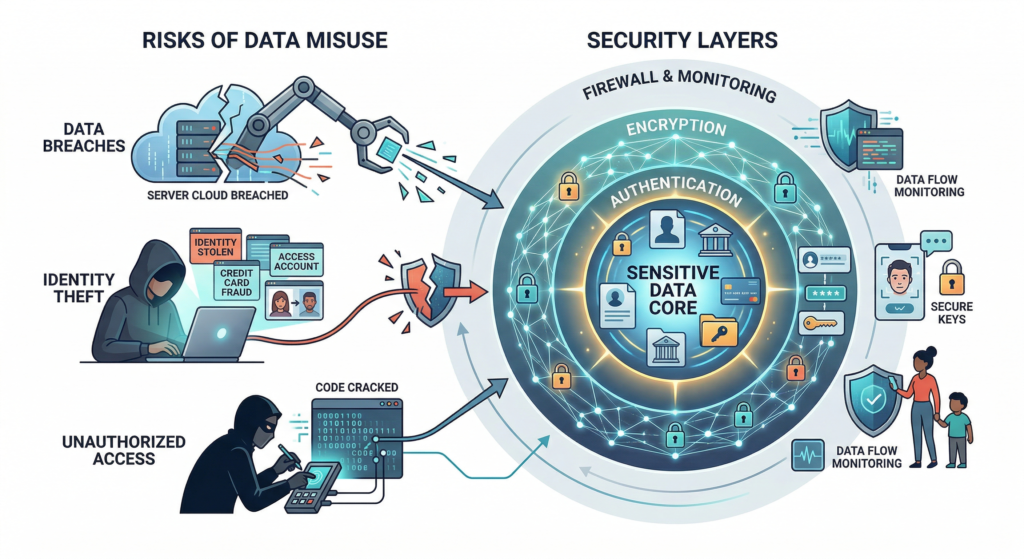
However, without clear safeguards, personal data can also be misused.
Examples of potential risks include:
- identity theft and financial fraud
- unauthorized data sharing between companies
- invasive digital profiling
- large-scale data breaches
India’s new data protection law aims to address these concerns by establishing clear rules for how personal information should be handled.
This evolution also mirrors trends seen in India’s fintech boom, where trust and regulation are becoming critical.
Key Provisions of the Law
The Digital Personal Data Protection Act introduces several important principles that will shape how organizations operate in the digital ecosystem.
Some of the key provisions include:
Consent-Based Data Collection
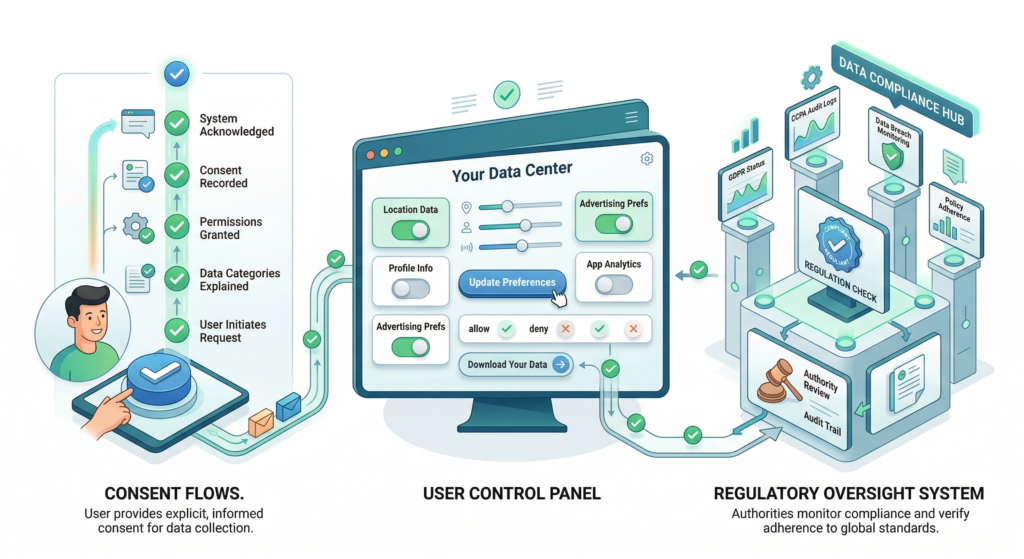
Companies must obtain clear and informed consent from individuals before collecting their personal data.
Users will have the right to know:
- what data is being collected
- how it will be used
- how long it will be stored
The Right to Access and Correction
Individuals will have the ability to:
- access the data companies hold about them
- request corrections if information is inaccurate
- ask for personal data to be erased under certain conditions
These rights are intended to give citizens greater control over their digital identities.
Data Protection Board
The law establishes a Data Protection Board of India, which will oversee compliance and investigate potential violations.
Companies that fail to protect user data or violate the law could face significant financial penalties.
Responsibilities for Businesses
Organizations handling personal data will be required to:
- implement stronger security safeguards
- notify authorities and users in case of data breaches
- ensure responsible data processing practices
For companies operating in India’s digital ecosystem, these obligations will likely require significant changes to internal processes.
Impact on India’s Technology Industry
The introduction of a comprehensive data protection framework will reshape how businesses operate in India’s rapidly expanding digital economy.
India’s technology sector includes thousands of startups, global technology companies, and digital platforms that rely heavily on data to deliver services.
These companies will now need to invest in stronger compliance systems.
Areas likely to see increased focus include:
- cybersecurity infrastructure
- secure data storage systems
- privacy-focused software design
- internal compliance teams
While these changes may initially increase operational costs for some businesses, they could also strengthen trust in India’s digital ecosystem.
As Rajeev Chandrasekhar has said:
“Trust and safety are foundational to the growth of the internet economy.”
A strong regulatory framework may therefore help build confidence among consumers, investors, and global technology partners.
Opportunities for Startups
Although regulation often raises concerns within startup communities, many entrepreneurs believe a clear legal framework could ultimately benefit India’s innovation ecosystem.
Startups operating in sectors such as fintech, health-tech, and e-commerce deal with large volumes of sensitive user data. Clear rules around data protection could help them build credibility with customers and investors.
In addition, the growing emphasis on privacy could create new opportunities for startups working in areas such as:
- cybersecurity solutions
- privacy-focused software platforms
- secure data infrastructure
- compliance and risk management tools
These emerging sectors could become important components of India’s broader digital economy.

Aligning with Global Standards
Another important aspect of India’s data protection law is its alignment with global trends.
Many countries have introduced similar regulations in recent years. Europe’s General Data Protection Regulation (GDPR), for example, established strict rules around how companies handle personal data.
By implementing its own data protection framework, India signals its intention to participate in a global digital economy where privacy standards are becoming increasingly important.
As Ajay Bhushan Pandey has noted:
“Data governance is a critical component of digital transformation.”
Strong governance frameworks are increasingly seen as essential for building secure and sustainable digital economies.
Challenges Ahead
Despite its potential benefits, implementing the data protection law will not be without challenges.
Businesses will need to adapt quickly to new compliance requirements, which may be particularly demanding for smaller companies with limited resources.
There are also ongoing debates around issues such as:
- cross-border data transfers
- data localization requirements
- enforcement mechanisms
- balancing privacy with innovation
How these issues are resolved will shape the long-term impact of the law.
A Turning Point for India’s Digital Economy
But as the digital economy grows, so too does the importance of protecting personal data.
India’s digital transformation has been remarkable over the past decade. From digital payments to e-commerce and online services, technology is reshaping how people live and work.
Startups navigating this landscape can also benefit from frameworks outlined in go-to-market strategies.
The Digital Personal Data Protection Act represents a significant step toward creating a more secure and accountable digital ecosystem.
If implemented effectively, the law could strengthen public trust in digital platforms while encouraging responsible innovation.
And in a world where data is increasingly valuable, trust may prove to be the most important currency of all.
Ultimately, the India data protection law will shape how trust, compliance, and growth are balanced in the years ahead.