Building the Foundations of a Digital Nation
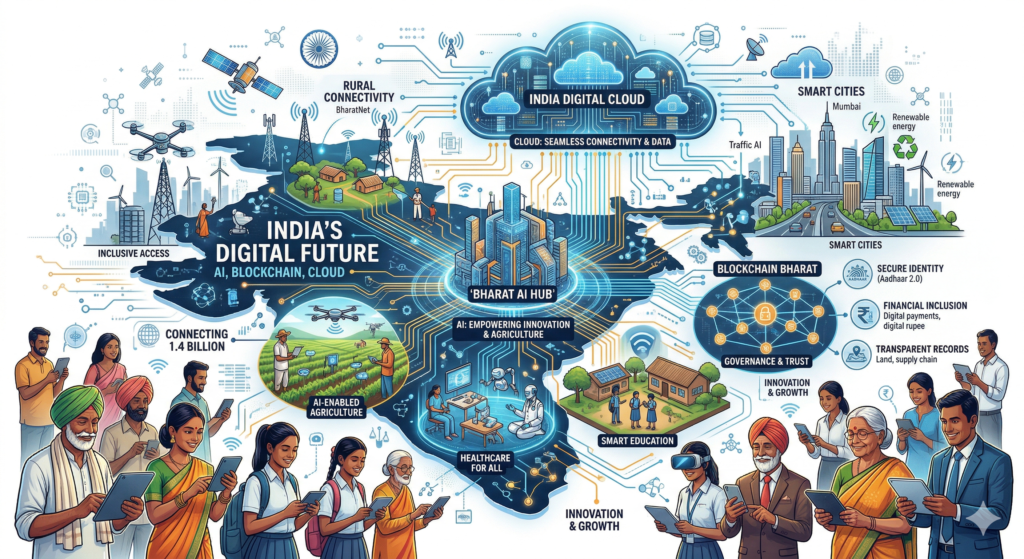
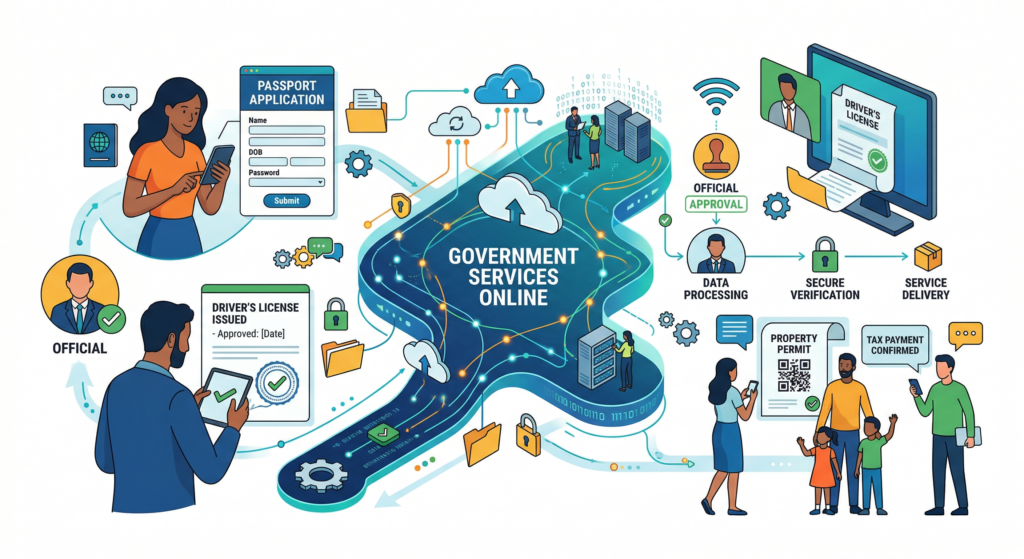
At its core, Digital India focuses on creating the infrastructure necessary for a modern digital society. The initiative operates through three broad pillars:
- Digital infrastructure as a core utility for every citizen
- Governance and services on demand
- Digital empowerment of citizens
These pillars aim to ensure that technology is not limited to urban centres but becomes accessible to millions of people across the country.
Some of the key initiatives under Digital India include:
- expanding broadband connectivity to rural areas
- promoting digital literacy programs
- enabling secure digital identity systems
- digitizing government services and documentation
Together, these efforts have helped create the digital backbone that powers many of India’s modern technology platforms.
The Rise of Digital Public Infrastructure
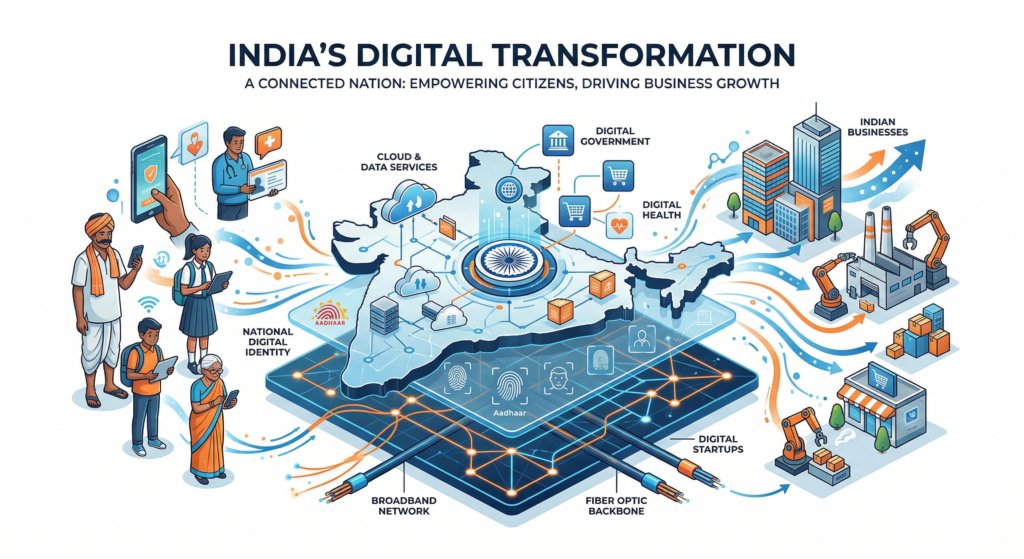
One of the most significant outcomes of the Digital India initiative has been the creation of Digital Public Infrastructure (DPI)—technology platforms that operate as shared national utilities.
India’s digital infrastructure stack includes several globally recognized innovations:
Aadhaar – Digital Identity
The Aadhaar system provides a unique digital identity for more than a billion Indians, enabling secure verification for government services, banking, and mobile connections.
Unified Payments Interface (UPI)
UPI has revolutionized digital payments by allowing instant bank transfers through mobile applications. Today, billions of transactions take place every month through the platform.
DigiLocker
DigiLocker enables citizens to store and access important documents such as driving licenses, academic certificates, and government records digitally.
According to Nandan Nilekani:
“India’s digital public infrastructure is creating a platform on which innovation can flourish.”
These platforms have become essential building blocks for India’s digital economy.
Transforming Government Services
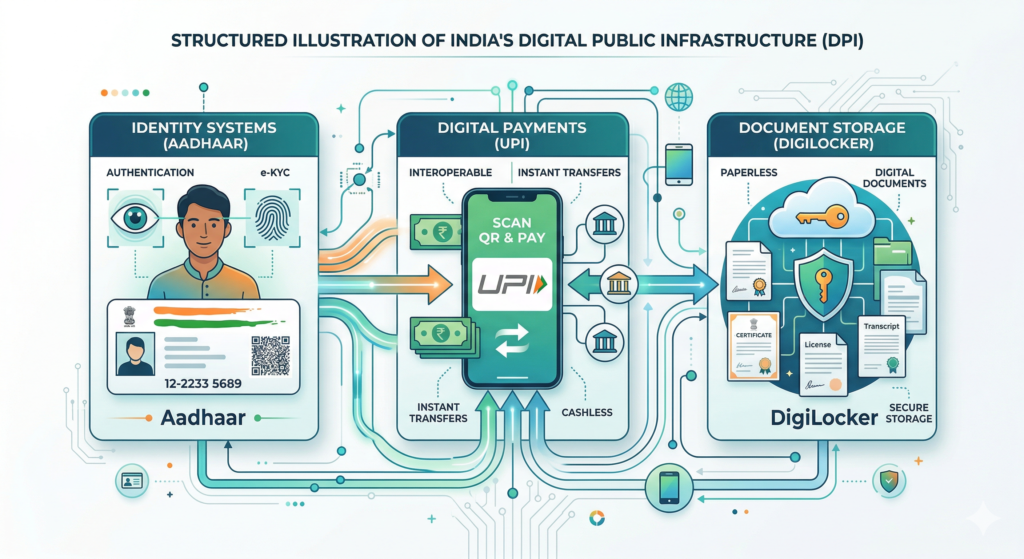
Digital India has also significantly changed how citizens interact with government institutions.
Traditionally, accessing government services often required physical visits to offices and lengthy paperwork. Digital platforms are gradually replacing these processes with online services.
Today, citizens can access many government services digitally, including:
- applying for passports and licenses
- accessing welfare benefits
- filing taxes and financial documents
- registering businesses online
This shift toward e-governance has improved efficiency, reduced corruption risks, and made public services more accessible.
As Ashwini Vaishnaw has said:
“Technology has enabled us to bring governance closer to citizens than ever before.”
Digital platforms are increasingly becoming the primary interface between citizens and the state.
Accelerating the Startup Ecosystem
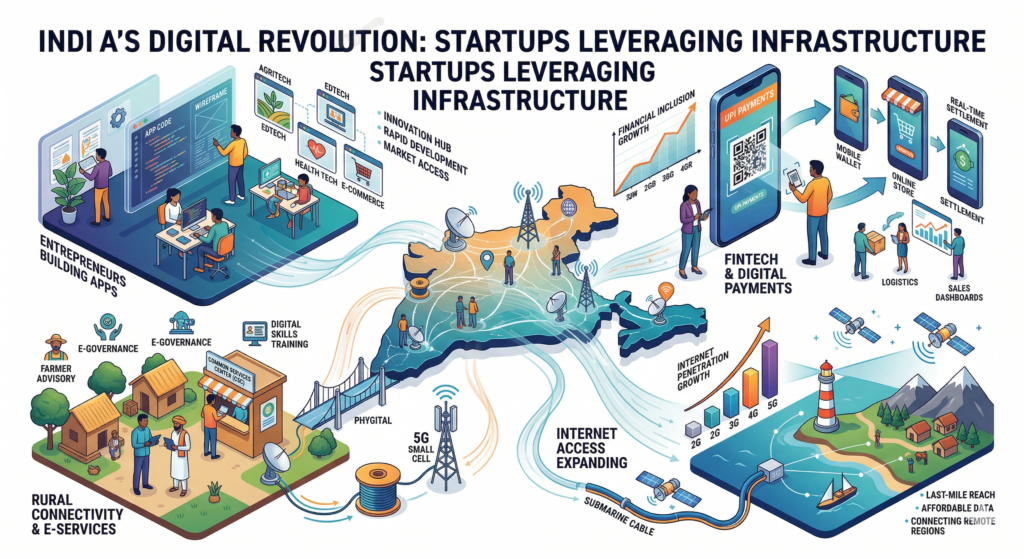
Digital India has also played a major role in supporting India’s thriving startup ecosystem.
By creating strong digital infrastructure, the initiative has lowered barriers for entrepreneurs building technology-driven companies.
Many startups today rely heavily on digital infrastructure such as:
- Aadhaar-based verification systems
- UPI payments infrastructure
- cloud-based digital services
- online regulatory and compliance platforms
These tools allow startups to scale rapidly without needing to build foundational infrastructure themselves.
The result has been a surge in technology startups across sectors such as fintech, health-tech, ed-tech, logistics, and e-commerce.
India now hosts one of the largest startup ecosystems in the world.
Expanding Internet Access
A crucial component of Digital India has been expanding internet connectivity across the country.
Projects such as BharatNet aim to connect hundreds of thousands of villages with high-speed broadband networks.
Improved connectivity enables:
- rural entrepreneurs to access digital markets
- students to benefit from online education platforms
- farmers to access information on weather and crop prices
- small businesses to adopt digital payment systems
Digital inclusion has therefore become an important aspect of India’s economic development.
As Rajeev Chandrasekhar noted:
“Digital connectivity is no longer a luxury—it is a fundamental driver of economic opportunity.”
Challenges and the Road Ahead
Despite its successes, the Digital India initiative still faces several challenges.
These include:
- bridging the digital divide between urban and rural areas
- strengthening cybersecurity and data protection
- improving digital literacy among citizens
- ensuring equitable access to digital services
Addressing these issues will be essential to ensure that the benefits of digital transformation reach every section of society.
At the same time, emerging technologies such as artificial intelligence, blockchain, and cloud computing are likely to play an increasingly important role in the next phase of India’s digital journey.
A Blueprint for the Future
Digital India has already transformed many aspects of the country’s economy and governance. By creating a robust digital infrastructure, the initiative has laid the foundation for innovation across sectors.
The program has helped enable everything from digital payments and e-governance to startup innovation and online education.
In many ways, Digital India has become more than a policy—it has become a blueprint for how technology can be used to accelerate national development.
As the digital economy continues to expand, the long-term success of this initiative may ultimately shape India’s position in the global technology landscape.
And if the momentum continues, Digital India could become one of the defining policy frameworks of the country’s economic transformation in the 21st century.