
Startups to Watch: 6 AI Startups Building the Next Generation of Automation
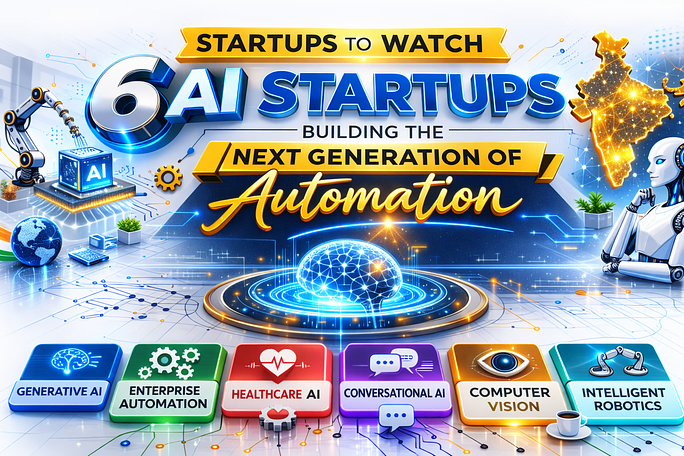
Artificial Intelligence has rapidly become the foundation of modern automation, enabling machines to perform tasks that once required human intelligence. From writing software code to analysing medical images and optimising supply chains, AI is transforming how businesses operate. In India, a new generation of startups is emerging to build AI-powered tools that automate workflows, improve decision-making, and unlock new levels of efficiency. Unlike earlier waves of Indian technology companies that focused primarily on IT services, many of today’s AI startups are building product-led platforms designed for global markets. Several of these companies are developing AI solutions that address real-world problems across industries such as healthcare, enterprise software, robotics, finance, and logistics. Below are six AI startups that are building the next generation of intelligent automation platforms. 1. Krutrim AI Krutrim AI, founded by Ola’s Bhavish Aggarwal, is one of India’s most ambitious artificial intelligence initiatives. The company is focused on building a full-stack AI ecosystem, including large language models, cloud infrastructure, and developer tools. Krutrim aims to create AI systems designed specifically for India’s linguistic and cultural diversity. Key focus areas include: Krutrim is also working toward building AI models capable of understanding India’s many regional languages, a critical capability for serving hundreds of millions of internet users. As Bhavish Aggarwal noted when launching the initiative: “India must build its own AI infrastructure to ensure technological sovereignty.” If successful, Krutrim could become one of the most important AI platforms built in India. 2. Observe.AI Observe.AI is a conversational intelligence platform designed to improve the performance of customer service teams using artificial intelligence. The company uses AI to analyse customer conversations and generate insights that help businesses improve support quality and operational efficiency. Key capabilities include: By analysing thousands of customer interactions, the platform helps companies identify patterns and improve customer experience. Observe.AI has raised significant venture capital funding and works with major global enterprises. 3. Rephrase.ai Rephrase.ai specialises in AI-generated video content, enabling businesses to create personalised video messages using synthetic media. The company’s platform allows organisations to generate realistic videos where AI avatars deliver customised messages. Use cases include: AI-generated video has become a powerful marketing automation tool because it enables companies to produce large volumes of personalised content without traditional video production costs. Rephrase.ai’s technology demonstrates how generative AI can reshape the future of media and communication. 4. Uniphore Uniphore is one of the most successful AI companies originating from India, focusing on conversational AI and voice automation. The company develops AI systems that analyse human speech and automate interactions between businesses and customers. Core technologies include: Uniphore’s solutions are widely used in industries such as: The company’s CEO Umesh Sachdev has often emphasised the importance of combining AI with human interaction. “AI should enhance human intelligence, not replace it.” Uniphore has grown into a global enterprise AI company, with customers across multiple continents. 5. SigTuple SigTuple is a healthcare AI startup building intelligent diagnostic systems. The company focuses on applying machine learning and computer vision to medical data in order to improve diagnostic accuracy. SigTuple’s technology is used to analyse medical images such as: The goal is to assist doctors by automating repetitive analysis tasks and highlighting potential abnormalities. Healthcare AI platforms like SigTuple have the potential to significantly improve healthcare access by enabling faster and more accurate diagnoses. 6. Niramai Niramai is a health-tech startup that has developed an AI-based breast cancer screening system. Unlike traditional mammography, Niramai’s technology uses thermal imaging combined with AI algorithms to detect early signs of breast cancer. Key advantages include: The technology is particularly valuable in regions where access to traditional diagnostic equipment may be limited. Niramai’s AI-driven screening system has already been deployed in hospitals and diagnostic centres across multiple countries. Why These Startups Matter The startups highlighted above represent a broader shift in India’s technology ecosystem. Earlier generations of Indian technology companies focused largely on IT outsourcing and services. Today’s AI startups, however, are building deep technology platforms and proprietary products. Several key trends are shaping this new wave of innovation: AI Infrastructure Development Companies are beginning to build foundational AI infrastructure, including models, platforms, and developer tools. Vertical AI Applications Many startups are focusing on specific industries such as healthcare, finance, and customer experience. This approach allows companies to develop highly specialised AI systems that deliver measurable business value. Global Product Strategy Unlike earlier startups that targeted primarily domestic markets, many AI startups today are building products designed for global customers. Automation at Scale AI-powered automation is rapidly expanding beyond simple tasks into areas such as decision support, analytics, and predictive modelling. This shift could fundamentally transform how businesses operate. The Future of AI Startups in India The coming decade will likely see significant consolidation and growth within the AI startup ecosystem. Some startups will evolve into global technology leaders, while others may be acquired by larger technology companies seeking AI capabilities. However, the broader trajectory is clear. Artificial intelligence is becoming a core layer of the digital economy, and the startups building these technologies today will shape how businesses and societies interact with intelligent systems in the future. For India, the opportunity is enormous. With its large talent pool, expanding startup ecosystem, and growing enterprise demand for automation, the country is well positioned to become one of the most important AI innovation hubs in the world. The startups emerging today are not simply building software tools — they are creating the next generation of intelligent infrastructure that will power industries globally.
Emerging Indian Startups to Watch in 2026
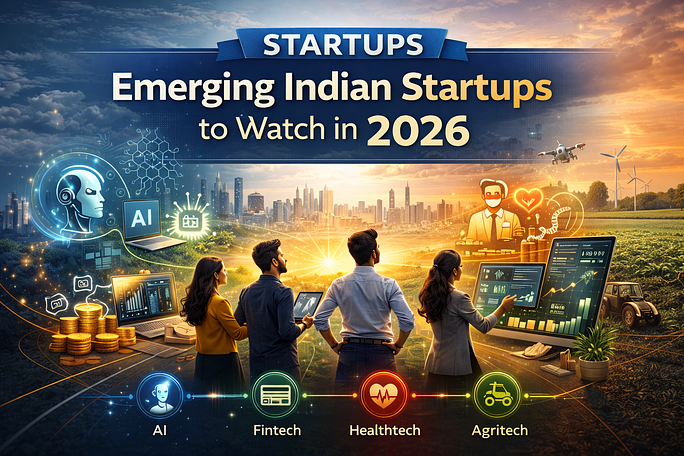
India’s startup ecosystem continues to evolve at a remarkable pace. Over the past decade, the country has emerged as one of the world’s most dynamic hubs for technology entrepreneurship. From software platforms and fintech infrastructure to artificial intelligence tools and healthcare innovation, Indian startups are increasingly building products that serve not only domestic markets but also global customers. According to the Startup India initiative, India now hosts more than 100,000 recognized startups, making it one of the largest startup ecosystems in the world. Venture capital investment has helped fuel this growth, but the real momentum lies in the emergence of companies solving complex problems across industries. Several sectors in particular—artificial intelligence, fintech, healthtech, and agritech—are seeing rapid innovation as founders build technology-driven solutions for some of the world’s largest markets. As 2026 approaches, a new generation of Indian startups is beginning to attract attention from investors, customers, and global technology observers. AI Startups Driving the Next Wave of Innovation Artificial intelligence has become one of the most important areas of startup activity in India. According to research from NASSCOM, India now has more than 800 AI-focused startups, with many of them building applications in enterprise software, automation, developer tools, and generative AI. Several emerging startups are gaining traction in this rapidly evolving ecosystem. Sarvam AIBased in Bengaluru, Sarvam AI is working on building large language models optimized for Indian languages and local use cases. As AI adoption expands across government services, financial institutions, and enterprise platforms, language-specific AI infrastructure is becoming increasingly important. Sarvam AI has attracted attention from investors interested in companies building foundational AI capabilities tailored for India’s multilingual market. KrutrimFounded by entrepreneur Bhavish Aggarwal, Krutrim is developing AI infrastructure and models designed specifically for Indian users and businesses. The company’s focus on building AI platforms capable of supporting Indian language interfaces reflects the broader opportunity to expand artificial intelligence adoption across the country. These startups highlight the growing ambition of Indian founders to build globally relevant AI products while addressing local market challenges. Fintech Startups Expanding Digital Finance India’s fintech ecosystem has grown dramatically over the past decade, fueled by digital payment infrastructure such as UPI (Unified Payments Interface) and a rapidly expanding digital economy. The country’s fintech startups are now building platforms that extend far beyond payments, including lending infrastructure, wealth management tools, and embedded financial services. Several emerging companies are shaping the next phase of fintech innovation. JupiterJupiter is a digital banking platform designed for India’s mobile-first consumers. The startup focuses on simplifying personal finance through a combination of banking services, budgeting tools, and financial insights. As digital banking adoption accelerates among younger users, platforms like Jupiter are helping redefine how consumers interact with financial services. ZestMoneyOperating in the “buy now, pay later” segment, ZestMoney has developed credit infrastructure designed to expand access to consumer financing for users without traditional credit histories. India’s rapidly growing e-commerce market has created significant demand for alternative lending platforms, and fintech startups are stepping in to address this gap. Healthtech Startups Transforming Healthcare Access Healthcare innovation has become another major focus for Indian entrepreneurs. The COVID-19 pandemic accelerated digital health adoption, encouraging startups to develop platforms that improve access to medical services, diagnostics, and patient care. India’s large population and healthcare infrastructure challenges present enormous opportunities for technology-driven solutions. Several healthtech startups are gaining attention in this space. HealthifyHealthify combines AI-driven health insights with coaching and digital tools to help users manage nutrition, fitness, and chronic health conditions. The company’s platform uses artificial intelligence to provide personalized health recommendations based on individual user data. Pristyn CarePristyn Care focuses on modernizing surgical care through technology-enabled healthcare delivery. The startup works with hospitals and clinics to improve the patient experience while streamlining medical procedures and post-surgery care. By combining digital platforms with offline healthcare networks, startups like Pristyn Care are helping bridge gaps in India’s healthcare system. Agritech Startups Modernizing Indian Agriculture Agriculture remains one of the most important sectors of India’s economy, employing millions of people across the country. At the same time, farmers face challenges related to supply chains, pricing transparency, and access to technology. Agritech startups are working to address these challenges by introducing digital tools that improve productivity and market access for farmers. DeHaat DeHaat is one of India’s fastest-growing agritech platforms, providing farmers with access to agricultural inputs, advisory services, and market connections through a digital platform. The company’s technology helps farmers improve crop yields while connecting them directly to buyers and supply chains. NinjacartNinjacart focuses on transforming agricultural supply chains by connecting farmers directly with retailers through a technology-enabled logistics platform. By reducing inefficiencies in food distribution networks, the company aims to improve pricing transparency and reduce food waste. Agritech innovation is becoming increasingly important as India seeks to modernize its agricultural ecosystem and improve farmer incomes. A New Generation of Startup Builders The startups emerging across these sectors reflect a broader transformation within India’s technology ecosystem. Earlier generations of Indian technology companies were largely focused on IT services and outsourcing. Today’s founders are increasingly building product-driven companies designed to solve complex problems using software, data, and artificial intelligence. Many of these startups are also adopting a global-first mindset, designing products that can scale internationally from the outset. This approach mirrors the playbook followed by successful Indian SaaS companies that have expanded into markets across North America, Europe, and Asia. The Road Ahead for India’s Startup Ecosystem Industry observers widely believe that India’s startup ecosystem is still in its early stages of growth. As digital infrastructure improves and new technologies such as artificial intelligence become more widely accessible, the number of innovative startups emerging from the country is expected to grow significantly. Venture capital investment, government initiatives supporting innovation, and a rapidly expanding developer community are all contributing to this momentum. For entrepreneurs, the opportunity is enormous. For investors and technology observers, India has become one of the most important markets to watch in the global startup landscape. And as the next generation of founders continues to experiment with new ideas, many of the
The Most Promising Fintech Startups in India
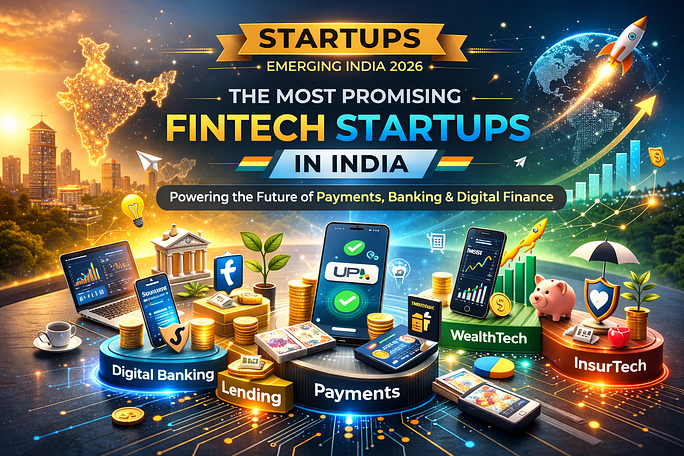
Over the past decade, India has emerged as one of the most dynamic fintech ecosystems in the world. Driven by rapid smartphone adoption, expanding internet access, and transformative digital infrastructure such as UPI (Unified Payments Interface) and Aadhaar, financial technology companies are reshaping how millions of people access banking, payments, lending, and investment services. According to industry estimates from NASSCOM and Invest India, India now hosts more than 2,000 fintech startups, making it one of the largest fintech startup ecosystems globally. Venture capital investment and government-backed digital initiatives have helped accelerate innovation across payments, lending platforms, wealth management tools, and financial infrastructure. Today, a new generation of fintech startups is emerging that aims to push the boundaries of financial innovation even further. These companies are building products designed not only for Indian consumers and businesses but increasingly for global markets as well. The Fintech Opportunity in India India’s fintech growth story is closely tied to the country’s digital transformation. The launch of UPI, India’s real-time digital payments system, has fundamentally changed how financial transactions take place across the economy. According to the National Payments Corporation of India (NPCI), UPI now processes billions of transactions every month, making it one of the largest digital payments networks in the world. This digital infrastructure has created fertile ground for startups to experiment with new financial products. From consumer finance platforms and digital banks to lending marketplaces and financial analytics tools, fintech startups are helping expand access to financial services for both individuals and businesses. Jupiter: Reimagining Digital Banking One of the emerging fintech platforms gaining traction in India is Jupiter, a digital banking startup focused on building a modern mobile-first banking experience. Jupiter provides users with tools designed to simplify personal finance, including budgeting insights, spending analytics, and integrated banking services. The platform aims to address a growing segment of digitally savvy consumers who expect banking to be as seamless and intuitive as other digital services. By combining traditional banking infrastructure with modern user experience design, startups like Jupiter are helping redefine how younger consumers interact with financial institutions. Razorpay: Powering India’s Digital Commerce While many fintech startups focus on consumers, others are building financial infrastructure for businesses. One of the most influential examples is Razorpay, a fintech company that provides payment processing and financial infrastructure for businesses operating online. Razorpay’s platform allows companies to accept digital payments, manage subscriptions, automate payroll, and access financial services through a single integrated system. As India’s digital economy continues expanding, platforms that enable businesses to manage financial operations efficiently are becoming increasingly important. Razorpay’s rapid growth reflects the broader demand for fintech solutions designed to support India’s fast-growing startup and e-commerce ecosystem. ZestMoney: Expanding Access to Credit Access to credit remains one of the largest challenges in India’s financial system. Millions of consumers and small businesses lack traditional credit histories, making it difficult for them to obtain loans through conventional banking channels. Startups like ZestMoney are attempting to address this gap through innovative lending platforms. ZestMoney operates in the Buy Now, Pay Later (BNPL) space, allowing consumers to make purchases and pay for them in installments even without traditional credit cards. By leveraging alternative data sources and digital financial infrastructure, fintech startups are expanding access to credit for underserved segments of the population. Groww: Simplifying Wealth Management Another area seeing rapid fintech innovation is wealth management. Historically, investment services in India were often seen as complex and inaccessible to many retail investors. Platforms such as Groww have helped change this perception by building simple, digital-first investment platforms. Groww allows users to invest in mutual funds, stocks, and other financial products through an intuitive mobile interface designed for first-time investors. As financial literacy improves and younger consumers become more comfortable with digital financial tools, platforms like Groww are helping democratize access to investing. Infrastructure Startups Enabling Fintech Innovation Beyond consumer-facing platforms, several startups are focusing on building infrastructure that powers fintech innovation behind the scenes. These companies provide APIs, payment rails, fraud detection tools, and financial analytics platforms used by other fintech companies and banks. Such infrastructure startups play a crucial role in enabling the broader fintech ecosystem to scale. As financial services become increasingly digitized, demand for infrastructure platforms supporting secure transactions and regulatory compliance is expected to grow significantly. Why India Is Becoming a Global Fintech Hub Several structural factors are helping India emerge as a global fintech innovation hub. Digital public infrastructureIndia’s digital identity and payments infrastructure—such as Aadhaar, UPI, and the India Stack—have created a foundation that allows startups to build financial products quickly and efficiently. Large consumer marketWith more than a billion people and a rapidly growing digital economy, India represents one of the largest potential markets for financial services innovation. Growing investor interestGlobal venture capital firms have increasingly invested in India’s fintech ecosystem, recognizing the enormous opportunity for technology-driven financial services. These factors together create an environment where startups can experiment rapidly with new business models and financial products. The Next Phase of Fintech Innovation While digital payments have been the most visible area of fintech innovation in India, the next phase of growth is expected to expand into several emerging areas. These include: Startups operating in these areas could play a key role in shaping the future of financial services in India. India’s Fintech Builders The fintech startups emerging across India today represent a new generation of entrepreneurs focused on transforming one of the most important sectors of the economy. By leveraging technology, data, and digital infrastructure, these founders are building platforms that expand financial inclusion while creating entirely new financial experiences for consumers and businesses. As India continues its digital transformation, many of the startups experimenting with fintech innovation today could become the financial institutions of tomorrow. And for investors and observers watching the global technology landscape, India’s fintech ecosystem remains one of the most exciting sectors to follow in the years ahead.
India’s Startup Ecosystem: What the Next 5 Years Could Look Like

Signals | By Bharat Samachar Editorial TeamOver the past decade, India has quietly emerged as one of the most important startup ecosystems in the world. From fintech and SaaS platforms to AI startups and digital infrastructure companies, Indian entrepreneurs have built thousands of technology-driven ventures that now serve customers across the globe. The country is already home to one of the largest startup communities outside the United States and China. According to Startup India, more than 100,000 recognized startups now operate across India, spanning industries from financial services and healthcare to deep technology and artificial intelligence. Venture capital investment has helped accelerate this growth, but an equally important factor has been the expansion of India’s digital economy. Looking ahead, industry observers believe the next five years could mark a new phase in the evolution of India’s startup ecosystem—one defined by deeper technology innovation, global expansion, and increasing investor participation. Several signals are already pointing toward how this transformation might unfold. The Rise of AI and Deep Tech Startups One of the most significant shifts in India’s startup landscape is the growing focus on artificial intelligence and deep technology innovation. Over the past few years, startups across the country have begun building products based on machine learning, computer vision, robotics, and generative AI. According to industry estimates from NASSCOM, India now hosts over 800 AI startups, with new companies emerging in areas such as enterprise automation, healthcare diagnostics, and financial analytics. Many of these startups are following a playbook similar to the earlier SaaS wave: building globally relevant products from engineering teams based in India. The next five years are likely to see an increasing number of startups experimenting with AI-driven applications across sectors including finance, logistics, retail, and manufacturing. As AI tools become more accessible, the barrier to building advanced software products continues to decline—creating new opportunities for founders across the country. Global Markets Becoming the Default Another important trend shaping the future of India’s startup ecosystem is the shift toward global-first business models. Earlier generations of startups often focused primarily on India’s domestic market. Today, many founders design products with global customers in mind from the very beginning. This approach has been particularly visible in the SaaS sector, where companies such as Freshworks, Zoho, and Chargebee demonstrated that software products built in India can compete successfully in international markets. The next wave of startups is adopting a similar strategy across industries. AI startups, developer tools companies, and fintech infrastructure platforms are increasingly targeting enterprise customers in North America, Europe, and Southeast Asia. This global mindset allows startups to access significantly larger markets while leveraging India’s engineering talent base. Venture Capital Is Evolving Venture capital will continue to play a major role in shaping the next phase of India’s startup ecosystem. Over the past decade, global investment firms have increasingly expanded their presence in India, recognizing the country as one of the most promising technology markets in the world. However, the funding landscape is also becoming more sophisticated. In addition to traditional venture capital firms, several new categories of investors are emerging: This diversification of capital sources is likely to make funding more accessible to startups working in emerging technology sectors. At the same time, investors are becoming more focused on sustainable growth and capital efficiency, encouraging founders to build businesses with stronger revenue models. The Growth of India’s Founder Networks Another important signal shaping the future of India’s startup ecosystem is the expansion of founder-led communities and mentorship networks. Organizations such as SaaSBoomi, startup accelerators, and venture-backed founder communities have created platforms where entrepreneurs can share insights and learn from each other’s experiences. This culture of knowledge sharing has already played a crucial role in the growth of India’s SaaS ecosystem. In the coming years, similar founder networks are likely to emerge in areas such as artificial intelligence, climate technology, and deep tech innovation. As experienced founders reinvest in the ecosystem—either as mentors or angel investors—the startup landscape could become even more interconnected. Digital Infrastructure as a Catalyst India’s digital infrastructure continues to provide a unique advantage for startups. Platforms such as Aadhaar, UPI, and the broader India Stack have enabled startups to build innovative financial services, identity systems, and digital platforms with relatively low barriers to entry. These systems have helped accelerate fintech innovation, allowing startups to experiment with digital payments, lending platforms, and embedded financial services. In the next five years, additional public digital infrastructure initiatives—particularly those supporting data sharing and digital governance—could create entirely new categories of startups. Entrepreneurs building on top of these platforms may find opportunities in sectors such as healthcare, agriculture, and digital public services. The Rise of Regional Startup Hubs While cities like Bengaluru, Delhi-NCR, and Mumbai have traditionally dominated India’s startup landscape, a growing number of founders are now emerging from smaller cities. Cities such as Pune, Ahmedabad, Jaipur, Indore, and Kochi have begun attracting startup activity as improved internet access and remote work opportunities allow founders to build companies from a wider range of locations. Government-backed incubators, university entrepreneurship programs, and regional venture capital funds are also contributing to this trend. Over the next five years, India’s startup ecosystem may become far more geographically diverse. A More Mature Startup Economy Perhaps the most important shift expected in the coming years is the gradual maturation of India’s startup economy. Earlier phases of startup growth were often characterized by rapid scaling and aggressive capital deployment. Today, founders and investors are increasingly focused on building companies with sustainable business models, stronger governance structures, and long-term growth strategies. As more startups reach profitability and mature into large technology companies, India’s startup ecosystem could begin producing a larger number of global technology leaders. The Next Chapter of India’s Innovation Story India’s startup ecosystem is still evolving, but the signals emerging today suggest that the next phase of growth could be even more transformative. Artificial intelligence innovation, expanding venture capital investment, strong digital infrastructure, and a rapidly growing founder community are all contributing to this momentum. If current trends continue, the next five years may see India strengthen its position as one of the world’s most
Why Bootstrapped Startups Are Making a Comeback
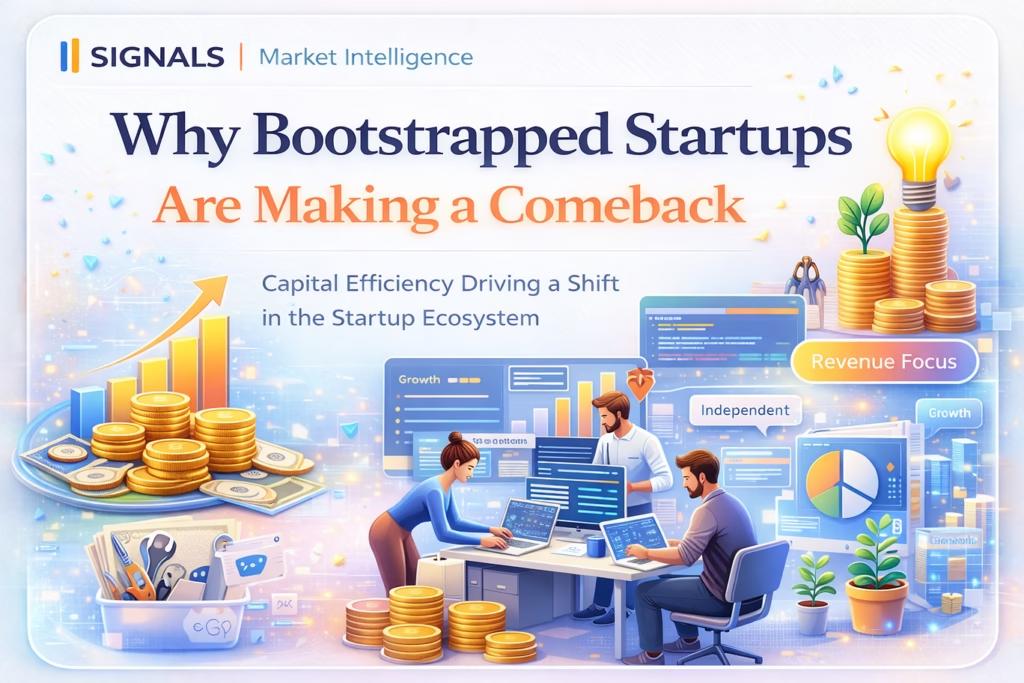
For much of the past decade, venture capital has dominated the global startup conversation. Billion-dollar funding rounds, unicorn valuations, and aggressive growth strategies became defining characteristics of the startup ecosystem. But a noticeable shift is beginning to take place. Across India and several other global startup hubs, bootstrapped startups—companies built without external venture capital—are quietly making a comeback. Founders are increasingly exploring capital-efficient ways to build sustainable companies, often focusing on profitability, disciplined growth, and customer-driven product development rather than rapid fundraising. While venture funding continues to play an important role in the technology ecosystem, the renewed interest in bootstrapping represents a broader change in how entrepreneurs think about building companies. Several signals suggest this trend could become even more significant in the years ahead. The Changing Venture Capital Environment One of the biggest drivers behind the resurgence of bootstrapped startups is the changing venture capital landscape. Over the past few years, global venture capital markets have gone through cycles of rapid expansion followed by periods of correction. As investors became more cautious about valuations and growth expectations, funding conditions tightened for many early-stage startups. This shift encouraged founders to rethink their approach to building companies. Rather than prioritizing fundraising as a milestone, many entrepreneurs began focusing on building products that could generate revenue quickly and sustain growth without relying heavily on outside capital. For founders who value independence and long-term control, bootstrapping offers a compelling alternative to the traditional venture-funded path. Lessons from India’s SaaS Ecosystem India’s technology ecosystem already offers several examples of successful bootstrapped companies. One of the most widely cited examples is Zoho, the global software company founded by Sridhar Vembu, which built a multi-billion-dollar enterprise software business largely without external venture capital. Zoho’s approach emphasized: The company’s success demonstrated that it is possible to build globally competitive technology products without relying heavily on venture funding. This philosophy has influenced a growing number of entrepreneurs, particularly within India’s SaaS and developer tools ecosystem. Many founders now see bootstrapping not as a constraint but as a strategic advantage that allows them to focus on product quality and customer value. Capital Efficiency Is Becoming a Competitive Advantage Another reason bootstrapped startups are gaining attention is the increasing importance of capital efficiency. During earlier phases of the startup boom, companies often prioritized rapid expansion even if it required substantial external funding. Today, both investors and founders are paying closer attention to sustainable business models. Bootstrapped startups typically operate with: These characteristics often allow them to achieve profitability earlier than venture-funded counterparts. In a technology environment where market conditions can change rapidly, startups with lean operating models may be better positioned to adapt. The Rise of Founder Independence Bootstrapping also appeals to founders who want to maintain greater control over their companies. Venture funding often comes with expectations around rapid scaling, board governance structures, and investor-driven growth strategies. While this model works well for many startups, some founders prefer building companies at a pace aligned with long-term product development rather than short-term valuation milestones. Bootstrapped companies allow founders to retain greater ownership, strategic flexibility, and decision-making autonomy. In India’s evolving startup ecosystem, this independence is becoming increasingly attractive for entrepreneurs who prioritize sustainable innovation over hyper-growth. Digital Infrastructure Is Lowering Barriers Another important signal behind the rise of bootstrapped startups is the growing accessibility of digital infrastructure. Today, founders can build and launch technology products with significantly lower upfront costs than in the past. Cloud computing platforms, open-source software tools, and global developer communities have dramatically reduced the capital required to build software products. In addition, online distribution channels—from developer platforms to digital marketplaces—allow startups to reach global customers without large marketing budgets. These changes have made it possible for small teams to build scalable technology companies with limited financial resources. Community-Driven Startup Ecosystems Founder communities and startup networks have also played a role in encouraging the bootstrapped model. Across India, several founder-led organizations now share knowledge about building companies without relying heavily on venture capital. Communities such as SaaSBoomi have helped create environments where entrepreneurs exchange insights on topics such as: This collaborative knowledge-sharing culture allows founders to learn from the experiences of others who have successfully built profitable companies without external funding. A Complement, Not a Replacement Despite the renewed interest in bootstrapping, venture capital will remain an essential part of the startup ecosystem. Certain industries—such as deep technology, biotechnology, and large-scale infrastructure platforms—often require significant upfront investment that bootstrapped startups may not be able to support. However, the growing visibility of profitable bootstrapped companies suggests that the startup ecosystem is becoming more diverse in its approaches to building businesses. Rather than a single dominant model, founders now have multiple pathways to success. A New Balance in Startup Building The resurgence of bootstrapped startups signals a broader maturation of the entrepreneurial ecosystem. As founders gain experience and the startup environment evolves, there is increasing recognition that building successful companies does not always require massive funding rounds. In many cases, disciplined growth, strong product-market fit, and long-term strategic thinking can be just as powerful as venture capital. For India’s next generation of entrepreneurs, the lesson may be simple: Raising capital is one way to build a startup—but it is not the only way. And in a rapidly changing technology landscape, the ability to build sustainable companies with limited resources may become one of the most valuable skills founders can develop.
Startups to Watch: 6 Indian AI Companies Building Next-Gen Automation

Artificial intelligence is rapidly reshaping the way businesses operate, with automation becoming one of the most transformative applications of the technology. Across industries such as finance, logistics, healthcare, and enterprise software, startups are developing intelligent systems that can automate complex workflows once handled by large teams of people. While global attention often focuses on large AI companies in Silicon Valley, a new generation of Indian startups is quietly building innovative AI-powered automation tools designed for both domestic and international markets. These companies may not yet be widely known, but their technology platforms and product strategies suggest they could play an important role in the next wave of enterprise automation. Here are six Indian AI startups that investors and industry observers are beginning to watch closely. 1. Tattvam AI AI-powered chip design automationBased in Chennai, Tattvam AI is working on one of the most technically ambitious problems in the semiconductor industry: automating chip design. Traditional chip development can take years and require large engineering teams. Tattvam AI is developing AI models capable of understanding circuit architecture and design constraints, dramatically reducing the time required to design custom chips. The company recently raised early funding to build its platform and aims to shorten chip design timelines from years to weeks. This could make semiconductor innovation more accessible for startups and specialized hardware companies. With demand for custom processors increasing due to AI workloads, tools that automate chip design could become an important part of the future semiconductor ecosystem. 2. Ascimov Agentic AI for robotic process automationKerala-based Ascimov is developing agentic AI systems designed to automate complex enterprise workflows. Unlike traditional robotic process automation tools that rely on predefined scripts, Ascimov’s platform focuses on AI agents capable of making contextual decisions, allowing automation systems to handle more dynamic and unpredictable tasks. This type of “agentic automation” is emerging as one of the most exciting trends in enterprise software. Rather than automating individual tasks, AI agents can coordinate entire workflows across multiple software systems. As businesses increasingly look to automate operational processes, startups like Ascimov could become key players in the next generation of enterprise automation platforms. 3. Gnani.ai Voice AI automation for customer interactionsBengaluru-based Gnani.ai is building advanced speech recognition and conversational AI systems tailored for multilingual markets. The company’s technology enables businesses to automate voice-based customer interactions in multiple Indian languages. This capability is particularly valuable in sectors such as banking, telecom, and e-commerce where large volumes of customer calls must be handled daily. Voice AI remains one of the most complex challenges in artificial intelligence due to accent variations, background noise, and linguistic diversity. By focusing on Indian languages and real-world enterprise use cases, Gnani.ai is addressing a critical gap in AI-driven customer service automation. 4. Kombai AI AI assistants for software developersDeveloper productivity tools have become one of the fastest-growing categories within the AI ecosystem. Kombai AI, founded by Indian engineers, is building AI-powered assistants designed to help developers automatically convert design files into functional code. This capability can significantly accelerate software development workflows. Instead of manually translating interface designs into front-end code, developers can use AI to generate production-ready components. As software teams increasingly rely on AI copilots to boost productivity, startups building tools for developers are attracting growing attention from venture investors. 5. Enmovil AI-driven supply chain automation Hyderabad-based Enmovil is developing AI software designed to automate supply chain planning and logistics operations. The company’s platform integrates with enterprise resource planning systems to provide predictive demand forecasting, real-time visibility across supply networks, and automated planning tools for manufacturers. Large global manufacturers face persistent challenges around supply chain complexity and fragmented logistics data. By applying AI to these problems, Enmovil aims to help companies improve efficiency while reducing operational costs. Supply chain automation is becoming increasingly important as global manufacturing networks grow more complex. 6. Lexi AI automation for legal workflows Legal services have traditionally been slow to adopt automation technologies, but AI is beginning to change that. Legal-tech startup Lexi is developing AI tools designed to automate legal research, contract drafting, and document analysis. The platform functions as an AI-powered legal assistant that can help law firms and corporate legal teams handle routine tasks more efficiently. By automating repetitive legal work, the technology allows lawyers to focus on higher-value strategic tasks. The startup is already serving law firms across multiple countries and is continuing to expand its capabilities as it prepares to raise additional funding. Why These Startups Matter These companies represent a broader shift in the AI ecosystem toward automation platforms that solve real operational problems. Rather than competing directly with large technology companies developing foundational AI models, many Indian startups are focusing on building specialized applications that sit on top of existing AI infrastructure. This strategy offers several advantages: It also mirrors the earlier playbook used by India’s SaaS ecosystem, where startups built globally successful software products without needing massive infrastructure investments. The Next Wave of AI Innovation India’s AI ecosystem is still evolving, but the momentum behind AI-driven startups continues to grow. Government initiatives supporting artificial intelligence research, combined with a large pool of engineering talent, are helping create fertile ground for new startups exploring automation technologies. For investors and industry observers, the companies highlighted here represent the early signals of a much larger transformation underway. Some of these startups may remain niche players, while others could grow into globally recognized technology companies. What is clear, however, is that the next generation of automation tools may increasingly come from a new wave of AI startups emerging across India’s innovation hubs.
Startups to Watch: Early-Stage Innovators Building the Next Wave of Indian Technology

India’s startup ecosystem has matured rapidly over the past decade. While large unicorns and heavily funded companies often dominate headlines, some of the most exciting innovation is happening among early-stage startups quietly building breakthrough technologies across multiple industries. Many of these companies are still operating under the radar, experimenting with bold ideas that could reshape sectors ranging from artificial intelligence and climate technology to agriculture and space infrastructure. For investors and ecosystem observers, identifying promising startups at this stage can offer early insights into where the next wave of innovation may emerge. Here are six early-stage Indian startups whose ideas, technologies, and ambitions make them companies worth watching. 1. GalaxEye Spacetech is one of the most exciting new frontiers for Indian startups, and GalaxEye is among the young companies working to expand India’s capabilities in satellite-based earth observation. Founded by engineers from IIT Madras, the company is developing multi-sensor satellites capable of capturing high-resolution earth imagery even through clouds or adverse weather conditions. This technology could dramatically improve monitoring for sectors such as agriculture, disaster management, defense, and urban planning. Unlike conventional satellites that rely on optical imaging, GalaxEye’s technology combines different sensing methods to provide more reliable data across varying environmental conditions. As demand for earth observation data grows globally, companies like GalaxEye could become an important part of India’s emerging space economy. 2. Boson Whitewater Transforming waste into clean energy Climate technology is becoming one of the fastest-growing sectors in the global startup ecosystem. Among India’s early-stage innovators in this field is Boson Whitewater, a startup working on technologies to convert non-recyclable plastic waste into hydrogen and other clean fuels. Plastic waste remains one of the world’s most pressing environmental challenges. Boson Whitewater’s approach focuses on converting waste into usable energy through advanced chemical processes. If successful at scale, this technology could help address two major challenges simultaneously: With governments and corporations increasingly prioritizing sustainability, climate-focused startups like Boson Whitewater may attract growing investor attention. 3. Cropin’s Emerging AI Agri-Automation Ecosystem AI-driven agricultural intelligenceAgriculture remains one of India’s largest industries, yet much of it still relies on traditional farming practices. Several startups are now using artificial intelligence and data analytics to modernize the sector. One of the emerging players in this space is the ecosystem being built around AI-powered agricultural intelligence platforms such as Cropin and similar early-stage innovators developing automation tools for farming. These startups use AI models to analyze crop health, soil conditions, weather patterns, and supply chain data, enabling farmers and agribusiness companies to make better decisions. The result is improved yields, reduced waste, and more efficient supply chains. As climate variability continues to impact agriculture worldwide, technologies that help farmers adapt and optimize crop production could become increasingly valuable. 4. CynLr Robotics that can “see” and handle complex objectsIndustrial automation is entering a new phase driven by advances in artificial intelligence and computer vision. Bengaluru-based CynLr (Cybernetics Laboratory) is developing robots capable of recognizing and manipulating objects in dynamic environments — a challenge that traditional industrial robots often struggle with. Most robots used in manufacturing are designed for repetitive tasks in highly controlled environments. CynLr’s technology focuses on enabling robots to perform more flexible tasks such as picking irregular objects or assembling components without extensive reprogramming. This capability could unlock new levels of automation in industries such as electronics manufacturing, logistics, and warehousing. As global labor shortages and rising costs push companies toward automation, robotics startups like CynLr could play a major role in shaping the next generation of industrial systems. 5. Pixxel’s Emerging Data Ecosystem Hyperspectral imaging for earth analyticsAnother promising company emerging from India’s spacetech ecosystem is Pixxel, which is developing a constellation of hyperspectral satellites designed to capture detailed earth data across hundreds of spectral bands. Unlike traditional satellite imagery, hyperspectral imaging can detect subtle differences in materials and environmental conditions. This technology has applications across industries including: For example, hyperspectral imaging can help identify crop diseases early, detect pollution in water bodies, or analyze soil composition. While still in its early stages, Pixxel’s approach reflects a broader trend toward using space-based data to power advanced analytics platforms on Earth. 6. Ati Motors Autonomous robots for industrial logistics Warehouse automation has become a major focus area for technology companies worldwide. Indian startup Ati Motors is building autonomous mobile robots designed to transport materials within factories and warehouses. These robots use a combination of AI, sensors, and mapping technology to navigate complex industrial environments without human intervention. In large manufacturing facilities, moving materials between production lines can be time-consuming and labor-intensive. Autonomous robots like those developed by Ati Motors can streamline these operations while improving efficiency. The company is already working with global manufacturing customers, demonstrating how Indian robotics startups are increasingly targeting international markets from the outset. A New Generation of Deep-Technology Startups What makes these startups particularly interesting is that many of them operate in deep technology sectors — industries that require advanced engineering, scientific research, and long-term innovation. In earlier years, much of India’s startup ecosystem focused on consumer internet businesses such as e-commerce or ride-hailing. Today, however, a growing number of founders are tackling complex technological challenges across sectors such as: These industries often require longer development cycles, but they also have the potential to create highly defensible technologies and global market opportunities. The Growing Opportunity for Investors For venture investors, early-stage startups in emerging technology sectors offer both opportunities and risks. On the one hand, deep-tech companies often require more time and capital to develop their products. On the other hand, successful startups in these fields can create significant long-term value. India’s expanding engineering talent pool, combined with increasing investor interest in sectors like AI, climate tech, and space technology, is creating a favorable environment for such startups to emerge. Over time, some of today’s early-stage innovators could grow into globally recognized technology companies. Why Early-Stage Innovation Matters Large technology companies often capture the spotlight, but many transformative innovations originate from small teams working on bold ideas long before they become widely known. Early-stage startups represent the experimental edge of the innovation