
India’s Role in Global Supply Chain Realignment
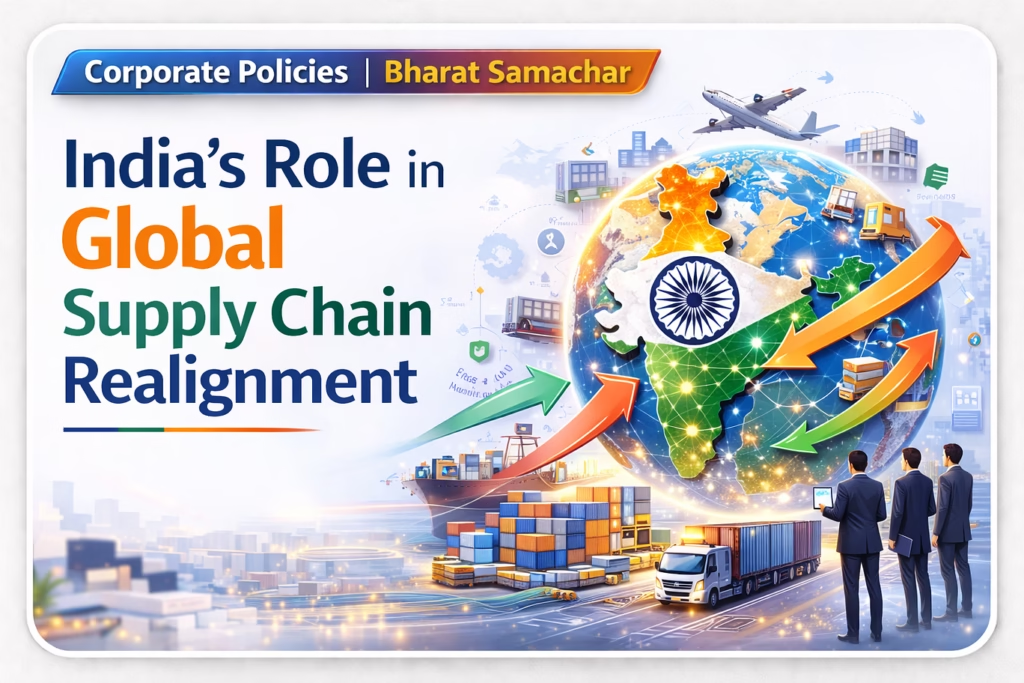
Over the past few years, global supply chains have undergone one of the most dramatic shifts in modern economic history. Events such as the COVID-19 pandemic, geopolitical tensions, trade disputes, and technological disruptions have forced governments and businesses to rethink how goods are produced and distributed across the world. For decades, global manufacturing and supply chains were heavily concentrated in a few regions. However, recent disruptions have exposed the risks of excessive dependence on single-country manufacturing hubs. As companies seek greater resilience and diversification, many are now looking toward new destinations for production and logistics. In this evolving landscape, India has emerged as one of the most promising alternatives. Increasingly, global policymakers and multinational corporations are viewing India not just as a large consumer market but also as a potential strategic manufacturing and supply chain hub. As Narendra Modi has emphasized: “India is positioning itself as a trusted partner in global supply chains.” This shift could have significant implications for the future of the global economy. The Changing Global Supply Chain Landscape The traditional model of global supply chains prioritized efficiency and cost optimization. Many multinational companies built highly centralized manufacturing networks to minimize production costs. However, recent disruptions have highlighted several vulnerabilities in this model, including: As a result, companies are increasingly adopting strategies such as “China Plus One,” where production is diversified across multiple countries to reduce risk. This shift has opened new opportunities for emerging economies like India to play a larger role in global manufacturing and supply chains. India’s Strategic Advantages India possesses several structural advantages that position it well in the evolving global supply chain landscape. Large Domestic Market India is one of the world’s largest consumer markets, providing businesses with both manufacturing and consumption opportunities. Skilled Workforce The country has a large and growing workforce, particularly in engineering, technology, and manufacturing sectors. Expanding Infrastructure Major investments in logistics, transportation, ports, and industrial corridors are improving India’s manufacturing ecosystem. Policy Support Government initiatives aimed at strengthening domestic manufacturing and exports are encouraging companies to invest in India. According to Piyush Goyal: “India is becoming an integral part of global supply chains as companies look for trusted and resilient partners.” These factors together are helping position India as an attractive destination for global businesses seeking to diversify their supply chains. Policy Initiatives Supporting Supply Chain Growth Recognizing the opportunity created by global supply chain shifts, the Indian government has introduced several policies aimed at boosting domestic manufacturing. One of the most significant initiatives is the Production Linked Incentive (PLI) Scheme. The PLI program offers financial incentives to companies that expand manufacturing in India across key sectors such as: The objective is to encourage both domestic and global firms to establish large-scale manufacturing operations in the country. In addition, initiatives such as Make in India and National Logistics Policy aim to strengthen India’s industrial ecosystem and reduce supply chain bottlenecks. Growth in Key Manufacturing Sectors India’s participation in global supply chains is expanding across several industries. Electronics Manufacturing India has emerged as a major hub for smartphone assembly and electronics manufacturing. Several global technology companies have increased their production presence in the country. Pharmaceuticals India is already one of the world’s largest producers of generic medicines and plays a critical role in global pharmaceutical supply chains. Automotive and EV Manufacturing India’s automotive industry is rapidly evolving, with increasing focus on electric vehicles and advanced manufacturing technologies. Renewable Energy With growing investments in solar and green energy infrastructure, India is also becoming an important player in global clean energy supply chains. These sectors are expected to drive India’s growing role in global production networks. The Importance of Logistics and Infrastructure Supply chains depend heavily on efficient logistics networks. To support manufacturing expansion, India is investing significantly in infrastructure development. Key initiatives include: These projects aim to reduce transportation costs and improve the efficiency of goods movement across the country. As Nitin Gadkari has stated: “Efficient logistics infrastructure is essential for India to compete globally.” Improving logistics performance will be critical for integrating India more deeply into international supply chains. Challenges That Remain While India has made significant progress, several challenges still need to be addressed to fully capitalize on global supply chain opportunities. These include: Addressing these issues will require continued collaboration between government agencies, industry leaders, and global partners. A Strategic Opportunity The ongoing realignment of global supply chains represents a rare economic opportunity for India. If the country successfully strengthens its manufacturing ecosystem, improves logistics infrastructure, and maintains a stable policy environment, it could become one of the most important supply chain hubs in the world. For global businesses seeking resilience and diversification, India offers a combination of scale, talent, and growing industrial capacity. And as the global economy continues to evolve, India’s role in shaping the future of international supply chains may only become more significant. In the coming decade, the country’s ability to integrate into global production networks could become a key driver of economic growth and industrial transformation.