
The Indian AI Industry — Startups, Opportunities, and Global Competition
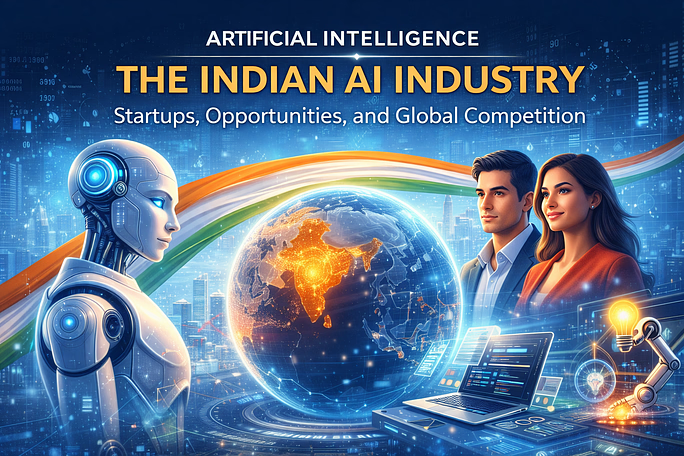
Artificial Intelligence (AI) is rapidly becoming one of the most transformative forces in the global technology ecosystem. From healthcare diagnostics and financial automation to logistics optimisation and generative content, AI is redefining how businesses operate and how societies interact with technology. India has emerged as one of the fastest-growing AI ecosystems in the world, powered by a large technology workforce, a thriving startup culture, and increasing enterprise adoption of AI-driven solutions. Over the past decade, the country has witnessed the rise of hundreds of AI startups focused on solving both domestic and global challenges. With support from government initiatives, venture capital funding, and the availability of open-source AI frameworks, India is increasingly positioning itself as a global hub for AI innovation and talent. The Scale of the Indian AI Opportunity The global AI industry is expanding rapidly, and India is playing an increasingly important role in this transformation. Key industry indicators highlight the scale of growth: The rise of generative AI has further accelerated startup creation, with the generative AI startup ecosystem growing dramatically in recent years and hundreds of ventures focusing on AI-powered applications and vertical software solutions. This rapid growth positions India not only as a technology services powerhouse, but increasingly as a product innovation hub in artificial intelligence. What Is Driving AI Innovation in India? Several structural factors are accelerating AI adoption across the Indian technology ecosystem. 1. Massive Talent PoolIndia produces one of the largest pools of engineers and data scientists globally, enabling companies to build large AI research and development teams. Key drivers include: As global technology companies expand their AI research operations in India, the country is becoming a key contributor to global AI development. 2. Enterprise Demand for AutomationBusinesses across sectors are increasingly turning to AI to improve efficiency, reduce costs, and automate repetitive tasks. AI adoption is expanding rapidly in sectors such as: AI-driven automation is particularly valuable in India’s large service sector, where technology can significantly improve productivity. 3. Government Support and National AI InitiativesThe Indian government has launched several initiatives to strengthen the country’s AI ecosystem. These include: These initiatives aim to position India as a global AI innovation hub while ensuring inclusive access to AI technologies. 4. Open Source and Cloud InfrastructureA major advantage for Indian AI startups is the widespread availability of open-source AI frameworks and cloud infrastructure. According to industry research: This has dramatically reduced the barriers to entry for entrepreneurs building AI-powered products. Where Indian AI Startups Are Building Innovation AI startups in India are focusing on several key technology domains.Generative AIGenerative AI platforms are enabling automated content generation, code creation, and knowledge discovery. Use cases include: Conversational AIChatbots and AI assistants are transforming customer engagement across industries. Applications include: Computer Vision Computer vision startups are building AI models that interpret visual data. Use cases include: AI in HealthcareHealthcare is one of the fastest-growing AI sectors in India. Applications include: AI-powered diagnostic systems have demonstrated extremely high accuracy rates in analysing medical images and detecting diseases. Global Competition: Can India Build the Next AI Giants? Despite the rapid growth of the Indian AI ecosystem, the global AI landscape remains highly competitive. The largest AI companies globally include: These organisations invest billions of dollars annually in AI research. However, Indian startups are increasingly carving out their own niche by focusing on: Several Indian startups are building AI systems specifically designed for the country’s linguistic and cultural diversity, which includes hundreds of languages and dialects. For example, multilingual AI models are being developed to support India’s diverse language ecosystem and improve accessibility for billions of users. Startups to Watch: 6 AI Startups Building the Next Generation of Automation India’s AI ecosystem includes several startups that are building cutting-edge automation technologies. Here are six companies worth watching. 1. Sarvam AI Sarvam AI is building large language models designed specifically for India. The company recently launched advanced AI models capable of reasoning and multilingual processing, aiming to create AI systems tailored for Indian users and languages. The company’s mission reflects a broader trend among Indian AI startups: building AI models optimised for local contexts and regional languages. A Sarvam AI leader described the vision simply: “AI built in India should understand India.” 2. Yellow.ai Yellow.ai is one of India’s leading conversational AI platforms, helping companies automate customer interactions. The platform provides: The company’s technology is used by major global brands to automate customer support and engagement. 3. Qure.ai Qure.ai is a healthcare AI startup using machine learning to analyse medical imaging. Its AI models can assist doctors in detecting diseases through radiology scans, helping improve diagnostic accuracy and speed. Healthcare AI platforms like Qure.ai demonstrate the potential of AI to augment medical professionals rather than replace them. 4. Fractal Analytics Fractal Analytics focuses on enterprise AI and advanced data science. The company provides AI-driven insights to businesses across industries including: Fractal has emerged as one of the largest AI analytics firms originating from India. 5. Mad Street Den Mad Street Den builds computer vision AI systems used in retail and fashion. Its AI platform helps retailers analyse customer behaviour and personalise shopping experiences. Applications include: 6. Arya.ai Arya.ai develops AI infrastructure for financial institutions. The company builds AI models designed to automate complex financial processes including: The Road Ahead for Indian AI The next decade will likely determine whether India can transition from being primarily a technology services provider to becoming a global AI product powerhouse. Several developments will shape the future of the ecosystem: Generative AI InnovationThe explosion of generative AI tools is enabling startups to build powerful applications on top of large language models. Vertical AI Platforms Instead of competing directly with global AI labs, many Indian startups are focusing on vertical AI solutions tailored for specific industries. AI Infrastructure and Data Access to high-quality datasets and computing infrastructure will be essential for scaling AI development. Responsible AIAs AI adoption expands, issues such as: will become increasingly important. Governments and regulators are already beginning to explore frameworks for responsible AI governance. Final Thoughts Artificial Intelligence is no longer a
Startups to Watch: 6 AI Startups Building the Next Generation of Automation
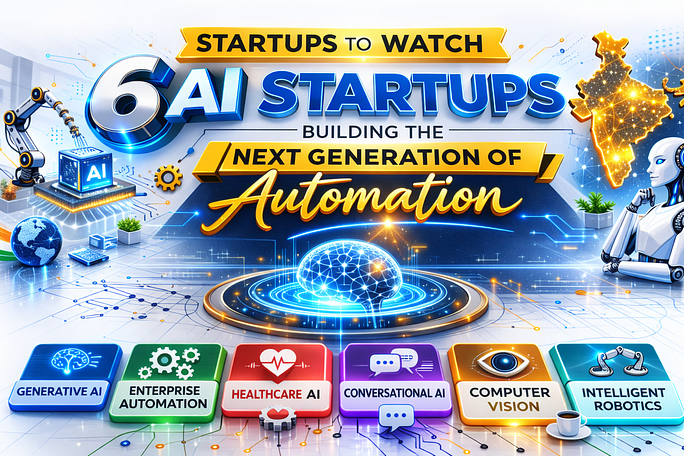
Artificial Intelligence has rapidly become the foundation of modern automation, enabling machines to perform tasks that once required human intelligence. From writing software code to analysing medical images and optimising supply chains, AI is transforming how businesses operate. In India, a new generation of startups is emerging to build AI-powered tools that automate workflows, improve decision-making, and unlock new levels of efficiency. Unlike earlier waves of Indian technology companies that focused primarily on IT services, many of today’s AI startups are building product-led platforms designed for global markets. Several of these companies are developing AI solutions that address real-world problems across industries such as healthcare, enterprise software, robotics, finance, and logistics. Below are six AI startups that are building the next generation of intelligent automation platforms. 1. Krutrim AI Krutrim AI, founded by Ola’s Bhavish Aggarwal, is one of India’s most ambitious artificial intelligence initiatives. The company is focused on building a full-stack AI ecosystem, including large language models, cloud infrastructure, and developer tools. Krutrim aims to create AI systems designed specifically for India’s linguistic and cultural diversity. Key focus areas include: Krutrim is also working toward building AI models capable of understanding India’s many regional languages, a critical capability for serving hundreds of millions of internet users. As Bhavish Aggarwal noted when launching the initiative: “India must build its own AI infrastructure to ensure technological sovereignty.” If successful, Krutrim could become one of the most important AI platforms built in India. 2. Observe.AI Observe.AI is a conversational intelligence platform designed to improve the performance of customer service teams using artificial intelligence. The company uses AI to analyse customer conversations and generate insights that help businesses improve support quality and operational efficiency. Key capabilities include: By analysing thousands of customer interactions, the platform helps companies identify patterns and improve customer experience. Observe.AI has raised significant venture capital funding and works with major global enterprises. 3. Rephrase.ai Rephrase.ai specialises in AI-generated video content, enabling businesses to create personalised video messages using synthetic media. The company’s platform allows organisations to generate realistic videos where AI avatars deliver customised messages. Use cases include: AI-generated video has become a powerful marketing automation tool because it enables companies to produce large volumes of personalised content without traditional video production costs. Rephrase.ai’s technology demonstrates how generative AI can reshape the future of media and communication. 4. Uniphore Uniphore is one of the most successful AI companies originating from India, focusing on conversational AI and voice automation. The company develops AI systems that analyse human speech and automate interactions between businesses and customers. Core technologies include: Uniphore’s solutions are widely used in industries such as: The company’s CEO Umesh Sachdev has often emphasised the importance of combining AI with human interaction. “AI should enhance human intelligence, not replace it.” Uniphore has grown into a global enterprise AI company, with customers across multiple continents. 5. SigTuple SigTuple is a healthcare AI startup building intelligent diagnostic systems. The company focuses on applying machine learning and computer vision to medical data in order to improve diagnostic accuracy. SigTuple’s technology is used to analyse medical images such as: The goal is to assist doctors by automating repetitive analysis tasks and highlighting potential abnormalities. Healthcare AI platforms like SigTuple have the potential to significantly improve healthcare access by enabling faster and more accurate diagnoses. 6. Niramai Niramai is a health-tech startup that has developed an AI-based breast cancer screening system. Unlike traditional mammography, Niramai’s technology uses thermal imaging combined with AI algorithms to detect early signs of breast cancer. Key advantages include: The technology is particularly valuable in regions where access to traditional diagnostic equipment may be limited. Niramai’s AI-driven screening system has already been deployed in hospitals and diagnostic centres across multiple countries. Why These Startups Matter The startups highlighted above represent a broader shift in India’s technology ecosystem. Earlier generations of Indian technology companies focused largely on IT outsourcing and services. Today’s AI startups, however, are building deep technology platforms and proprietary products. Several key trends are shaping this new wave of innovation: AI Infrastructure Development Companies are beginning to build foundational AI infrastructure, including models, platforms, and developer tools. Vertical AI Applications Many startups are focusing on specific industries such as healthcare, finance, and customer experience. This approach allows companies to develop highly specialised AI systems that deliver measurable business value. Global Product Strategy Unlike earlier startups that targeted primarily domestic markets, many AI startups today are building products designed for global customers. Automation at Scale AI-powered automation is rapidly expanding beyond simple tasks into areas such as decision support, analytics, and predictive modelling. This shift could fundamentally transform how businesses operate. The Future of AI Startups in India The coming decade will likely see significant consolidation and growth within the AI startup ecosystem. Some startups will evolve into global technology leaders, while others may be acquired by larger technology companies seeking AI capabilities. However, the broader trajectory is clear. Artificial intelligence is becoming a core layer of the digital economy, and the startups building these technologies today will shape how businesses and societies interact with intelligent systems in the future. For India, the opportunity is enormous. With its large talent pool, expanding startup ecosystem, and growing enterprise demand for automation, the country is well positioned to become one of the most important AI innovation hubs in the world. The startups emerging today are not simply building software tools — they are creating the next generation of intelligent infrastructure that will power industries globally.
The Global AI Race: Where India Stands Against the US and China
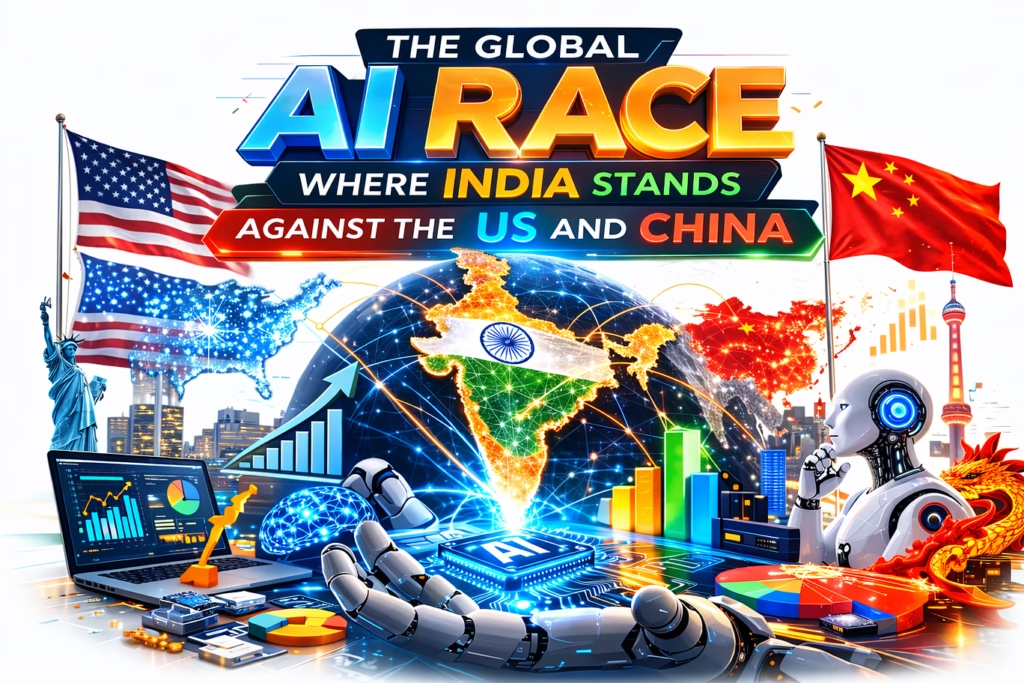
Artificial Intelligence is rapidly emerging as the defining technology of the 21st century. Governments, technology companies, and venture capital investors across the world are racing to develop the most powerful AI systems, recognising that leadership in artificial intelligence could determine economic competitiveness for decades. The global AI ecosystem is largely dominated by three major players: the United States, China, and increasingly India. While the United States currently leads in foundational AI research and large language models, and China has built a powerful ecosystem of AI-driven industrial and consumer applications, India is emerging as a fast-growing innovation hub with unique advantages in talent, startups, and enterprise AI adoption. Understanding where India stands in this global AI race requires examining several factors including talent, startup ecosystems, infrastructure, research capabilities, and investment trends. The Global AI Landscape Artificial intelligence has become one of the most competitive areas of global technology development. According to industry estimates: Countries that develop strong AI capabilities will likely gain significant advantages in areas such as: As a result, artificial intelligence has become not just a technology competition but a strategic geopolitical race. The United States: The Global AI Leader The United States currently leads the global AI ecosystem, primarily due to its strong research institutions, massive venture capital investment, and the presence of the world’s largest technology companies. Several of the most influential AI organisations are headquartered in the US, including: These organisations invest billions of dollars annually in AI research and development. Key strengths of the US AI ecosystem include: • world-leading universities and research labs• massive venture capital funding• advanced semiconductor and computing infrastructure• a strong startup ecosystem Large technology companies in the US are also building powerful foundation models capable of generating text, images, video, and software code. These models are rapidly becoming the backbone of modern AI applications. China: Scaling AI at National Level China has also made artificial intelligence a national strategic priority. The Chinese government has invested heavily in AI infrastructure, research institutes, and startup ecosystems. China’s AI strategy focuses particularly on: Chinese technology companies such as Baidu, Alibaba, Tencent, and Huawei have built extensive AI research programs. China’s advantages include: • large-scale data availability• government-backed AI investment• rapid deployment of AI applications• strong manufacturing ecosystem By integrating AI with industrial systems, China has accelerated automation across sectors such as manufacturing, logistics, and transportation. India’s Emerging Role in the AI Ecosystem While India entered the AI race later than the United States and China, the country has quickly become one of the most dynamic AI startup ecosystems globally. India’s AI ecosystem is expanding rapidly due to several structural advantages. Massive Talent PoolIndia produces one of the world’s largest pools of software engineers and data scientists. Today: This talent pool forms the foundation of India’s AI development ecosystem. Thriving Startup EcosystemIndia currently hosts hundreds of AI startups, building solutions across sectors such as: Unlike earlier generations of technology companies focused on services, many AI startups are building product-led platforms with global reach. These startups are increasingly attracting international venture capital investment. Enterprise Adoption of AI One of India’s strongest advantages is the rapid adoption of AI by businesses. Several sectors are aggressively integrating artificial intelligence into their operations. Examples include: Financial Services Healthcare E-commerce Customer Support According to industry surveys, over 80% of Indian enterprises are actively exploring AI deployment. India’s Unique Advantage: AI for Emerging Markets Unlike many Western AI startups that focus primarily on developed markets, Indian companies are increasingly building solutions designed for emerging economies. This includes technologies that address challenges such as: • multilingual communication• low-cost automation• healthcare accessibility• financial inclusion India’s linguistic diversity also presents an opportunity for startups to develop AI models capable of understanding multiple regional languages. These innovations could enable AI platforms to serve hundreds of millions of new internet users. The Role of Government in India’s AI Strategy Recognising the importance of artificial intelligence, the Indian government has launched several initiatives aimed at strengthening the country’s AI ecosystem. Key initiatives include: IndiaAI Mission A national initiative designed to accelerate AI research, startup development, and computing infrastructure. AI Talent Development Programs aimed at expanding AI education, training, and workforce development. Startup Support Government-backed funding and incubator programs supporting deep-tech startups. National AI Research Programs Collaborations between academia, research institutions, and technology companies to advance AI innovation. These initiatives aim to position India as a global hub for responsible and inclusive AI development. Challenges Facing the Indian AI Ecosystem Despite its rapid growth, India’s AI ecosystem still faces several structural challenges. Limited AI Infrastructure Training large AI models requires enormous computing resources, including specialised GPUs and data centres. Much of this infrastructure is currently concentrated in the United States. Research Funding Compared with the US and China, India still invests less in fundamental AI research. Increasing research investment will be critical for long-term competitiveness. Access to High-Quality Data AI systems depend heavily on large, high-quality datasets. Building robust national data infrastructure will be essential for accelerating AI innovation. The Future of India in the Global AI Race Despite these challenges, India has several advantages that could enable it to become one of the world’s leading AI ecosystems. These advantages include: • one of the largest technology talent pools globally • a vibrant startup ecosystem • increasing enterprise demand for automation • strong software engineering expertise Over the next decade, India is likely to play an increasingly important role in building AI-powered applications, enterprise platforms, and vertical industry solutions. While the United States may continue to lead in foundational AI research, India has the opportunity to dominate the development of practical AI applications for global markets. Final Thoughts Artificial Intelligence is not merely another technological wave — it represents a fundamental shift in how societies operate and how economies grow. The global AI race is intensifying as countries recognise the transformative potential of intelligent systems. For India, the opportunity is enormous. By combining its vast engineering talent, entrepreneurial energy, and growing digital economy, the country has the potential to become one of the most influential AI innovation hubs in the world. The startups
The Rise of the SaaS Industry in India

Software-as-a-Service (SaaS) has emerged as one of the most transformative segments of the global technology industry. By delivering software through cloud-based platforms rather than traditional on-premise installations, SaaS allows businesses to access powerful applications through the internet without heavy infrastructure investment. Over the past decade, SaaS has fundamentally changed how organisations deploy software, enabling faster adoption, lower costs, and scalable solutions for businesses of all sizes. India has become one of the fastest-growing SaaS ecosystems in the world, with startups building products used by companies across the United States, Europe, and Asia. Today, the country hosts more than 1,000 SaaS companies, many of which sell their products globally from India. From customer relationship management platforms and enterprise productivity tools to cybersecurity and AI-driven analytics software, Indian SaaS companies are increasingly becoming global technology players. What is SaaS? Software-as-a-Service refers to a cloud-based software delivery model in which applications are hosted online and accessed through web browsers or APIs. Unlike traditional software that requires installation on local computers or servers, SaaS applications operate on subscription models and are maintained by the software provider. Key characteristics of SaaS platforms include: • Cloud-based delivery• Subscription pricing models• Automatic updates and maintenance• Scalability for businesses of all sizes• Accessibility from any internet-connected device Examples of SaaS applications include: • Customer relationship management tools• project management software• HR and payroll platforms• marketing automation systems• cybersecurity platforms The SaaS model has gained widespread adoption because it reduces IT infrastructure costs and enables companies to deploy software much faster. Global SaaS Market Size The global SaaS market has experienced explosive growth over the past decade as organisations increasingly migrate their operations to the cloud. Industry estimates highlight the scale of this transformation: Several factors are accelerating global SaaS adoption: • increasing cloud infrastructure adoption• remote and hybrid work environments• enterprise digital transformation initiatives• AI integration into business software SaaS platforms are now widely used across industries including finance, healthcare, retail, logistics, and education. For many organisations, SaaS applications have become the primary software infrastructure powering their operations. The Rise of India’s SaaS Ecosystem India has emerged as one of the most exciting SaaS innovation hubs globally. Several factors have contributed to the rapid growth of the Indian SaaS industry: Large Engineering Talent PoolIndia produces hundreds of thousands of software engineers every year, providing SaaS startups with access to a deep pool of technical talent. Global Customer BaseMany Indian SaaS startups build products primarily for international markets, particularly the United States and Europe. This global-first approach allows startups to generate revenue in stronger markets while operating with cost advantages in India. Cloud Infrastructure AvailabilityThe widespread availability of cloud platforms such as AWS, Google Cloud, and Microsoft Azure has significantly reduced the cost of building and scaling SaaS products. Startup Ecosystem Growth India is now the third-largest startup ecosystem in the world, with increasing venture capital investment flowing into enterprise technology companies. Market Size of the Indian SaaS Industry India’s SaaS industry has grown rapidly in recent years and is expected to continue expanding over the next decade. Key market indicators include: The Indian SaaS ecosystem has also achieved significant milestones: • more than 1,000 SaaS startups operating in the country• dozens of companies generating over $100 million in annual recurring revenue (ARR)• strong investor interest and growing IPO pipelines These indicators demonstrate that India is becoming a major contributor to the global SaaS economy. Key Growth Trends in the SaaS Industry Several major technology and business trends are driving the expansion of SaaS globally and in India. 1. Cloud-First Digital TransformationBusinesses across industries are increasingly adopting cloud-based platforms for their operations. Companies are replacing legacy software systems with modern SaaS platforms that offer: • better scalability• lower maintenance costs• faster deployment This shift toward cloud-first architecture has significantly accelerated SaaS adoption. 2. Rise of AI-Powered SaaSArtificial Intelligence is becoming deeply integrated into SaaS platforms. Modern SaaS tools now include features such as: • predictive analytics• AI-driven automation• conversational interfaces• intelligent workflow optimisation AI-powered SaaS platforms are helping companies automate complex tasks and improve decision-making. 3. Growth of Vertical SaaSTraditional SaaS platforms served broad horizontal functions such as CRM or project management. However, a new category known as Vertical SaaS is gaining traction. Vertical SaaS platforms are designed specifically for particular industries such as: • healthcare• real estate• logistics• financial services• education These specialised solutions provide deeper functionality tailored to industry-specific needs. 4. Global Expansion of Indian SaaS CompaniesMany Indian SaaS companies operate globally from day one. This strategy allows them to: • target larger markets• generate higher revenue• scale internationally Several Indian SaaS companies now serve thousands of international customers. The Future of the SaaS Industry in India The next decade could be transformative for the Indian SaaS ecosystem. Industry analysts believe India could capture 4–6% of the global SaaS market, generating annual revenues of $50–70 billion by 2030. Several factors will shape the future of the sector: • increasing global demand for enterprise software• continued growth of cloud infrastructure• integration of artificial intelligence into SaaS platforms• expansion of India’s startup ecosystem India’s strong engineering talent, combined with its cost advantages and entrepreneurial ecosystem, positions the country to become a global SaaS powerhouse. Final Thoughts Software-as-a-Service has fundamentally transformed how businesses use technology. By shifting software delivery to the cloud, SaaS platforms enable organisations to scale faster, reduce costs, and adopt new technologies more efficiently. India’s SaaS ecosystem is still evolving, but its growth trajectory is clear. With thousands of startups, a rapidly expanding global customer base, and increasing venture capital investment, India is poised to become one of the most influential SaaS innovation hubs in the world. As digital transformation accelerates across industries, SaaS companies will play a critical role in shaping the future of enterprise technology.
Why SaaS is the Most Scalable Startup Model

Over the past two decades, Software-as-a-Service (SaaS) has emerged as one of the most powerful and scalable business models in the global technology ecosystem. By delivering software through cloud-based platforms rather than traditional on-premise installations, SaaS companies enable businesses to access powerful applications through the internet without the need for complex infrastructure or large upfront investments. This shift has fundamentally transformed how software is built, distributed, and monetised. Today, many of the world’s most successful technology companies operate on the SaaS model. From Salesforce and Adobe to Shopify and ServiceNow, SaaS platforms now power a significant portion of the global digital economy. At the same time, India has rapidly emerged as one of the most promising SaaS ecosystems globally, with startups building cloud-based platforms used by businesses across North America, Europe, and Asia. The reason SaaS has become so dominant is simple: it is one of the most scalable startup models ever created. The Global SaaS Opportunity The scale of the SaaS market reflects how rapidly businesses are moving toward cloud-based software solutions. Industry estimates highlight the enormous growth potential of the sector: Several macro trends are accelerating SaaS adoption worldwide: • cloud computing adoption• digital transformation initiatives• remote and hybrid work environments• demand for automation and analytics tools These trends have created an environment where SaaS companies can scale faster than traditional software businesses. What Makes SaaS So Scalable? SaaS startups possess several structural advantages that make them uniquely suited for rapid global growth. 1. Recurring Revenue Creates Predictable Growth One of the most powerful aspects of the SaaS model is the subscription-based revenue structure. Instead of selling software as a one-time purchase, SaaS companies charge customers recurring monthly or annual fees. This creates predictable revenue streams that allow companies to forecast growth more accurately. Key advantages include: • stable cash flow• long-term customer relationships• higher investor confidence• stronger company valuations SaaS companies typically track Annual Recurring Revenue (ARR) as a core growth metric. Investors often value SaaS companies at high ARR multiples because recurring revenue signals business stability. 2. Global Distribution Through the Internet Traditional businesses often require physical infrastructure or distribution networks to reach customers. SaaS companies, however, distribute their products entirely through the internet. This enables them to sell software to customers around the world without building offices or physical distribution channels. Advantages include: • global customer reach• lower operational costs• rapid international expansion Many SaaS startups in India generate the majority of their revenue from international markets while operating with development teams based locally. 3. Extremely High Gross Margins SaaS companies often operate with gross margins ranging from 70% to 90%, significantly higher than most traditional businesses. Once a software platform has been developed, the cost of delivering it to additional customers is relatively low. This creates powerful economies of scale. For example: • the same software product can serve thousands of customers• infrastructure costs grow slower than revenue• profitability increases as customer numbers rise This scalability is one of the key reasons investors are highly attracted to SaaS startups. 4. Product-Led Growth Accelerates Scaling Many modern SaaS companies use a strategy known as Product-Led Growth (PLG). In this model, the product itself becomes the primary driver of user acquisition and expansion. Instead of relying heavily on sales teams, customers can: • sign up for free trials• explore the product independently• upgrade to paid plans Examples of PLG strategies include: • freemium pricing models• self-serve onboarding• in-product upgrade prompts Companies such as Slack, Zoom, and Dropbox have scaled rapidly using this approach. Product-led growth allows SaaS startups to acquire users globally with minimal sales overhead. 5. Continuous Innovation Through Cloud Delivery Unlike traditional software that requires manual upgrades, SaaS products are updated continuously through the cloud. This enables companies to deliver improvements rapidly without disrupting users. Advantages include: • faster product development cycles• continuous feature releases• real-time performance improvements SaaS companies can also analyse customer usage data to understand how their products are used. This data-driven feedback loop allows companies to refine their platforms and build features that customers truly need. SaaS Success Stories Several global companies have demonstrated the enormous potential of the SaaS model. Salesforce Salesforce pioneered the cloud-based Customer Relationship Management (CRM) industry and became one of the world’s largest enterprise software companies. Shopify Shopify enables millions of businesses worldwide to build and manage online stores through its SaaS platform. Zoom Zoom experienced explosive growth by offering cloud-based video communication software that organisations could adopt instantly. The Rise of the SaaS Ecosystem in India India has rapidly become one of the most exciting SaaS ecosystems in the world. Several factors are driving this growth: • a large and skilled engineering workforce• lower product development costs• global demand for enterprise software• increasing venture capital investment Today, India hosts more than 1,000 SaaS startups, many of which serve international markets. Industry analysts estimate that Indian SaaS companies could generate $50–70 billion in annual revenue by 2030. Several Indian SaaS companies have already achieved global success, demonstrating the scalability of the model. Emerging Trends in the SaaS Industry The SaaS industry continues to evolve rapidly as new technologies reshape how software platforms operate. Key trends include: AI-Powered SaaS Artificial intelligence is becoming deeply integrated into SaaS platforms. Examples include: • predictive analytics• automated workflows• AI-powered customer support• intelligent data insights AI integration is expected to significantly enhance the capabilities of SaaS platforms. Vertical SaaSMany startups are now building SaaS platforms designed specifically for individual industries. Examples include: • healthcare SaaS platforms• logistics management software• fintech infrastructure tools• real estate management systems Vertical SaaS companies often achieve strong market positions because they deeply understand industry-specific needs. API-First PlatformsModern SaaS products increasingly provide APIs that allow businesses to integrate software into their existing systems. This creates entire ecosystems of applications built on top of SaaS platforms. Final Thoughts Software-as-a-Service has fundamentally changed how software is created, distributed, and consumed. By combining cloud delivery, recurring revenue, and global accessibility, SaaS enables startups to build businesses that scale rapidly across markets. For entrepreneurs, the SaaS model offers
The Most Promising Fintech Startups in India
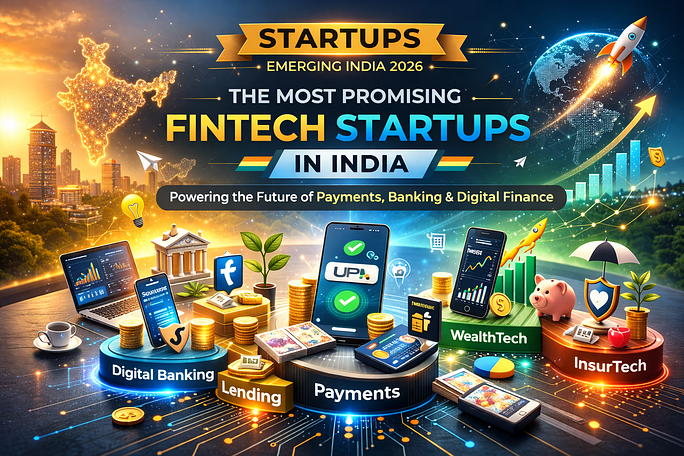
Over the past decade, India has emerged as one of the most dynamic fintech ecosystems in the world. Driven by rapid smartphone adoption, expanding internet access, and transformative digital infrastructure such as UPI (Unified Payments Interface) and Aadhaar, financial technology companies are reshaping how millions of people access banking, payments, lending, and investment services. According to industry estimates from NASSCOM and Invest India, India now hosts more than 2,000 fintech startups, making it one of the largest fintech startup ecosystems globally. Venture capital investment and government-backed digital initiatives have helped accelerate innovation across payments, lending platforms, wealth management tools, and financial infrastructure. Today, a new generation of fintech startups is emerging that aims to push the boundaries of financial innovation even further. These companies are building products designed not only for Indian consumers and businesses but increasingly for global markets as well. The Fintech Opportunity in India India’s fintech growth story is closely tied to the country’s digital transformation. The launch of UPI, India’s real-time digital payments system, has fundamentally changed how financial transactions take place across the economy. According to the National Payments Corporation of India (NPCI), UPI now processes billions of transactions every month, making it one of the largest digital payments networks in the world. This digital infrastructure has created fertile ground for startups to experiment with new financial products. From consumer finance platforms and digital banks to lending marketplaces and financial analytics tools, fintech startups are helping expand access to financial services for both individuals and businesses. Jupiter: Reimagining Digital Banking One of the emerging fintech platforms gaining traction in India is Jupiter, a digital banking startup focused on building a modern mobile-first banking experience. Jupiter provides users with tools designed to simplify personal finance, including budgeting insights, spending analytics, and integrated banking services. The platform aims to address a growing segment of digitally savvy consumers who expect banking to be as seamless and intuitive as other digital services. By combining traditional banking infrastructure with modern user experience design, startups like Jupiter are helping redefine how younger consumers interact with financial institutions. Razorpay: Powering India’s Digital Commerce While many fintech startups focus on consumers, others are building financial infrastructure for businesses. One of the most influential examples is Razorpay, a fintech company that provides payment processing and financial infrastructure for businesses operating online. Razorpay’s platform allows companies to accept digital payments, manage subscriptions, automate payroll, and access financial services through a single integrated system. As India’s digital economy continues expanding, platforms that enable businesses to manage financial operations efficiently are becoming increasingly important. Razorpay’s rapid growth reflects the broader demand for fintech solutions designed to support India’s fast-growing startup and e-commerce ecosystem. ZestMoney: Expanding Access to Credit Access to credit remains one of the largest challenges in India’s financial system. Millions of consumers and small businesses lack traditional credit histories, making it difficult for them to obtain loans through conventional banking channels. Startups like ZestMoney are attempting to address this gap through innovative lending platforms. ZestMoney operates in the Buy Now, Pay Later (BNPL) space, allowing consumers to make purchases and pay for them in installments even without traditional credit cards. By leveraging alternative data sources and digital financial infrastructure, fintech startups are expanding access to credit for underserved segments of the population. Groww: Simplifying Wealth Management Another area seeing rapid fintech innovation is wealth management. Historically, investment services in India were often seen as complex and inaccessible to many retail investors. Platforms such as Groww have helped change this perception by building simple, digital-first investment platforms. Groww allows users to invest in mutual funds, stocks, and other financial products through an intuitive mobile interface designed for first-time investors. As financial literacy improves and younger consumers become more comfortable with digital financial tools, platforms like Groww are helping democratize access to investing. Infrastructure Startups Enabling Fintech Innovation Beyond consumer-facing platforms, several startups are focusing on building infrastructure that powers fintech innovation behind the scenes. These companies provide APIs, payment rails, fraud detection tools, and financial analytics platforms used by other fintech companies and banks. Such infrastructure startups play a crucial role in enabling the broader fintech ecosystem to scale. As financial services become increasingly digitized, demand for infrastructure platforms supporting secure transactions and regulatory compliance is expected to grow significantly. Why India Is Becoming a Global Fintech Hub Several structural factors are helping India emerge as a global fintech innovation hub. Digital public infrastructureIndia’s digital identity and payments infrastructure—such as Aadhaar, UPI, and the India Stack—have created a foundation that allows startups to build financial products quickly and efficiently. Large consumer marketWith more than a billion people and a rapidly growing digital economy, India represents one of the largest potential markets for financial services innovation. Growing investor interestGlobal venture capital firms have increasingly invested in India’s fintech ecosystem, recognizing the enormous opportunity for technology-driven financial services. These factors together create an environment where startups can experiment rapidly with new business models and financial products. The Next Phase of Fintech Innovation While digital payments have been the most visible area of fintech innovation in India, the next phase of growth is expected to expand into several emerging areas. These include: Startups operating in these areas could play a key role in shaping the future of financial services in India. India’s Fintech Builders The fintech startups emerging across India today represent a new generation of entrepreneurs focused on transforming one of the most important sectors of the economy. By leveraging technology, data, and digital infrastructure, these founders are building platforms that expand financial inclusion while creating entirely new financial experiences for consumers and businesses. As India continues its digital transformation, many of the startups experimenting with fintech innovation today could become the financial institutions of tomorrow. And for investors and observers watching the global technology landscape, India’s fintech ecosystem remains one of the most exciting sectors to follow in the years ahead.