
How Venture Capital Works
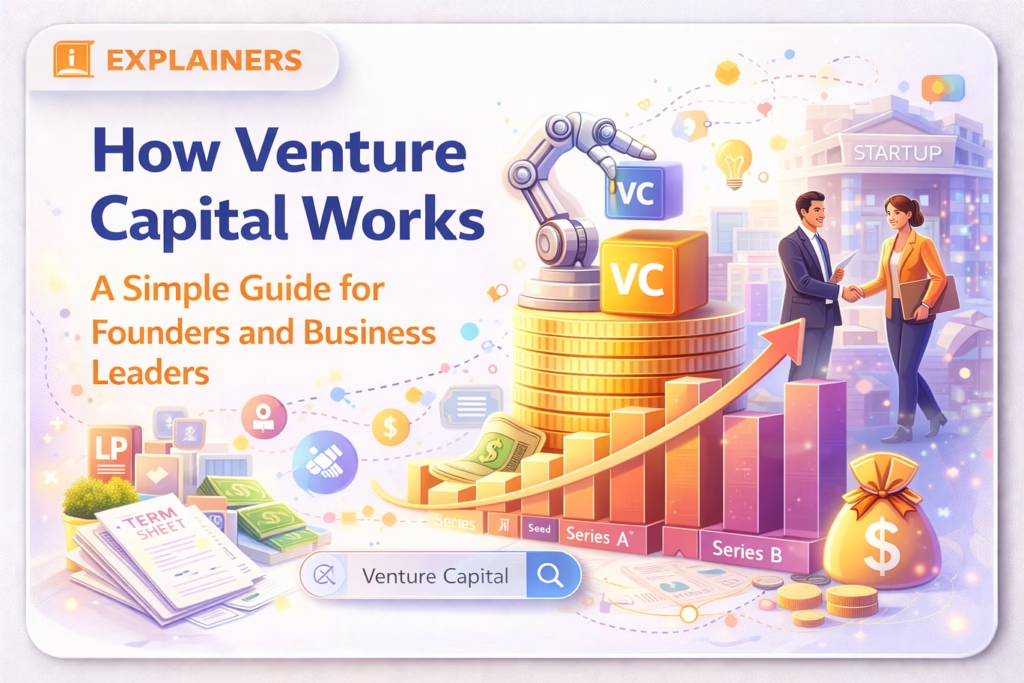
Over the past two decades, venture capital has played a crucial role in building some of the most influential companies in the global technology industry. Companies such as Google, Amazon, Airbnb, and Uber all relied on venture capital funding during their early growth stages. In India as well, venture capital has helped accelerate the growth of the startup ecosystem. Major Indian companies such as Flipkart, Paytm, Byju’s, Ola, and Swiggy all raised venture funding as they scaled their businesses. Yet despite its importance, venture capital is often misunderstood. Many founders assume that venture capital is simply a source of startup funding. In reality, venture capital is a structured investment system designed to finance high-growth companies in exchange for equity ownership. Understanding how venture capital works is essential for entrepreneurs, investors, and business leaders navigating the startup ecosystem. What Is Venture Capital? Venture capital (VC) is a form of private investment provided to early-stage companies with high growth potential. Unlike traditional bank loans, venture capital investments are typically made in exchange for equity ownership in the company. This means investors receive shares in the business rather than expecting fixed interest payments. Venture capital investors usually focus on companies that have the potential to grow rapidly and capture large markets. These companies are often technology-driven startups operating in sectors such as: Because startups are inherently risky, venture capital firms expect that many investments may fail. However, the few companies that succeed can generate extremely large returns. This risk–reward model is at the core of the venture capital industry. How Venture Capital Funds Work Venture capital firms operate through investment funds that pool capital from various investors. These investors, known as Limited Partners (LPs), typically include: The venture capital firm itself acts as the General Partner (GP), responsible for managing the fund and making investment decisions. The typical venture capital fund structure works like this: Most venture capital funds operate with a lifespan of around 10 years. Why Venture Capital Exists Traditional financing models such as bank loans are not well suited for startups. Banks typically require: Early-stage startups rarely meet these criteria. Venture capital fills this gap by providing funding to companies that have strong growth potential but may not yet be profitable. In exchange for this risk, venture capital firms seek significant returns if the startup succeeds. For example, if a VC firm invests $5 million in a startup and the company later becomes worth $5 billion, the value of that early investment can increase dramatically. This potential for outsized returns drives venture capital investment. The Startup Funding Lifecycle Startups typically raise venture capital in multiple stages as they grow. Each stage corresponds to different levels of business maturity. Pre-Seed Stage This is often the earliest funding stage. Startups at this stage are usually developing their initial product or idea. Funding may come from: Typical funding size: $100,000 to $1 million. Seed StageSeed funding is used to build the first version of the product and test market demand. At this stage, startups often begin hiring their first team members and launching early customer pilots. Seed investors may include: Typical funding size: $1 million to $5 million. Series ASeries A funding helps startups scale their business model. At this stage, investors expect the company to show evidence of: Series A rounds are typically led by venture capital firms. Typical funding size: $10 million to $20 million. Series B and BeyondLater-stage funding rounds focus on expanding the company’s market presence and accelerating growth. Startups may use this capital to: Some startups eventually raise hundreds of millions of dollars across multiple funding rounds. How Venture Capital Firms Make Money Venture capital firms generate returns through successful exits. There are two primary exit paths: AcquisitionA larger company purchases the startup. This allows investors to sell their shares and realize profits. Many successful startups are acquired by larger technology firms seeking innovation and talent. Initial Public Offering (IPO) In an IPO, a company lists its shares on a public stock exchange. This allows venture investors to sell their holdings in the public market. Several technology companies that once raised venture capital later became publicly traded firms. Key Venture Capital Terms Explained Understanding venture capital also requires familiarity with several commonly used terms. ValuationValuation refers to the estimated worth of a company. Startups are often valued based on growth potential rather than current profits. EquityEquity represents ownership in the company. When investors provide venture capital funding, they receive equity shares. DilutionAs startups raise new funding rounds, founders typically sell additional shares. This reduces the percentage ownership of existing shareholders. This process is known as dilution. Term SheetA term sheet outlines the conditions under which an investment is made. It includes details such as: Term sheets are a crucial part of venture capital negotiations. Venture Capital in India India’s venture capital ecosystem has grown significantly over the past decade.According to industry reports, the country now hosts thousands of startups and hundreds of venture capital firms investing in emerging companies. Several factors have contributed to the growth of venture capital in India: Major global venture capital firms such as Sequoia Capital, Accel, and Tiger Global have actively invested in Indian startups. At the same time, domestic investors and angel networks have also become increasingly active. As a result, India has produced dozens of unicorn startups and continues to attract global investment. Why Venture Capital Matters for Entrepreneurs For founders, venture capital can provide more than just funding. VC firms often help startups by offering: However, venture capital also comes with expectations. Investors typically seek startups that can grow extremely fast and capture large markets. This means that venture-backed companies often pursue aggressive growth strategies. For some businesses, especially those focused on profitability rather than rapid expansion, venture capital may not always be the right funding model. Key Takeaways Venture capital plays a critical role in supporting innovation and startup growth around the world. Understanding how it works can help entrepreneurs make better decisions about funding their businesses. Key insights include: For entrepreneurs building
AI Startups Attracting Record Venture Capital
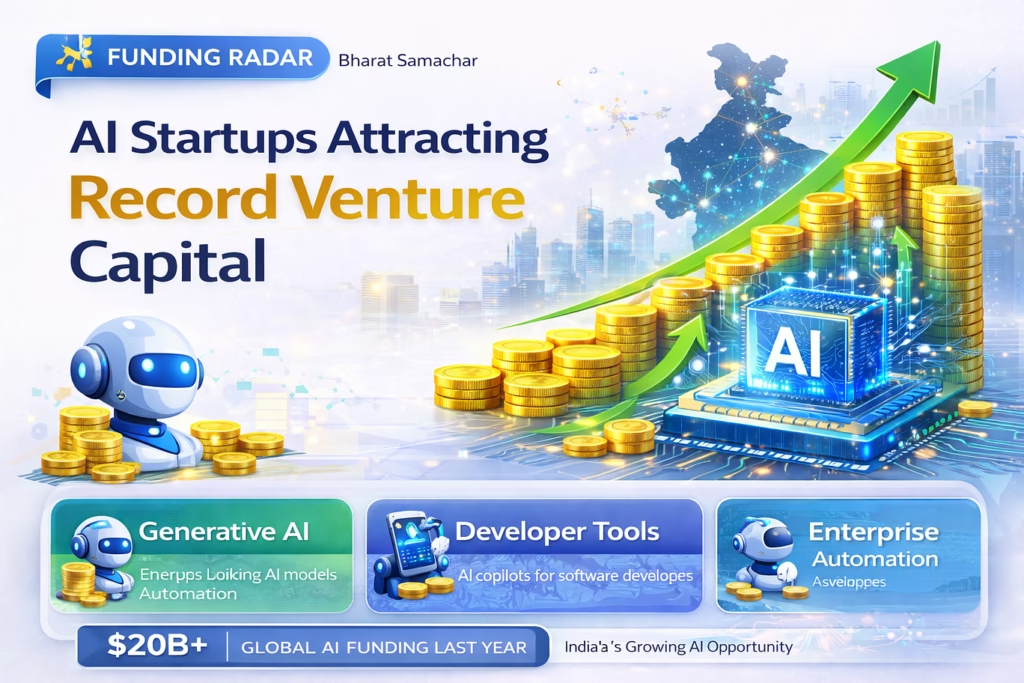
Artificial intelligence has rapidly become the most heavily funded sector in global technology, and India is emerging as an important part of this investment wave. Venture capital firms, global technology companies, and institutional investors are collectively pouring billions of dollars into AI startups across the world. While Silicon Valley remains the epicenter of foundational AI research, the Indian startup ecosystem is increasingly attracting investor interest in AI-driven products and platforms. From enterprise automation tools to developer productivity software, a growing number of Indian startups are building AI-powered applications designed for global markets. According to multiple industry analyses, artificial intelligence companies received tens of billions of dollars in venture capital funding globally over the past year, making AI the most capitalized emerging technology sector. This surge reflects both the transformational potential of artificial intelligence and the intense competition among technology companies to build the next generation of intelligent software systems. Why AI Is Dominating Venture Funding Several powerful trends are driving this unprecedented wave of venture capital investment into artificial intelligence. Explosion of Generative AIThe rapid development of generative AI models has dramatically accelerated interest in artificial intelligence startups. Breakthroughs in large language models, image generation, and AI-driven automation have demonstrated that software can now perform increasingly complex cognitive tasks. These advances have created an entirely new category of startups building products around generative AI capabilities. Venture capital firms are particularly interested in companies developing tools that help businesses integrate AI into everyday workflows. From AI-powered content generation platforms to intelligent coding assistants, generative AI has opened up a wide range of commercial applications. As a result, investors see AI not just as a technological trend but as a foundational shift in how software is developed and used. Enterprise AutomationAnother major driver of AI investment is the growing demand for enterprise automation. Companies across industries are increasingly adopting AI-powered systems to automate repetitive tasks, improve operational efficiency, and analyze large volumes of data. Businesses are using artificial intelligence to streamline processes such as customer service, financial analysis, supply chain management, and marketing optimization. For example, AI-powered customer support platforms can now automatically resolve a significant portion of customer queries without human intervention. Similarly, AI-driven analytics tools are helping organizations extract insights from large datasets more efficiently than traditional business intelligence platforms. These capabilities have made AI startups particularly attractive to enterprise customers, which in turn increases investor confidence in the long-term commercial potential of these companies. Developer Productivity ToolsArtificial intelligence is also transforming software development itself. AI-powered developer tools are becoming one of the fastest-growing categories in venture capital investment. These platforms help software engineers write code more efficiently, debug programs faster, and automate routine development tasks. Products such as AI code assistants, automated testing platforms, and AI-driven DevOps tools are rapidly gaining traction among technology companies. Investors are particularly interested in this category because developer productivity tools often scale globally and can generate strong recurring revenue models. As a result, many venture capital firms view AI-driven developer tools as one of the most promising segments within the broader AI ecosystem. India’s Emerging Role in the AI Ecosystem India’s artificial intelligence ecosystem is still developing, but several structural advantages are positioning the country as a significant player in the global AI landscape. One of India’s biggest strengths is its large pool of software engineers and machine learning professionals. The country produces hundreds of thousands of engineering graduates each year, many of whom are increasingly specializing in fields such as artificial intelligence, data science, and cloud computing. Major technology hubs such as Bengaluru, Hyderabad, Delhi-NCR, Pune, and Chennai have become important centers for AI research, startup activity, and venture investment. Another advantage is India’s strong experience in building globally competitive software products. The country’s SaaS ecosystem has already demonstrated that startups can build products in India while selling to customers across North America, Europe, and other international markets. The Application Layer Strategy Unlike some companies in the United States and China that are building massive foundational AI models, many Indian startups are focusing on what is often called the “application layer” of artificial intelligence. Rather than developing large-scale AI models from scratch—which requires enormous computing infrastructure and billions of dollars in investment—these startups build products that leverage existing AI platforms. Examples of these AI-driven products include: This strategy allows startups to focus on solving real business problems while relying on foundational AI technologies developed by larger technology companies. For many investors, this approach represents a more capital-efficient way to build successful AI businesses. Venture Capital Interest in Indian AI Startups Global venture capital firms are increasingly monitoring India’s AI startup ecosystem for promising opportunities. Several investors believe that India’s combination of engineering talent, capital efficiency, and global product orientation could lead to the emergence of multiple successful AI companies over the next decade. Early-stage AI startups are already attracting seed and Series A funding from both domestic and international investors. As artificial intelligence becomes integrated into more business processes, demand for specialized AI applications is likely to grow significantly. The Road Ahead Artificial intelligence is still in the early stages of commercial adoption, but its impact across industries is expected to expand rapidly in the coming years. For India’s startup ecosystem, the current wave of AI investment presents a major opportunity. If founders continue focusing on practical applications and enterprise solutions, the country could become an important hub for AI-driven software innovation. Just as the SaaS boom produced globally recognized companies such as Freshworks and Zoho, the next decade could see a new generation of Indian startups building influential AI products for global markets. The surge in venture capital investment suggests that investors believe this transformation is already underway.