
The Next Big Technologies That Will Shape the Next Decade
Every decade brings technologies that redefine industries. The internet transformed communication in the 1990s. Smartphones reshaped commerce and social behaviour in the 2010s. The coming decade may bring even deeper changes as a new generation of technologies—artificial intelligence, robotics, biotechnology, quantum computing, and clean energy—begin to mature. These technologies are not just incremental improvements; they have the potential to reshape economies, industries, and the way people live and work. As Nandan Nilekani once observed: “Technology has the power to fundamentally transform societies when it is applied at scale.” The technologies emerging today could shape the next phase of global progress. Artificial Intelligence Will Power the Next Digital Revolution Artificial Intelligence (AI) is already transforming industries, but its influence is only beginning to unfold. AI systems are now capable of: In India, startups are increasingly building AI-first companies, integrating machine learning into everything from healthcare to finance. For example: According to Vijay Shekhar Sharma: “AI will redefine how businesses operate and how consumers interact with digital platforms.” As AI tools become more accessible, businesses across sectors will increasingly rely on intelligent automation to remain competitive. Robotics and Intelligent Automation Robotics is advancing rapidly as artificial intelligence, sensors, and machine vision technologies evolve. While robots have long been used in manufacturing, they are now moving into many other industries. Some of the most promising applications include: For instance, logistics companies are already deploying robotic systems that sort packages and manage inventory far faster than traditional processes. As Kunal Shah once said: “Technology should remove friction from people’s lives.” Automation technologies are doing exactly that by improving efficiency and reducing human error in many industries. Quantum Computing Could Solve Previously Impossible Problems Quantum computing remains one of the most exciting technological frontiers. Unlike traditional computers that operate using binary bits, quantum computers use qubits, allowing them to process vast amounts of information simultaneously. This could enable breakthroughs in fields such as: Major global technology companies are investing heavily in quantum computing research, and although the technology is still evolving, its long-term potential is enormous. Biotechnology and the Future of Healthcare Biotechnology is another area likely to reshape the next decade. Advances in genetic research, molecular biology, and bioinformatics are enabling new approaches to medicine and healthcare. These innovations may lead to: During the pandemic, the world witnessed how rapidly biotechnology could evolve when combined with advanced computing and global collaboration. India’s growing biotech ecosystem is expected to play an increasingly important role in future medical innovation. Climate Technology and the Energy Transition As climate change becomes one of the defining challenges of the 21st century, technological innovation will play a critical role in addressing it. Several emerging technologies are shaping the transition toward cleaner energy systems. Key areas of innovation include: Electric vehicles are already transforming transportation globally, and continued improvements in battery technology are expected to accelerate this transition. As Bhavish Aggarwal has said: “The future of mobility will be electric, connected, and intelligent.” Climate technologies are likely to become one of the most important sectors for innovation in the coming decade. The Future of Connectivity and Digital Infrastructure Another major technological shift will come from improved global connectivity. Technologies such as 5G networks, satellite internet, and the Internet of Things (IoT) will connect billions of devices, enabling new forms of automation and data-driven decision making. This could enable innovations such as: Improved connectivity will also allow emerging technologies such as AI and robotics to function more efficiently through real-time data exchange. A Decade of Extraordinary Innovation Predicting the future is never easy, but one thing is clear: technology is accelerating faster than ever before. Artificial intelligence, robotics, biotechnology, clean energy, and advanced computing are converging to create entirely new possibilities. For entrepreneurs and businesses, the coming decade will likely reward those who are willing to experiment, innovate, and adapt. As Deepinder Goyal once remarked: “Great companies are built by constantly reinventing themselves.” The same principle may apply to the broader technological landscape. The next decade will not simply bring new tools—it will bring entirely new ways of thinking about industries, economies, and innovation. And those who embrace these technologies early may help shape the future of the world itself.
The Ethical Dilemma of Artificial Intelligence
Artificial intelligence is rapidly becoming the invisible engine behind modern life. It recommends the movies we watch, filters spam from our inboxes, powers financial fraud detection, and increasingly influences decisions in hiring, healthcare, finance, and public policy. But with great capability comes an equally great responsibility. The rise of AI has triggered one of the most important debates in modern technology: how do we ensure that intelligent machines serve society ethically and responsibly? Artificial intelligence promises enormous benefits, yet it also introduces complex questions around bias, privacy, accountability, and the future of human work. As Aravind Srinivas has said: “AI is an incredibly powerful tool, but the real question is how responsibly humans choose to use it.” This tension between innovation and responsibility lies at the heart of the ethical dilemma surrounding artificial intelligence. When Algorithms Influence Human Decisions One of the biggest ethical concerns around AI is that machines are increasingly making decisions that affect people’s lives. Today, AI systems are used in: While these systems promise efficiency and speed, they can also unintentionally reproduce human biases embedded in historical data. For instance, an AI recruitment tool trained on past hiring data may unknowingly favour certain demographics over others. Similarly, facial recognition systems have faced criticism for higher error rates when identifying certain population groups. According to Prashanth Chandrasekar: “AI systems reflect the data they are trained on. If the data is flawed, the outcomes will be flawed.” This means the responsibility for fairness ultimately lies with the people building and deploying these systems. The Privacy Question Another major ethical challenge revolves around data privacy. AI systems rely heavily on vast datasets to improve their accuracy. These datasets often include personal information such as browsing patterns, purchase history, location data, and biometric identifiers. The more data an AI system processes, the more powerful it becomes—but this also raises serious questions: As Sridhara Vembu has often emphasized: “Technology must serve society, not extract value from people without accountability.” This perspective highlights a growing demand for stronger ethical standards in how technology companies collect and use data. Automation and the Future of Work Few topics generate as much debate as the impact of AI on employment. Automation has always reshaped industries—from the Industrial Revolution to the rise of computers—but artificial intelligence is unique because it can automate both physical and cognitive work. Examples include: However, many technology leaders believe AI will augment human work rather than eliminate it entirely. According to Anand Mahindra: “The goal of technology should not be to replace humans, but to amplify human capability.” History suggests that technological revolutions tend to create new kinds of work even as they disrupt old ones. Who Is Accountable When AI Makes Mistakes? Another difficult ethical question arises when AI systems fail. Imagine situations where: In such scenarios, assigning responsibility becomes complex. Is the developer responsible?The company deploying the system?Or the algorithm itself? This issue is becoming increasingly relevant as AI systems gain more autonomy. As Kris Gopalakrishnan has noted: “Technology evolves faster than regulation. Society must continuously adapt its frameworks to keep pace.” Governments around the world are now exploring regulatory models to ensure accountability in AI systems. The Risk of Misuse Beyond unintended bias or error, AI also presents risks when used deliberately for harmful purposes. Some of the most concerning possibilities include: These risks highlight why many researchers believe that global cooperation is necessary to establish ethical standards for AI development. Building Responsible AI Despite these challenges, the solution is not to slow technological progress but to guide it responsibly. Experts increasingly believe ethical AI should be built around several key principles: According to Debjani Ghosh: “Responsible AI is not just a technological issue—it is a societal commitment.” A Human Question at Its Core Ultimately, the ethical dilemma of artificial intelligence is not really about machines. It is about human values. AI reflects the priorities, incentives, and ethical frameworks of the people who design it. If used responsibly, artificial intelligence could help solve some of humanity’s biggest challenges—from improving healthcare to tackling climate change. But if deployed without care, it could deepen inequality, undermine trust, and create new societal risks. The future of artificial intelligence will therefore depend not just on technological breakthroughs, but on the wisdom with which society chooses to guide its development. And that responsibility lies not with machines—but with us.
How AI Will Change the Jobs of the Future
For decades, technology has reshaped the way people work. The industrial revolution mechanized physical labour, computers digitized office work, and the internet connected businesses globally. Artificial Intelligence, however, may be the most transformative shift yet. Unlike earlier technologies that automated routine tasks, AI has the ability to perform cognitive work—analysing data, recognising patterns, generating content, and even assisting with decision-making. This has sparked both excitement and anxiety about what the future of work might look like. Will AI replace human jobs? Or will it create entirely new opportunities? Most experts believe the answer lies somewhere in between. As Sridhara Vembu once observed: “Technology changes jobs faster than education systems adapt. The real challenge is preparing people for the new roles that emerge.” The transformation of work is already underway. Jobs Will Not Disappear—They Will Evolve History offers an important lesson. Every major technological shift has disrupted existing jobs while creating new industries. When computers became widespread in the 1980s and 1990s, many administrative roles changed dramatically. But new professions—such as software engineering, digital marketing, and cybersecurity—emerged in their place. Artificial intelligence is likely to follow a similar pattern. Rather than eliminating work entirely, AI will redefine what humans focus on. Tasks that involve repetitive data processing will increasingly be handled by machines, while humans will focus more on creativity, strategy, and complex decision-making. According to Nithin Kamath: “Technology doesn’t destroy opportunities—it shifts where those opportunities exist.” Industries Already Seeing AI Disruption Several industries are already experiencing significant changes as AI systems become more capable. Customer Support AI-powered chatbots are now able to handle a large percentage of routine customer queries. Companies are using AI systems to: This allows human agents to focus on more complex or emotionally sensitive customer interactions. Healthcare AI tools are increasingly being used to assist doctors in analysing medical data. Examples include: Rather than replacing doctors, these technologies help them make faster and more accurate decisions. Finance Financial institutions rely heavily on AI to detect suspicious activity and prevent fraud. AI systems can analyse millions of transactions and identify unusual patterns within seconds—something impossible for human analysts to do manually. In addition, algorithmic systems are now widely used for: These tools improve efficiency but still require human oversight. The Rise of New Jobs While some roles may decline, entirely new career paths are emerging. Some of the fastest-growing AI-related roles include: As Deepinder Goyal once remarked: “Innovation always creates new possibilities for people willing to adapt.” These new roles highlight how the workforce itself will evolve alongside technological progress. Human Skills Will Become More Valuable One of the most interesting consequences of AI adoption is that human skills may become more important—not less. Machines excel at processing data and performing repetitive tasks. However, they still struggle with abilities that humans possess naturally. These include: As AI automates routine work, the value of these uniquely human capabilities is likely to increase. According to Ritesh Agarwal: “Technology can scale processes, but human insight and empathy are irreplaceable.” The Importance of Reskilling One of the biggest challenges of the AI era will be ensuring that workers can transition into new roles. Many jobs will require different skills than they do today, which means continuous learning will become essential. Governments, universities, and companies will all need to play a role in preparing people for these changes. Some of the most important skills for the AI era include: Workers who invest in learning these skills will be better positioned to thrive in an AI-driven economy. A New Relationship Between Humans and Machines Rather than replacing humans entirely, AI is more likely to become a collaborative partner in the workplace. In many industries, professionals are already using AI tools to enhance productivity. Examples include: This partnership between human creativity and machine intelligence may ultimately redefine how work gets done. The Future of Work Artificial intelligence will undoubtedly reshape the global workforce over the next decade. Some roles will disappear, many will evolve, and entirely new professions will emerge. But the fundamental nature of work—solving problems, creating value, and collaborating with others—will remain deeply human. As Kunal Shah has noted: “The biggest advantage humans will always have is the ability to ask better questions.” In the age of artificial intelligence, that ability may become more valuable than ever. Because while machines can process information at incredible speed, it is human curiosity, creativity, and judgement that ultimately drive progress. And those qualities will continue to shape the jobs of the future.
Why India Could Become the World’s AI Talent Capital
Over the past three decades, India has quietly built one of the world’s most powerful technology talent pipelines. From software engineering to global IT services, Indian professionals have played a central role in shaping the digital economy. Today, a new opportunity is emerging—one that could position India at the centre of the next technological revolution. Artificial intelligence is rapidly transforming industries worldwide, and the demand for skilled AI professionals is growing faster than any other segment of the technology workforce. Increasingly, companies across the globe are looking to India not just for software developers, but for AI researchers, machine learning engineers, and data scientists. The question now being asked in technology circles is simple: Could India become the world’s AI talent capital? Many experts believe the answer is yes. As Sridhara Vembu has often emphasized: “India’s biggest advantage has always been its talent. Technology waves come and go, but talent compounds over time.” That talent base may now become one of the country’s greatest strategic assets. A Massive Technology Workforce One of India’s biggest strengths in the AI race is its sheer scale of technical talent. India produces hundreds of thousands of engineering graduates every year, many of whom specialise in computer science, data science, and related fields. Several factors contribute to this growing talent pool: According to industry estimates, India already has one of the largest populations of AI-skilled professionals in the world, and that number continues to grow as universities and training programs expand their focus on artificial intelligence. The Startup Ecosystem Driving AI Innovation India’s startup ecosystem is another powerful driver of AI talent development. Young companies across sectors—from fintech to healthcare—are integrating artificial intelligence into their products and services. These startups provide a fertile environment where engineers and researchers can experiment, build, and scale AI systems. Examples of AI-driven innovation in India include: As Vijay Shekhar Sharma once noted: “India’s startup ecosystem has the ability to adopt and adapt new technologies faster than many traditional industries.” This environment is creating a generation of engineers who are not just writing code but building intelligent systems. Indian Engineers Powering Global AI Another factor strengthening India’s position in the AI landscape is the growing presence of Indian professionals in global technology companies. Across Silicon Valley and other global tech hubs, Indian engineers and researchers are leading teams developing cutting-edge AI systems. Many of the world’s most influential technology companies employ large numbers of Indian AI specialists working on: This global exposure is important because it allows Indian engineers to participate directly in the development of advanced technologies and bring that expertise back into India’s innovation ecosystem. The Rise of AI Education Recognizing the importance of artificial intelligence, many educational institutions across India are rapidly adapting their curricula. Universities, technical institutes, and private learning platforms are introducing specialised courses in: In addition, online platforms have made advanced AI education accessible to a much broader audience. According to Nithin Kamath: “Technology education in India has become far more accessible than it was even a decade ago.” This democratization of learning is enabling a wider group of students and professionals to acquire the skills needed for the AI-driven economy. Cost Advantage Meets High Skill Another factor that positions India uniquely in the AI talent landscape is the combination of high technical capability and relatively lower costs compared to Western markets. Global companies increasingly rely on Indian engineering teams to build and maintain AI-powered systems because they can access high-quality expertise at scale. This advantage has historically helped India dominate the global IT services industry. The same dynamic could play out again in artificial intelligence. Companies around the world are already setting up AI research centres and development hubs in India to tap into this talent pool. The Importance of Responsible AI As India’s influence in the AI ecosystem grows, so too does its responsibility to shape the ethical development of these technologies. Artificial intelligence raises important questions around: Technology leaders increasingly argue that AI development must be guided by strong ethical frameworks. As Debjani Ghosh has said: “India has the opportunity not just to build AI talent, but to build responsible AI leadership.” This perspective highlights the broader role India could play—not only as a supplier of technical expertise but also as a contributor to global conversations about the responsible use of artificial intelligence. A Moment of Opportunity Artificial intelligence is still in its early stages. Many of the technologies that will define the AI era are still being developed. For India, this creates a rare window of opportunity. With a large and growing technology workforce, a vibrant startup ecosystem, expanding AI education programs, and strong global connections, the country has many of the ingredients needed to become a global centre for AI talent. However, achieving this vision will require continued investment in education, research, and innovation. If those investments continue, India could play a pivotal role in shaping the next phase of the global technology landscape. And in doing so, it may not just participate in the AI revolution—it could help lead it.
India’s Data Protection Law: How It Will Change the Digital Economy

In an age where data has become one of the most valuable resources in the global economy, governments around the world are grappling with an important question: how do you protect personal information without slowing innovation? India’s answer to that challenge is the Digital Personal Data Protection Act, a landmark law designed to regulate how companies collect, store, and use personal data. For a country with more than 800 million internet users and one of the fastest-growing digital economies in the world, the implications of this law could be far-reaching. The legislation represents India’s first comprehensive attempt to create a legal framework around personal data—something that technology companies, startups, and digital platforms have long operated without. As Ashwini Vaishnaw explained while introducing the law: “The Digital Personal Data Protection Act strikes a balance between protecting citizens’ rights and enabling the growth of India’s digital economy.” That balance will be critical as the country navigates the complex intersection of privacy, technology, and economic growth. Why Data Protection Matters The digital economy runs on data. Every online transaction, mobile app interaction, and digital service generates vast amounts of information about users. Companies analyze this data to improve services, personalize experiences, detect fraud, and build new products. However, without clear safeguards, personal data can also be misused. Examples of potential risks include: India’s new data protection law aims to address these concerns by establishing clear rules for how personal information should be handled. Key Provisions of the Law The Digital Personal Data Protection Act introduces several important principles that will shape how organizations operate in the digital ecosystem. Some of the key provisions include: Consent-Based Data Collection Companies must obtain clear and informed consent from individuals before collecting their personal data. Users will have the right to know: The Right to Access and Correction Individuals will have the ability to: These rights are intended to give citizens greater control over their digital identities. Data Protection Board The law establishes a Data Protection Board of India, which will oversee compliance and investigate potential violations. Companies that fail to protect user data or violate the law could face significant financial penalties. Responsibilities for Businesses Organizations handling personal data will be required to: For companies operating in India’s digital ecosystem, these obligations will likely require significant changes to internal processes. Impact on India’s Technology Industry The introduction of a comprehensive data protection framework will reshape how businesses operate in India’s rapidly expanding digital economy. India’s technology sector includes thousands of startups, global technology companies, and digital platforms that rely heavily on data to deliver services. These companies will now need to invest in stronger compliance systems. Areas likely to see increased focus include: While these changes may initially increase operational costs for some businesses, they could also strengthen trust in India’s digital ecosystem. As Rajeev Chandrasekhar has said: “Trust and safety are foundational to the growth of the internet economy.” A strong regulatory framework may therefore help build confidence among consumers, investors, and global technology partners. Opportunities for Startups Although regulation often raises concerns within startup communities, many entrepreneurs believe a clear legal framework could ultimately benefit India’s innovation ecosystem. Startups operating in sectors such as fintech, health-tech, and e-commerce deal with large volumes of sensitive user data. Clear rules around data protection could help them build credibility with customers and investors. In addition, the growing emphasis on privacy could create new opportunities for startups working in areas such as: These emerging sectors could become important components of India’s broader digital economy. Aligning with Global Standards Another important aspect of India’s data protection law is its alignment with global trends. Many countries have introduced similar regulations in recent years. Europe’s General Data Protection Regulation (GDPR), for example, established strict rules around how companies handle personal data. By implementing its own data protection framework, India signals its intention to participate in a global digital economy where privacy standards are becoming increasingly important. As Ajay Bhushan Pandey has noted: “Data governance is a critical component of digital transformation.” Strong governance frameworks are increasingly seen as essential for building secure and sustainable digital economies. Challenges Ahead Despite its potential benefits, implementing the data protection law will not be without challenges. Businesses will need to adapt quickly to new compliance requirements, which may be particularly demanding for smaller companies with limited resources. There are also ongoing debates around issues such as: How these issues are resolved will shape the long-term impact of the law. A Turning Point for India’s Digital Economy But as the digital economy grows, so too does the importance of protecting personal data. India’s digital transformation has been remarkable over the past decade. From digital payments to e-commerce and online services, technology is reshaping how people live and work. The Digital Personal Data Protection Act represents a significant step toward creating a more secure and accountable digital ecosystem. If implemented effectively, the law could strengthen public trust in digital platforms while encouraging responsible innovation. And in a world where data is increasingly valuable, trust may prove to be the most important currency of all.
Digital India: The Policy Driving India’s Tech Transformation
Over the past decade, India has witnessed one of the most remarkable digital transformations in the world. From mobile payments and online governance to digital identity systems and internet connectivity in rural areas, technology has rapidly reshaped how citizens interact with the economy and the sta At the centre of this transformation lies one ambitious policy initiative: Digital India. Launched in 2015, the Digital India program aims to transform India into a digitally empowered society and knowledge economy. The initiative focuses on expanding digital infrastructure, delivering government services online, and enabling technology-driven innovation across industries. Today, nearly a decade later, Digital India has become one of the most influential policy frameworks shaping the country’s technology landscape. As Narendra Modi remarked when introducing the initiative: “Digital India is not just about technology—it is about transforming the lives of people through technology.” The program has since evolved into a foundation for India’s growing digital economy. Building the Foundations of a Digital Nation At its core, Digital India focuses on creating the infrastructure necessary for a modern digital society. The initiative operates through three broad pillars: These pillars aim to ensure that technology is not limited to urban centres but becomes accessible to millions of people across the country. Some of the key initiatives under Digital India include: Together, these efforts have helped create the digital backbone that powers many of India’s modern technology platforms. The Rise of Digital Public Infrastructure One of the most significant outcomes of the Digital India initiative has been the creation of Digital Public Infrastructure (DPI)—technology platforms that operate as shared national utilities. India’s digital infrastructure stack includes several globally recognized innovations: Aadhaar – Digital Identity The Aadhaar system provides a unique digital identity for more than a billion Indians, enabling secure verification for government services, banking, and mobile connections. Unified Payments Interface (UPI) UPI has revolutionized digital payments by allowing instant bank transfers through mobile applications. Today, billions of transactions take place every month through the platform. DigiLocker DigiLocker enables citizens to store and access important documents such as driving licenses, academic certificates, and government records digitally. According to Nandan Nilekani: “India’s digital public infrastructure is creating a platform on which innovation can flourish.” These platforms have become essential building blocks for India’s digital economy. Transforming Government Services Digital India has also significantly changed how citizens interact with government institutions. Traditionally, accessing government services often required physical visits to offices and lengthy paperwork. Digital platforms are gradually replacing these processes with online services. Today, citizens can access many government services digitally, including: This shift toward e-governance has improved efficiency, reduced corruption risks, and made public services more accessible. As Ashwini Vaishnaw has said: “Technology has enabled us to bring governance closer to citizens than ever before.” Digital platforms are increasingly becoming the primary interface between citizens and the state. Accelerating the Startup Ecosystem Digital India has also played a major role in supporting India’s thriving startup ecosystem. By creating strong digital infrastructure, the initiative has lowered barriers for entrepreneurs building technology-driven companies. Many startups today rely heavily on digital infrastructure such as: These tools allow startups to scale rapidly without needing to build foundational infrastructure themselves. The result has been a surge in technology startups across sectors such as fintech, health-tech, ed-tech, logistics, and e-commerce. India now hosts one of the largest startup ecosystems in the world. Expanding Internet Access A crucial component of Digital India has been expanding internet connectivity across the country. Projects such as BharatNet aim to connect hundreds of thousands of villages with high-speed broadband networks. Improved connectivity enables: Digital inclusion has therefore become an important aspect of India’s economic development. As Rajeev Chandrasekhar noted: “Digital connectivity is no longer a luxury—it is a fundamental driver of economic opportunity.” Challenges and the Road Ahead Despite its successes, the Digital India initiative still faces several challenges. These include: Addressing these issues will be essential to ensure that the benefits of digital transformation reach every section of society. At the same time, emerging technologies such as artificial intelligence, blockchain, and cloud computing are likely to play an increasingly important role in the next phase of India’s digital journey. A Blueprint for the Future Digital India has already transformed many aspects of the country’s economy and governance. By creating a robust digital infrastructure, the initiative has laid the foundation for innovation across sectors. The program has helped enable everything from digital payments and e-governance to startup innovation and online education. In many ways, Digital India has become more than a policy—it has become a blueprint for how technology can be used to accelerate national development. As the digital economy continues to expand, the long-term success of this initiative may ultimately shape India’s position in the global technology landscape. And if the momentum continues, Digital India could become one of the defining policy frameworks of the country’s economic transformation in the 21st century.
The Future of Work in India: Policy and Regulation
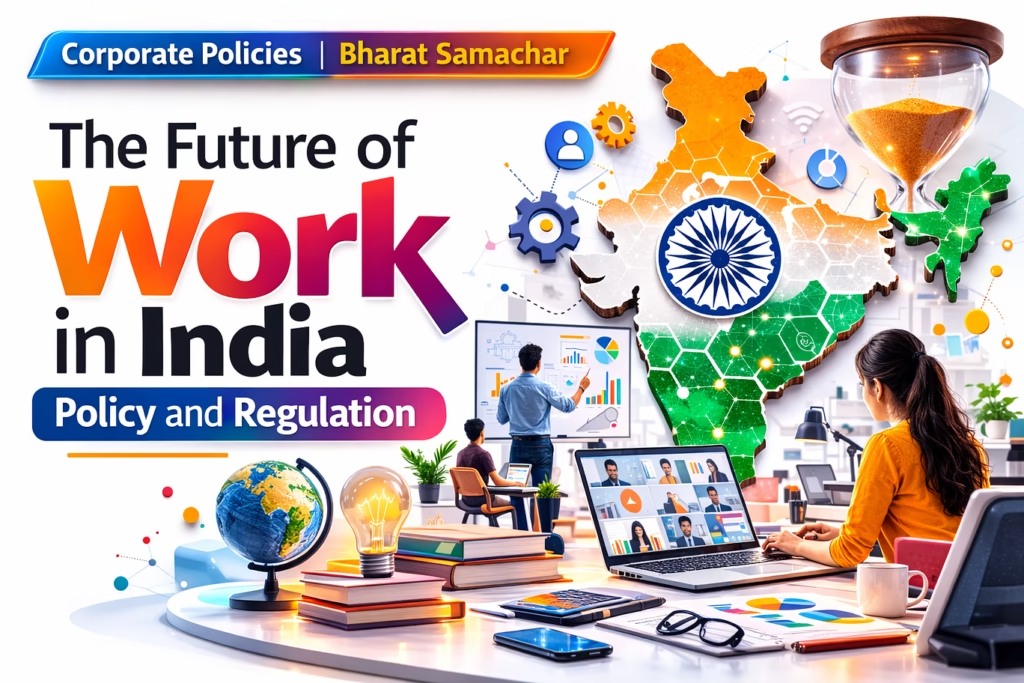
The nature of work is changing faster than at any point in modern history. Advances in artificial intelligence, automation, digital platforms, and remote technologies are transforming how companies operate and how people earn their livelihoods. For a country like India—with one of the world’s largest and youngest workforces—this transformation presents both enormous opportunity and significant policy challenges. Governments, businesses, and institutions must now rethink traditional labour frameworks to ensure that the future of work remains inclusive, productive, and resilient. As Narendra Modi has often emphasized: “India’s demographic dividend will only become a strength if we prepare our workforce for the future.” Preparing that workforce increasingly requires policies that reflect the realities of a digital economy. The Changing Nature of Work Over the past decade, technological progress has dramatically altered the structure of employment. Digital platforms, automation technologies, and AI-powered systems are reshaping industries ranging from manufacturing to finance. Some of the most important shifts include: These trends are creating new forms of employment while also disrupting traditional job structures. For policymakers, the challenge lies in ensuring that labour regulations evolve alongside these technological shifts. The Rise of the Gig Economy One of the most visible transformations in India’s labour market has been the growth of the gig economy. Millions of Indians now earn income through digital platforms such as ride-hailing services, delivery apps, and freelance marketplaces. Gig work offers flexibility and new income opportunities, but it also raises important questions about worker protections. Key concerns include: Recognizing these challenges, policymakers have begun exploring regulatory frameworks that address the needs of platform workers. According to Bhupender Yadav: “India’s labour policies must adapt to new forms of employment while ensuring that workers receive adequate protections.” This balance will be critical as the gig economy continues to expand. India’s New Labour Codes One of the most significant regulatory developments shaping the future of work in India is the introduction of the four new labour codes. These reforms aim to consolidate and simplify dozens of older labour laws into a more modern and streamlined framework. The four codes cover: Together, they seek to modernize India’s labour regulations while improving ease of doing business. The new labour codes also recognize emerging forms of work, including gig and platform-based employment, marking an important step toward adapting labour policy to a digital economy. The Role of Skill Development As automation and artificial intelligence reshape industries, the demand for new skills is growing rapidly. Many traditional roles are evolving, and workers increasingly need training in areas such as: Recognizing this shift, the government has launched multiple skill development initiatives aimed at preparing the workforce for the digital era. Programs under Skill India and the National Skill Development Mission aim to equip millions of young Indians with the capabilities needed for emerging industries. As Dharmendra Pradhan has noted: “Skill development is the foundation of India’s future workforce.” Investing in education and training will be essential to ensure that technological disruption leads to opportunity rather than unemployment. Remote Work and the Digital Workplace Another major shift in the future of work is the rise of remote and hybrid working models. Accelerated by the COVID-19 pandemic, remote work has become increasingly common across many industries. Companies are now able to hire talent from anywhere, while employees enjoy greater flexibility in how and where they work. However, remote work also introduces new policy considerations, including: Governments around the world are still adapting to these changes, and India is no exception. The growth of digital workplaces will likely require new frameworks to address the legal and regulatory aspects of distributed workforces. Automation and Job Transformation Automation and artificial intelligence are expected to reshape many industries in the coming years. Some repetitive tasks may be replaced by machines, while entirely new professions emerge in areas such as AI development, robotics maintenance, and digital services. Industries likely to see significant change include: However, experts widely believe that technology will not simply eliminate jobs—it will transform them. New roles requiring creativity, complex problem-solving, and human judgment will become increasingly valuable. Balancing Innovation and Protection The future of work ultimately requires a delicate balance between innovation and worker protection. On one hand, flexible labour markets can encourage entrepreneurship and technological progress. On the other hand, workers must have access to fair wages, social security, and safe working conditions. India’s policy framework will therefore need to address several critical questions: As Rajeev Chandrasekhar has observed: “The digital economy will create enormous opportunities, but we must ensure that growth is inclusive.” A Workforce for the Digital Age India stands at a pivotal moment in its economic development. With a young population, a rapidly growing digital economy, and expanding technology sectors, the country has the potential to become a global hub for innovation and talent. However, realizing this potential will depend on how effectively policies adapt to the evolving world of work. Forward-looking labour regulations, strong education systems, and continuous skill development will be essential. If these elements align successfully, the future of work in India could become one of the country’s greatest economic advantages in the decades ahead.
Corporate Governance Reforms in India: Strengthening Transparency and Accountability

Over the past three decades, India’s corporate landscape has undergone a profound transformation. As the country’s economy expanded and businesses grew increasingly global, the need for stronger corporate governance frameworks became more urgent. Corporate governance—the system of rules, practices, and processes by which companies are directed and controlled—plays a critical role in ensuring transparency, accountability, and ethical business conduct. In India, a series of reforms introduced by regulators and policymakers have gradually strengthened governance standards across corporate India. These reforms have not only helped protect investors but have also enhanced the credibility of Indian companies in global markets. As Madhabi Puri Buch has emphasized: “Strong corporate governance is the foundation of trust in financial markets.” Trust, in many ways, is the currency on which modern capital markets depend. Why Corporate Governance Matters Corporate governance frameworks ensure that companies operate responsibly and in the best interests of stakeholders, including shareholders, employees, customers, and society at large. Strong governance practices help: In an increasingly interconnected global economy, companies with robust governance systems are often better positioned to attract long-term investment. India’s growing integration with global capital markets has therefore made corporate governance reforms an important policy priority. The Evolution of Governance Reforms India’s corporate governance framework has evolved significantly since the early 1990s, when economic liberalization opened the country to global investment. Several major reforms have shaped the current governance landscape. Clause 49 of the Listing Agreement One of the earliest milestones was the introduction of Clause 49 by the Securities and Exchange Board of India (SEBI). This regulation required listed companies to adopt stronger governance practices, including the appointment of independent directors and improved financial disclosures. The Companies Act, 2013 The Companies Act of 2013 represented one of the most comprehensive corporate law reforms in India. The legislation introduced several key governance provisions, including: The Act also introduced requirements related to corporate social responsibility (CSR), making India one of the few countries to mandate corporate contributions toward social development. According to Nirmala Sitharaman: “Strong corporate governance ensures that economic growth is both sustainable and inclusive.” The Role of Independent Directors Independent directors play a crucial role in corporate governance by providing objective oversight of management decisions. Their responsibilities typically include: Reforms in recent years have sought to strengthen the independence and effectiveness of these directors. SEBI has introduced guidelines to improve transparency around the appointment, evaluation, and tenure of independent board members. These measures aim to ensure that boards function as effective checks on corporate management. SEBI’s Ongoing Governance Reforms The Securities and Exchange Board of India (SEBI) continues to play a central role in strengthening corporate governance standards. Over the past decade, the regulator has introduced several reforms aimed at improving board accountability and investor protection. Key initiatives include: These measures aim to prevent conflicts of interest and ensure that companies operate with greater transparency. As Ajay Tyagi once noted: “Good governance is not just a regulatory requirement—it is a competitive advantage.” Companies with strong governance frameworks are often better positioned to build long-term credibility with investors and stakeholders. ESG and the New Era of Governance Corporate governance is increasingly being viewed through the broader lens of Environmental, Social, and Governance (ESG) principles. Global investors are placing greater emphasis on how companies address issues such as environmental sustainability, social responsibility, and ethical governance. India has responded to this trend through regulatory initiatives such as the Business Responsibility and Sustainability Reporting (BRSR) framework introduced by SEBI. Under these guidelines, large listed companies are required to disclose detailed information about their environmental and social impact. This shift reflects a growing recognition that corporate governance must extend beyond financial accountability to include broader societal responsibilities. Challenges That Remain Despite significant progress, several challenges remain in strengthening corporate governance across India. These include: Addressing these issues will require continued collaboration between regulators, corporate leaders, and investors. The Road Ahead India’s economic ambitions increasingly depend on attracting global investment and building internationally competitive companies. Strong corporate governance frameworks will play a vital role in achieving these goals. By improving transparency, protecting shareholder rights, and promoting responsible corporate behavior, governance reforms can strengthen the credibility of Indian businesses in global markets. As Uday Kotak has observed: “Good governance is ultimately about fairness, transparency, and accountability.” These principles will continue to shape the evolution of corporate India as the country’s economy grows and integrates more deeply with global markets. In the years ahead, the strength of India’s corporate governance systems may well become one of the defining factors in the country’s long-term economic success.
India’s Role in Global Supply Chain Realignment

Over the past few years, global supply chains have undergone one of the most dramatic shifts in modern economic history. Events such as the COVID-19 pandemic, geopolitical tensions, trade disputes, and technological disruptions have forced governments and businesses to rethink how goods are produced and distributed across the world. For decades, global manufacturing and supply chains were heavily concentrated in a few regions. However, recent disruptions have exposed the risks of excessive dependence on single-country manufacturing hubs. As companies seek greater resilience and diversification, many are now looking toward new destinations for production and logistics. In this evolving landscape, India has emerged as one of the most promising alternatives. Increasingly, global policymakers and multinational corporations are viewing India not just as a large consumer market but also as a potential strategic manufacturing and supply chain hub. As Narendra Modi has emphasized: “India is positioning itself as a trusted partner in global supply chains.” This shift could have significant implications for the future of the global economy. The Changing Global Supply Chain Landscape The traditional model of global supply chains prioritized efficiency and cost optimization. Many multinational companies built highly centralized manufacturing networks to minimize production costs. However, recent disruptions have highlighted several vulnerabilities in this model, including: As a result, companies are increasingly adopting strategies such as “China Plus One,” where production is diversified across multiple countries to reduce risk. This shift has opened new opportunities for emerging economies like India to play a larger role in global manufacturing and supply chains. India’s Strategic Advantages India possesses several structural advantages that position it well in the evolving global supply chain landscape. Large Domestic Market India is one of the world’s largest consumer markets, providing businesses with both manufacturing and consumption opportunities. Skilled Workforce The country has a large and growing workforce, particularly in engineering, technology, and manufacturing sectors. Expanding Infrastructure Major investments in logistics, transportation, ports, and industrial corridors are improving India’s manufacturing ecosystem. Policy Support Government initiatives aimed at strengthening domestic manufacturing and exports are encouraging companies to invest in India. According to Piyush Goyal: “India is becoming an integral part of global supply chains as companies look for trusted and resilient partners.” These factors together are helping position India as an attractive destination for global businesses seeking to diversify their supply chains. Policy Initiatives Supporting Supply Chain Growth Recognizing the opportunity created by global supply chain shifts, the Indian government has introduced several policies aimed at boosting domestic manufacturing. One of the most significant initiatives is the Production Linked Incentive (PLI) Scheme. The PLI program offers financial incentives to companies that expand manufacturing in India across key sectors such as: The objective is to encourage both domestic and global firms to establish large-scale manufacturing operations in the country. In addition, initiatives such as Make in India and National Logistics Policy aim to strengthen India’s industrial ecosystem and reduce supply chain bottlenecks. Growth in Key Manufacturing Sectors India’s participation in global supply chains is expanding across several industries. Electronics Manufacturing India has emerged as a major hub for smartphone assembly and electronics manufacturing. Several global technology companies have increased their production presence in the country. Pharmaceuticals India is already one of the world’s largest producers of generic medicines and plays a critical role in global pharmaceutical supply chains. Automotive and EV Manufacturing India’s automotive industry is rapidly evolving, with increasing focus on electric vehicles and advanced manufacturing technologies. Renewable Energy With growing investments in solar and green energy infrastructure, India is also becoming an important player in global clean energy supply chains. These sectors are expected to drive India’s growing role in global production networks. The Importance of Logistics and Infrastructure Supply chains depend heavily on efficient logistics networks. To support manufacturing expansion, India is investing significantly in infrastructure development. Key initiatives include: These projects aim to reduce transportation costs and improve the efficiency of goods movement across the country. As Nitin Gadkari has stated: “Efficient logistics infrastructure is essential for India to compete globally.” Improving logistics performance will be critical for integrating India more deeply into international supply chains. Challenges That Remain While India has made significant progress, several challenges still need to be addressed to fully capitalize on global supply chain opportunities. These include: Addressing these issues will require continued collaboration between government agencies, industry leaders, and global partners. A Strategic Opportunity The ongoing realignment of global supply chains represents a rare economic opportunity for India. If the country successfully strengthens its manufacturing ecosystem, improves logistics infrastructure, and maintains a stable policy environment, it could become one of the most important supply chain hubs in the world. For global businesses seeking resilience and diversification, India offers a combination of scale, talent, and growing industrial capacity. And as the global economy continues to evolve, India’s role in shaping the future of international supply chains may only become more significant. In the coming decade, the country’s ability to integrate into global production networks could become a key driver of economic growth and industrial transformation.
Newtrace – The Indian Startup Trying to Make Green Hydrogen Cheaper

In the global race to decarbonise heavy industry and transition toward cleaner energy systems, green hydrogen has emerged as one of the most promising solutions. However, despite its enormous potential, the widespread adoption of green hydrogen has been hindered by one major obstacle: cost. Producing hydrogen using renewable energy remains significantly more expensive than conventional fossil-fuel-based methods. This is precisely the problem that Bengaluru-based climate technology startup Newtrace is attempting to solve. Founded in 2021, the deep-tech venture is building advanced electrode and electrolyser technologies designed to make green hydrogen production dramatically more efficient and affordable. By focusing on the most critical component inside hydrogen production systems, the company aims to unlock a key bottleneck in the global clean-energy transition. The Startup’s Mission Newtrace operates at the intersection of clean energy, materials science, and electrochemistry. Its mission is simple but ambitious: to reduce the cost of producing green hydrogen so that it can compete with traditional fossil-fuel-derived hydrogen Hydrogen today is widely used across industries such as fertilizer production, oil refining, and chemical manufacturing. Unfortunately, most hydrogen currently produced globally is “grey hydrogen,” which is generated using fossil fuels and emits large amounts of carbon dioxide. Green hydrogen, on the other hand, is produced by splitting water into hydrogen and oxygen using renewable electricity from sources like solar or wind. The process uses machines called electrolysers, which perform electrolysis by passing electricity through water. If the electricity used is renewable, the resulting hydrogen is considered completely clean. Despite its environmental benefits, green hydrogen production is still expensive. One of the biggest reasons for this is inefficiency in electrolyser systems, particularly in the electrode components, where much of the energy loss occurs during electrolysis. This is where Newtrace’s innovation comes into play. The Technology: Voltagen Electrodes At the heart of Newtrace’s technology is Voltagen, a proprietary electrode system designed specifically for alkaline water electrolysers. These electrodes play a crucial role in improving the efficiency of hydrogen production. Voltagen electrodes are engineered to deliver several key improvements: Because the technology can be integrated into existing hydrogen production infrastructure without redesigning entire systems, it offers a practical path for manufacturers and hydrogen producers to upgrade performance quickly. The company has also developed membraneless electrolyser technology, further expanding its innovation in hydrogen production systems. According to the company’s leadership, improvements in materials science and manufacturing processes are essential for reducing hydrogen costs. As CEO and co-founder Prasanta Sarkar explained, the challenge of green hydrogen economics is fundamentally a materials and engineering problem, not just an energy one. The Founders Behind Newtrace Newtrace was founded by Prasanta Sarkar and Rochan Sinha, two engineers with deep expertise in electrochemistry, materials science, and industrial engineering. Instead of pursuing software or consumer-tech opportunities — which often dominate startup ecosystems — the founders chose a far more difficult path: building deep-tech hardware in climate technology. This requires years of research, laboratory experimentation, and industrial validation before commercial deployment. Today, the company operates out of a 30,000-square-foot facility in Bengaluru and employs more than 45 engineers and scientists working on hydrogen technology development. Funding and Investor Support Newtrace recently announced a $6.3 million Pre-Series A funding round, marking an important milestone in the company’s growth journey. The round was led by HDFC Bank and Mitsui Sumitomo Insurance Venture Capital, highlighting growing institutional interest in climate technology innovation. The funding round also saw participation from several existing investors, including: Prior to this round, the startup had already raised around $5.7 million in seed funding in 2023, bringing its total funding to roughly $12 million to date. The new capital will be used to: The company expects to begin initial commercial deliveries of Voltagen electrodes within the next 12 months, marking the transition from research to large-scale commercialization. Why Green Hydrogen Matters The importance of startups like Newtrace extends far beyond the company itself. Green hydrogen is increasingly seen as a cornerstone of the global clean energy transition. Unlike electricity, which is difficult to store and transport over long distances, hydrogen can serve as a clean energy carrier for heavy industries that are difficult to electrify. Key sectors where green hydrogen could play a transformative role include: Recognizing this potential, the Indian government launched the National Green Hydrogen Mission, which aims to make India a global hub for hydrogen production. The initiative includes billions of rupees in incentives to accelerate research, infrastructure, and manufacturing in the sector. Startups like Newtrace are expected to play a critical role in achieving these ambitions by building the core technologies required to scale hydrogen production. The Road Ahead Newtrace now stands at a crucial point in its journey. Having demonstrated the science behind its technology, the company is moving toward industrial-scale manufacturing and commercialization. If successful, its innovations could help reduce the cost of green hydrogen significantly — making it viable for widespread industrial adoption. That would not only position Newtrace as a major player in the emerging hydrogen economy but could also help India establish itself as a global hub for clean energy technology. In many ways, the startup represents a broader shift happening across India’s innovation ecosystem: a growing willingness to tackle deep, complex scientific problems that have global impact. And if Newtrace succeeds, the impact could extend far beyond a single company — helping bring the world one step closer to a cleaner energy future.