
The Global SaaS Opportunity: Why Indian Startups Are Winning Abroad

Why This Is Trending Over the past decade, something remarkable has happened in the global technology landscape. A growing number of world-class software companies are being built not in Silicon Valley—but from cities like Chennai, Bengaluru, Pune, and Hyderabad.Indian SaaS startups have quietly emerged as powerful competitors in the global enterprise software market. Companies such as Freshworks, Zoho, Chargebee, Postman, BrowserStack, and Darwinbox have demonstrated that global software products can be built in India and sold successfully to customers across the world. Freshworks’ NASDAQ listing in 2021 marked a major milestone for India’s product ecosystem, signaling that Indian SaaS companies could compete with global technology firms on the world stage. At the same time, companies like Postman have become essential developer tools used by millions of engineers worldwide, while Chargebee has built a global customer base in subscription billing infrastructure. What was once seen as an outsourcing-driven technology industry is now evolving into a product innovation ecosystem. Today, hundreds of Indian SaaS startups are following a similar playbook. Rather than focusing primarily on the domestic market, many founders are designing products intended for global customers from day one. This global-first approach has helped Indian startups rapidly expand across key markets such as: As a result, India’s SaaS ecosystem has attracted growing interest from global venture capital firms and technology investors. According to estimates from NASSCOM and SaaSBoomi, the Indian SaaS ecosystem could generate $50 billion in revenue by the end of the decade, positioning India as one of the world’s largest software innovation hubs. India’s Structural Advantage in SaaS Several structural factors have contributed to the rise of Indian SaaS startups.Unlike earlier technology waves that were dominated by Silicon Valley, the SaaS ecosystem has become far more global. This shift has allowed Indian founders to build companies that compete internationally while operating from India. Capital EfficiencyOne of the most important drivers behind India’s SaaS success is capital efficiency. Compared to Silicon Valley, startups in India can build world-class engineering teams at significantly lower cost. This difference in operating costs allows founders to allocate more resources toward: For venture capital investors, this creates an attractive opportunity. Startups in India can often reach meaningful scale with far less capital than comparable companies in the United States. As venture capitalist Jason Lemkin of SaaStr has previously noted: “SaaS startups outside Silicon Valley can often build great products at a fraction of the cost.” This cost advantage allows Indian founders to remain more disciplined while scaling their businesses. A Deep Engineering Talent PoolIndia’s large and highly skilled software engineering workforce also plays a critical role in the success of SaaS startups. For decades, Indian engineers have worked on global enterprise systems through IT services firms and multinational technology companies. This experience has helped build deep expertise in areas such as: Cities such as Bengaluru, Chennai, and Pune now host thousands of experienced software engineers who have worked on complex global technology products. Many of these engineers are now launching startups of their own. The Rise of Remote-First Global TeamsAnother key factor enabling the growth of Indian SaaS companies is the rise of distributed and remote-first startup teams. Unlike earlier technology eras, software companies today can operate globally without being headquartered in Silicon Valley. Modern SaaS startups frequently follow a hybrid model: Product and engineering teams in India → sales and customer teams in global marketsThis structure allows companies to combine India’s engineering strength with proximity to enterprise customers in markets like the United States. Freshworks famously adopted this strategy by building a strong presence in North America while maintaining large product teams in India. Today, many Indian SaaS startups follow the same model. The Power of Product-Led Growth Another defining feature of successful SaaS companies is their focus on product-led growth (PLG).Rather than relying solely on traditional enterprise sales teams, many SaaS companies grow by allowing customers to adopt the product directly. Users can often: This model has proven particularly effective for developer tools and enterprise software. Products like Postman and BrowserStack gained global popularity because engineers could adopt them organically before formal enterprise adoption. This bottom-up adoption model allows startups to grow rapidly without massive marketing budgets. The Ecosystem Advantage The growth of the Indian SaaS ecosystem has also been accelerated by strong founder communities. Organizations such as SaaSBoomi, along with venture capital firms focused on enterprise software, have created networks where founders actively share knowledge and insights. Experienced founders often mentor new startups on topics such as: This collaborative ecosystem helps younger companies avoid common mistakes and scale more quickly. The success of early SaaS pioneers has therefore created a multiplier effect across the ecosystem. Venture Capital Is Taking Notice The rapid growth of Indian SaaS startups has not gone unnoticed by global investors. Several venture capital firms now actively focus on the Indian enterprise software market. These include: According to industry reports, SaaS companies now represent one of the largest segments of venture capital investment in India’s startup ecosystem. Investors are increasingly drawn to SaaS startups because of their: As more Indian startups demonstrate successful global expansion, investor confidence in the ecosystem continues to grow. The Next Decade of Indian SaaS Despite the progress made so far, many industry observers believe that India’s SaaS ecosystem is still in its early stages. Over the next decade, the country could see the emergence of dozens of globally significant enterprise software companies. New opportunities are emerging in areas such as: The next generation of founders is already building products designed for global markets from the start. The Big Opportunity India may never replicate Silicon Valley’s exact startup ecosystem. But it does not need to. By combining: India has created a unique model for building world-class software companies. The success of companies like Freshworks, Zoho, Chargebee, and Postman shows that global software innovation no longer has to originate in Silicon Valley. In many ways, the Indian SaaS story may only be beginning. And if current trends continue, India could emerge as one of the most important centers for enterprise software innovation in the global economy.
What Is Artificial Intelligence? A Simple Guide for Business Leaders

Artificial intelligence has rapidly become one of the most talked-about technologies in the world. From chatbots and recommendation systems to advanced data analysis and automation tools, AI is increasingly shaping how companies operate and compete. For business leaders, however, artificial intelligence can often feel like a complex and abstract concept. Terms such as machine learning, neural networks, and generative AI are frequently used in technology discussions, but understanding how these technologies actually work—and what they mean for businesses—is not always straightforward. Yet the stakes are high. According to industry analysts, artificial intelligence could contribute trillions of dollars to the global economy over the next decade. Companies across industries are already using AI to improve decision-making, automate operations, and create entirely new products and services. In simple terms, artificial intelligence refers to the ability of computer systems to perform tasks that normally require human intelligence—such as recognizing patterns, analyzing data, understanding language, and making predictions. For business leaders, understanding AI is no longer optional. It is becoming a core capability that will shape the future of almost every industry. What Is Artificial Intelligence? Artificial Intelligence (AI) refers to computer systems designed to simulate aspects of human intelligence. These systems can analyze data, learn from patterns, make predictions, and sometimes generate new content or decisions based on information they have processed. Traditional software programs follow explicit instructions written by programmers. Artificial intelligence systems, however, can learn from data and improve their performance over time. This ability to learn from experience is what makes AI fundamentally different from conventional software. AI technologies are often used to perform tasks such as: These capabilities allow organizations to process information at a scale and speed far beyond human capacity. How Artificial Intelligence Works Most modern AI systems are powered by a branch of computer science known as machine learning. Machine learning enables computers to learn patterns from data rather than relying solely on predefined rules. Instead of telling a computer exactly how to solve a problem, developers provide large datasets that allow the system to identify patterns and improve its predictions over time. For example, an AI system designed to detect fraudulent financial transactions may be trained using millions of historical payment records. By analyzing patterns in this data, the system learns to recognize suspicious activity. The more data the system processes, the better it becomes at identifying patterns and making predictions. Another key concept in AI is the use of neural networks, which are computing systems inspired by the structure of the human brain. Neural networks allow AI systems to analyze complex relationships within large datasets. This technology powers many modern AI applications, including speech recognition, image analysis, and recommendation systems. Traditional AI vs Generative AI In recent years, artificial intelligence has evolved rapidly, particularly with the emergence of generative AI technologies. Understanding the difference between traditional AI and generative AI is important for business leaders. Traditional AI Traditional AI systems focus primarily on analyzing data and making predictions. Examples include: These systems are designed to identify patterns and support decision-making. They typically operate within clearly defined tasks. Generative AIGenerative AI represents a newer category of artificial intelligence capable of creating new content rather than simply analyzing data. Generative AI models can produce: Tools such as large language models have demonstrated how AI can generate human-like responses and assist in complex creative tasks. For businesses, generative AI opens new possibilities in areas such as: Generative AI is one of the key drivers behind the recent surge of global interest in artificial intelligence. Real-World Business Applications of AI Artificial intelligence is already being used across a wide range of industries. For business leaders, the most important question is not whether AI will affect their industry—but how quickly. Below are several major areas where AI is transforming business operations. Customer Service and SupportMany companies now use AI-powered chatbots to handle customer inquiries, resolve basic issues, and provide instant responses. These systems can significantly reduce customer service costs while improving response times. AI can also analyze customer interactions to identify patterns and improve service quality. Marketing and PersonalizationAI is widely used in marketing to analyze customer behavior and personalize digital experiences. E-commerce platforms, for example, use AI algorithms to recommend products based on browsing history and purchase behavior. Personalized marketing campaigns driven by AI can significantly improve customer engagement and conversion rates. Financial ServicesBanks and financial institutions rely heavily on AI for fraud detection, risk analysis, and credit scoring. AI systems can monitor millions of transactions in real time to detect unusual patterns that may indicate fraud. These technologies help financial institutions manage risk while improving operational efficiency. Supply Chain OptimizationAI systems are increasingly used to forecast demand, optimize inventory levels, and manage logistics operations. By analyzing historical data and market trends, AI can help companies predict demand fluctuations and avoid supply chain disruptions. This capability has become especially important in global industries where supply chains are highly complex. Healthcare InnovationArtificial intelligence is also transforming healthcare. AI systems can assist doctors by analyzing medical images, predicting disease risks, and supporting clinical decision-making. In some cases, AI has demonstrated the ability to detect certain medical conditions earlier than traditional diagnostic methods. Why Artificial Intelligence Matters for Business Leaders Artificial intelligence is not just another technology trend. It represents a fundamental shift in how organizations operate and make decisions. Companies that successfully adopt AI can gain significant advantages in: At the same time, organizations that fail to adopt AI may struggle to compete in increasingly data-driven markets. For business leaders, the key challenge is not simply implementing AI tools but developing a broader strategy for integrating AI into their business operations. This may involve: Organizations that approach AI strategically are more likely to unlock long-term value from the technology. Artificial Intelligence and India’s Digital Economy India is rapidly emerging as an important hub for artificial intelligence development. The country has several structural advantages that could support the growth of its AI ecosystem, including: Indian startups are increasingly building AI-powered products for global markets, particularly
How Venture Capital Works
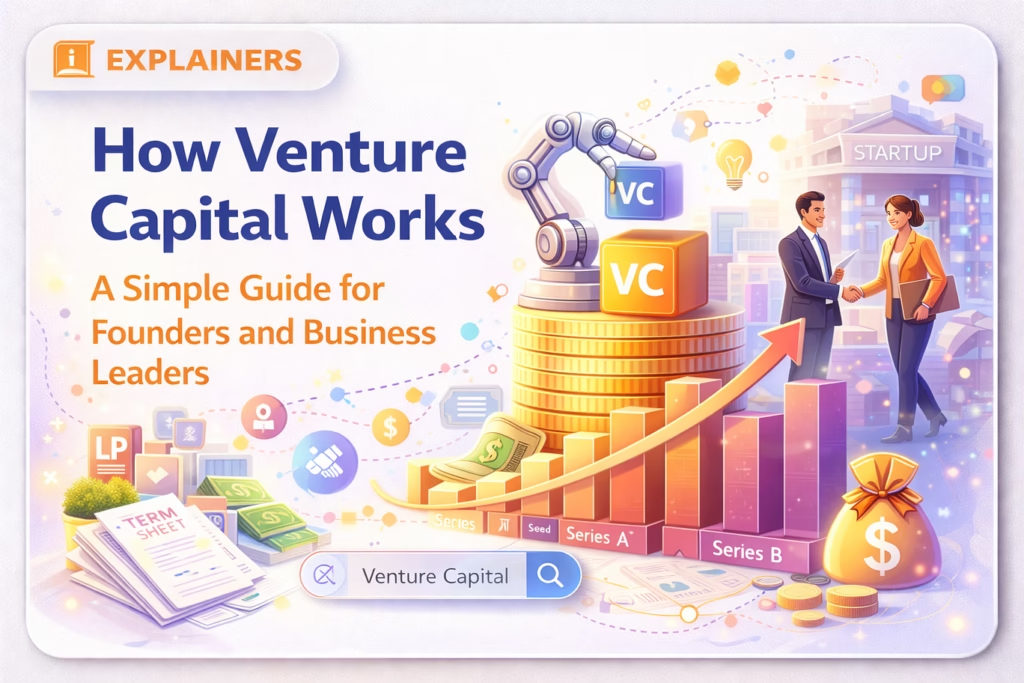
Over the past two decades, venture capital has played a crucial role in building some of the most influential companies in the global technology industry. Companies such as Google, Amazon, Airbnb, and Uber all relied on venture capital funding during their early growth stages. In India as well, venture capital has helped accelerate the growth of the startup ecosystem. Major Indian companies such as Flipkart, Paytm, Byju’s, Ola, and Swiggy all raised venture funding as they scaled their businesses. Yet despite its importance, venture capital is often misunderstood. Many founders assume that venture capital is simply a source of startup funding. In reality, venture capital is a structured investment system designed to finance high-growth companies in exchange for equity ownership. Understanding how venture capital works is essential for entrepreneurs, investors, and business leaders navigating the startup ecosystem. What Is Venture Capital? Venture capital (VC) is a form of private investment provided to early-stage companies with high growth potential. Unlike traditional bank loans, venture capital investments are typically made in exchange for equity ownership in the company. This means investors receive shares in the business rather than expecting fixed interest payments. Venture capital investors usually focus on companies that have the potential to grow rapidly and capture large markets. These companies are often technology-driven startups operating in sectors such as: Because startups are inherently risky, venture capital firms expect that many investments may fail. However, the few companies that succeed can generate extremely large returns. This risk–reward model is at the core of the venture capital industry. How Venture Capital Funds Work Venture capital firms operate through investment funds that pool capital from various investors. These investors, known as Limited Partners (LPs), typically include: The venture capital firm itself acts as the General Partner (GP), responsible for managing the fund and making investment decisions. The typical venture capital fund structure works like this: Most venture capital funds operate with a lifespan of around 10 years. Why Venture Capital Exists Traditional financing models such as bank loans are not well suited for startups. Banks typically require: Early-stage startups rarely meet these criteria. Venture capital fills this gap by providing funding to companies that have strong growth potential but may not yet be profitable. In exchange for this risk, venture capital firms seek significant returns if the startup succeeds. For example, if a VC firm invests $5 million in a startup and the company later becomes worth $5 billion, the value of that early investment can increase dramatically. This potential for outsized returns drives venture capital investment. The Startup Funding Lifecycle Startups typically raise venture capital in multiple stages as they grow. Each stage corresponds to different levels of business maturity. Pre-Seed Stage This is often the earliest funding stage. Startups at this stage are usually developing their initial product or idea. Funding may come from: Typical funding size: $100,000 to $1 million. Seed StageSeed funding is used to build the first version of the product and test market demand. At this stage, startups often begin hiring their first team members and launching early customer pilots. Seed investors may include: Typical funding size: $1 million to $5 million. Series ASeries A funding helps startups scale their business model. At this stage, investors expect the company to show evidence of: Series A rounds are typically led by venture capital firms. Typical funding size: $10 million to $20 million. Series B and BeyondLater-stage funding rounds focus on expanding the company’s market presence and accelerating growth. Startups may use this capital to: Some startups eventually raise hundreds of millions of dollars across multiple funding rounds. How Venture Capital Firms Make Money Venture capital firms generate returns through successful exits. There are two primary exit paths: AcquisitionA larger company purchases the startup. This allows investors to sell their shares and realize profits. Many successful startups are acquired by larger technology firms seeking innovation and talent. Initial Public Offering (IPO) In an IPO, a company lists its shares on a public stock exchange. This allows venture investors to sell their holdings in the public market. Several technology companies that once raised venture capital later became publicly traded firms. Key Venture Capital Terms Explained Understanding venture capital also requires familiarity with several commonly used terms. ValuationValuation refers to the estimated worth of a company. Startups are often valued based on growth potential rather than current profits. EquityEquity represents ownership in the company. When investors provide venture capital funding, they receive equity shares. DilutionAs startups raise new funding rounds, founders typically sell additional shares. This reduces the percentage ownership of existing shareholders. This process is known as dilution. Term SheetA term sheet outlines the conditions under which an investment is made. It includes details such as: Term sheets are a crucial part of venture capital negotiations. Venture Capital in India India’s venture capital ecosystem has grown significantly over the past decade.According to industry reports, the country now hosts thousands of startups and hundreds of venture capital firms investing in emerging companies. Several factors have contributed to the growth of venture capital in India: Major global venture capital firms such as Sequoia Capital, Accel, and Tiger Global have actively invested in Indian startups. At the same time, domestic investors and angel networks have also become increasingly active. As a result, India has produced dozens of unicorn startups and continues to attract global investment. Why Venture Capital Matters for Entrepreneurs For founders, venture capital can provide more than just funding. VC firms often help startups by offering: However, venture capital also comes with expectations. Investors typically seek startups that can grow extremely fast and capture large markets. This means that venture-backed companies often pursue aggressive growth strategies. For some businesses, especially those focused on profitability rather than rapid expansion, venture capital may not always be the right funding model. Key Takeaways Venture capital plays a critical role in supporting innovation and startup growth around the world. Understanding how it works can help entrepreneurs make better decisions about funding their businesses. Key insights include: For entrepreneurs building
What Is a Unicorn Startup?

Over the past decade, the term “unicorn startup” has become one of the most widely used phrases in the global technology and venture capital ecosystem. Media headlines frequently celebrate companies reaching unicorn status, while investors closely track how many new unicorns emerge each year. In simple terms, a unicorn startup is a privately held startup company valued at more than $1 billion. The term reflects the idea that such companies were once considered extremely rare—much like the mythical creature from which the name is derived. Today, however, unicorn startups are no longer unusual. Advances in technology, the expansion of venture capital funding, and the growth of global digital markets have created an environment where high-growth companies can scale rapidly. India has become one of the world’s most active startup ecosystems, producing dozens of unicorn companies across sectors such as fintech, e-commerce, SaaS, and logistics. For entrepreneurs, investors, and business leaders, understanding what unicorn startups are—and how they are built—offers valuable insight into the dynamics of the modern startup economy. What Is a Unicorn Startup? A unicorn startup is a privately owned company valued at $1 billion or more by investors. The valuation is typically determined during venture capital funding rounds, when investors purchase equity in the company at an agreed price. If a startup raises investment at a valuation above $1 billion, it officially joins the ranks of unicorn companies. Importantly, this valuation does not necessarily mean the company generates $1 billion in revenue or profit. In many cases, unicorn startups may still be in the early stages of building their business models. Instead, the valuation reflects investor expectations about the company’s future growth potential. Investors may believe the startup could eventually dominate a large market or disrupt an existing industry. As a result, unicorn valuations often represent future potential rather than current financial performance. Origin of the Term “Unicorn” The term “unicorn” was first coined in 2013 by venture capitalist Aileen Lee, founder of Cowboy Ventures. Lee used the term to describe startups that reached a $1 billion valuation, highlighting how rare these companies were at the time. In her analysis, she found that only a small number of startups achieved such valuations compared to the vast number of companies launched each year. Since then, however, the startup ecosystem has grown dramatically. Today, hundreds of unicorn startups exist around the world, particularly in sectors driven by digital technology. The term has become a shorthand way of describing high-growth, venture-backed companies with massive market potential. How Startups Become Unicorns Becoming a unicorn is not a simple milestone. It typically requires a combination of strong market demand, rapid growth, and significant investor support. While every startup journey is different, several common patterns can be observed among companies that achieve unicorn status. 1. Large Market OpportunityMost unicorn startups operate in markets with enormous potential. Examples include: Large markets allow startups to scale rapidly and attract investor interest. 2. Scalable Business ModelsUnicorn startups typically build technology-driven platforms that can expand quickly without proportional increases in cost. Examples include: This scalability allows companies to grow rapidly across global markets. 3. Venture Capital FundingMost unicorn startups raise multiple rounds of venture capital funding. As startups demonstrate growth and traction, investors increase their valuations during successive funding rounds. These rounds often include: Each round allows the company to expand its operations and pursue new growth opportunities. 4. Rapid User GrowthMany unicorn companies achieve rapid expansion by acquiring millions of users within a relatively short period. This growth often attracts additional investor interest and drives higher valuations. Digital platforms in particular can scale quickly because they operate across global markets. Famous Unicorn Startups Around the World Over the past decade, several companies have achieved global prominence after reaching unicorn status. Examples include: These companies demonstrate how startups can scale rapidly and transform entire industries. Many unicorns eventually grow into some of the most influential companies in the world. India’s Unicorn Startup Ecosystem India has emerged as one of the fastest-growing startup ecosystems globally. The country now hosts dozens of unicorn companies across multiple industries. Some well-known Indian unicorn startups include: Several factors have contributed to the rise of unicorn startups in India: Large Digital MarketIndia has one of the world’s largest internet user bases, creating massive opportunities for digital businesses. Expanding Venture Capital InvestmentGlobal venture capital firms have invested heavily in Indian startups over the past decade. This capital has helped companies scale rapidly. Strong Technology TalentIndia’s engineering and software talent pool provides a strong foundation for building scalable technology companies. Growing Entrepreneurial EcosystemAccelerators, startup incubators, and founder networks have strengthened the country’s innovation ecosystem. As a result, India now ranks among the top countries globally for startup activity. Are Unicorn Valuations Always Reliable? While unicorn status is often seen as a symbol of success, it is important to understand that startup valuations are based on investor expectations. In some cases, companies may struggle to sustain their valuations if growth slows or market conditions change. For example, during periods of economic uncertainty, investors may reassess startup valuations. This has happened during several global technology market corrections. Nevertheless, the unicorn concept remains a powerful indicator of how venture capital markets identify high-growth companies. The Evolution of the Unicorn Economy As the startup ecosystem has evolved, additional terms have emerged to describe companies at different valuation levels. DecacornA decacorn is a startup valued at $10 billion or more. Examples include several global technology giants that began as venture-backed startups. HectocornA hectocorn refers to companies valued at $100 billion or more. Only a handful of companies globally have reached this level. These classifications highlight how rapidly some startups can scale in the modern digital economy. Why Unicorn Startups Matter Unicorn startups play an important role in driving innovation and economic growth. They often create new industries, disrupt traditional business models, and generate significant employment opportunities. For investors, unicorn startups represent the possibility of exceptional returns. For entrepreneurs, they represent proof that ambitious ideas can scale globally. In countries such as India, unicorn startups also demonstrate the growing strength of the domestic innovation ecosystem. As technology continues to transform industries worldwide, unicorn
What Is Blockchain? Beyond Cryptocurrency

Over the past decade, blockchain has emerged as one of the most talked-about technologies in the digital economy. Initially associated primarily with cryptocurrencies such as Bitcoin, blockchain technology has evolved into a much broader innovation with potential applications across industries ranging from finance and supply chains to healthcare and digital identity. At its core, blockchain is designed to solve one of the most fundamental challenges of the digital age: how to establish trust in a decentralized environment. Traditionally, transactions and records have relied on centralized authorities—such as banks, governments, or large corporations—to verify and maintain data. Blockchain introduces a new model where information can be verified and stored across a distributed network, reducing reliance on intermediaries. Today, major financial institutions, technology companies, and governments are actively exploring blockchain’s potential. Many experts believe it could reshape how data, assets, and transactions are recorded and shared globally. For business leaders, understanding blockchain is increasingly important—not just because of cryptocurrency, but because of its potential to transform digital infrastructure across industries. What Is Blockchain? Blockchain is a distributed digital ledger technology that records transactions across a network of computers in a secure and transparent way. Instead of storing data in a single centralized database, blockchain distributes copies of the ledger across multiple nodes in a network. Each transaction is grouped into a block, and these blocks are linked together chronologically to form a chain of records—hence the name blockchain. Once a block of data is added to the chain, it becomes extremely difficult to modify or delete. This creates a tamper-resistant system that ensures the integrity of records. In simple terms, blockchain is a shared digital record system that multiple participants can trust without relying on a central authority. This architecture makes blockchain particularly useful in situations where transparency, security, and trust are essential. How Blockchain Works To understand blockchain more clearly, it helps to break down the process into several key steps. 1. Transaction InitiationA transaction begins when a user initiates an action—such as sending digital assets, recording a contract, or updating information.This transaction is broadcast to the blockchain network. 2. Network Verification The transaction is verified by multiple computers (known as nodes) within the network.These nodes use algorithms to confirm that the transaction is valid.This decentralized verification process eliminates the need for a single central authority. 3. Block Creation Once verified, the transaction is grouped with other transactions into a block.Each block contains: This linking mechanism ensures that all blocks form a continuous chain. 4. Block Addition to the ChainAfter validation, the new block is permanently added to the blockchain. Once recorded, altering past records becomes extremely difficult because it would require changing every subsequent block across the entire network. 5. Distributed Ledger Update All participants in the network update their copies of the ledger. This ensures that every participant has access to the same verified information. Key Characteristics of Blockchain Blockchain technology offers several unique properties that differentiate it from traditional databases. Decentralization Instead of relying on a central authority, blockchain operates through a distributed network. This reduces the risk of single points of failure. Transparency Most blockchain systems allow participants to view transaction records. This increases accountability and trust between participants. Security Blockchain uses advanced cryptographic techniques to protect data. Once recorded, transactions are extremely difficult to alter. Immutability Data stored on a blockchain cannot easily be changed or deleted. This creates reliable historical records. Blockchain Beyond Cryptocurrency Although blockchain first gained global attention through cryptocurrencies, its potential applications extend far beyond digital currency. Many industries are exploring blockchain to improve transparency, efficiency, and trust. Below are several key sectors where blockchain is gaining traction. Enterprise Applications of Blockchain Supply Chain Management Blockchain can improve supply chain transparency by allowing companies to track goods at every stage of production and distribution. For example, companies can verify: This helps reduce fraud and improves product traceability. Major global companies in retail and logistics are already experimenting with blockchain-based supply chain systems. Smart Contracts Smart contracts are self-executing digital agreements stored on blockchain networks. These contracts automatically execute when predefined conditions are met. For example, a payment could be automatically released when goods are delivered and verified. Smart contracts reduce administrative overhead and improve transaction efficiency. Digital Identity Systems Blockchain technology can also support secure digital identity systems. Instead of storing identity information in centralized databases, blockchain allows individuals to control and share verified digital identities. This concept is gaining attention in sectors such as: Data Integrity and Record Management Organizations that require secure and tamper-proof records can use blockchain to store important documents and transaction histories. Industries such as legal services, healthcare, and insurance are exploring blockchain-based record systems. Blockchain in Financial Services The financial sector has been one of the earliest adopters of blockchain technology. Banks and fintech companies are exploring blockchain to improve efficiency in areas such as: Traditional international payments can take several days to settle due to multiple intermediary banks. Blockchain-based payment networks, however, can potentially settle transactions much faster. Several central banks are also exploring Central Bank Digital Currencies (CBDCs) built on blockchain-inspired technologies. Blockchain and Fintech Innovation Blockchain has enabled the development of entirely new financial ecosystems. Some emerging areas include: Decentralized Finance (DeFi) DeFi platforms allow users to access financial services—such as lending, borrowing, and trading—without traditional financial intermediaries. These systems operate using blockchain-based smart contracts. Digital Assets and Tokenization Blockchain allows real-world assets such as real estate, commodities, and financial instruments to be represented as digital tokens. This process, known as tokenization, could increase liquidity and enable fractional ownership of assets. Cross-Border Payments Blockchain networks can reduce the cost and complexity of international transactions. Several fintech companies are developing blockchain-based payment infrastructure to support faster global transfers. Blockchain in India India has shown growing interest in blockchain technology across both public and private sectors. Several Indian startups are developing blockchain-based solutions for industries such as: The Indian government has also explored blockchain applications in areas such as land record management and supply chain tracking. India’s large technology workforce and rapidly expanding digital infrastructure
AI Startups Attracting Record Venture Capital
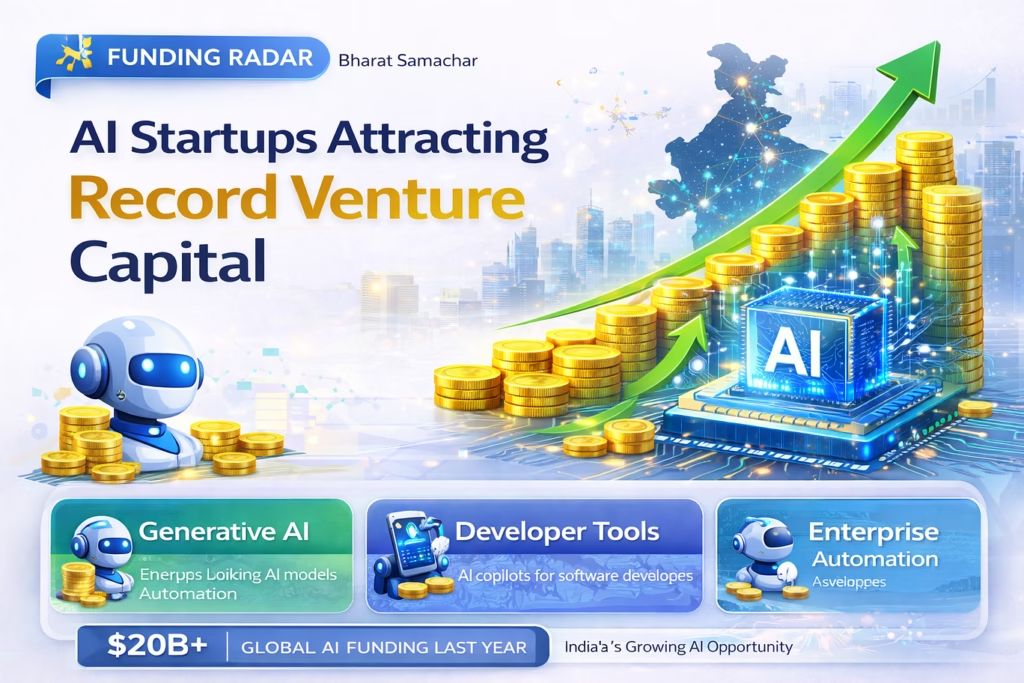
Artificial intelligence has rapidly become the most heavily funded sector in global technology, and India is emerging as an important part of this investment wave. Venture capital firms, global technology companies, and institutional investors are collectively pouring billions of dollars into AI startups across the world. While Silicon Valley remains the epicenter of foundational AI research, the Indian startup ecosystem is increasingly attracting investor interest in AI-driven products and platforms. From enterprise automation tools to developer productivity software, a growing number of Indian startups are building AI-powered applications designed for global markets. According to multiple industry analyses, artificial intelligence companies received tens of billions of dollars in venture capital funding globally over the past year, making AI the most capitalized emerging technology sector. This surge reflects both the transformational potential of artificial intelligence and the intense competition among technology companies to build the next generation of intelligent software systems. Why AI Is Dominating Venture Funding Several powerful trends are driving this unprecedented wave of venture capital investment into artificial intelligence. Explosion of Generative AIThe rapid development of generative AI models has dramatically accelerated interest in artificial intelligence startups. Breakthroughs in large language models, image generation, and AI-driven automation have demonstrated that software can now perform increasingly complex cognitive tasks. These advances have created an entirely new category of startups building products around generative AI capabilities. Venture capital firms are particularly interested in companies developing tools that help businesses integrate AI into everyday workflows. From AI-powered content generation platforms to intelligent coding assistants, generative AI has opened up a wide range of commercial applications. As a result, investors see AI not just as a technological trend but as a foundational shift in how software is developed and used. Enterprise AutomationAnother major driver of AI investment is the growing demand for enterprise automation. Companies across industries are increasingly adopting AI-powered systems to automate repetitive tasks, improve operational efficiency, and analyze large volumes of data. Businesses are using artificial intelligence to streamline processes such as customer service, financial analysis, supply chain management, and marketing optimization. For example, AI-powered customer support platforms can now automatically resolve a significant portion of customer queries without human intervention. Similarly, AI-driven analytics tools are helping organizations extract insights from large datasets more efficiently than traditional business intelligence platforms. These capabilities have made AI startups particularly attractive to enterprise customers, which in turn increases investor confidence in the long-term commercial potential of these companies. Developer Productivity ToolsArtificial intelligence is also transforming software development itself. AI-powered developer tools are becoming one of the fastest-growing categories in venture capital investment. These platforms help software engineers write code more efficiently, debug programs faster, and automate routine development tasks. Products such as AI code assistants, automated testing platforms, and AI-driven DevOps tools are rapidly gaining traction among technology companies. Investors are particularly interested in this category because developer productivity tools often scale globally and can generate strong recurring revenue models. As a result, many venture capital firms view AI-driven developer tools as one of the most promising segments within the broader AI ecosystem. India’s Emerging Role in the AI Ecosystem India’s artificial intelligence ecosystem is still developing, but several structural advantages are positioning the country as a significant player in the global AI landscape. One of India’s biggest strengths is its large pool of software engineers and machine learning professionals. The country produces hundreds of thousands of engineering graduates each year, many of whom are increasingly specializing in fields such as artificial intelligence, data science, and cloud computing. Major technology hubs such as Bengaluru, Hyderabad, Delhi-NCR, Pune, and Chennai have become important centers for AI research, startup activity, and venture investment. Another advantage is India’s strong experience in building globally competitive software products. The country’s SaaS ecosystem has already demonstrated that startups can build products in India while selling to customers across North America, Europe, and other international markets. The Application Layer Strategy Unlike some companies in the United States and China that are building massive foundational AI models, many Indian startups are focusing on what is often called the “application layer” of artificial intelligence. Rather than developing large-scale AI models from scratch—which requires enormous computing infrastructure and billions of dollars in investment—these startups build products that leverage existing AI platforms. Examples of these AI-driven products include: This strategy allows startups to focus on solving real business problems while relying on foundational AI technologies developed by larger technology companies. For many investors, this approach represents a more capital-efficient way to build successful AI businesses. Venture Capital Interest in Indian AI Startups Global venture capital firms are increasingly monitoring India’s AI startup ecosystem for promising opportunities. Several investors believe that India’s combination of engineering talent, capital efficiency, and global product orientation could lead to the emergence of multiple successful AI companies over the next decade. Early-stage AI startups are already attracting seed and Series A funding from both domestic and international investors. As artificial intelligence becomes integrated into more business processes, demand for specialized AI applications is likely to grow significantly. The Road Ahead Artificial intelligence is still in the early stages of commercial adoption, but its impact across industries is expected to expand rapidly in the coming years. For India’s startup ecosystem, the current wave of AI investment presents a major opportunity. If founders continue focusing on practical applications and enterprise solutions, the country could become an important hub for AI-driven software innovation. Just as the SaaS boom produced globally recognized companies such as Freshworks and Zoho, the next decade could see a new generation of Indian startups building influential AI products for global markets. The surge in venture capital investment suggests that investors believe this transformation is already underway.
Startups to Watch: 6 Indian AI Companies Building Next-Gen Automation

Artificial intelligence is rapidly reshaping the way businesses operate, with automation becoming one of the most transformative applications of the technology. Across industries such as finance, logistics, healthcare, and enterprise software, startups are developing intelligent systems that can automate complex workflows once handled by large teams of people. While global attention often focuses on large AI companies in Silicon Valley, a new generation of Indian startups is quietly building innovative AI-powered automation tools designed for both domestic and international markets. These companies may not yet be widely known, but their technology platforms and product strategies suggest they could play an important role in the next wave of enterprise automation. Here are six Indian AI startups that investors and industry observers are beginning to watch closely. 1. Tattvam AI AI-powered chip design automationBased in Chennai, Tattvam AI is working on one of the most technically ambitious problems in the semiconductor industry: automating chip design. Traditional chip development can take years and require large engineering teams. Tattvam AI is developing AI models capable of understanding circuit architecture and design constraints, dramatically reducing the time required to design custom chips. The company recently raised early funding to build its platform and aims to shorten chip design timelines from years to weeks. This could make semiconductor innovation more accessible for startups and specialized hardware companies. With demand for custom processors increasing due to AI workloads, tools that automate chip design could become an important part of the future semiconductor ecosystem. 2. Ascimov Agentic AI for robotic process automationKerala-based Ascimov is developing agentic AI systems designed to automate complex enterprise workflows. Unlike traditional robotic process automation tools that rely on predefined scripts, Ascimov’s platform focuses on AI agents capable of making contextual decisions, allowing automation systems to handle more dynamic and unpredictable tasks. This type of “agentic automation” is emerging as one of the most exciting trends in enterprise software. Rather than automating individual tasks, AI agents can coordinate entire workflows across multiple software systems. As businesses increasingly look to automate operational processes, startups like Ascimov could become key players in the next generation of enterprise automation platforms. 3. Gnani.ai Voice AI automation for customer interactionsBengaluru-based Gnani.ai is building advanced speech recognition and conversational AI systems tailored for multilingual markets. The company’s technology enables businesses to automate voice-based customer interactions in multiple Indian languages. This capability is particularly valuable in sectors such as banking, telecom, and e-commerce where large volumes of customer calls must be handled daily. Voice AI remains one of the most complex challenges in artificial intelligence due to accent variations, background noise, and linguistic diversity. By focusing on Indian languages and real-world enterprise use cases, Gnani.ai is addressing a critical gap in AI-driven customer service automation. 4. Kombai AI AI assistants for software developersDeveloper productivity tools have become one of the fastest-growing categories within the AI ecosystem. Kombai AI, founded by Indian engineers, is building AI-powered assistants designed to help developers automatically convert design files into functional code. This capability can significantly accelerate software development workflows. Instead of manually translating interface designs into front-end code, developers can use AI to generate production-ready components. As software teams increasingly rely on AI copilots to boost productivity, startups building tools for developers are attracting growing attention from venture investors. 5. Enmovil AI-driven supply chain automation Hyderabad-based Enmovil is developing AI software designed to automate supply chain planning and logistics operations. The company’s platform integrates with enterprise resource planning systems to provide predictive demand forecasting, real-time visibility across supply networks, and automated planning tools for manufacturers. Large global manufacturers face persistent challenges around supply chain complexity and fragmented logistics data. By applying AI to these problems, Enmovil aims to help companies improve efficiency while reducing operational costs. Supply chain automation is becoming increasingly important as global manufacturing networks grow more complex. 6. Lexi AI automation for legal workflows Legal services have traditionally been slow to adopt automation technologies, but AI is beginning to change that. Legal-tech startup Lexi is developing AI tools designed to automate legal research, contract drafting, and document analysis. The platform functions as an AI-powered legal assistant that can help law firms and corporate legal teams handle routine tasks more efficiently. By automating repetitive legal work, the technology allows lawyers to focus on higher-value strategic tasks. The startup is already serving law firms across multiple countries and is continuing to expand its capabilities as it prepares to raise additional funding. Why These Startups Matter These companies represent a broader shift in the AI ecosystem toward automation platforms that solve real operational problems. Rather than competing directly with large technology companies developing foundational AI models, many Indian startups are focusing on building specialized applications that sit on top of existing AI infrastructure. This strategy offers several advantages: It also mirrors the earlier playbook used by India’s SaaS ecosystem, where startups built globally successful software products without needing massive infrastructure investments. The Next Wave of AI Innovation India’s AI ecosystem is still evolving, but the momentum behind AI-driven startups continues to grow. Government initiatives supporting artificial intelligence research, combined with a large pool of engineering talent, are helping create fertile ground for new startups exploring automation technologies. For investors and industry observers, the companies highlighted here represent the early signals of a much larger transformation underway. Some of these startups may remain niche players, while others could grow into globally recognized technology companies. What is clear, however, is that the next generation of automation tools may increasingly come from a new wave of AI startups emerging across India’s innovation hubs.
Why India Is Becoming a Global Startup Hub

Over the past decade, India has quietly transformed into one of the most dynamic startup ecosystems in the world. What was once a market dominated by outsourcing companies and IT services firms is now home to thousands of technology startups building products for global markets. From fintech platforms and enterprise software companies to artificial intelligence startups and digital infrastructure providers, Indian entrepreneurs are increasingly shaping the future of technology. According to industry estimates, India now has more than 100,000 startups, making it the third-largest startup ecosystem globally, behind only the United States and China. Venture capital investment has also surged, with billions of dollars flowing into Indian startups across sectors such as fintech, SaaS, AI, healthtech, and climate technology. The rise of India’s startup ecosystem is not the result of a single factor. Instead, it is the outcome of a powerful combination of talent, technology infrastructure, capital availability, and entrepreneurial ambition. Taken together, these forces are helping position India as one of the most important innovation hubs in the global economy. The Rise of a Massive Digital Market One of the most important drivers of India’s startup boom has been the rapid expansion of the country’s digital economy. Over the past decade, India has undergone an extraordinary digital transformation fueled by: India now has more than 800 million internet users, creating one of the largest connected populations in the world. This digital foundation has opened the door for startups building online-first businesses across sectors such as e-commerce, payments, logistics, and education technology. Government initiatives such as Digital India and the development of the India Stack digital infrastructure have further accelerated innovation. Platforms like Aadhaar, UPI, and digital identity systems have enabled startups to build services on top of shared national infrastructure. This environment has allowed entrepreneurs to launch companies capable of scaling to millions of users within a relatively short period of time. A Deep Pool of Engineering Talent Another key factor behind India’s startup growth is its vast pool of technical talent. India produces hundreds of thousands of engineers every year from universities and technology institutes across the country. Many of these engineers have gained experience working in global technology companies, including multinational firms that operate large engineering centers in cities such as Bengaluru, Hyderabad, Pune, and Gurgaon. These professionals bring with them expertise in areas such as: As a result, startups in India are able to build world-class technology products while maintaining relatively efficient cost structures compared to technology hubs like Silicon Valley. This combination of high-quality engineering talent and cost efficiency has become one of the defining advantages of the Indian startup ecosystem. The Rise of Global SaaS Companies One of the most significant developments in India’s startup ecosystem has been the emergence of globally competitive SaaS (Software-as-a-Service) companies. Startups have demonstrated that world-class enterprise software products can be built in India and sold to customers around the world. Unlike earlier generations of technology companies that focused primarily on outsourcing services, these startups are building proprietary software platforms designed for global markets. This shift toward product-driven companies represents an important evolution in India’s technology industry. Many founders now follow a “global-first” strategy, designing products that serve international customers from the very beginning. In this model, engineering teams are often based in India while sales and marketing operations operate closer to major customer markets such as North America and Europe. The success of these companies has inspired a new generation of entrepreneurs to pursue similar global ambitions. Increasing Venture Capital Investment Venture capital has played a crucial role in accelerating India’s startup ecosystem. Over the past decade, global investment firms have significantly expanded their presence in India. Major venture capital funds including Sequoia Capital, Accel, Lightspeed, Tiger Global, and SoftBank have backed hundreds of Indian startups. Domestic venture funds have also grown in prominence, helping support early-stage founders across sectors such as fintech, SaaS, deep technology, and artificial intelligence. The availability of venture funding has enabled startups to: At the same time, the ecosystem has also matured to include angel investors, incubators, accelerators, and startup-focused venture studios. These networks provide mentorship, capital, and operational guidance to early-stage founders, increasing the likelihood that promising ideas can develop into scalable businesses. Government Support for Innovation Government policy has also played an important role in strengthening India’s startup ecosystem. Programs such as Startup India have introduced policy frameworks designed to encourage entrepreneurship. These initiatives include tax benefits for startups, simplified compliance processes, and funding support for early-stage innovation. India has also seen the growth of technology incubators and research centers associated with universities and public institutions. These organizations help translate academic research into commercial technology products. In emerging sectors such as artificial intelligence, biotechnology, and semiconductor technology, public-private collaboration is increasingly becoming an important catalyst for innovation. A New Generation of Ambitious Founders Perhaps the most important factor driving India’s startup ecosystem is the emergence of a new generation of entrepreneurs with global ambitions. Many founders today have experience working in international technology companies or have studied abroad before returning to India to build companies. Others are second-time entrepreneurs who have already experienced the startup journey and are now building more sophisticated ventures. These founders are increasingly focused on building companies that compete globally rather than serving only domestic markets. In sectors such as: Indian startups are building products designed for customers across multiple continents. This global outlook is helping reshape how investors and industry observers perceive the Indian startup ecosystem. Challenges That Still Remain Despite its rapid growth, India’s startup ecosystem still faces several challenges. One of the most significant constraints is access to large-scale computing infrastructure, particularly for companies working in artificial intelligence and deep technology. Compared with the United States and China, India still has fewer large research labs and high-performance computing resources. Another challenge is late-stage funding availability. While early-stage venture capital has become more accessible, many startups still struggle to secure large growth-stage investments. Regulatory complexity can also create friction for startups navigating compliance requirements across multiple jurisdictions. However, these challenges are gradually being addressed as the ecosystem continues to mature. The
Startups to Watch: Early-Stage Innovators Building the Next Wave of Indian Technology

India’s startup ecosystem has matured rapidly over the past decade. While large unicorns and heavily funded companies often dominate headlines, some of the most exciting innovation is happening among early-stage startups quietly building breakthrough technologies across multiple industries. Many of these companies are still operating under the radar, experimenting with bold ideas that could reshape sectors ranging from artificial intelligence and climate technology to agriculture and space infrastructure. For investors and ecosystem observers, identifying promising startups at this stage can offer early insights into where the next wave of innovation may emerge. Here are six early-stage Indian startups whose ideas, technologies, and ambitions make them companies worth watching. 1. GalaxEye Spacetech is one of the most exciting new frontiers for Indian startups, and GalaxEye is among the young companies working to expand India’s capabilities in satellite-based earth observation. Founded by engineers from IIT Madras, the company is developing multi-sensor satellites capable of capturing high-resolution earth imagery even through clouds or adverse weather conditions. This technology could dramatically improve monitoring for sectors such as agriculture, disaster management, defense, and urban planning. Unlike conventional satellites that rely on optical imaging, GalaxEye’s technology combines different sensing methods to provide more reliable data across varying environmental conditions. As demand for earth observation data grows globally, companies like GalaxEye could become an important part of India’s emerging space economy. 2. Boson Whitewater Transforming waste into clean energy Climate technology is becoming one of the fastest-growing sectors in the global startup ecosystem. Among India’s early-stage innovators in this field is Boson Whitewater, a startup working on technologies to convert non-recyclable plastic waste into hydrogen and other clean fuels. Plastic waste remains one of the world’s most pressing environmental challenges. Boson Whitewater’s approach focuses on converting waste into usable energy through advanced chemical processes. If successful at scale, this technology could help address two major challenges simultaneously: With governments and corporations increasingly prioritizing sustainability, climate-focused startups like Boson Whitewater may attract growing investor attention. 3. Cropin’s Emerging AI Agri-Automation Ecosystem AI-driven agricultural intelligenceAgriculture remains one of India’s largest industries, yet much of it still relies on traditional farming practices. Several startups are now using artificial intelligence and data analytics to modernize the sector. One of the emerging players in this space is the ecosystem being built around AI-powered agricultural intelligence platforms such as Cropin and similar early-stage innovators developing automation tools for farming. These startups use AI models to analyze crop health, soil conditions, weather patterns, and supply chain data, enabling farmers and agribusiness companies to make better decisions. The result is improved yields, reduced waste, and more efficient supply chains. As climate variability continues to impact agriculture worldwide, technologies that help farmers adapt and optimize crop production could become increasingly valuable. 4. CynLr Robotics that can “see” and handle complex objectsIndustrial automation is entering a new phase driven by advances in artificial intelligence and computer vision. Bengaluru-based CynLr (Cybernetics Laboratory) is developing robots capable of recognizing and manipulating objects in dynamic environments — a challenge that traditional industrial robots often struggle with. Most robots used in manufacturing are designed for repetitive tasks in highly controlled environments. CynLr’s technology focuses on enabling robots to perform more flexible tasks such as picking irregular objects or assembling components without extensive reprogramming. This capability could unlock new levels of automation in industries such as electronics manufacturing, logistics, and warehousing. As global labor shortages and rising costs push companies toward automation, robotics startups like CynLr could play a major role in shaping the next generation of industrial systems. 5. Pixxel’s Emerging Data Ecosystem Hyperspectral imaging for earth analyticsAnother promising company emerging from India’s spacetech ecosystem is Pixxel, which is developing a constellation of hyperspectral satellites designed to capture detailed earth data across hundreds of spectral bands. Unlike traditional satellite imagery, hyperspectral imaging can detect subtle differences in materials and environmental conditions. This technology has applications across industries including: For example, hyperspectral imaging can help identify crop diseases early, detect pollution in water bodies, or analyze soil composition. While still in its early stages, Pixxel’s approach reflects a broader trend toward using space-based data to power advanced analytics platforms on Earth. 6. Ati Motors Autonomous robots for industrial logistics Warehouse automation has become a major focus area for technology companies worldwide. Indian startup Ati Motors is building autonomous mobile robots designed to transport materials within factories and warehouses. These robots use a combination of AI, sensors, and mapping technology to navigate complex industrial environments without human intervention. In large manufacturing facilities, moving materials between production lines can be time-consuming and labor-intensive. Autonomous robots like those developed by Ati Motors can streamline these operations while improving efficiency. The company is already working with global manufacturing customers, demonstrating how Indian robotics startups are increasingly targeting international markets from the outset. A New Generation of Deep-Technology Startups What makes these startups particularly interesting is that many of them operate in deep technology sectors — industries that require advanced engineering, scientific research, and long-term innovation. In earlier years, much of India’s startup ecosystem focused on consumer internet businesses such as e-commerce or ride-hailing. Today, however, a growing number of founders are tackling complex technological challenges across sectors such as: These industries often require longer development cycles, but they also have the potential to create highly defensible technologies and global market opportunities. The Growing Opportunity for Investors For venture investors, early-stage startups in emerging technology sectors offer both opportunities and risks. On the one hand, deep-tech companies often require more time and capital to develop their products. On the other hand, successful startups in these fields can create significant long-term value. India’s expanding engineering talent pool, combined with increasing investor interest in sectors like AI, climate tech, and space technology, is creating a favorable environment for such startups to emerge. Over time, some of today’s early-stage innovators could grow into globally recognized technology companies. Why Early-Stage Innovation Matters Large technology companies often capture the spotlight, but many transformative innovations originate from small teams working on bold ideas long before they become widely known. Early-stage startups represent the experimental edge of the innovation
How AI Is Transforming Indian Businesses Faster Than Expected

Not too long ago, artificial intelligence was discussed in boardrooms as a future possibility—something businesses should “keep an eye on.” Today, however, AI has moved far beyond experimentation. Across India, companies are already using AI to streamline operations, understand customers better, and build entirely new products. From fast-growing startups to large enterprises, AI is quietly becoming one of the most important drivers of business transformation. What’s remarkable is not just the technology itself, but the speed at which Indian businesses have begun adopting it. As Satya Nadella once remarked: “AI is perhaps the most important technology of our time.” For many Indian businesses, that statement is already proving true. Why AI Adoption in India Is Accelerating Several forces have come together to push AI adoption forward. Unlike earlier technological shifts that required heavy infrastructure investments, today’s AI tools are available through cloud platforms and software services. This has dramatically lowered the entry barrier. Equally important is India’s rapidly digitizing economy. With millions of digital transactions happening every day and vast amounts of customer data being generated online, businesses now have the raw material AI systems need to function effectively. Some of the key drivers behind the surge in AI adoption include: According to Sundar Pichai: “AI is one of the most profound things we’re working on as humanity.” Indian businesses are increasingly realizing that ignoring AI is no longer an option. How AI Is Changing Customer Experience One of the most visible impacts of AI can be seen in how companies interact with customers. Across sectors like banking, telecom, and e-commerce, AI-powered chatbots and recommendation engines are now handling millions of interactions every day. These systems allow businesses to respond instantly to customer queries while also delivering personalized recommendations. For example: These technologies allow businesses to provide faster service while understanding their customers in ways that were previously impossible. Smarter Business Decisions Through Data Another powerful use of AI lies in decision-making. Traditionally, companies relied heavily on historical reports and managerial intuition. While experience remains valuable, AI can analyze enormous datasets in seconds, identifying patterns that humans might miss. Businesses are now using AI for: Retail companies, for instance, can now predict demand patterns more accurately and adjust inventory levels accordingly. This reduces both overstocking and shortages—two common challenges in traditional retail operations. AI-driven analytics is also helping companies spot new growth opportunities faster than before. Automating Repetitive Work Beyond customer engagement and decision-making, AI is also improving internal productivity. Many repetitive tasks that once required hours of manual work can now be automated using AI tools. These include document processing, compliance checks, invoice matching, and customer support responses. This automation doesn’t just reduce operational costs—it allows employees to focus on more meaningful and strategic work. As Elon Musk observed: “AI will change almost everything.” For businesses, this change often begins with simple efficiencies that gradually reshape entire workflows. AI Is Fueling India’s Startup Innovation AI adoption is not limited to large corporations. In fact, many of India’s most exciting innovations are coming from startups that are built around AI from the start. These startups are applying AI to solve real-world problems across multiple sectors: Such innovations are not only transforming industries but also positioning India as a growing hub for AI entrepreneurship. Challenges Businesses Must Address Despite the rapid progress, adopting AI is not without challenges. Many organizations still struggle with issues such as: Businesses that address these challenges early will be better positioned to unlock the full potential of AI. The Road Ahead Artificial intelligence is still evolving, and its impact on business is likely to deepen in the coming years. Technologies such as generative AI, predictive analytics, and intelligent automation are already opening new possibilities. For Indian businesses, the opportunity is enormous. With a strong technology workforce, a vibrant startup ecosystem, and a rapidly growing digital economy, India has all the ingredients needed to become a major force in AI-driven innovation. The companies that succeed in this new era will not necessarily be the largest—but those that are willing to experiment, adapt, and embrace intelligent technologies. AI is no longer a distant concept. It is already reshaping how Indian businesses compete, grow, and innovate.