
Bootstrapped Builders: Indian Entrepreneurs Who Built Profitable Startups Without Venture Capital
In the global startup ecosystem, venture capital often dominates the conversation. Funding announcements, unicorn valuations, and high-profile investors frequently make headlines across technology media. Yet alongside the venture-backed startup narrative exists another powerful story—one of entrepreneurs who built profitable companies without relying on venture capital. Across India and the global Indian diaspora, a growing number of founders have demonstrated that it is possible to build successful, globally competitive businesses through bootstrapping—funding companies through personal capital, customer revenue, and disciplined growth rather than venture funding. These entrepreneurs represent a different kind of startup builder. Instead of chasing rapid valuation growth, they focus on building sustainable companies that generate real revenue and long-term value. And in doing so, they are quietly shaping an important part of India’s entrepreneurial story. What Bootstrapping Really Means Bootstrapping refers to building a company without institutional venture capital. Instead, founders rely on internal funding sources such as: This approach forces companies to become financially disciplined from the very beginning. Unlike venture-backed startups, which often prioritize rapid growth over profitability, bootstrapped companies must design business models that generate sustainable cash flow. For many entrepreneurs, these constraints ultimately become a competitive advantage. Sridhar Vembu and Zoho: India’s Most Famous Bootstrapped Tech Story Perhaps the most prominent example of a bootstrapped Indian technology company is Zoho, founded by Sridhar Vembu. The company began in the late 1990s as a small software business and gradually evolved into one of the world’s largest enterprise software platforms. Today, Zoho offers dozens of business software products—from CRM tools to finance platforms—serving millions of users globally. Remarkably, the company achieved this scale without raising venture capital. Zoho has consistently emphasized profitability, long-term thinking, and independence. Sridhar Vembu has often spoken about the importance of building sustainable businesses rather than chasing venture capital. “We believe in building a company that lasts for generations,” Vembu once remarked in discussions about Zoho’s philosophy. Zoho’s success has become a powerful example for many Indian founders considering alternative paths to startup growth. Girish Mathrubootham’s Early Lessons Before Venture Capital While Freshworks later became a venture-backed success story, its early growth phase reflected many bootstrapped principles. Founder Girish Mathrubootham initially built the product with a strong focus on customer needs and early revenue before raising significant venture capital. The company’s early strategy centered around product-led growth, where the product itself attracted users and drove adoption. This approach allowed the company to validate its business model before raising institutional funding. Today, Freshworks is listed on the Nasdaq, becoming one of the most visible global SaaS success stories to emerge from India. Its early journey highlights the importance of revenue-driven validation even for startups that eventually pursue venture capital. Indian SaaS Entrepreneurs Embracing Bootstrapping The rise of the global SaaS industry has made bootstrapping increasingly viable for software startups. Several Indian SaaS founders have built profitable businesses by focusing on niche markets, strong products, and global customers. India’s software ecosystem offers several advantages for bootstrapped founders: These factors allow entrepreneurs to launch products with relatively small initial investments. As a result, many Indian SaaS companies are now experimenting with bootstrapped growth models rather than immediately seeking venture funding. Why Some Indian Founders Avoid Venture Capital While venture capital can accelerate growth, some founders deliberately choose not to raise external funding. One of the primary reasons is control. Bootstrapped companies allow founders to retain full ownership of their businesses and maintain long-term strategic independence. Venture-backed startups often involve investor oversight, board governance, and expectations around rapid scaling. Bootstrapped founders, by contrast, can prioritize sustainable growth over short-term valuation milestones. Another factor is financial discipline. Without access to large pools of investor capital, bootstrapped startups must focus on revenue generation and operational efficiency. This often leads to companies that are more resilient during economic downturns. The Rise of Revenue-First Entrepreneurship Bootstrapped founders typically follow what many entrepreneurs describe as a revenue-first philosophy. Instead of focusing on funding rounds, they prioritize acquiring paying customers as early as possible. This approach encourages founders to develop deep relationships with their customers and build products that solve real business problems. In many cases, customer feedback directly shapes product development. This customer-centric mindset has become particularly important in industries such as SaaS, where long-term subscription revenue is a key driver of business sustainability. Challenges of the Bootstrapped Path Despite its advantages, bootstrapping is not easy. Founders often face several challenges when building companies without venture capital. Slower scaling Bootstrapped startups may take longer to scale compared to venture-backed competitors with significant marketing budgets. Resource constraints Limited capital means founders must carefully prioritize product development and hiring decisions. Market competition In sectors where venture-funded competitors spend aggressively on growth, bootstrapped startups must rely on efficiency and product quality to compete. However, many founders view these challenges as beneficial. They encourage careful decision-making and prevent companies from growing too quickly without strong business fundamentals. A Different Model of Startup Success The global startup ecosystem is often dominated by stories of unicorn valuations and billion-dollar funding rounds. But the success of bootstrapped Indian entrepreneurs shows that there is more than one way to build a successful company. For many founders, building a profitable and sustainable business may ultimately be more rewarding than pursuing rapid venture-backed growth. Bootstrapped companies also tend to develop strong organizational cultures built around discipline, customer focus, and long-term thinking. India’s Bootstrapped Builders As India’s startup ecosystem continues to mature, the number of founders choosing the bootstrapped path may grow. With access to global markets, cloud infrastructure, and a deep talent pool, Indian entrepreneurs today have more opportunities than ever before to build successful companies independently. From software platforms serving international customers to niche technology products solving specialized problems, a new generation of founders is demonstrating that venture capital is not the only path to startup success. In many ways, these entrepreneurs represent a powerful spirit of Indian innovation. They are builders who prioritize independence, resilience, and long-term value creation. And their stories remind us that sometimes the most enduring companies are not built through massive funding—but through patience, discipline, and the determination to
Women Founders Reshaping India’s Startup Ecosystem
India’s startup ecosystem has expanded at remarkable speed over the past decade. From fintech platforms and SaaS companies to consumer brands and deep-tech ventures, entrepreneurs across the country are building companies that are increasingly competing on a global stage. While much of the early startup narrative in India was dominated by male founders, a new generation of women entrepreneurs is now playing a pivotal role in shaping the country’s innovation economy. Across sectors such as fintech, beauty, healthcare, education, and software, women founders are building influential companies, raising capital, and creating platforms that serve millions of customers. Their journeys represent not only business success stories but also a broader shift in India’s entrepreneurial landscape. The Rise of Women Entrepreneurs in India Over the past decade, the number of women-led startups in India has steadily increased. According to government data from the Startup India initiative, nearly 18% of recognized startups in India now have at least one woman founder or co-founder. While this number still leaves room for improvement, it reflects significant progress compared to earlier decades when women founders were far less visible in the startup ecosystem. Several factors have contributed to this shift. India’s growing access to higher education, increased participation of women in the technology workforce, and the rise of digital entrepreneurship have all created new opportunities for women to launch and scale companies. At the same time, venture capital investors and startup communities are increasingly recognizing the importance of diverse founding teams in driving innovation. Falguni Nayar and the Nykaa Success Story One of the most prominent examples of women entrepreneurship in India is Falguni Nayar, founder of beauty and lifestyle platform Nykaa. Before launching Nykaa in 2012, Nayar spent nearly two decades as an investment banker at Kotak Mahindra Capital. At the age of 50, she decided to pursue entrepreneurship and build a digital-first beauty retail platform focused on the Indian market. Nykaa quickly grew into one of India’s most successful consumer startups. In 2021, the company went public in one of the country’s most high-profile startup IPOs, making Nayar one of India’s richest self-made women entrepreneurs. Nykaa’s success demonstrated how strong brand positioning, deep consumer insights, and disciplined execution could create a powerful digital retail business. Upasana Taku and Fintech Innovation Another influential entrepreneur shaping India’s startup ecosystem is Upasana Taku, co-founder of digital payments platform MobiKwik. As fintech adoption accelerated across India following the country’s push toward digital payments, companies like MobiKwik played an important role in expanding financial access to millions of users. Taku has often spoken about the challenges of building fintech infrastructure in a rapidly evolving regulatory and technological environment. Under her leadership, MobiKwik has grown into one of India’s prominent digital financial platforms offering services such as digital wallets, payments infrastructure, and credit solutions. Her journey highlights the growing role of women entrepreneurs in building India’s financial technology ecosystem. Richa Kar and the Rise of Consumer Internet Startups India’s consumer internet boom also produced influential women founders such as Richa Kar, founder of lingerie e-commerce platform Zivame. Kar launched Zivame with the goal of solving a problem many Indian consumers faced: the lack of comfortable, well-fitted lingerie options in traditional retail environments. By building a digital-first platform focused on privacy and personalized recommendations, Zivame transformed how many consumers in India purchased intimate wear. The company helped demonstrate how startups could use technology to solve culturally sensitive problems in new ways. Kiran Mazumdar-Shaw: A Pioneer of Indian Biotechnology Long before India’s startup boom, Kiran Mazumdar-Shaw had already established herself as one of the country’s most influential entrepreneurs. As the founder of Biocon, she built one of India’s leading biotechnology companies focused on developing affordable medicines and biopharmaceutical products. Mazumdar-Shaw’s entrepreneurial journey began in the late 1970s when she launched Biocon from a small garage in Bengaluru. Today, Biocon is recognized globally for its work in biotechnology research and healthcare innovation. Her career helped pave the way for many future entrepreneurs—particularly women—entering India’s life sciences and deep-tech sectors. Women Founders Across India’s Startup Landscape Beyond these prominent examples, hundreds of women entrepreneurs across India are building companies in diverse sectors. Some are launching consumer brands targeting digital-first customers. Others are developing enterprise software platforms, healthcare technologies, and education solutions. Cities such as Bengaluru, Delhi-NCR, Mumbai, Pune, and Hyderabad have become important hubs for women-led startups. Several startup networks and mentorship programs are also supporting women entrepreneurs through funding access, leadership training, and community building. Organizations focused on promoting women entrepreneurship have helped create stronger support systems for founders navigating the early stages of building companies. Challenges Still Remain Despite growing momentum, women founders still face several challenges within the startup ecosystem. Access to venture capital remains one of the most significant barriers. Global research has shown that startups founded solely by women often receive a smaller share of venture funding compared to male-led companies. In India, many investors and policymakers are working to address this gap by supporting funding initiatives aimed at women entrepreneurs. At the same time, cultural expectations and work-life balance pressures can sometimes create additional hurdles for women founders compared to their male counterparts. However, the increasing visibility of successful women entrepreneurs is helping shift these perceptions. The Next Generation of Women Builders The rise of women founders in India reflects a broader transformation in the country’s innovation economy. Young entrepreneurs today are entering a startup ecosystem that is more connected, better funded, and more supportive than ever before. Universities, incubators, and global technology companies are actively encouraging women to pursue careers in entrepreneurship and technology leadership. As India continues to produce new startups across sectors such as artificial intelligence, fintech, SaaS, and climate technology, women entrepreneurs are expected to play an increasingly important role in shaping the future of these industries. Builders of a More Inclusive Startup Ecosystem The success of founders such as Falguni Nayar, Upasana Taku, Richa Kar, and Kiran Mazumdar-Shaw demonstrates the growing impact of women entrepreneurs in India’s startup ecosystem. Their journeys illustrate how vision, resilience, and innovation can create companies that influence entire industries. More
Emerging Indian Startups to Watch in 2026
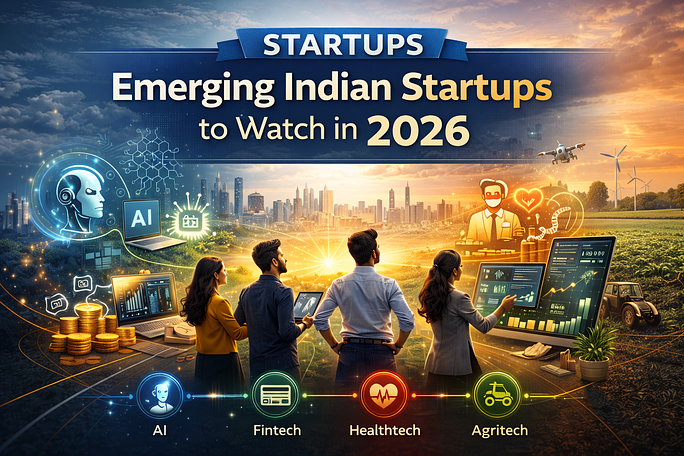
India’s startup ecosystem continues to evolve at a remarkable pace. Over the past decade, the country has emerged as one of the world’s most dynamic hubs for technology entrepreneurship. From software platforms and fintech infrastructure to artificial intelligence tools and healthcare innovation, Indian startups are increasingly building products that serve not only domestic markets but also global customers. According to the Startup India initiative, India now hosts more than 100,000 recognized startups, making it one of the largest startup ecosystems in the world. Venture capital investment has helped fuel this growth, but the real momentum lies in the emergence of companies solving complex problems across industries. Several sectors in particular—artificial intelligence, fintech, healthtech, and agritech—are seeing rapid innovation as founders build technology-driven solutions for some of the world’s largest markets. As 2026 approaches, a new generation of Indian startups is beginning to attract attention from investors, customers, and global technology observers. AI Startups Driving the Next Wave of Innovation Artificial intelligence has become one of the most important areas of startup activity in India. According to research from NASSCOM, India now has more than 800 AI-focused startups, with many of them building applications in enterprise software, automation, developer tools, and generative AI. Several emerging startups are gaining traction in this rapidly evolving ecosystem. Sarvam AIBased in Bengaluru, Sarvam AI is working on building large language models optimized for Indian languages and local use cases. As AI adoption expands across government services, financial institutions, and enterprise platforms, language-specific AI infrastructure is becoming increasingly important. Sarvam AI has attracted attention from investors interested in companies building foundational AI capabilities tailored for India’s multilingual market. KrutrimFounded by entrepreneur Bhavish Aggarwal, Krutrim is developing AI infrastructure and models designed specifically for Indian users and businesses. The company’s focus on building AI platforms capable of supporting Indian language interfaces reflects the broader opportunity to expand artificial intelligence adoption across the country. These startups highlight the growing ambition of Indian founders to build globally relevant AI products while addressing local market challenges. Fintech Startups Expanding Digital Finance India’s fintech ecosystem has grown dramatically over the past decade, fueled by digital payment infrastructure such as UPI (Unified Payments Interface) and a rapidly expanding digital economy. The country’s fintech startups are now building platforms that extend far beyond payments, including lending infrastructure, wealth management tools, and embedded financial services. Several emerging companies are shaping the next phase of fintech innovation. JupiterJupiter is a digital banking platform designed for India’s mobile-first consumers. The startup focuses on simplifying personal finance through a combination of banking services, budgeting tools, and financial insights. As digital banking adoption accelerates among younger users, platforms like Jupiter are helping redefine how consumers interact with financial services. ZestMoneyOperating in the “buy now, pay later” segment, ZestMoney has developed credit infrastructure designed to expand access to consumer financing for users without traditional credit histories. India’s rapidly growing e-commerce market has created significant demand for alternative lending platforms, and fintech startups are stepping in to address this gap. Healthtech Startups Transforming Healthcare Access Healthcare innovation has become another major focus for Indian entrepreneurs. The COVID-19 pandemic accelerated digital health adoption, encouraging startups to develop platforms that improve access to medical services, diagnostics, and patient care. India’s large population and healthcare infrastructure challenges present enormous opportunities for technology-driven solutions. Several healthtech startups are gaining attention in this space. HealthifyHealthify combines AI-driven health insights with coaching and digital tools to help users manage nutrition, fitness, and chronic health conditions. The company’s platform uses artificial intelligence to provide personalized health recommendations based on individual user data. Pristyn CarePristyn Care focuses on modernizing surgical care through technology-enabled healthcare delivery. The startup works with hospitals and clinics to improve the patient experience while streamlining medical procedures and post-surgery care. By combining digital platforms with offline healthcare networks, startups like Pristyn Care are helping bridge gaps in India’s healthcare system. Agritech Startups Modernizing Indian Agriculture Agriculture remains one of the most important sectors of India’s economy, employing millions of people across the country. At the same time, farmers face challenges related to supply chains, pricing transparency, and access to technology. Agritech startups are working to address these challenges by introducing digital tools that improve productivity and market access for farmers. DeHaat DeHaat is one of India’s fastest-growing agritech platforms, providing farmers with access to agricultural inputs, advisory services, and market connections through a digital platform. The company’s technology helps farmers improve crop yields while connecting them directly to buyers and supply chains. NinjacartNinjacart focuses on transforming agricultural supply chains by connecting farmers directly with retailers through a technology-enabled logistics platform. By reducing inefficiencies in food distribution networks, the company aims to improve pricing transparency and reduce food waste. Agritech innovation is becoming increasingly important as India seeks to modernize its agricultural ecosystem and improve farmer incomes. A New Generation of Startup Builders The startups emerging across these sectors reflect a broader transformation within India’s technology ecosystem. Earlier generations of Indian technology companies were largely focused on IT services and outsourcing. Today’s founders are increasingly building product-driven companies designed to solve complex problems using software, data, and artificial intelligence. Many of these startups are also adopting a global-first mindset, designing products that can scale internationally from the outset. This approach mirrors the playbook followed by successful Indian SaaS companies that have expanded into markets across North America, Europe, and Asia. The Road Ahead for India’s Startup Ecosystem Industry observers widely believe that India’s startup ecosystem is still in its early stages of growth. As digital infrastructure improves and new technologies such as artificial intelligence become more widely accessible, the number of innovative startups emerging from the country is expected to grow significantly. Venture capital investment, government initiatives supporting innovation, and a rapidly expanding developer community are all contributing to this momentum. For entrepreneurs, the opportunity is enormous. For investors and technology observers, India has become one of the most important markets to watch in the global startup landscape. And as the next generation of founders continues to experiment with new ideas, many of the
The Most Promising Fintech Startups in India
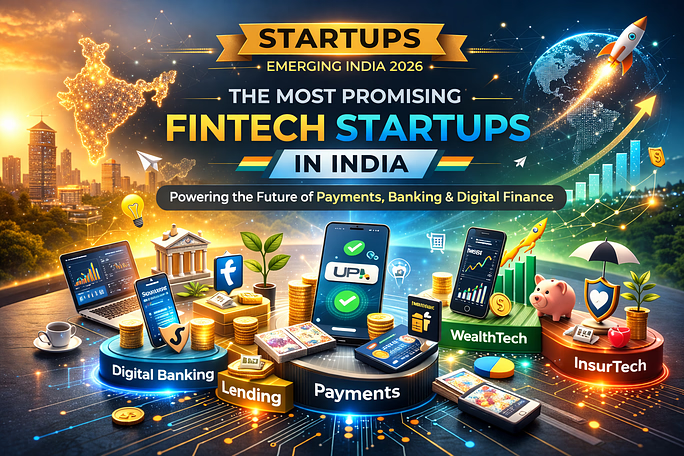
Over the past decade, India has emerged as one of the most dynamic fintech ecosystems in the world. Driven by rapid smartphone adoption, expanding internet access, and transformative digital infrastructure such as UPI (Unified Payments Interface) and Aadhaar, financial technology companies are reshaping how millions of people access banking, payments, lending, and investment services. According to industry estimates from NASSCOM and Invest India, India now hosts more than 2,000 fintech startups, making it one of the largest fintech startup ecosystems globally. Venture capital investment and government-backed digital initiatives have helped accelerate innovation across payments, lending platforms, wealth management tools, and financial infrastructure. Today, a new generation of fintech startups is emerging that aims to push the boundaries of financial innovation even further. These companies are building products designed not only for Indian consumers and businesses but increasingly for global markets as well. The Fintech Opportunity in India India’s fintech growth story is closely tied to the country’s digital transformation. The launch of UPI, India’s real-time digital payments system, has fundamentally changed how financial transactions take place across the economy. According to the National Payments Corporation of India (NPCI), UPI now processes billions of transactions every month, making it one of the largest digital payments networks in the world. This digital infrastructure has created fertile ground for startups to experiment with new financial products. From consumer finance platforms and digital banks to lending marketplaces and financial analytics tools, fintech startups are helping expand access to financial services for both individuals and businesses. Jupiter: Reimagining Digital Banking One of the emerging fintech platforms gaining traction in India is Jupiter, a digital banking startup focused on building a modern mobile-first banking experience. Jupiter provides users with tools designed to simplify personal finance, including budgeting insights, spending analytics, and integrated banking services. The platform aims to address a growing segment of digitally savvy consumers who expect banking to be as seamless and intuitive as other digital services. By combining traditional banking infrastructure with modern user experience design, startups like Jupiter are helping redefine how younger consumers interact with financial institutions. Razorpay: Powering India’s Digital Commerce While many fintech startups focus on consumers, others are building financial infrastructure for businesses. One of the most influential examples is Razorpay, a fintech company that provides payment processing and financial infrastructure for businesses operating online. Razorpay’s platform allows companies to accept digital payments, manage subscriptions, automate payroll, and access financial services through a single integrated system. As India’s digital economy continues expanding, platforms that enable businesses to manage financial operations efficiently are becoming increasingly important. Razorpay’s rapid growth reflects the broader demand for fintech solutions designed to support India’s fast-growing startup and e-commerce ecosystem. ZestMoney: Expanding Access to Credit Access to credit remains one of the largest challenges in India’s financial system. Millions of consumers and small businesses lack traditional credit histories, making it difficult for them to obtain loans through conventional banking channels. Startups like ZestMoney are attempting to address this gap through innovative lending platforms. ZestMoney operates in the Buy Now, Pay Later (BNPL) space, allowing consumers to make purchases and pay for them in installments even without traditional credit cards. By leveraging alternative data sources and digital financial infrastructure, fintech startups are expanding access to credit for underserved segments of the population. Groww: Simplifying Wealth Management Another area seeing rapid fintech innovation is wealth management. Historically, investment services in India were often seen as complex and inaccessible to many retail investors. Platforms such as Groww have helped change this perception by building simple, digital-first investment platforms. Groww allows users to invest in mutual funds, stocks, and other financial products through an intuitive mobile interface designed for first-time investors. As financial literacy improves and younger consumers become more comfortable with digital financial tools, platforms like Groww are helping democratize access to investing. Infrastructure Startups Enabling Fintech Innovation Beyond consumer-facing platforms, several startups are focusing on building infrastructure that powers fintech innovation behind the scenes. These companies provide APIs, payment rails, fraud detection tools, and financial analytics platforms used by other fintech companies and banks. Such infrastructure startups play a crucial role in enabling the broader fintech ecosystem to scale. As financial services become increasingly digitized, demand for infrastructure platforms supporting secure transactions and regulatory compliance is expected to grow significantly. Why India Is Becoming a Global Fintech Hub Several structural factors are helping India emerge as a global fintech innovation hub. Digital public infrastructureIndia’s digital identity and payments infrastructure—such as Aadhaar, UPI, and the India Stack—have created a foundation that allows startups to build financial products quickly and efficiently. Large consumer marketWith more than a billion people and a rapidly growing digital economy, India represents one of the largest potential markets for financial services innovation. Growing investor interestGlobal venture capital firms have increasingly invested in India’s fintech ecosystem, recognizing the enormous opportunity for technology-driven financial services. These factors together create an environment where startups can experiment rapidly with new business models and financial products. The Next Phase of Fintech Innovation While digital payments have been the most visible area of fintech innovation in India, the next phase of growth is expected to expand into several emerging areas. These include: Startups operating in these areas could play a key role in shaping the future of financial services in India. India’s Fintech Builders The fintech startups emerging across India today represent a new generation of entrepreneurs focused on transforming one of the most important sectors of the economy. By leveraging technology, data, and digital infrastructure, these founders are building platforms that expand financial inclusion while creating entirely new financial experiences for consumers and businesses. As India continues its digital transformation, many of the startups experimenting with fintech innovation today could become the financial institutions of tomorrow. And for investors and observers watching the global technology landscape, India’s fintech ecosystem remains one of the most exciting sectors to follow in the years ahead.
Why AI Funding in India Is Rising Rapidly

Signals | By Bharat Samachar Editorial Team Artificial intelligence is quickly becoming one of the most important drivers of innovation across the global technology landscape. From enterprise automation and healthcare diagnostics to developer tools and financial analytics, AI is transforming industries at a pace few technologies have matched. In India, the momentum behind artificial intelligence is becoming increasingly visible through one key signal: rapidly rising venture capital investment in AI startups. Over the past few years, investors have begun allocating larger amounts of capital toward companies building AI-powered platforms and infrastructure. The trend reflects growing confidence that India could become one of the world’s major hubs for AI innovation. Several structural factors are driving this surge in funding—from talent availability and digital infrastructure to global demand for AI applications. The Expanding AI Startup Ecosystem India’s AI startup ecosystem has grown dramatically in recent years. According to research from NASSCOM, India now has over 800 AI startups, with companies working across areas such as generative AI, enterprise automation, robotics, computer vision, and data analytics. Many of these startups are building products designed for global markets, reflecting the broader shift toward product-led technology companies emerging from India. Cities such as Bengaluru, Hyderabad, Delhi-NCR, Pune, and Chennai have become important hubs for AI innovation, attracting both venture capital investors and global technology companies. This expanding ecosystem is creating a pipeline of startups capable of attracting significant investment. Global Investor Interest in AI Another key factor driving AI funding in India is the global surge in investor interest in artificial intelligence. Since the rapid adoption of generative AI tools in recent years, venture capital firms worldwide have begun prioritizing investments in AI-focused companies. According to global venture funding reports, AI startups accounted for a growing share of technology investments in 2023 and 2024, with billions of dollars flowing into companies building AI models, developer tools, and AI-powered applications. India has naturally become part of this global investment trend. For international venture capital firms looking to identify emerging innovation hubs, India offers a compelling combination of engineering talent, cost efficiency, and a large domestic market. India’s Engineering Talent Advantage One of the most important reasons investors are increasingly backing AI startups in India is the country’s deep engineering talent pool. India produces hundreds of thousands of engineers each year, many of whom specialize in computer science, machine learning, and data science. The country also has one of the world’s largest developer communities, with millions of programmers contributing to open-source technologies and global software platforms. This talent base provides a strong foundation for building AI products. Startups can assemble skilled engineering teams capable of developing machine learning models, AI applications, and data platforms at significantly lower cost compared to traditional technology hubs such as Silicon Valley. For investors, this cost advantage increases the potential return on early-stage investments. The Rise of Application-Layer AI Startups Unlike the United States and China, where much of the investment has gone into companies building massive foundational AI models, many Indian startups are focusing on application-layer AI products. These companies are developing tools that use AI technologies to solve practical problems across industries. Examples include: This approach allows startups to build valuable AI products without requiring the massive computing infrastructure needed to train large language models. For investors, application-layer AI companies often represent attractive opportunities because they can generate revenue more quickly than infrastructure-heavy startups. Government Support for AI Innovation Government initiatives have also contributed to the rise of AI investment in India. Programs designed to promote digital innovation and technology entrepreneurship have created an environment where AI startups can experiment and scale more easily. India’s broader digital infrastructure—including digital identity systems, open payment networks, and public digital platforms—has provided startups with tools that enable rapid product development. At the same time, policymakers have increasingly recognized artificial intelligence as a strategic technology that could shape the country’s economic future. As a result, government-backed initiatives supporting AI research and innovation are expected to expand further in the coming years. Enterprise Demand for AI Solutions Another reason investors are increasingly backing AI startups in India is the growing demand from enterprises. Businesses across industries are now exploring how artificial intelligence can improve operational efficiency, automate routine tasks, and generate new insights from data. Indian enterprises—from banks and telecommunications providers to retail and logistics companies—are beginning to adopt AI-powered tools at a much larger scale. This demand creates significant opportunities for startups developing enterprise-focused AI products. As companies accelerate digital transformation initiatives, startups capable of delivering reliable AI solutions could capture substantial market share. The Global Opportunity Perhaps the most important reason AI funding is rising in India is the global opportunity for AI-driven software products. Just as India became a major hub for SaaS companies serving international customers, many AI startups are now building products designed for global markets from the very beginning. This model allows startups to combine India’s engineering strength with global revenue potential. Several successful SaaS companies from India have already demonstrated how this approach can scale internationally. AI startups are now following a similar playbook. A Strong Signal for India’s Technology Future The rapid rise in AI funding reflects a broader shift in India’s technology ecosystem. Earlier generations of Indian technology companies were largely focused on IT services and outsourcing. Today, founders are increasingly building product-driven companies powered by artificial intelligence, data, and advanced software platforms. For investors, this shift represents a major opportunity. And for India’s startup ecosystem, the surge in AI investment is a powerful signal that the country may play a far larger role in shaping the future of global technology innovation.
India’s Startup Ecosystem: What the Next 5 Years Could Look Like

Signals | By Bharat Samachar Editorial TeamOver the past decade, India has quietly emerged as one of the most important startup ecosystems in the world. From fintech and SaaS platforms to AI startups and digital infrastructure companies, Indian entrepreneurs have built thousands of technology-driven ventures that now serve customers across the globe. The country is already home to one of the largest startup communities outside the United States and China. According to Startup India, more than 100,000 recognized startups now operate across India, spanning industries from financial services and healthcare to deep technology and artificial intelligence. Venture capital investment has helped accelerate this growth, but an equally important factor has been the expansion of India’s digital economy. Looking ahead, industry observers believe the next five years could mark a new phase in the evolution of India’s startup ecosystem—one defined by deeper technology innovation, global expansion, and increasing investor participation. Several signals are already pointing toward how this transformation might unfold. The Rise of AI and Deep Tech Startups One of the most significant shifts in India’s startup landscape is the growing focus on artificial intelligence and deep technology innovation. Over the past few years, startups across the country have begun building products based on machine learning, computer vision, robotics, and generative AI. According to industry estimates from NASSCOM, India now hosts over 800 AI startups, with new companies emerging in areas such as enterprise automation, healthcare diagnostics, and financial analytics. Many of these startups are following a playbook similar to the earlier SaaS wave: building globally relevant products from engineering teams based in India. The next five years are likely to see an increasing number of startups experimenting with AI-driven applications across sectors including finance, logistics, retail, and manufacturing. As AI tools become more accessible, the barrier to building advanced software products continues to decline—creating new opportunities for founders across the country. Global Markets Becoming the Default Another important trend shaping the future of India’s startup ecosystem is the shift toward global-first business models. Earlier generations of startups often focused primarily on India’s domestic market. Today, many founders design products with global customers in mind from the very beginning. This approach has been particularly visible in the SaaS sector, where companies such as Freshworks, Zoho, and Chargebee demonstrated that software products built in India can compete successfully in international markets. The next wave of startups is adopting a similar strategy across industries. AI startups, developer tools companies, and fintech infrastructure platforms are increasingly targeting enterprise customers in North America, Europe, and Southeast Asia. This global mindset allows startups to access significantly larger markets while leveraging India’s engineering talent base. Venture Capital Is Evolving Venture capital will continue to play a major role in shaping the next phase of India’s startup ecosystem. Over the past decade, global investment firms have increasingly expanded their presence in India, recognizing the country as one of the most promising technology markets in the world. However, the funding landscape is also becoming more sophisticated. In addition to traditional venture capital firms, several new categories of investors are emerging: This diversification of capital sources is likely to make funding more accessible to startups working in emerging technology sectors. At the same time, investors are becoming more focused on sustainable growth and capital efficiency, encouraging founders to build businesses with stronger revenue models. The Growth of India’s Founder Networks Another important signal shaping the future of India’s startup ecosystem is the expansion of founder-led communities and mentorship networks. Organizations such as SaaSBoomi, startup accelerators, and venture-backed founder communities have created platforms where entrepreneurs can share insights and learn from each other’s experiences. This culture of knowledge sharing has already played a crucial role in the growth of India’s SaaS ecosystem. In the coming years, similar founder networks are likely to emerge in areas such as artificial intelligence, climate technology, and deep tech innovation. As experienced founders reinvest in the ecosystem—either as mentors or angel investors—the startup landscape could become even more interconnected. Digital Infrastructure as a Catalyst India’s digital infrastructure continues to provide a unique advantage for startups. Platforms such as Aadhaar, UPI, and the broader India Stack have enabled startups to build innovative financial services, identity systems, and digital platforms with relatively low barriers to entry. These systems have helped accelerate fintech innovation, allowing startups to experiment with digital payments, lending platforms, and embedded financial services. In the next five years, additional public digital infrastructure initiatives—particularly those supporting data sharing and digital governance—could create entirely new categories of startups. Entrepreneurs building on top of these platforms may find opportunities in sectors such as healthcare, agriculture, and digital public services. The Rise of Regional Startup Hubs While cities like Bengaluru, Delhi-NCR, and Mumbai have traditionally dominated India’s startup landscape, a growing number of founders are now emerging from smaller cities. Cities such as Pune, Ahmedabad, Jaipur, Indore, and Kochi have begun attracting startup activity as improved internet access and remote work opportunities allow founders to build companies from a wider range of locations. Government-backed incubators, university entrepreneurship programs, and regional venture capital funds are also contributing to this trend. Over the next five years, India’s startup ecosystem may become far more geographically diverse. A More Mature Startup Economy Perhaps the most important shift expected in the coming years is the gradual maturation of India’s startup economy. Earlier phases of startup growth were often characterized by rapid scaling and aggressive capital deployment. Today, founders and investors are increasingly focused on building companies with sustainable business models, stronger governance structures, and long-term growth strategies. As more startups reach profitability and mature into large technology companies, India’s startup ecosystem could begin producing a larger number of global technology leaders. The Next Chapter of India’s Innovation Story India’s startup ecosystem is still evolving, but the signals emerging today suggest that the next phase of growth could be even more transformative. Artificial intelligence innovation, expanding venture capital investment, strong digital infrastructure, and a rapidly growing founder community are all contributing to this momentum. If current trends continue, the next five years may see India strengthen its position as one of the world’s most
Why Bootstrapped Startups Are Making a Comeback
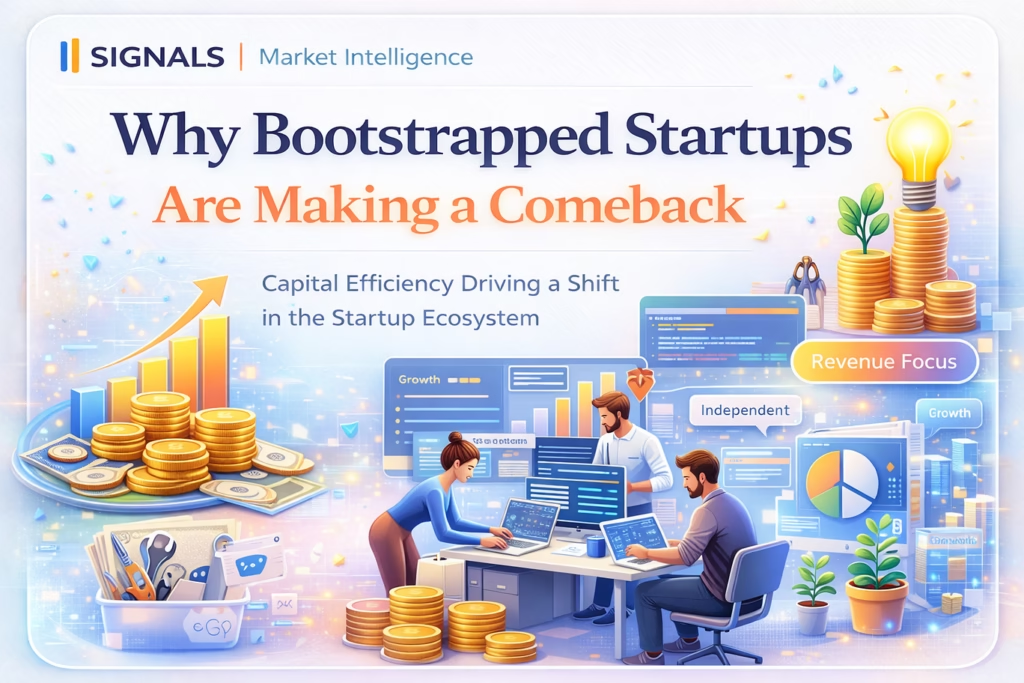
For much of the past decade, venture capital has dominated the global startup conversation. Billion-dollar funding rounds, unicorn valuations, and aggressive growth strategies became defining characteristics of the startup ecosystem. But a noticeable shift is beginning to take place. Across India and several other global startup hubs, bootstrapped startups—companies built without external venture capital—are quietly making a comeback. Founders are increasingly exploring capital-efficient ways to build sustainable companies, often focusing on profitability, disciplined growth, and customer-driven product development rather than rapid fundraising. While venture funding continues to play an important role in the technology ecosystem, the renewed interest in bootstrapping represents a broader change in how entrepreneurs think about building companies. Several signals suggest this trend could become even more significant in the years ahead. The Changing Venture Capital Environment One of the biggest drivers behind the resurgence of bootstrapped startups is the changing venture capital landscape. Over the past few years, global venture capital markets have gone through cycles of rapid expansion followed by periods of correction. As investors became more cautious about valuations and growth expectations, funding conditions tightened for many early-stage startups. This shift encouraged founders to rethink their approach to building companies. Rather than prioritizing fundraising as a milestone, many entrepreneurs began focusing on building products that could generate revenue quickly and sustain growth without relying heavily on outside capital. For founders who value independence and long-term control, bootstrapping offers a compelling alternative to the traditional venture-funded path. Lessons from India’s SaaS Ecosystem India’s technology ecosystem already offers several examples of successful bootstrapped companies. One of the most widely cited examples is Zoho, the global software company founded by Sridhar Vembu, which built a multi-billion-dollar enterprise software business largely without external venture capital. Zoho’s approach emphasized: The company’s success demonstrated that it is possible to build globally competitive technology products without relying heavily on venture funding. This philosophy has influenced a growing number of entrepreneurs, particularly within India’s SaaS and developer tools ecosystem. Many founders now see bootstrapping not as a constraint but as a strategic advantage that allows them to focus on product quality and customer value. Capital Efficiency Is Becoming a Competitive Advantage Another reason bootstrapped startups are gaining attention is the increasing importance of capital efficiency. During earlier phases of the startup boom, companies often prioritized rapid expansion even if it required substantial external funding. Today, both investors and founders are paying closer attention to sustainable business models. Bootstrapped startups typically operate with: These characteristics often allow them to achieve profitability earlier than venture-funded counterparts. In a technology environment where market conditions can change rapidly, startups with lean operating models may be better positioned to adapt. The Rise of Founder Independence Bootstrapping also appeals to founders who want to maintain greater control over their companies. Venture funding often comes with expectations around rapid scaling, board governance structures, and investor-driven growth strategies. While this model works well for many startups, some founders prefer building companies at a pace aligned with long-term product development rather than short-term valuation milestones. Bootstrapped companies allow founders to retain greater ownership, strategic flexibility, and decision-making autonomy. In India’s evolving startup ecosystem, this independence is becoming increasingly attractive for entrepreneurs who prioritize sustainable innovation over hyper-growth. Digital Infrastructure Is Lowering Barriers Another important signal behind the rise of bootstrapped startups is the growing accessibility of digital infrastructure. Today, founders can build and launch technology products with significantly lower upfront costs than in the past. Cloud computing platforms, open-source software tools, and global developer communities have dramatically reduced the capital required to build software products. In addition, online distribution channels—from developer platforms to digital marketplaces—allow startups to reach global customers without large marketing budgets. These changes have made it possible for small teams to build scalable technology companies with limited financial resources. Community-Driven Startup Ecosystems Founder communities and startup networks have also played a role in encouraging the bootstrapped model. Across India, several founder-led organizations now share knowledge about building companies without relying heavily on venture capital. Communities such as SaaSBoomi have helped create environments where entrepreneurs exchange insights on topics such as: This collaborative knowledge-sharing culture allows founders to learn from the experiences of others who have successfully built profitable companies without external funding. A Complement, Not a Replacement Despite the renewed interest in bootstrapping, venture capital will remain an essential part of the startup ecosystem. Certain industries—such as deep technology, biotechnology, and large-scale infrastructure platforms—often require significant upfront investment that bootstrapped startups may not be able to support. However, the growing visibility of profitable bootstrapped companies suggests that the startup ecosystem is becoming more diverse in its approaches to building businesses. Rather than a single dominant model, founders now have multiple pathways to success. A New Balance in Startup Building The resurgence of bootstrapped startups signals a broader maturation of the entrepreneurial ecosystem. As founders gain experience and the startup environment evolves, there is increasing recognition that building successful companies does not always require massive funding rounds. In many cases, disciplined growth, strong product-market fit, and long-term strategic thinking can be just as powerful as venture capital. For India’s next generation of entrepreneurs, the lesson may be simple: Raising capital is one way to build a startup—but it is not the only way. And in a rapidly changing technology landscape, the ability to build sustainable companies with limited resources may become one of the most valuable skills founders can develop.
The AI Investment Frenzy: Are We Entering Another Tech Bubble?

Artificial intelligence has rapidly become the center of gravity for global technology investment. Over the past two years, venture capital firms, technology giants, and institutional investors have poured billions of dollars into AI startups, infrastructure providers, and generative AI platforms. The scale of investment is unprecedented. Global technology companies such as Microsoft, Google, Amazon, and Meta are committing tens of billions of dollars toward building AI models, data centers, and developer ecosystems. At the same time, venture capital firms have made AI the dominant investment theme across global startup markets, with early-stage funding rounds increasingly concentrated in AI-driven companies. This surge has inevitably raised a question that investors and entrepreneurs are beginning to debate more openly:Are we witnessing the early stages of a transformational technology revolution—or the formation of another technology bubble? The Scale of the AI Investment Wave The current investment cycle in AI is being driven by two parallel forces. First, large technology companies are racing to build foundational AI platforms that could define the next generation of computing. Second, venture capital firms are aggressively backing startups building applications on top of these emerging AI capabilities. Executives at major technology companies believe AI represents a platform shift comparable to the rise of the internet or the smartphone. Satya Nadella, CEO of Microsoft, has described artificial intelligence as “the defining technology of our time.” Under his leadership, Microsoft has invested heavily in AI infrastructure and partnerships, including its multibillion-dollar collaboration with AI research companies. Similarly, Sundar Pichai has emphasized that AI will reshape nearly every digital product category. Google has been rapidly integrating AI capabilities across its services—from search and cloud computing to productivity software. Meanwhile, semiconductor companies are also experiencing unprecedented demand driven by AI infrastructure. Jensen Huang has repeatedly noted that AI computing demand is accelerating faster than many previous technology cycles. “We are at the beginning of a new computing era driven by artificial intelligence,” Huang said in recent industry discussions. This massive infrastructure buildout is one reason why AI investment volumes have surged so quickly. Echoes of Past Technology Booms Despite the excitement, the AI investment surge inevitably invites comparisons with earlier technology bubbles. The dot-com boom of the late 1990s, the cryptocurrency startup wave, and even the SaaS funding explosion of the past decade all experienced similar cycles of enthusiasm, overinvestment, and eventual market corrections. In each case, capital flowed rapidly into emerging technology companies as investors attempted to capture early leadership positions. Some industry observers believe the current AI boom could follow a similar pattern. The rapid proliferation of AI startups—many of which are building similar products or relying on the same underlying models—has raised concerns about whether the market may become saturated. However, there are important differences between the current AI wave and earlier speculative cycles. Why This AI Wave May Be Different Unlike some previous technology hype cycles, artificial intelligence is already demonstrating clear real-world adoption across industries. Companies in sectors such as finance, healthcare, logistics, software development, and marketing are actively integrating AI tools into their operations. Developer platforms, enterprise software systems, and customer service tools are increasingly incorporating AI capabilities to automate tasks, analyze data, and improve productivity. Sam Altman has argued that AI is likely to become a foundational technology layer across most digital services. “AI will eventually touch nearly every aspect of the economy,” Altman has suggested in various industry conversations. If that prediction proves accurate, the long-term impact of artificial intelligence could justify the current level of investment. In other words, even if the AI market eventually experiences consolidation, the underlying technology is likely to remain transformative. The Venture Capital Perspective For venture capital firms, AI presents both enormous opportunity and significant risk. On one hand, AI startups have the potential to scale quickly if their products successfully integrate into enterprise workflows. On the other hand, the cost of building foundational AI models can be extremely high, often requiring massive computing resources and infrastructure. As a result, many investors are beginning to focus on application-layer AI companies rather than startups attempting to compete directly in the development of large-scale foundational models. This shift in investment strategy mirrors the evolution of earlier technology ecosystems. During the early days of cloud computing, the most successful startups were often those building software applications on top of cloud infrastructure rather than competing with the cloud providers themselves. A similar pattern may emerge in the AI ecosystem. What This Means for India’s AI Ecosystem For India’s startup ecosystem, the AI investment boom presents a particularly interesting opportunity. India has several structural advantages in the global AI landscape: However, building large foundational AI models often requires billions of dollars in computing infrastructure—something that may be more difficult for startups outside major global technology hubs. Instead, many Indian startups are focusing on AI-powered applications, such as: This strategy allows companies to leverage global AI infrastructure while focusing on solving specific business problems. In many ways, this approach mirrors the earlier playbook followed by India’s successful SaaS companies. A Bubble—or the Beginning of a New Technology Era? The AI investment surge may eventually experience the same market corrections that have shaped previous technology cycles. Some startups will fail. Others will consolidate. Funding enthusiasm may fluctuate as the market matures. But the broader impact of artificial intelligence is unlikely to disappear. The real question facing investors today is not whether AI will reshape the technology landscape—but which companies will ultimately emerge as the leaders of this new era. And for founders, the lesson may be clear: The most valuable AI startups will not necessarily be the ones raising the most capital—but those building products that deliver real value in the real economy.
The New Startup Playbook: Why Capital Efficiency Is Back

For much of the past decade, the global startup ecosystem operated on a simple principle: grow fast, raise capital, and capture market share before competitors do. This approach was fueled by an era of abundant venture capital, low interest rates, and intense investor competition for high-growth technology startups. Founders were often encouraged to scale aggressively, expand teams quickly, and prioritize user growth—even if profitability remained years away. Today, that playbook is changing. Across global startup ecosystems—from Silicon Valley to Bengaluru—investors and founders are increasingly returning to a more disciplined philosophy: capital efficiency. Startups are now expected to demonstrate clearer revenue models, disciplined spending, and a credible path to profitability much earlier in their lifecycle. The shift signals a broader transformation in how technology companies are being built. The End of the “Growth at All Costs” Era During the peak venture capital boom between 2018 and 2021, startups were often rewarded for rapid expansion rather than sustainable economics. Companies raised massive funding rounds and invested heavily in: Many of these companies prioritized scaling their user base even if their underlying business models were still evolving. However, changing macroeconomic conditions—including rising interest rates and tighter capital markets—have forced both investors and founders to reconsider that strategy. Instead of rewarding aggressive spending, venture capital firms are increasingly prioritizing financial discipline and operational efficiency. As a result, startups are being evaluated on metrics such as: In other words, investors now want startups that can build sustainable businesses rather than simply grow quickly. Investors Are Rewriting the Rules Venture capital firms themselves have become more selective about how they deploy capital. In recent years, several investors have openly acknowledged that the previous funding environment encouraged companies to scale too quickly without fully validating their business models. Today, many investors are encouraging founders to adopt leaner operating models. Instead of raising capital every 12 to 18 months, startups are being advised to extend their financial runway and build stronger revenue foundations before seeking additional funding. This shift has revived interest in companies that demonstrate product-market fit and organic growth rather than aggressive spending. The Return of Capital-Efficient Startups One of the most visible outcomes of this shift is the renewed attention toward capital-efficient startups and bootstrapped companies. Capital-efficient startups typically focus on: Rather than relying heavily on venture capital, these companies prioritize customer revenue as the primary driver of growth. In many cases, founders deliberately avoid raising large funding rounds until their product has achieved meaningful market traction. This approach allows companies to maintain greater control over their strategy while building businesses with more resilient financial structures. Product-Led Growth Is Driving the Shift Another major factor behind the return of capital efficiency is the rise of product-led growth models. Product-led companies rely on their products themselves—rather than large sales teams—to acquire and retain customers. This model has become particularly successful in the software sector, where companies build tools that users can adopt easily without extensive sales processes. Many SaaS companies now grow through: These strategies allow startups to scale revenue while keeping operational costs relatively low. The result is a business model that naturally emphasizes capital efficiency. Lessons from India’s SaaS Ecosystem India’s startup ecosystem provides some of the most compelling examples of capital-efficient technology companies. Many Indian SaaS companies were built with a global-first mindset while maintaining lean engineering teams in India. Companies such as Zoho, for example, have long emphasized sustainable growth and profitability rather than venture-backed expansion. Founded by Sridhar Vembu, Zoho became a global enterprise software company while largely avoiding external venture capital. This model has inspired many entrepreneurs in India’s SaaS ecosystem to build companies with a similar philosophy. Several newer SaaS startups are now prioritizing product innovation, global distribution, and capital discipline rather than rapid fundraising cycles. Smaller Teams, Bigger Impact Another emerging feature of the new startup playbook is the rise of smaller, highly efficient teams. Advances in cloud computing, automation tools, and artificial intelligence have dramatically increased the productivity of small engineering teams. Startups that once required hundreds of employees to build and scale digital products can now operate with significantly fewer people. This shift allows founders to allocate capital more strategically while maintaining faster product development cycles. In many cases, the most successful startups today are those that combine strong product design with highly focused teams. A More Sustainable Startup Ecosystem The return of capital efficiency may ultimately create a healthier startup ecosystem. When companies are built with sustainable economics from the beginning, they are better positioned to survive market downturns and competitive pressures. Investors also benefit from startups that generate strong long-term value rather than relying on constant fundraising. In this sense, the new startup playbook represents a maturation of the global technology ecosystem. Founders are increasingly recognizing that building enduring companies requires more than rapid growth—it requires disciplined strategy and strong fundamentals. The Next Generation of Startups May Look Different The most successful startups of the next decade may look very different from those built during the peak venture funding years. Instead of massive teams and aggressive expansion strategies, many of tomorrow’s technology leaders may be: India’s SaaS ecosystem already reflects many of these characteristics. As capital efficiency becomes a defining trait of modern startups, the companies that succeed may not be the ones that raise the most capital—but those that build the most resilient businesses.
India’s AI Moment: Can the Country Become a Global AI Hub?

Why This Is Trending Artificial intelligence has rapidly become one of the most important strategic technologies shaping the global economy. Governments, technology companies, and investors worldwide are pouring billions of dollars into AI infrastructure, research, and startups. In this global race, India is increasingly being viewed as a potential AI powerhouse. Over the past few years, the country has witnessed a surge in: According to NASSCOM, India already has over 3,000 AI startups, making it one of the largest AI startup ecosystems globally. Major cities such as Bengaluru, Hyderabad, Delhi-NCR, and Pune have become hubs for AI research, product development, and enterprise software innovation. At the same time, global technology giants including Microsoft, Google, Amazon, NVIDIA, and Meta have significantly expanded their AI engineering presence in India. The question now emerging among investors and policymakers is simple but critical: Can India become a global center for artificial intelligence innovation? India’s Structural Advantages in the AI Race India enters the global AI race with several powerful structural advantages that could allow it to build a meaningful role in the global AI ecosystem. One of the World’s Largest Developer Communities India is home to one of the largest software developer populations in the world. Estimates suggest the country has more than 5 million software developers, with thousands more graduating from engineering institutions every year. Platforms such as GitHub consistently rank India among the fastest-growing developer communities globally. As AI development increasingly relies on software engineering, this large talent base could become a key competitive advantage. For global technology companies, India represents a massive pool of engineering talent capable of building and deploying AI-powered products at scale. Strong Foundations in Software Engineering India’s long-standing leadership in software services and SaaS development provides a natural foundation for AI innovation. Over the past two decades, Indian technology companies have built deep expertise in: This experience allows Indian engineers and startups to build AI-powered software applications that integrate directly into enterprise workflows. Rather than starting from scratch, many Indian companies are building AI capabilities on top of existing software ecosystems. Rapidly Expanding Digital Infrastructure Another key advantage is India’s rapidly expanding digital infrastructure. Government initiatives such as Digital India, along with platforms like Aadhaar, UPI, and India Stack, have created one of the largest digital public infrastructures in the world. These systems generate vast amounts of data and digital transactions, which can serve as the foundation for AI-driven services across sectors such as: The scale of India’s digital economy creates unique opportunities for AI-driven innovation. The Role of Government Policy The Indian government has also begun to place artificial intelligence at the center of its technology strategy. Several initiatives have been launched to strengthen the country’s AI ecosystem. These include: IndiaAI Mission A national program aimed at supporting AI startups, building compute infrastructure, and encouraging research collaboration. AI Centers of Excellence The government has announced plans to establish AI research hubs in areas such as healthcare, agriculture, and education. Public Digital Infrastructure India’s digital public goods ecosystem is increasingly being positioned as a platform on which AI startups can build new services. These initiatives signal growing recognition among policymakers that artificial intelligence could become a major driver of India’s economic growth. The Challenges India Must Overcome Despite its advantages, India still faces several challenges in becoming a global AI hub. Access to High-End Compute Infrastructure Training advanced AI models requires enormous computing power, typically powered by specialized chips such as NVIDIA GPUs. Countries like the United States and China have invested billions of dollars in building large-scale AI compute infrastructure. India’s access to such infrastructure remains limited in comparison. Without adequate access to compute resources, domestic startups may struggle to compete in areas requiring large-scale model training. Research Funding and Academic Ecosystem Another challenge lies in AI research funding. Many of the world’s leading AI breakthroughs emerge from well-funded academic institutions and research labs. Countries like the United States benefit from a long tradition of collaboration between: India’s research ecosystem is improving, but still requires greater investment in: Strengthening this ecosystem could significantly accelerate India’s AI innovation capabilities. The Strategic Path Forward Given these challenges, many industry experts believe India should pursue a different strategic approach in the AI race. Instead of attempting to compete directly with global giants in building foundational AI models, Indian startups may find greater success focusing on AI applications and enterprise solutions. This strategy aligns with the country’s existing strengths in software development and product engineering. The Rise of Application-Layer AI Industry research suggests that a majority of Indian AI startups are already focusing on application-layer innovation. These companies are building AI-powered tools that solve specific business problems across industries. Examples include: Rather than investing billions in foundational models, these startups are leveraging existing AI platforms and applying them to real-world problems. This approach allows companies to move faster while remaining capital efficient. Lessons from the SaaS Playbook Interestingly, this strategy closely mirrors India’s earlier success in the global SaaS ecosystem. Companies such as: demonstrated that world-class software products could be built from India and sold to global customers. These companies did not attempt to compete with global cloud infrastructure providers. Instead, they built valuable applications on top of those platforms. Many AI startups are now adopting a similar model. By combining AI capabilities with deep domain expertise, Indian founders are building products designed for global markets from day one. Global Tech Companies Are Already Betting on India Another sign of India’s growing importance in AI is the expansion of global technology companies in the country. Major firms have established large AI engineering teams in India. For example: These investments reinforce the view that India will play a meaningful role in the future of global AI development. The Next Decade of India’s AI Ecosystem Industry observers widely believe that the current wave of AI innovation in India is still in its early stages. Over the next decade, several trends could shape the country’s AI landscape: If these trends continue, India could emerge as one of the most important application-layer AI ecosystems in the world. The Big Question India may not produce the