
The Indian AI Industry — Startups, Opportunities, and Global Competition
Artificial Intelligence (AI) is rapidly becoming one of the most transformative forces in the global technology ecosystem. From healthcare diagnostics and financial automation to logistics optimisation and generative content, AI is redefining how businesses operate and how societies interact with technology. India has emerged as one of the fastest-growing AI ecosystems in the world, powered by a large technology workforce, a thriving startup culture, and increasing enterprise adoption of AI-driven solutions. Over the past decade, the country has witnessed the rise of hundreds of AI startups focused on solving both domestic and global challenges. With support from government initiatives, venture capital funding, and the availability of open-source AI frameworks, India is increasingly positioning itself as a global hub for AI innovation and talent. The Scale of the Indian AI Opportunity The global AI industry is expanding rapidly, and India is playing an increasingly important role in this transformation. Key industry indicators highlight the scale of growth: The rise of generative AI has further accelerated startup creation, with the generative AI startup ecosystem growing dramatically in recent years and hundreds of ventures focusing on AI-powered applications and vertical software solutions. This rapid growth positions India not only as a technology services powerhouse, but increasingly as a product innovation hub in artificial intelligence. What Is Driving AI Innovation in India? Several structural factors are accelerating AI adoption across the Indian technology ecosystem. 1. Massive Talent PoolIndia produces one of the largest pools of engineers and data scientists globally, enabling companies to build large AI research and development teams. Key drivers include: As global technology companies expand their AI research operations in India, the country is becoming a key contributor to global AI development. 2. Enterprise Demand for AutomationBusinesses across sectors are increasingly turning to AI to improve efficiency, reduce costs, and automate repetitive tasks. AI adoption is expanding rapidly in sectors such as: AI-driven automation is particularly valuable in India’s large service sector, where technology can significantly improve productivity. 3. Government Support and National AI InitiativesThe Indian government has launched several initiatives to strengthen the country’s AI ecosystem. These include: These initiatives aim to position India as a global AI innovation hub while ensuring inclusive access to AI technologies. 4. Open Source and Cloud InfrastructureA major advantage for Indian AI startups is the widespread availability of open-source AI frameworks and cloud infrastructure. According to industry research: This has dramatically reduced the barriers to entry for entrepreneurs building AI-powered products. Where Indian AI Startups Are Building Innovation AI startups in India are focusing on several key technology domains.Generative AIGenerative AI platforms are enabling automated content generation, code creation, and knowledge discovery. Use cases include: Conversational AIChatbots and AI assistants are transforming customer engagement across industries. Applications include: Computer Vision Computer vision startups are building AI models that interpret visual data. Use cases include: AI in HealthcareHealthcare is one of the fastest-growing AI sectors in India. Applications include: AI-powered diagnostic systems have demonstrated extremely high accuracy rates in analysing medical images and detecting diseases. Global Competition: Can India Build the Next AI Giants? Despite the rapid growth of the Indian AI ecosystem, the global AI landscape remains highly competitive. The largest AI companies globally include: These organisations invest billions of dollars annually in AI research. However, Indian startups are increasingly carving out their own niche by focusing on: Several Indian startups are building AI systems specifically designed for the country’s linguistic and cultural diversity, which includes hundreds of languages and dialects. For example, multilingual AI models are being developed to support India’s diverse language ecosystem and improve accessibility for billions of users. Startups to Watch: 6 AI Startups Building the Next Generation of Automation India’s AI ecosystem includes several startups that are building cutting-edge automation technologies. Here are six companies worth watching. 1. Sarvam AI Sarvam AI is building large language models designed specifically for India. The company recently launched advanced AI models capable of reasoning and multilingual processing, aiming to create AI systems tailored for Indian users and languages. The company’s mission reflects a broader trend among Indian AI startups: building AI models optimised for local contexts and regional languages. A Sarvam AI leader described the vision simply: “AI built in India should understand India.” 2. Yellow.ai Yellow.ai is one of India’s leading conversational AI platforms, helping companies automate customer interactions. The platform provides: The company’s technology is used by major global brands to automate customer support and engagement. 3. Qure.ai Qure.ai is a healthcare AI startup using machine learning to analyse medical imaging. Its AI models can assist doctors in detecting diseases through radiology scans, helping improve diagnostic accuracy and speed. Healthcare AI platforms like Qure.ai demonstrate the potential of AI to augment medical professionals rather than replace them. 4. Fractal Analytics Fractal Analytics focuses on enterprise AI and advanced data science. The company provides AI-driven insights to businesses across industries including: Fractal has emerged as one of the largest AI analytics firms originating from India. 5. Mad Street Den Mad Street Den builds computer vision AI systems used in retail and fashion. Its AI platform helps retailers analyse customer behaviour and personalise shopping experiences. Applications include: 6. Arya.ai Arya.ai develops AI infrastructure for financial institutions. The company builds AI models designed to automate complex financial processes including: The Road Ahead for Indian AI The next decade will likely determine whether India can transition from being primarily a technology services provider to becoming a global AI product powerhouse. Several developments will shape the future of the ecosystem: Generative AI InnovationThe explosion of generative AI tools is enabling startups to build powerful applications on top of large language models. Vertical AI Platforms Instead of competing directly with global AI labs, many Indian startups are focusing on vertical AI solutions tailored for specific industries. AI Infrastructure and Data Access to high-quality datasets and computing infrastructure will be essential for scaling AI development. Responsible AIAs AI adoption expands, issues such as: will become increasingly important. Governments and regulators are already beginning to explore frameworks for responsible AI governance. Final Thoughts Artificial Intelligence is no longer a
Startups to Watch: 6 AI Startups Building the Next Generation of Automation
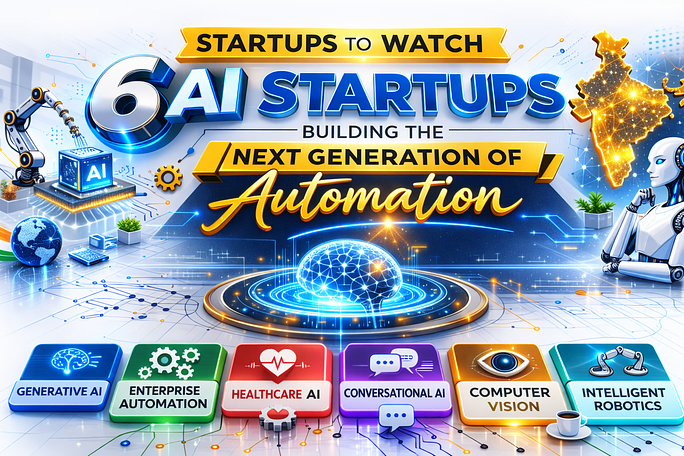
Artificial Intelligence has rapidly become the foundation of modern automation, enabling machines to perform tasks that once required human intelligence. From writing software code to analysing medical images and optimising supply chains, AI is transforming how businesses operate. In India, a new generation of startups is emerging to build AI-powered tools that automate workflows, improve decision-making, and unlock new levels of efficiency. Unlike earlier waves of Indian technology companies that focused primarily on IT services, many of today’s AI startups are building product-led platforms designed for global markets. Several of these companies are developing AI solutions that address real-world problems across industries such as healthcare, enterprise software, robotics, finance, and logistics. Below are six AI startups that are building the next generation of intelligent automation platforms. 1. Krutrim AI Krutrim AI, founded by Ola’s Bhavish Aggarwal, is one of India’s most ambitious artificial intelligence initiatives. The company is focused on building a full-stack AI ecosystem, including large language models, cloud infrastructure, and developer tools. Krutrim aims to create AI systems designed specifically for India’s linguistic and cultural diversity. Key focus areas include: Krutrim is also working toward building AI models capable of understanding India’s many regional languages, a critical capability for serving hundreds of millions of internet users. As Bhavish Aggarwal noted when launching the initiative: “India must build its own AI infrastructure to ensure technological sovereignty.” If successful, Krutrim could become one of the most important AI platforms built in India. 2. Observe.AI Observe.AI is a conversational intelligence platform designed to improve the performance of customer service teams using artificial intelligence. The company uses AI to analyse customer conversations and generate insights that help businesses improve support quality and operational efficiency. Key capabilities include: By analysing thousands of customer interactions, the platform helps companies identify patterns and improve customer experience. Observe.AI has raised significant venture capital funding and works with major global enterprises. 3. Rephrase.ai Rephrase.ai specialises in AI-generated video content, enabling businesses to create personalised video messages using synthetic media. The company’s platform allows organisations to generate realistic videos where AI avatars deliver customised messages. Use cases include: AI-generated video has become a powerful marketing automation tool because it enables companies to produce large volumes of personalised content without traditional video production costs. Rephrase.ai’s technology demonstrates how generative AI can reshape the future of media and communication. 4. Uniphore Uniphore is one of the most successful AI companies originating from India, focusing on conversational AI and voice automation. The company develops AI systems that analyse human speech and automate interactions between businesses and customers. Core technologies include: Uniphore’s solutions are widely used in industries such as: The company’s CEO Umesh Sachdev has often emphasised the importance of combining AI with human interaction. “AI should enhance human intelligence, not replace it.” Uniphore has grown into a global enterprise AI company, with customers across multiple continents. 5. SigTuple SigTuple is a healthcare AI startup building intelligent diagnostic systems. The company focuses on applying machine learning and computer vision to medical data in order to improve diagnostic accuracy. SigTuple’s technology is used to analyse medical images such as: The goal is to assist doctors by automating repetitive analysis tasks and highlighting potential abnormalities. Healthcare AI platforms like SigTuple have the potential to significantly improve healthcare access by enabling faster and more accurate diagnoses. 6. Niramai Niramai is a health-tech startup that has developed an AI-based breast cancer screening system. Unlike traditional mammography, Niramai’s technology uses thermal imaging combined with AI algorithms to detect early signs of breast cancer. Key advantages include: The technology is particularly valuable in regions where access to traditional diagnostic equipment may be limited. Niramai’s AI-driven screening system has already been deployed in hospitals and diagnostic centres across multiple countries. Why These Startups Matter The startups highlighted above represent a broader shift in India’s technology ecosystem. Earlier generations of Indian technology companies focused largely on IT outsourcing and services. Today’s AI startups, however, are building deep technology platforms and proprietary products. Several key trends are shaping this new wave of innovation: AI Infrastructure Development Companies are beginning to build foundational AI infrastructure, including models, platforms, and developer tools. Vertical AI Applications Many startups are focusing on specific industries such as healthcare, finance, and customer experience. This approach allows companies to develop highly specialised AI systems that deliver measurable business value. Global Product Strategy Unlike earlier startups that targeted primarily domestic markets, many AI startups today are building products designed for global customers. Automation at Scale AI-powered automation is rapidly expanding beyond simple tasks into areas such as decision support, analytics, and predictive modelling. This shift could fundamentally transform how businesses operate. The Future of AI Startups in India The coming decade will likely see significant consolidation and growth within the AI startup ecosystem. Some startups will evolve into global technology leaders, while others may be acquired by larger technology companies seeking AI capabilities. However, the broader trajectory is clear. Artificial intelligence is becoming a core layer of the digital economy, and the startups building these technologies today will shape how businesses and societies interact with intelligent systems in the future. For India, the opportunity is enormous. With its large talent pool, expanding startup ecosystem, and growing enterprise demand for automation, the country is well positioned to become one of the most important AI innovation hubs in the world. The startups emerging today are not simply building software tools — they are creating the next generation of intelligent infrastructure that will power industries globally.
The Global AI Race: Where India Stands Against the US and China
Artificial Intelligence is rapidly emerging as the defining technology of the 21st century. Governments, technology companies, and venture capital investors across the world are racing to develop the most powerful AI systems, recognising that leadership in artificial intelligence could determine economic competitiveness for decades. The global AI ecosystem is largely dominated by three major players: the United States, China, and increasingly India. While the United States currently leads in foundational AI research and large language models, and China has built a powerful ecosystem of AI-driven industrial and consumer applications, India is emerging as a fast-growing innovation hub with unique advantages in talent, startups, and enterprise AI adoption. Understanding where India stands in this global AI race requires examining several factors including talent, startup ecosystems, infrastructure, research capabilities, and investment trends. The Global AI Landscape Artificial intelligence has become one of the most competitive areas of global technology development. According to industry estimates: Countries that develop strong AI capabilities will likely gain significant advantages in areas such as: As a result, artificial intelligence has become not just a technology competition but a strategic geopolitical race. The United States: The Global AI Leader The United States currently leads the global AI ecosystem, primarily due to its strong research institutions, massive venture capital investment, and the presence of the world’s largest technology companies. Several of the most influential AI organisations are headquartered in the US, including: These organisations invest billions of dollars annually in AI research and development. Key strengths of the US AI ecosystem include: • world-leading universities and research labs• massive venture capital funding• advanced semiconductor and computing infrastructure• a strong startup ecosystem Large technology companies in the US are also building powerful foundation models capable of generating text, images, video, and software code. These models are rapidly becoming the backbone of modern AI applications. China: Scaling AI at National Level China has also made artificial intelligence a national strategic priority. The Chinese government has invested heavily in AI infrastructure, research institutes, and startup ecosystems. China’s AI strategy focuses particularly on: Chinese technology companies such as Baidu, Alibaba, Tencent, and Huawei have built extensive AI research programs. China’s advantages include: • large-scale data availability• government-backed AI investment• rapid deployment of AI applications• strong manufacturing ecosystem By integrating AI with industrial systems, China has accelerated automation across sectors such as manufacturing, logistics, and transportation. India’s Emerging Role in the AI Ecosystem While India entered the AI race later than the United States and China, the country has quickly become one of the most dynamic AI startup ecosystems globally. India’s AI ecosystem is expanding rapidly due to several structural advantages. Massive Talent PoolIndia produces one of the world’s largest pools of software engineers and data scientists. Today: This talent pool forms the foundation of India’s AI development ecosystem. Thriving Startup EcosystemIndia currently hosts hundreds of AI startups, building solutions across sectors such as: Unlike earlier generations of technology companies focused on services, many AI startups are building product-led platforms with global reach. These startups are increasingly attracting international venture capital investment. Enterprise Adoption of AI One of India’s strongest advantages is the rapid adoption of AI by businesses. Several sectors are aggressively integrating artificial intelligence into their operations. Examples include: Financial Services Healthcare E-commerce Customer Support According to industry surveys, over 80% of Indian enterprises are actively exploring AI deployment. India’s Unique Advantage: AI for Emerging Markets Unlike many Western AI startups that focus primarily on developed markets, Indian companies are increasingly building solutions designed for emerging economies. This includes technologies that address challenges such as: • multilingual communication• low-cost automation• healthcare accessibility• financial inclusion India’s linguistic diversity also presents an opportunity for startups to develop AI models capable of understanding multiple regional languages. These innovations could enable AI platforms to serve hundreds of millions of new internet users. The Role of Government in India’s AI Strategy Recognising the importance of artificial intelligence, the Indian government has launched several initiatives aimed at strengthening the country’s AI ecosystem. Key initiatives include: IndiaAI Mission A national initiative designed to accelerate AI research, startup development, and computing infrastructure. AI Talent Development Programs aimed at expanding AI education, training, and workforce development. Startup Support Government-backed funding and incubator programs supporting deep-tech startups. National AI Research Programs Collaborations between academia, research institutions, and technology companies to advance AI innovation. These initiatives aim to position India as a global hub for responsible and inclusive AI development. Challenges Facing the Indian AI Ecosystem Despite its rapid growth, India’s AI ecosystem still faces several structural challenges. Limited AI Infrastructure Training large AI models requires enormous computing resources, including specialised GPUs and data centres. Much of this infrastructure is currently concentrated in the United States. Research Funding Compared with the US and China, India still invests less in fundamental AI research. Increasing research investment will be critical for long-term competitiveness. Access to High-Quality Data AI systems depend heavily on large, high-quality datasets. Building robust national data infrastructure will be essential for accelerating AI innovation. The Future of India in the Global AI Race Despite these challenges, India has several advantages that could enable it to become one of the world’s leading AI ecosystems. These advantages include: • one of the largest technology talent pools globally • a vibrant startup ecosystem • increasing enterprise demand for automation • strong software engineering expertise Over the next decade, India is likely to play an increasingly important role in building AI-powered applications, enterprise platforms, and vertical industry solutions. While the United States may continue to lead in foundational AI research, India has the opportunity to dominate the development of practical AI applications for global markets. Final Thoughts Artificial Intelligence is not merely another technological wave — it represents a fundamental shift in how societies operate and how economies grow. The global AI race is intensifying as countries recognise the transformative potential of intelligent systems. For India, the opportunity is enormous. By combining its vast engineering talent, entrepreneurial energy, and growing digital economy, the country has the potential to become one of the most influential AI innovation hubs in the world. The startups
The Rise of the SaaS Industry in India

Software-as-a-Service (SaaS) has emerged as one of the most transformative segments of the global technology industry. By delivering software through cloud-based platforms rather than traditional on-premise installations, SaaS allows businesses to access powerful applications through the internet without heavy infrastructure investment. Over the past decade, SaaS has fundamentally changed how organisations deploy software, enabling faster adoption, lower costs, and scalable solutions for businesses of all sizes. India has become one of the fastest-growing SaaS ecosystems in the world, with startups building products used by companies across the United States, Europe, and Asia. Today, the country hosts more than 1,000 SaaS companies, many of which sell their products globally from India. From customer relationship management platforms and enterprise productivity tools to cybersecurity and AI-driven analytics software, Indian SaaS companies are increasingly becoming global technology players. What is SaaS? Software-as-a-Service refers to a cloud-based software delivery model in which applications are hosted online and accessed through web browsers or APIs. Unlike traditional software that requires installation on local computers or servers, SaaS applications operate on subscription models and are maintained by the software provider. Key characteristics of SaaS platforms include: • Cloud-based delivery• Subscription pricing models• Automatic updates and maintenance• Scalability for businesses of all sizes• Accessibility from any internet-connected device Examples of SaaS applications include: • Customer relationship management tools• project management software• HR and payroll platforms• marketing automation systems• cybersecurity platforms The SaaS model has gained widespread adoption because it reduces IT infrastructure costs and enables companies to deploy software much faster. Global SaaS Market Size The global SaaS market has experienced explosive growth over the past decade as organisations increasingly migrate their operations to the cloud. Industry estimates highlight the scale of this transformation: Several factors are accelerating global SaaS adoption: • increasing cloud infrastructure adoption• remote and hybrid work environments• enterprise digital transformation initiatives• AI integration into business software SaaS platforms are now widely used across industries including finance, healthcare, retail, logistics, and education. For many organisations, SaaS applications have become the primary software infrastructure powering their operations. The Rise of India’s SaaS Ecosystem India has emerged as one of the most exciting SaaS innovation hubs globally. Several factors have contributed to the rapid growth of the Indian SaaS industry: Large Engineering Talent PoolIndia produces hundreds of thousands of software engineers every year, providing SaaS startups with access to a deep pool of technical talent. Global Customer BaseMany Indian SaaS startups build products primarily for international markets, particularly the United States and Europe. This global-first approach allows startups to generate revenue in stronger markets while operating with cost advantages in India. Cloud Infrastructure AvailabilityThe widespread availability of cloud platforms such as AWS, Google Cloud, and Microsoft Azure has significantly reduced the cost of building and scaling SaaS products. Startup Ecosystem Growth India is now the third-largest startup ecosystem in the world, with increasing venture capital investment flowing into enterprise technology companies. Market Size of the Indian SaaS Industry India’s SaaS industry has grown rapidly in recent years and is expected to continue expanding over the next decade. Key market indicators include: The Indian SaaS ecosystem has also achieved significant milestones: • more than 1,000 SaaS startups operating in the country• dozens of companies generating over $100 million in annual recurring revenue (ARR)• strong investor interest and growing IPO pipelines These indicators demonstrate that India is becoming a major contributor to the global SaaS economy. Key Growth Trends in the SaaS Industry Several major technology and business trends are driving the expansion of SaaS globally and in India. 1. Cloud-First Digital TransformationBusinesses across industries are increasingly adopting cloud-based platforms for their operations. Companies are replacing legacy software systems with modern SaaS platforms that offer: • better scalability• lower maintenance costs• faster deployment This shift toward cloud-first architecture has significantly accelerated SaaS adoption. 2. Rise of AI-Powered SaaSArtificial Intelligence is becoming deeply integrated into SaaS platforms. Modern SaaS tools now include features such as: • predictive analytics• AI-driven automation• conversational interfaces• intelligent workflow optimisation AI-powered SaaS platforms are helping companies automate complex tasks and improve decision-making. 3. Growth of Vertical SaaSTraditional SaaS platforms served broad horizontal functions such as CRM or project management. However, a new category known as Vertical SaaS is gaining traction. Vertical SaaS platforms are designed specifically for particular industries such as: • healthcare• real estate• logistics• financial services• education These specialised solutions provide deeper functionality tailored to industry-specific needs. 4. Global Expansion of Indian SaaS CompaniesMany Indian SaaS companies operate globally from day one. This strategy allows them to: • target larger markets• generate higher revenue• scale internationally Several Indian SaaS companies now serve thousands of international customers. The Future of the SaaS Industry in India The next decade could be transformative for the Indian SaaS ecosystem. Industry analysts believe India could capture 4–6% of the global SaaS market, generating annual revenues of $50–70 billion by 2030. Several factors will shape the future of the sector: • increasing global demand for enterprise software• continued growth of cloud infrastructure• integration of artificial intelligence into SaaS platforms• expansion of India’s startup ecosystem India’s strong engineering talent, combined with its cost advantages and entrepreneurial ecosystem, positions the country to become a global SaaS powerhouse. Final Thoughts Software-as-a-Service has fundamentally transformed how businesses use technology. By shifting software delivery to the cloud, SaaS platforms enable organisations to scale faster, reduce costs, and adopt new technologies more efficiently. India’s SaaS ecosystem is still evolving, but its growth trajectory is clear. With thousands of startups, a rapidly expanding global customer base, and increasing venture capital investment, India is poised to become one of the most influential SaaS innovation hubs in the world. As digital transformation accelerates across industries, SaaS companies will play a critical role in shaping the future of enterprise technology.
Why SaaS is the Most Scalable Startup Model

Over the past two decades, Software-as-a-Service (SaaS) has emerged as one of the most powerful and scalable business models in the global technology ecosystem. By delivering software through cloud-based platforms rather than traditional on-premise installations, SaaS companies enable businesses to access powerful applications through the internet without the need for complex infrastructure or large upfront investments. This shift has fundamentally transformed how software is built, distributed, and monetised. Today, many of the world’s most successful technology companies operate on the SaaS model. From Salesforce and Adobe to Shopify and ServiceNow, SaaS platforms now power a significant portion of the global digital economy. At the same time, India has rapidly emerged as one of the most promising SaaS ecosystems globally, with startups building cloud-based platforms used by businesses across North America, Europe, and Asia. The reason SaaS has become so dominant is simple: it is one of the most scalable startup models ever created. The Global SaaS Opportunity The scale of the SaaS market reflects how rapidly businesses are moving toward cloud-based software solutions. Industry estimates highlight the enormous growth potential of the sector: Several macro trends are accelerating SaaS adoption worldwide: • cloud computing adoption• digital transformation initiatives• remote and hybrid work environments• demand for automation and analytics tools These trends have created an environment where SaaS companies can scale faster than traditional software businesses. What Makes SaaS So Scalable? SaaS startups possess several structural advantages that make them uniquely suited for rapid global growth. 1. Recurring Revenue Creates Predictable Growth One of the most powerful aspects of the SaaS model is the subscription-based revenue structure. Instead of selling software as a one-time purchase, SaaS companies charge customers recurring monthly or annual fees. This creates predictable revenue streams that allow companies to forecast growth more accurately. Key advantages include: • stable cash flow• long-term customer relationships• higher investor confidence• stronger company valuations SaaS companies typically track Annual Recurring Revenue (ARR) as a core growth metric. Investors often value SaaS companies at high ARR multiples because recurring revenue signals business stability. 2. Global Distribution Through the Internet Traditional businesses often require physical infrastructure or distribution networks to reach customers. SaaS companies, however, distribute their products entirely through the internet. This enables them to sell software to customers around the world without building offices or physical distribution channels. Advantages include: • global customer reach• lower operational costs• rapid international expansion Many SaaS startups in India generate the majority of their revenue from international markets while operating with development teams based locally. 3. Extremely High Gross Margins SaaS companies often operate with gross margins ranging from 70% to 90%, significantly higher than most traditional businesses. Once a software platform has been developed, the cost of delivering it to additional customers is relatively low. This creates powerful economies of scale. For example: • the same software product can serve thousands of customers• infrastructure costs grow slower than revenue• profitability increases as customer numbers rise This scalability is one of the key reasons investors are highly attracted to SaaS startups. 4. Product-Led Growth Accelerates Scaling Many modern SaaS companies use a strategy known as Product-Led Growth (PLG). In this model, the product itself becomes the primary driver of user acquisition and expansion. Instead of relying heavily on sales teams, customers can: • sign up for free trials• explore the product independently• upgrade to paid plans Examples of PLG strategies include: • freemium pricing models• self-serve onboarding• in-product upgrade prompts Companies such as Slack, Zoom, and Dropbox have scaled rapidly using this approach. Product-led growth allows SaaS startups to acquire users globally with minimal sales overhead. 5. Continuous Innovation Through Cloud Delivery Unlike traditional software that requires manual upgrades, SaaS products are updated continuously through the cloud. This enables companies to deliver improvements rapidly without disrupting users. Advantages include: • faster product development cycles• continuous feature releases• real-time performance improvements SaaS companies can also analyse customer usage data to understand how their products are used. This data-driven feedback loop allows companies to refine their platforms and build features that customers truly need. SaaS Success Stories Several global companies have demonstrated the enormous potential of the SaaS model. Salesforce Salesforce pioneered the cloud-based Customer Relationship Management (CRM) industry and became one of the world’s largest enterprise software companies. Shopify Shopify enables millions of businesses worldwide to build and manage online stores through its SaaS platform. Zoom Zoom experienced explosive growth by offering cloud-based video communication software that organisations could adopt instantly. The Rise of the SaaS Ecosystem in India India has rapidly become one of the most exciting SaaS ecosystems in the world. Several factors are driving this growth: • a large and skilled engineering workforce• lower product development costs• global demand for enterprise software• increasing venture capital investment Today, India hosts more than 1,000 SaaS startups, many of which serve international markets. Industry analysts estimate that Indian SaaS companies could generate $50–70 billion in annual revenue by 2030. Several Indian SaaS companies have already achieved global success, demonstrating the scalability of the model. Emerging Trends in the SaaS Industry The SaaS industry continues to evolve rapidly as new technologies reshape how software platforms operate. Key trends include: AI-Powered SaaS Artificial intelligence is becoming deeply integrated into SaaS platforms. Examples include: • predictive analytics• automated workflows• AI-powered customer support• intelligent data insights AI integration is expected to significantly enhance the capabilities of SaaS platforms. Vertical SaaSMany startups are now building SaaS platforms designed specifically for individual industries. Examples include: • healthcare SaaS platforms• logistics management software• fintech infrastructure tools• real estate management systems Vertical SaaS companies often achieve strong market positions because they deeply understand industry-specific needs. API-First PlatformsModern SaaS products increasingly provide APIs that allow businesses to integrate software into their existing systems. This creates entire ecosystems of applications built on top of SaaS platforms. Final Thoughts Software-as-a-Service has fundamentally changed how software is created, distributed, and consumed. By combining cloud delivery, recurring revenue, and global accessibility, SaaS enables startups to build businesses that scale rapidly across markets. For entrepreneurs, the SaaS model offers
How Indian SaaS Startups Are Winning Global Markets

Lessons from Chargebee, Freshworks and Postman By Bharat Samachar Editorial TeamOver the past decade, something remarkable has happened in the global technology landscape. A growing number of world-class software companies are being built not in Silicon Valley — but from Chennai, Bengaluru, Pune and Hyderabad. From subscription management platform Chargebee to customer engagement giant Freshworks and developer-favorite Postman, Indian SaaS startups are increasingly winning customers across North America, Europe, and Asia. This transformation has quietly turned India into one of the most important hubs for global software innovation. But how exactly are Indian startups achieving this global success? And what can the next generation of founders learn from their journey? The Rise of Global SaaS from India India’s SaaS ecosystem has grown rapidly over the last decade. Today, Indian SaaS companies collectively generate billions of dollars in annual revenue and serve customers across more than 100 countries. Industry reports from organizations such as NASSCOM, SaaSBoomi, and venture firms tracking the sector have consistently highlighted the momentum behind India’s SaaS ecosystem. Several structural advantages have helped Indian startups compete globally: What started as outsourcing and IT services decades ago has evolved into a product-driven innovation economy. And the playbooks emerging from this ecosystem are worth studying. The Global SaaS Playbook Emerging from India While each startup story is different, several common patterns have emerged among companies that successfully scale internationally. These patterns form what many founders informally call the “Global SaaS Playbook.” 1. Building Global Products from Day One One of the most important shifts in Indian startups has been a “global-first mindset.” Earlier generations of startups often focused primarily on domestic markets. Today’s SaaS founders do the opposite. They build products aimed at global customers from day one. For example: Instead of asking “How do we sell in India?”, many founders now ask: “What product problem exists globally that we can solve from India?” This shift has fundamentally changed the ambition level of Indian startups. 2. Winning the U.S. Market Through Smart GTM Strategies For most SaaS companies, the United States remains the largest market for enterprise software. Indian startups that succeed globally almost always develop a strong Go-To-Market (GTM) strategy for North America. Many follow a similar model: Product built in India → sales presence in the US This approach allows startups to: Companies like Freshworks famously adopted this approach early by building a strong US sales footprint while maintaining product teams in India. The strategy has since become common across the ecosystem. 3. Remote Product Teams Built in India Another key advantage of Indian SaaS startups is their ability to build high-quality product teams in India. Engineering talent from cities like Bengaluru, Chennai, and Pune powers many globally successful SaaS products. These teams often operate in distributed or remote-first structures, allowing companies to attract talent from across the country. The result is a powerful combination: This model has proven particularly effective in building developer tools and enterprise platforms. Case Studies: Indian SaaS Companies Making Global Impact While dozens of companies are emerging from the ecosystem, a few examples illustrate the scale of what Indian SaaS startups have achieved. Chargebee Founded in Chennai, Chargebee provides subscription billing software used by thousands of SaaS companies globally. The company focused early on solving complex billing challenges faced by subscription-based businesses. By targeting SaaS startups worldwide rather than focusing solely on India, Chargebee built a global customer base and became one of the leading platforms in the subscription management category. Freshworks Freshworks is perhaps one of the most visible success stories in India’s SaaS ecosystem. Founded by Girish Mathrubootham, the company built customer engagement software used by businesses around the world. Freshworks later became one of the first Indian SaaS companies to list on the Nasdaq stock exchange, marking a milestone for India’s product ecosystem. Postman Postman started as a developer tool built by a small team in Bengaluru. Today it is used by millions of developers worldwide to test and build APIs. Its growth demonstrates how developer-focused products can achieve global scale when built with a strong product vision. The Ecosystem Advantage Another important reason for the rise of Indian SaaS companies is the strengthening ecosystem around founders. Organizations such as SaaSBoomi, along with venture capital firms and angel investors focused on SaaS, have created networks where founders actively share insights and learnings. This culture of knowledge sharing has helped new founders avoid common mistakes and scale faster. Many experienced founders now mentor new startups, helping them navigate: What New Founders Can Learn For early-stage founders, the success of companies like Chargebee, Freshworks and Postman offers several practical lessons. Think global early The most successful startups design products that solve global problems. Build strong product teams India’s engineering talent is one of the country’s biggest competitive advantages. Invest in GTM strategy Even great products need thoughtful distribution and sales strategies. Leverage the ecosystem Founder communities, accelerators, and mentors play an increasingly important role. India’s Next Wave of Global SaaS Industry observers widely believe the Indian SaaS ecosystem is still in its early stages. Over the next decade, many expect India to produce dozens of globally successful SaaS companies across sectors such as: The next generation of founders is already building products aimed at global markets. If current trends continue, India could emerge as one of the world’s most important software product hubs. — Editorial Note & Disclosure This article is an independent editorial analysis by Bharat Samachar, based on publicly available information, industry commentary, and general observations about the Indian SaaS ecosystem. References to companies such as Chargebee, Freshworks, and Postman are made for informational purposes only. All trademarks and company names belong to their respective owners. Readers are encouraged to consult official company sources and industry reports for the most current information.
Inside India’s AI Startup Playbook: Building Global AI Products from India
Over the past few years, artificial intelligence has triggered a new wave of innovation across the global technology ecosystem. While Silicon Valley remains the epicenter of foundational AI research, a growing number of startups are emerging from India with ambitions to build globally relevant AI products. From generative AI platforms and developer tools to enterprise automation systems, Indian founders are increasingly attempting to replicate the playbook that helped the country succeed in SaaS: build world-class technology in India and scale it globally. The momentum is visible in the numbers. According to NASSCOM’s research on India’s generative AI ecosystem, the number of AI startups in the country has expanded dramatically in recent years. India’s generative AI startup base grew 3.6 times between early 2023 and early 2024, reflecting a rapid surge in experimentation and product development. By 2025, the ecosystem had grown even further. NASSCOM estimates that India now hosts more than 890 generative AI startups, with a large share focused on application-layer innovation rather than foundational models. This growth suggests that India’s AI ecosystem may be entering a phase similar to the SaaS boom of the past decade—one driven by strong engineering talent, global demand for software, and a new generation of founders building ambitious products from India. The Scale of India’s AI Opportunity The broader AI economy in India is expanding rapidly. According to a joint BCG–NASSCOM report, the country’s AI market is projected to grow at 25–35% annually, making it one of the fastest-growing AI markets in the world. At the same time, the country’s AI talent base is also expanding. NASSCOM estimates that India’s AI workforce could grow from roughly 600,000 professionals today to more than 1.25 million by 2027, reflecting the increasing demand for machine learning engineers, data scientists, and AI researchers. Government data also highlights the scale of technological adoption across the startup ecosystem. India now hosts over 1.8 lakh startups, and nearly 89% of newly launched startups are incorporating AI into their products or services. Taken together, these trends point to a powerful structural shift: artificial intelligence is quickly becoming a foundational layer of India’s startup economy. The Emerging “AI Startup Playbook” from India While the ecosystem is still evolving, several patterns are emerging in how Indian AI startups approach product development and global expansion. These patterns form what many investors and founders informally describe as India’s emerging AI startup playbook. 1. Building AI Applications Instead of Foundational ModelsOne defining trend is that most Indian AI startups are focusing on application-layer innovation rather than large foundational models. According to NASSCOM’s analysis of the generative AI ecosystem, roughly 83% of Indian GenAI startups focus on applications and vertical AI solutions, including tools for enterprises, developers, and specific industries. This strategy reflects a practical reality: building foundational models requires enormous compute resources and capital, often running into billions of dollars. Instead, Indian startups are focusing on building AI-powered products that solve real business problems. These include: This approach mirrors the earlier SaaS strategy where Indian startups built products on top of existing cloud infrastructure rather than competing directly with hyperscale providers. 2. Leveraging India’s Engineering Talent A major advantage for AI startups in India remains access to a deep engineering talent pool. India’s technology workforce already numbers in the millions, and the AI talent base continues to expand rapidly as universities and companies invest in machine learning and data science education. Major technology hubs such as Bengaluru, Delhi-NCR, Hyderabad, Pune, and Chennai have become important centers for AI startups and research talent. For example, Bengaluru alone hosts more than 700 AI startups, making it one of the largest AI startup clusters outside the United States. This concentration of engineering talent allows startups to build sophisticated AI systems at significantly lower cost than Silicon Valley. The result is a competitive advantage that many founders are leveraging to develop complex AI applications while maintaining capital efficiency. 3. Building Global Products from Day OneAnother pattern visible across India’s AI ecosystem is a global-first product strategy. Just as earlier SaaS companies like Freshworks and Postman targeted international markets from the beginning, many AI startups are designing products for global customers rather than focusing solely on domestic demand. This approach is partly driven by the structure of the AI market. Enterprise AI adoption is strongest in the United States and Europe, where companies are aggressively investing in automation, data analytics, and generative AI tools. To reach those customers, many Indian AI startups follow a familiar structure: AI research and engineering in India → customer acquisition in global markets. This model allows companies to combine India’s engineering strength with proximity to enterprise buyers. 4. Vertical AI as a Strategic FocusAnother emerging trend is the rise of vertical AI startups. Rather than building general-purpose tools, many founders are targeting specific industries such as: According to industry reports, vertical AI solutions are becoming one of the fastest-growing segments of the global AI market. Indian startups are increasingly positioning themselves to capture this opportunity by combining domain expertise with AI-driven automation. Capital Is Following the Momentum Investor interest in the Indian AI ecosystem is also rising. Funding for AI startups in India reached approximately $560 million in 2024, reflecting growing global interest in the country’s deep-tech capabilities. Several emerging companies have already begun attracting significant international investment. For example, AI startup Emergent recently raised $70 million in funding from investors including SoftBank and Khosla Ventures, underscoring growing confidence in India’s AI product ecosystem. According to Khosla Ventures founder Vinod Khosla, the broader opportunity lies in the democratization of software creation through AI tools. As he noted while discussing AI-driven development platforms: “The democratization of software building is going to be a massive trend.” For startups building AI products from India, that trend represents a massive market opportunity. Challenges on the Road Ahead Despite the rapid growth, India’s AI ecosystem still faces several challenges. First, the country currently lags global leaders in large-scale foundational model development, where massive computational resources are required. Second, access to advanced GPUs and AI infrastructure remains limited compared to the United States and China. Finally, the availability of specialized AI researchers—particularly in areas
The Venture Capital Playbook: How Startups Raise Their First $5 Million

For most startups, raising the first few million dollars in venture capital represents one of the most critical milestones in their journey. This early capital often determines whether a promising idea can evolve into a scalable company—or remain just another concept that never finds traction. Across global startup ecosystems—from Silicon Valley and London to Bengaluru and Singapore—investors tend to look for similar patterns before writing their first large checks. While every startup journey is unique, venture capitalists repeatedly emphasize that the earliest rounds of funding tend to follow a recognizable playbook. Understanding this playbook can help founders navigate one of the most complex phases of building a startup: raising their first $5 million in institutional capital. The Importance of Early Venture Capital Early-stage venture capital plays a crucial role in the global innovation economy. According to data from Crunchbase, global venture funding has fluctuated significantly over the past decade but remains one of the most important drivers of startup growth. Venture-backed startups have historically powered many of the world’s most transformative companies—from Amazon and Google to Stripe and Airbnb. In the early stages, however, capital is rarely about immediate profitability. Instead, investors typically fund startups based on future potential, team capability, and the scale of the opportunity being addressed. As legendary venture capitalist Marc Andreessen, co-founder of Andreessen Horowitz, famously said: “The only thing that matters is getting to product-market fit.” For founders, early funding provides the runway required to reach that point. The Typical Funding Journey to the First $5 Million Most startups do not raise $5 million immediately. Instead, the capital is typically accumulated across several early funding rounds. The typical path often looks like this: Pre-seed:$100,000 – $500,000 raised from founders, angel investors, or accelerators. Seed Round:$1 million – $3 million raised from early-stage venture funds. Early Series A:Additional $3 million – $5 million raised to scale the business. Combined, these rounds often bring startups into the $3 million–$5 million range, giving them enough capital to expand product development, hire teams, and enter new markets. According to PitchBook, median seed round sizes in the United States have grown significantly over the past decade, with many seed rounds now crossing the $3 million mark in strong ecosystems. What Investors Look For Before Writing the First Big Check Despite the diversity of startup sectors—from AI and fintech to SaaS and climate technology—venture capitalists generally evaluate early-stage startups through a common framework. 1. A Large and Growing Market One of the most consistent themes in venture capital investing is the importance of addressing a large market opportunity. Investors often describe this as the Total Addressable Market (TAM). Startups targeting small niche markets rarely attract venture capital because VC funds are structured to generate very large returns. As venture capitalist Peter Thiel wrote in Zero to One: “The biggest secret in venture capital is that the best investment in a successful fund equals or outperforms the entire rest of the fund combined.” This means investors typically seek startups that have the potential to scale into billion-dollar markets. 2. A Strong Founding Team For early-stage investors, the founding team often matters even more than the product. At the earliest stages, products can pivot and markets can evolve. What investors are truly backing is the ability of the founders to adapt, learn, and execute. According to startup accelerator Y Combinator, one of the most important signals for early investors is whether founders demonstrate: In many early-stage deals, investors describe themselves as “betting on the jockey, not the horse.” 3. Evidence of Early Product-Market Fit While startups rarely achieve full product-market fit before raising early capital, investors look for early signals that customers genuinely want the product. These signals can include: Venture capitalist Marc Andreessen originally defined product-market fit as: “Being in a good market with a product that can satisfy that market.” Startups that show strong early traction often find it significantly easier to raise their first few million dollars. 4. A Clear Go-To-Market Strategy Another key component of the venture capital playbook is demonstrating how the startup plans to acquire customers. A compelling Go-To-Market (GTM) strategy typically answers questions such as: For SaaS startups, this might involve product-led growth models. For consumer startups, it could involve viral acquisition or social platforms. Without a credible distribution strategy, even promising products may struggle to secure venture funding. The Role of Angel Investors and Accelerators Before venture capital firms invest, many startups first receive funding from angel investors and startup accelerators.Angel investors are typically experienced entrepreneurs, executives, or early investors who provide capital in the earliest stages of a company. Accelerators such as Y Combinator, Techstars, and 500 Global have also become important gateways into venture capital ecosystems. These programs often provide: Several of the world’s most successful startups—including Airbnb, Stripe, and Dropbox—received early support from accelerators before raising significant venture capital. Storytelling Matters in Venture Capital While metrics and traction are important, venture capital fundraising is also heavily influenced by narrative. Investors often hear hundreds of startup pitches each year. The startups that stand out are usually those that clearly articulate: According to Sequoia Capital, one of the world’s most influential venture firms, founders should be able to answer three core questions clearly: A strong narrative helps investors visualize the long-term potential of the startup. Global Competition for Venture Capital Startup ecosystems around the world are increasingly competing for venture capital. The United States still attracts the largest share of venture funding, but ecosystems in India, Southeast Asia, Europe, and Latin America have grown significantly over the past decade. India, for example, has become one of the world’s largest startup ecosystems. According to the Startup India initiative, the country now hosts more than 100,000 registered startups, many of which operate in sectors such as fintech, AI, SaaS, and deep technology. As global venture capital becomes more distributed, founders outside traditional hubs are finding it easier to access funding. The Road After the First $5 Million Raising the first $5 million is not the finish line. In many ways, it is only the beginning. Once startups secure early venture capital, investors expect them to focus on several key milestones: These milestones determine whether
The Founder-Led Sales Playbook Every Early Startup Should Learn

For many early-stage startups, product development often receives the majority of attention. Founders spend months refining product features, building technology stacks, and hiring engineering teams. Yet one of the most critical functions during the earliest stage of a company is frequently overlooked: sales led directly by the founders themselves. Across startup ecosystems—from Silicon Valley and London to Bengaluru and Singapore—experienced investors repeatedly emphasize a simple truth: in the early days of a startup, founders must sell. Whether it involves convincing the first customer, pitching investors, or securing early partnerships, founder-led sales is often the difference between startups that gain traction and those that quietly disappear. Understanding this founder-driven sales playbook has become an essential lesson for new entrepreneurs building technology companies. Why Founder-Led Sales Matters In the earliest stages of a startup, no one understands the product, the vision, or the problem being solved better than the founders themselves. Because of this, many investors believe that founders should personally lead sales efforts until the company achieves clear product-market fit. Paul Graham, co-founder of the startup accelerator Y Combinator, has frequently emphasized this principle. In one of his essays on startup growth, he wrote: “The most common unscalable thing founders have to do at the start is to recruit users manually.” In practice, this means founders must speak directly with potential customers, understand their pain points, and iterate quickly based on real feedback. This direct interaction often provides insights that no market research report can replicate. The First 10 Customers Are the Hardest For most startups, acquiring the first few customers is far more difficult than scaling later. At this stage, the product may still be evolving, the brand is unknown, and potential customers are often hesitant to adopt solutions from new companies. According to research from First Round Capital, early customer acquisition is one of the most important validation signals for young startups. Investors frequently look for proof that founders have been able to convince real customers to adopt their product before committing larger amounts of capital. This is why many venture capitalists prefer founders who demonstrate strong sales instincts early on. In the words of Ben Horowitz, co-founder of venture firm Andreessen Horowitz: “The number one mistake founders make is waiting too long to hire a sales leader—or worse, avoiding sales entirely.” Before hiring a sales team, however, founders themselves must first prove that customers actually want the product. Understanding the Problem Through Direct Customer Conversations One of the key advantages of founder-led sales is the direct learning loop it creates between customers and product development. Early conversations with customers often reveal insights about: These conversations frequently lead to product improvements that shape the future direction of the company. Many successful startups have credited early customer interactions with helping them refine their products. For example, software companies in the SaaS ecosystem often rely on early customer feedback to iterate quickly before scaling their platforms globally. This early stage of intense customer engagement is often referred to as the product discovery phase. Building the Founder Sales Narrative Founder-led sales is not only about closing deals. It is also about communicating a compelling vision. Early customers often adopt products from startups not just because of the features, but because they believe in the founders and the problem being solved. As venture capitalist Peter Thiel wrote in his book Zero to One: “A great company is built around a secret that’s hidden from the outside.” Founders must articulate that vision clearly when speaking with potential customers. This narrative typically includes: A clear and persuasive story can often be as important as the product itself during the early stages. Founder-Led Sales and Product-Market Fit Founder-driven sales also plays a critical role in achieving product-market fit—the stage where a product strongly satisfies a specific market demand. Venture capitalist Marc Andreessen famously defined product-market fit as: “Being in a good market with a product that can satisfy that market.” Reaching that stage typically requires constant experimentation. Founders must test pricing models, messaging, and target customer segments. Because they are directly involved in these conversations, founders can rapidly adapt the product and positioning based on feedback. Once a repeatable sales process begins to emerge, startups can then transition toward building formal sales teams. When Startups Begin Hiring Sales Teams Founder-led sales does not last forever. Eventually, startups must transition from founder-driven selling to scalable sales processes. This typically happens when companies reach several milestones: Once these elements are in place, startups can begin hiring dedicated sales professionals to scale growth. However, many experienced founders warn that hiring sales teams too early can be risky. Without a validated sales process, new hires may struggle to replicate success. This is why many venture investors encourage founders to personally close the first 20 to 50 deals before building large sales teams. The Role of Founder Credibility Another reason founder-led sales is so powerful in the early stages is credibility. Early customers often take risks when adopting new technologies from unknown startups. When founders themselves participate in the sales process, it signals commitment and accountability. Customers are more likely to trust companies where the founders are actively involved in solving their problems. This dynamic has been particularly visible in enterprise software markets, where early customers often build close relationships with startup founders during the initial stages. These early adopters frequently become long-term advocates of the product. Lessons from the SaaS Ecosystem The importance of founder-led sales has been especially evident in the global SaaS ecosystem. Many successful SaaS founders personally led early sales efforts before scaling their companies. For instance, several enterprise software founders have spoken publicly about spending months meeting customers, running product demos, and refining messaging during the earliest stages of their companies. These early sales conversations helped them understand customer needs and shape the product roadmap. Over time, those insights helped companies scale into global platforms. The Founder-Led Sales Mindset While every startup journey is different, the founder-led sales playbook typically involves several common principles. First, founders must actively engage with potential customers rather than relying solely on
Builders of New India: The Founders Behind India’s AI Boom
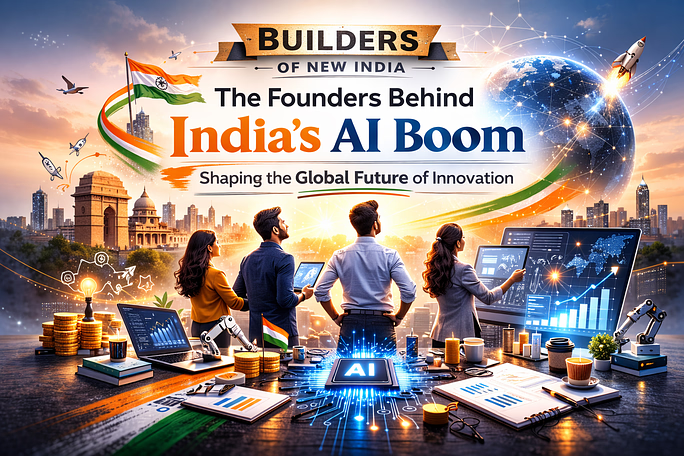
Artificial intelligence is rapidly becoming one of the most transformative forces shaping the global technology landscape. From healthcare diagnostics and financial automation to generative AI tools and enterprise software, the technology is reshaping how companies operate and how societies interact with digital systems. While the United States and China continue to dominate the development of foundational AI models, a new wave of founders in India is quietly building innovative AI-driven products that are gaining global attention. Over the past few years, India has emerged as one of the fastest-growing AI startup ecosystems in the world. According to research from NASSCOM, India is now home to more than 890 generative AI startups, a number that has expanded rapidly as new entrepreneurs experiment with applications across industries. Behind this momentum lies a new generation of founders—engineers, researchers, and entrepreneurs—who are building companies designed to compete on a global stage. These founders represent a broader transformation in India’s technology ecosystem: a shift from outsourcing and IT services to product-led innovation powered by artificial intelligence. The Rise of India’s AI Entrepreneur India’s startup ecosystem has expanded dramatically over the past decade. According to data from the Startup India initiative, the country now hosts more than 100,000 registered startups, making it one of the largest startup ecosystems globally. Artificial intelligence has become one of the most active sectors within this ecosystem. Several structural factors have contributed to this growth. First, India has one of the world’s largest pools of software engineering talent. Universities across the country produce hundreds of thousands of engineering graduates each year, many of whom are increasingly specializing in fields such as machine learning, data science, and artificial intelligence. Second, global cloud infrastructure has dramatically reduced the cost of building AI-powered software products. Startups can now leverage platforms such as cloud computing, open-source AI frameworks, and pretrained models to develop applications without building foundational models from scratch. Third, the global demand for AI-driven automation has created new opportunities for startups to build solutions that can scale internationally. Together, these factors have created fertile ground for a new generation of founders experimenting with AI innovation. Builders of the AI Ecosystem Across India’s technology hubs—Bengaluru, Hyderabad, Delhi-NCR, Chennai, and Pune—entrepreneurs are launching AI startups focused on a wide range of industries. Many of these founders share a similar approach: instead of building foundational AI models that require enormous computing resources, they focus on application-layer innovation. These companies develop AI-powered tools designed to solve real-world business problems. Some startups are building developer productivity platforms that automate coding tasks. Others are developing enterprise AI tools that help companies automate customer service, analyze financial data, or streamline operational workflows. This focus on practical applications reflects the broader evolution of India’s startup ecosystem. Rather than competing directly with global AI labs building large language models, Indian founders are increasingly focusing on building products on top of existing AI infrastructure. This strategy mirrors the earlier SaaS playbook that helped Indian software companies scale globally. Founders Building Global AI Products One of the defining characteristics of India’s AI startup ecosystem is the global ambition of its founders. Many entrepreneurs are designing products aimed at international markets from the very beginning. This global-first mindset is partly driven by the structure of the AI market. Enterprise adoption of AI technologies is strongest in markets such as North America and Europe, where companies are investing heavily in automation, analytics, and generative AI tools. As a result, many Indian AI startups follow a familiar operating model: Engineering and product development in India → customer acquisition in global markets. This structure allows startups to combine India’s engineering talent with access to global enterprise customers. Several technology leaders have highlighted the importance of this model. Satya Nadella, CEO of Microsoft, has often spoken about the growing role of India’s developer community in shaping global software innovation. “India has one of the largest developer ecosystems in the world, and it will play a central role in shaping the future of AI,” Nadella noted during discussions on the country’s technology ecosystem. For many founders, this global outlook is central to their strategy. Bengaluru: The Epicenter of India’s AI Innovation While AI startups are emerging across the country, Bengaluru has become the most prominent hub for AI entrepreneurship. Often referred to as India’s “Silicon Valley,” the city hosts hundreds of technology startups, venture capital firms, and research centers focused on artificial intelligence. Industry estimates suggest that more than 700 AI startups operate in Bengaluru alone, making it one of the largest AI startup clusters outside the United States. The city’s ecosystem benefits from a powerful combination of factors: This environment allows founders to experiment rapidly with new technologies and business models. The Role of Venture Capital The rapid growth of India’s AI ecosystem has also attracted increasing attention from venture capital investors. According to industry reports, funding for AI startups in India has risen significantly in recent years as global investors search for the next generation of technology companies. Venture capital firms are particularly interested in startups that combine strong technical capabilities with global market potential. Many investors believe that India’s deep engineering talent and cost-efficient development environment give founders a structural advantage when building AI-driven products. As venture capitalist Vinod Khosla, founder of Khosla Ventures, has observed: “AI has the potential to democratize innovation in ways we have never seen before.” For founders building AI startups in India, this shift could create unprecedented opportunities. Challenges and the Road Ahead Despite the rapid growth of the ecosystem, India’s AI startup community still faces several challenges. Access to large-scale computing infrastructure remains limited compared to the United States and China. Building foundational AI models requires enormous computational resources, including advanced GPUs and specialized research talent. However, many entrepreneurs view these limitations as an opportunity to focus on building application-driven AI companies rather than infrastructure-heavy research labs. Government initiatives aimed at expanding AI infrastructure and supporting research could further strengthen the ecosystem in the coming years. The Builders of India’s AI Future The founders building AI startups across India represent a new